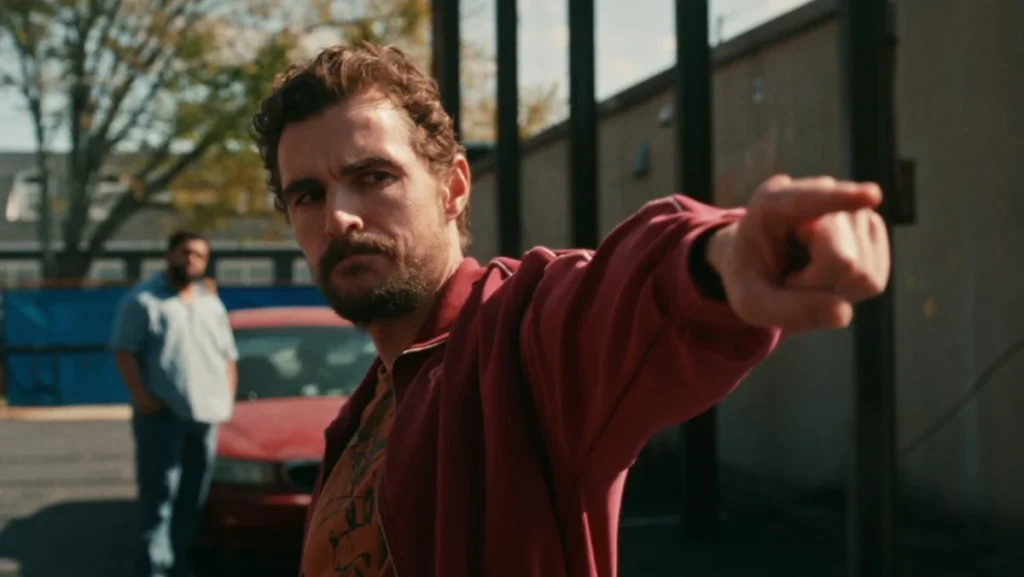
The contemporary reimagining of Faces of Death, directed by Daniel Goldhaber and co-written with Isa Mazzei, arrives amidst a fervent discussion regarding media consumption, desensitization to violence, and the ethical quagmires of the digital age. Positioned by its creators as a cinematic exploration that "holds a mirror up to the toxic media ecosystem we live inside of," the film purports to delve into profound questions about humanity’s "ravenous appetite for real-life carnage" and the complicity inherent in witnessing violent imagery. However, early critical assessments, encapsulated by the succinct "Bottom Line" that it is "Not nearly as thoughtful as it thinks it is," suggest a potential disparity between stated artistic intent and final execution. IFC Films, the distributor, has notably granted this R-rated, 1-hour 38-minute feature one of its widest releases to date, signaling a significant investment in its potential impact, whether critically or commercially. The film features a diverse cast including Barbie Ferreira, Dacre Montgomery, Josie Totah, Aaron Holliday, Jermaine Fowler, Charlie XCX, Kurt Yue, Ash Maeda, Sam Malone, Tiffany Colin, Tadasy Young, and Jared Bankens, with a release date slated for Friday, April 10.
Revisiting a Cult Phenomenon: The Original Faces of Death
To understand the context of this new iteration, it is crucial to recall the controversial legacy of the original Faces of Death. Released in 1978, the film quickly established itself as a prime example of the "mondo horror" genre, a term derived from the 1962 Italian shockumentary Mondo Cane. These films typically presented a sensationalized, often exploitative, compilation of real and staged footage depicting shocking or exotic cultural practices, death, and violence. The original Faces of Death achieved notoriety by purporting to showcase genuine footage of various gruesome fatalities, narrated by a fictional "pathologist Frances B. Gross." While a significant portion of the footage was indeed fabricated with varying degrees of realism, its presentation as authentic garnered immense fascination and revulsion.
The low-budget production proved extraordinarily profitable, especially following its widespread availability on VHS, which propelled it to cult status. It spawned a veritable cottage industry of sequels and spin-offs, both official and unofficial, solidifying its place as a touchstone of morbid curiosity. The film’s enduring appeal lay in its deliberate blurring of the lines between reality and fiction, tapping into a primal human fascination with death and taboo. This aspect also fueled intense ethical debates, with critics decrying its exploitative nature and its potential psychological impact on viewers. Despite, or perhaps because of, its controversial content, Faces of Death became a cultural artifact, influencing subsequent horror subgenres like found footage and mockumentaries, and testing the boundaries of what audiences were willing to consume.
The Modern Lens: Content Moderation and Digital Desensitization
The new Faces of Death reframes the original’s premise for the digital age, centering its narrative on Margo (Barbie Ferreira), a content moderator for a YouTube-esque video-sharing platform named Kino. Margo’s daily existence is a stark illustration of the contemporary "toxic media ecosystem" the filmmakers aim to critique. Her job entails the relentless, often instantaneous, decision-making regarding objectionable uploads, ranging from graphic violence to other extreme content. This character offers a poignant entry point into the psychological toll and ethical dilemmas faced by real-world content moderators, who are exposed to a deluge of traumatic material daily, often with insufficient support or recognition.
Margo’s personal history, which includes a tragic encounter with internet notoriety, further underscores the film’s thematic exploration of online culture’s pervasive influence. Her supervisor (Jermaine Fowler) embodies a more cynical, profit-driven perspective, urging Margo to prioritize engagement with the mantra, "Give the people what they want!" This dialogue succinctly captures the tension between platform responsibility and the commercial pressures of the "attention economy," where sensationalism often translates directly into views and revenue.
The plot thickens as Margo begins to notice uncanny resemblances between contemporary videos uploaded to Kino and clips from the original Faces of Death. A specific "tip-off" comes when an online commentator explicitly references the 1978 film, prompting Margo to retrieve a VHS copy for comparison. This meta-narrative device allows the new film to weave in archival footage from its predecessor, effectively bridging the gap between the analogue and digital eras of media consumption and providing moments of gruesome nostalgia for fans of the original.
The Architect of Carnage: A Serial Killer for the Digital Age
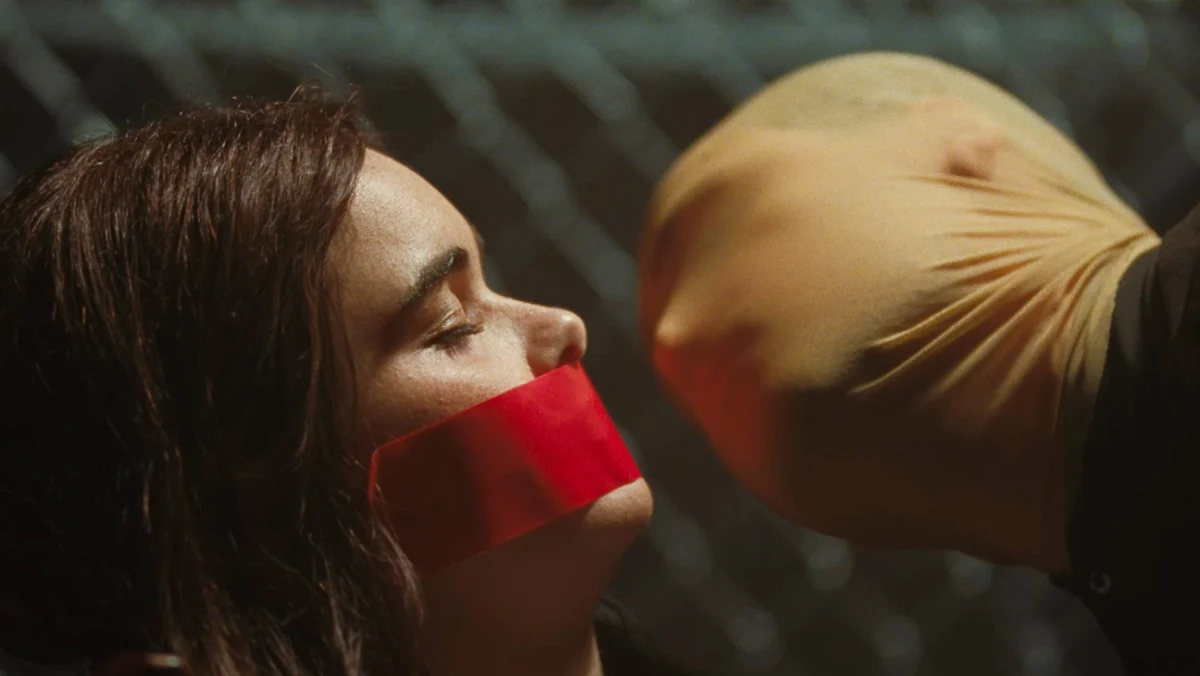
Margo’s investigation leads her to the chilling realization that the disturbing videos are not merely copies but actual contemporary re-enactments – the work of a serial killer named Arthur (Dacre Montgomery). Arthur, depicted as a gleefully malevolent figure who dons red contact lenses and a mask, embodies the film’s commentary on the darkest facets of online culture. He keeps victims imprisoned in his basement, performing ultra-violent acts that are then disseminated online, drawing parallels to real-world "dark web" phenomena and the perverse communities that sometimes form around extreme content.
Arthur’s character serves as the film’s primary antagonist and its most direct mouthpiece for its thematic concerns. His philosophical pronouncements, such as "It’s the attention economy, and baby, business is booming!" are not merely villainous boasts but pointed critiques of a system that rewards and amplifies extreme content. He openly acknowledges the cyclical nature of media consumption and exploitation, stating, "The algorithm loves remakes… people love remakes. If it’s a remake, you can get away with murder." This meta-commentary, reminiscent of the Scream franchise’s self-awareness, directly addresses the film’s own existence as a remake/reboot/exploration, inviting viewers to question the motivations behind its creation and their own consumption of it.
The inevitable confrontation between Margo and Arthur becomes a battle not just for survival but for the soul of the digital media landscape. Arthur revels in the attention his "work" garners, asking Margo, "Are you a fan of my work?" This question forces both the character and the audience to confront their own potential complicity in the cycle of violence consumption. While the film ultimately devolves into a conventional horror showdown between a "plucky young heroine" and a "psycho villain," its thematic underpinnings elevate it beyond mere genre fare, or at least attempt to. Barbie Ferreira delivers an appealing performance as Margo, grounding the escalating horror in a relatable human experience, while Dacre Montgomery’s portrayal of Arthur is effectively creepy, creating a villain who is both monstrous and eerily reflective of contemporary anxieties.
Beyond the Screen: Implications for Media, Ethics, and the Genre
The new Faces of Death attempts to resonate deeply with current societal concerns regarding media ethics, content moderation, and the psychological effects of pervasive digital violence. The film’s exploration of desensitization is particularly pertinent in an era where individuals are constantly bombarded with unfiltered, often graphic, content through social media feeds and news cycles. Studies by organizations like the American Psychological Association have long discussed the potential for repeated exposure to violent media to desensitize individuals, potentially reducing empathy and increasing aggressive thoughts or behaviors. The film implicitly asks whether the constant stream of shocking imagery, real or manufactured, contributes to a societal erosion of compassion.
The decision by IFC Films to give Faces of Death its widest release ever underscores the perceived market appetite for content that engages with these themes, even if through the lens of exploitation. While the original Faces of Death proved that "you can’t go broke underestimating the public’s taste," the contemporary version faces a more complex landscape. Audiences today are arguably more media-literate, but also more accustomed to extreme content. The challenge for the filmmakers is whether their "exploitation of an iconic exploitation film" manages to transcend its roots and deliver a meaningful critique, or if it simply becomes another entry in the very "toxic media ecosystem" it claims to analyze.
The film also contributes to the ongoing debate about the prevalence and purpose of remakes, reboots, and "re-imaginings" in Hollywood. While Arthur’s meta-commentary suggests that algorithms and audience nostalgia drive this trend, critics often question the artistic merit of such endeavors. Director Daniel Goldhaber, known for his previous works like Cam (a psychological horror exploring online identity) and How to Blow Up a Pipeline (a thriller with a clear political message), brings a track record of tackling socially charged narratives within genre frameworks. His collaboration with Isa Mazzei, who also worked on Cam, suggests a deliberate attempt to imbue this reboot with a deeper intellectual layer than its predecessor.
Ultimately, Faces of Death serves as a cultural artifact in its own right, reflecting the anxieties of a society grappling with the pervasive influence of digital media. Its success, both critically and commercially, will not only be a testament to its entertainment value but also an indicator of how audiences and critics perceive its engagement with profound ethical questions. Does it succeed in holding up that mirror, or does it merely reflect the sensationalism it seeks to critique? The answer lies in the eye of the beholder, and the ongoing dialogue it sparks about our collective "ravenous appetite for real-life carnage" in the digital age.