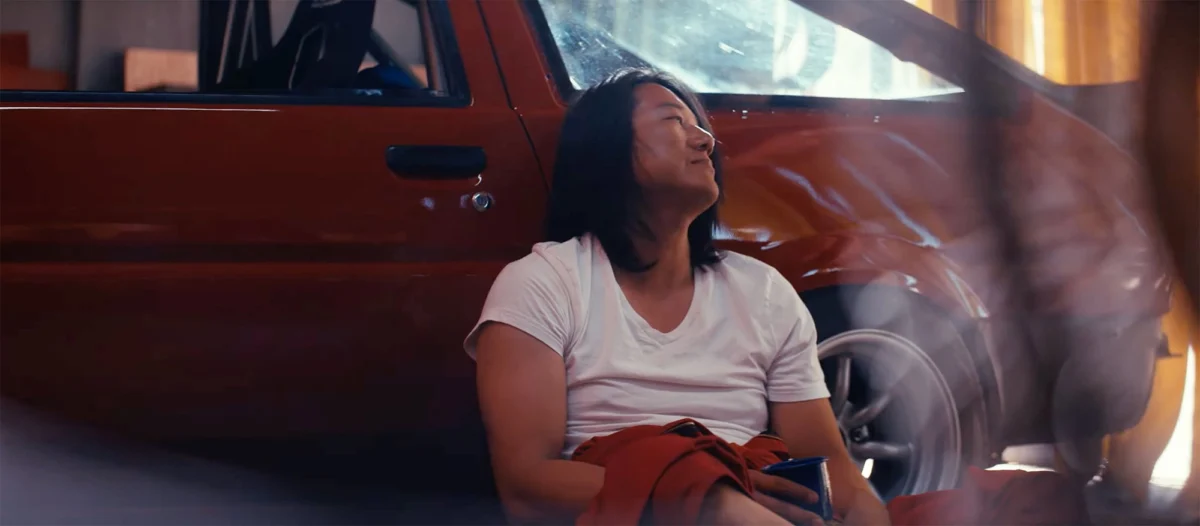
The emergence of the first teaser trailer for Drifter marks a significant milestone in the directorial career of Sung Kang, an individual whose name has become synonymous with international car culture and the high-octane world of cinematic racing. Released on March 24, 2026, the 30-second promotional clip offers a visceral glimpse into a project that appears to be a deeply personal endeavor for Kang, who not only directs the feature but also takes on the lead role of Tree. This production represents a departure from the high-budget, gravity-defying spectacle of the Fast & Furious franchise, moving instead toward a grounded, character-driven narrative that explores the emotional and technical nuances of competitive drifting. Produced as an independent project, Drifter seeks to capture the "raw instinct" of the sport while delving into themes of isolation, mentorship, and the necessity of human connection.
Narrative Overview and Character Dynamics
The plot of Drifter centers on Tree, portrayed by Kang, a solitary custodian working at a forgotten racetrack located in a desolate desert town. Tree is a man defined by his past—a history characterized by tragedy that has left him adrift in his own life. Despite his humble professional standing, he possesses an extraordinary, latent talent for drifting, a specialized driving technique where the driver intentionally oversteers, with loss of traction, while maintaining control and driving the car through the entirety of a corner.
The film’s narrative arc is set in motion when Tree is presented with a singular opportunity to participate in a professional drifting event. However, the story emphasizes that mechanical skill and "raw instinct" are insufficient for success at the highest levels of the sport. The protagonist must confront his self-imposed isolation and learn to integrate into a community. This journey is facilitated by a hardened mentor and a "found family" of enthusiasts and mechanics. The screenplay, co-written by Ted Chung, Sung Kang, and Aaron Strongoni, suggests that the art of drifting serves as a metaphor for Tree’s internal state: a dangerous dance that requires both individual precision and a reliance on others to prevent a total loss of control.
The Directorial Evolution of Sung Kang
To understand the significance of Drifter, one must look at the professional trajectory of Sung Kang. Kang first gained widespread recognition for his portrayal of Han Lue in Justin Lin’s 2002 crime drama Better Luck Tomorrow. The character proved so compelling that he was integrated into the Fast & Furious universe, starting with 2006’s The Fast and the Furious: Tokyo Drift. For two decades, Kang has been a central figure in the most successful racing franchise in cinematic history, a role that granted him a front-row seat to the evolution of automotive filmmaking.

Drifter is Kang’s second feature-length directorial effort, following his debut with the horror-comedy Shaky Shivers. While his first film allowed him to experiment with genre tropes and tonal shifts, Drifter appears to be a return to the world he knows best, albeit through a different lens. By choosing an indie production model, Kang and his producers—Ted Chung and Brian Yang—have opted for creative autonomy, allowing for a more authentic representation of the drifting subculture than might be possible within a major studio system.
Supporting Cast and Authentic Automotive Representation
The casting of Drifter reflects a blend of seasoned dramatic actors and figures deeply embedded in the real-world automotive community. Joining Sung Kang are Tamara Braun, Gregory Cruz, Shane Johnson, and Michael Nehring, who are expected to provide the dramatic weight necessary for the film’s "found family" dynamics.
Particularly notable are the inclusions of Emelia Hartford and James Pumphrey. Hartford is a well-known figure in the automotive world, recognized as a professional driver, car builder, and content creator with a massive following on platforms like YouTube. Her presence suggests a commitment to technical accuracy in the racing sequences. Similarly, James Pumphrey, a lead personality from the popular automotive media outlet Donut Media, brings a level of enthusiast credibility to the project. The involvement of these individuals indicates that Drifter is aimed not just at general moviegoers, but at a core demographic of automotive enthusiasts who demand realism in the depiction of car culture.
Technical Execution and Visual Style
The 30-second teaser trailer, while brief, highlights the film’s specific visual language. Early reactions from industry observers have pointed to the final shot of the teaser—a dynamic camera movement that flips and rotates around the vehicle—as a standout moment. This suggests that Kang is utilizing innovative cinematography to capture the disorienting and kinetic energy of a drift car in motion.
Unlike the CGI-heavy sequences found in contemporary blockbusters, the footage in Drifter appears to favor practical stunt work and on-track filming. The setting—a "forgotten desert town"—provides a stark, cinematic backdrop that emphasizes the loneliness of the protagonist while allowing the vibrant colors and smoke of the racing tires to pop against the arid landscape. The use of a desert racetrack also serves a practical purpose for an indie production, providing a controlled environment for complex driving maneuvers while maintaining the film’s gritty, grounded aesthetic.

Chronology of Production and Release Outlook
The development of Drifter has been a relatively quiet affair, consistent with its status as an independent production.
- Pre-production and Writing: The script was developed by the trio of Chung, Kang, and Strongoni, focusing on a narrative that could balance emotional depth with technical racing.
- Filming: Principal photography took place in various desert locations, selected to evoke a sense of Americana and isolation.
- Teaser Debut: The first official look at the film was released on March 24, 2026, via YouTube and various social media channels.
- Current Status: As of late March 2026, the film is in the post-production phase.
While a specific release date has not been finalized, industry insiders expect Drifter to make its debut in the latter half of 2026. Given its indie nature, there is high speculation regarding a premiere at a major film festival—such as the Toronto International Film Festival or a specialized genre festival—prior to a wider theatrical or streaming release.
Supporting Data: The Global Appeal of Drifting
The decision to focus on drifting is a strategic one, tapping into a sport that has seen exponential growth over the last two decades. Professional drifting circuits, such as Formula DRIFT in the United States and D1 Grand Prix in Japan, have expanded their global footprints. By centering the film on this specific discipline, the production taps into a pre-existing international audience.
Furthermore, the "Han" character in the Fast & Furious franchise is the individual most responsible for introducing drifting to a mainstream Western audience in 2006. Kang’s return to this specific style of driving carries a sense of "full circle" narrative for his career. Data from social media and automotive forums suggests that the "tuner" and "drift" communities remain highly engaged, often criticizing major films for inaccurate portrayals of car physics. Drifter, by involving real drivers like Hartford, appears positioned to avoid these pitfalls.
Broader Impact and Industry Implications
Drifter represents a growing trend of established actors taking the helm of independent projects to tell stories that are overlooked by major studios. In an era dominated by franchises and intellectual property, a character-driven drama about a janitor finding redemption through a niche sport is a calculated risk.

The film’s success could pave the way for more "enthusiast-led" cinema—films made by people who are actually part of the cultures they are depicting. For Sung Kang, Drifter is an opportunity to redefine his legacy. While he will likely always be remembered as Han, this film allows him to showcase his range as a filmmaker and his ability to handle complex emotional narratives.
The emphasis on "connection with others" as the central conflict of the film suggests that Drifter is less about the cars themselves and more about the people who drive them. This focus on human elements over mechanical spectacle may allow the film to resonate with a broader audience beyond the automotive community. As the industry looks toward the late 2026 release window, Drifter stands as a testament to the enduring appeal of the "underdog" story, reimagined for a new generation of racing fans.
Conclusion and Future Updates
While the initial teaser for Drifter is short, it has successfully generated significant interest within both the film and automotive industries. The combination of Sung Kang’s star power, a cast of authentic car culture figures, and a narrative that promises emotional substance suggests that this is a project to watch. As post-production continues, further trailers and behind-the-scenes footage are expected to shed more light on the technical aspects of the racing and the deeper backstories of the characters inhabiting this desert racing world. For now, the "raw instinct" showcased in the teaser serves as a promising prelude to what may be one of the most authentic racing films of the decade.