The international film community has received its first glimpse into one of the most anticipated titles of the 2026 festival season with the release of the teaser trailer for The Meltdown. Directed by acclaimed Chilean filmmaker Manuela Martelli, the film is slated to make its world premiere at the 79th Cannes Film Festival in May 2026. Competing in the prestigious Un Certain Regard section, the production marks Martelli’s follow-up to her internationally lauded directorial debut, Chile ’76. Distributed by the French powerhouse Les Films du Losange, the film—alternatively titled Dégel in French and El Deshielo in Spanish—continues Martelli’s exploration of Chile’s complex sociopolitical history through the lens of domestic suspense and atmospheric mystery.
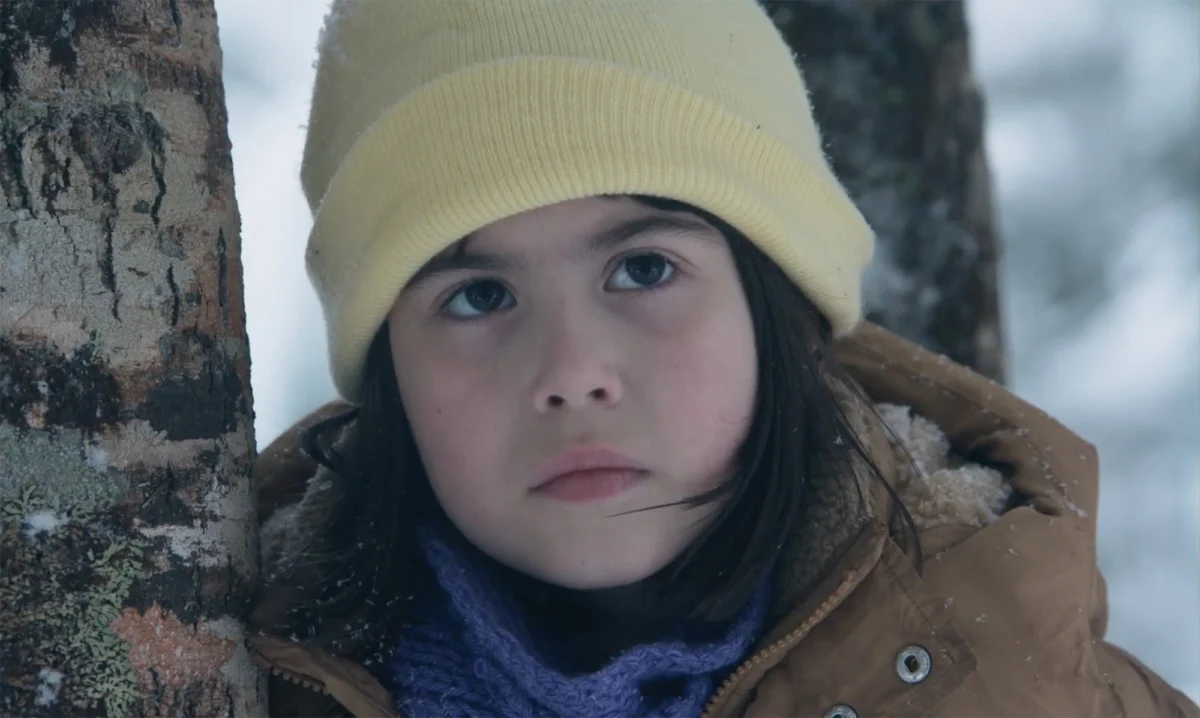
Set in the year 1992, the narrative of The Meltdown unfolds during a pivotal moment in Chilean history, as the nation grappled with the early years of its transition to democracy following the end of Augusto Pinochet’s military dictatorship. The story centers on nine-year-old Inés, portrayed by Maya O’Rourke, who is staying at her grandparents’ secluded hotel located near a remote Andean ski resort. The isolation of the mountain setting serves as the backdrop for a burgeoning friendship between Inés and Hanna, a teenage German skier played by Saskia Rosendahl. The plot takes a sharp, Hitchcockian turn when Hanna vanishes without a trace, prompting an investigation that serves as a catalyst for unearthing long-buried secrets and institutional silences inherent in the post-dictatorship era.
Directorial Vision and Stylistic Continuity
Manuela Martelli has established herself as a significant voice in contemporary Latin American cinema, transitioning from a successful acting career to a focused and deliberate directorial path. Her first feature, Chile ’76 (released as 1976 in some territories), earned widespread critical acclaim for its taut, claustrophobic depiction of a woman’s quiet rebellion during the height of military rule. That film premiered at the Cannes Directors’ Fortnight in 2022 and later received a Goya Award nomination for Best European Film, signaling Martelli’s ability to blend genre elements with profound historical commentary.

With The Meltdown, Martelli appears to be refining her signature style, which critics often describe as a blend of psychological thriller and political allegory. The use of a child protagonist in Inés allows the film to explore the concept of "post-memory"—the relationship that the "generation after" bears to the personal, collective, and cultural trauma of those who came before. By setting the film in 1992, Martelli captures a country in a state of literal and metaphorical "thaw," where the frozen remnants of the past begin to melt, revealing truths that many would prefer to remain hidden.
Cast and Production Background
The film features a diverse international cast, reflecting the co-production efforts behind the project. Saskia Rosendahl, known for her breakout role in Cate Shortland’s Lore and her work in Never Look Away, brings a European perspective to the Chilean landscape as the missing skier, Hanna. Joining her are Maya O’Rourke, Maia Rae Domagala, and Jakub Gierszal. The presence of Gierszal, a prominent Polish actor, further emphasizes the film’s international scope and the interconnectedness of the characters within the remote mountain setting.
The production is a collaborative effort involving several prominent production houses, including Ronda Cine, Cinema Inutile, and Wood Producciones. The latter is headed by Andrés Wood, one of Chile’s most influential filmmakers, known for Machuca and Violeta Went to Heaven. Wood’s involvement as a producer alongside Alejandra Garcia and Alex C. Lo underscores the industry’s confidence in Martelli’s sophomore effort. The cinematography and production design, as hinted at in the teaser, utilize the stark, imposing beauty of the Andes to create a sense of unease and grandeur, mirroring the "meltdown" referenced in the title.
Historical and Political Context: Chile in 1992
To understand the stakes of The Meltdown, one must consider the historical reality of Chile in 1992. Two years prior, Patricio Aylwin had been sworn in as the first democratically elected president after 17 years of military rule. However, the transition was far from complete; Pinochet remained the Commander-in-Chief of the Army until 1998, and the "Boricua" laws and institutional frameworks of the dictatorship remained largely intact.

This period was characterized by a delicate "policy of the possible," where the government sought to uncover human rights abuses while maintaining a fragile peace with the military. In this context, a "missing person" mystery carries immense weight. The disappearance of a foreign national in a remote area would not only trigger a local investigation but would inevitably collide with the remnants of the old regime’s surveillance culture and the pervasive atmosphere of secrecy. The "meltdown" of the title likely refers to the "Deshielo"—the period where the ice of the dictatorship began to break, often in violent or unpredictable ways.
Chronology of Development and Release
The path of The Meltdown from conception to the Cannes 2026 lineup follows a trajectory of steady growth and international interest:
- 2023–2024: Following the success of Chile ’76, Martelli began developing the script for The Meltdown, securing co-production deals between Chile, France, and other European partners.
- Late 2024 – Early 2025: Principal photography took place on location in the Chilean Andes, utilizing the natural seasonal changes to capture the transition from winter to spring, central to the film’s metaphorical "thaw."
- Late 2025: Post-production was completed in Paris and Santiago, with Les Films du Losange acquiring international sales rights.
- April 10, 2026: The first look teaser trailer was officially released via YouTube and major film trade outlets, generating immediate buzz within the cinephile community.
- May 2026: The film is scheduled to premiere at the Cannes Film Festival in the Un Certain Regard section, a category dedicated to films with unique perspectives and non-traditional storytelling.
Industry Implications and Critical Anticipation
The selection of The Meltdown for Un Certain Regard places Martelli among a prestigious group of filmmakers. The 2026 Cannes lineup is reportedly highly competitive, featuring new works from directors such as Ryusuke Hamaguchi, Na Hong-jin, and Quentin Dupieux. Martelli’s inclusion highlights the continued strength of Chilean cinema on the global stage, a trend that has seen directors like Pablo Larraín and Sebastián Lelio achieve significant Academy Award success.
Industry analysts suggest that The Meltdown could be a major contender for the Un Certain Regard Prize. The film’s blend of accessible mystery and deep intellectual themes makes it a prime candidate for both festival accolades and successful theatrical distribution in European and North American markets. Early reactions to the teaser have praised the film’s "icy" aesthetic and the haunting performance of Maya O’Rourke, whose perspective anchors the film’s more harrowing revelations.

Official Responses and Broader Impact
While official statements from the director have been kept brief to maintain the mystery of the film’s plot, Martelli has previously noted her interest in how history is perceived by those on the periphery of power. Inferred from the production’s notes, the film aims to challenge the "official" narratives of the Chilean transition by showing how the past persists in the landscape and the people.
The broader impact of The Meltdown lies in its contribution to the "cinema of memory." By framing the post-dictatorship struggle as a suspense thriller, Martelli engages a wider audience in a conversation about justice and the difficulty of reconciliation. The film suggests that the "melting" of a frozen past is a messy, dangerous process that can reveal beauty but also the skeletal remains of crimes long forgotten.
As the 2026 Cannes Film Festival approaches, The Meltdown stands as a testament to the power of regional storytelling with universal resonance. With no official general release dates set beyond the festival circuit, the international film community remains focused on the initial critical reception in May, which will likely dictate the film’s trajectory through the remainder of the 2026 awards season and its eventual arrival in global cinemas.