The Artistic Legacy of James Grashow
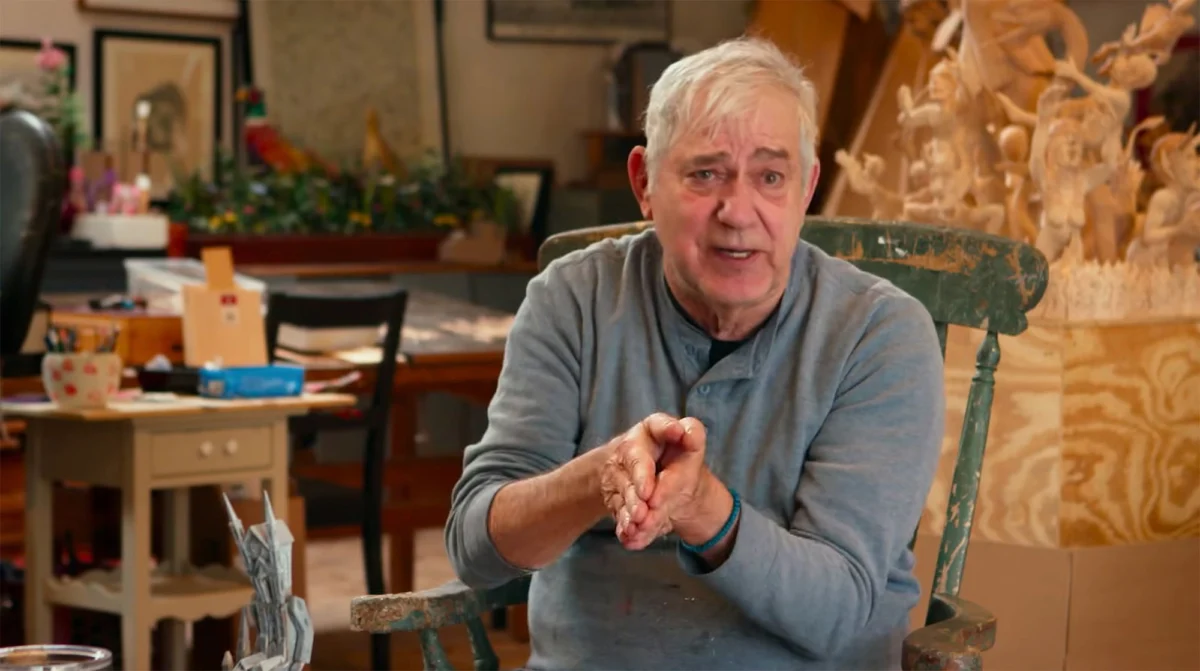
To understand the weight of Jimmy & The Demons, one must first examine the prolific six-decade career of its subject. James "Jimmy" Grashow has long been recognized as a polymath in the art world, known for his versatility across mediums ranging from intricate woodcuts to massive, fantastical sculptures made entirely of cardboard. His work has appeared on the covers of iconic albums and in the pages of prestigious publications such as Rolling Stone, Esquire, and The New York Times.
Grashow’s career is defined by a paradoxical relationship with his materials. While his woodcuts are permanent and traditional, his cardboard sculptures—most notably his 2012 project "The Corrugated Fountain"—were designed to be ephemeral. "The Corrugated Fountain" was a massive, Baroque-style installation that Grashow intentionally left outdoors to be destroyed by the elements, a poetic commentary on the transience of life and the inevitability of decay. This preoccupation with mortality serves as the foundational subtext for Jimmy & The Demons, as the artist, now in his late 70s, faces the most physically and emotionally demanding project of his life.
A Magnum Opus Born of Contradiction
The central narrative of the documentary follows Grashow as he accepts a high-stakes commission from an art collector whose deep religious faith stands in stark contrast to Grashow’s own secular and often irreverent worldview. The project—a monumental wood sculpture of Jesus carrying a cathedral on his back, besieged by demons at his feet—becomes the lens through which the film explores Grashow’s inner psyche.
Spanning four years of production, the film documents the grueling physical labor required of the 79-year-old artist. Woodworking at this scale is a violent and demanding craft, requiring the manipulation of heavy timber and the precision of fine carving. As the sculpture takes shape, it becomes clear that the "demons" Grashow is carving are not merely religious allegories, but manifestations of his own lifelong anxieties and his looming fear of death. The film captures the irony of an artist spending his final years of peak physical capability creating a permanent monument to the very burdens he has spent a lifetime trying to outrun.
The Vision of Director Cindy Meehl
The documentary is helmed by Cindy Meehl, a director known for her ability to capture the profound bond between humans and their passions. Meehl rose to prominence with the 2011 documentary Buck, which profiled "horse whisperer" Buck Brannaman and won the Audience Award at the Sundance Film Festival. She followed this success with The Dog Doc, further cementing her reputation for sensitive, character-driven storytelling.

In Jimmy & The Demons, Meehl shifts her focus from the animal world to the internal world of human creativity. Her directorial style in this project is described as a "magical journey," blending fly-on-the-wall observational footage with a retrospective of Grashow’s earlier works. By documenting the four-year creative process, Meehl provides a rare longitudinal look at how a single piece of art can consume and eventually transform its creator. The production was supported by producer Elizabeth Westrate, known for her work on documentaries that explore complex cultural and social themes.
Chronology of Production and Release
The timeline of Jimmy & The Demons reflects the slow, deliberate nature of its subject matter:
- 2021–2025: Principal photography takes place as James Grashow works on the Jesus and the Cathedral commission. The filming tracks the physical decline and creative resurgence of the artist over this four-year period.
- June 2025: The film makes its world premiere at the Tribeca Film Festival in New York City. It is met with critical acclaim for its cinematography and its unflinching look at the toll of the artistic process.
- Late 2025: Cedar Creek Productions secures distribution rights for a domestic theatrical rollout and begins a festival circuit run to build word-of-mouth momentum.
- March 30, 2026: The official trailer is released to the public, offering the first look at the finished sculpture and the emotional arc of the film.
- April 3, 2026: The film begins its limited theatrical engagement in select US cities, with a focus on art-house cinemas and cultural hubs.
Analysis of Themes: Art, Aging, and Mortality
Jimmy & The Demons functions as more than a simple biography; it is a meditation on the "third act" of a creative life. According to data from the National Endowment for the Arts, older artists often face significant challenges regarding physical stamina and market visibility, yet they also possess a "late-style" depth that younger artists have yet to acquire. Grashow’s willingness to sacrifice his health for his work—as noted in the film’s synopsis—highlights the obsessive nature of high-level artistry.
The documentary also explores the supportive structures that allow such genius to flourish. The film features interviews and interactions with Grashow’s family and his local community, illustrating that while the act of carving is solitary, the life of the artist is sustained by a network of care. This communal aspect provides a necessary counterpoint to the "dark side" and the "demons" that Grashow grapples with in his studio.
The choice of wood as the primary medium for this final project is significant. Unlike the cardboard of his earlier years, wood is enduring. For an artist haunted by the fear of mortality since childhood, the transition from the ephemeral to the permanent suggests a final attempt at legacy-building. The sculpture, which the film suggests becomes a "self-portrait," represents the weight of history, talent, and anxiety that every individual carries.
Industry Implications and Expected Impact
The release of Jimmy & The Demons comes at a time when biographical documentaries are seeing a resurgence in the independent film market. Following the success of films like The Woodmans and Finding Vivian Maier, there is a proven audience for stories that deconstruct the "tortured artist" trope while celebrating the technical mastery of traditional crafts.

Industry analysts suggest that Jimmy & The Demons will likely perform well in urban markets with high concentrations of art enthusiasts and practitioners. The film’s focus on the physical process of woodworking also makes it a candidate for educational screenings at fine arts institutions and craft guilds. Furthermore, Cindy Meehl’s involvement brings a level of prestige that may position the film for consideration during the 2026 awards season.
The documentary also serves a preservationist function. By capturing Grashow’s process in high definition, Meehl has created a permanent record of a master craftsman’s technique—a technique that is increasingly rare in a digital age. As the trailer poses the question, "What do you say after you’ve said everything you can say?", the film suggests that for an artist like Grashow, the answer is not found in words, but in the relentless, physical act of creation.
Official Release and Accessibility
Jimmy & The Demons will open in select theaters on April 3, 2026. Cedar Creek Productions has indicated that the theatrical run will be followed by a digital release on major streaming platforms later in the year, ensuring that Grashow’s story reaches a global audience. For those interested in the technical aspects of Grashow’s work, the film’s official website provides additional resources, including a retrospective gallery of his woodcuts and cardboard installations.
As the art world continues to grapple with the role of the physical object in an increasingly virtual society, Jimmy & The Demons stands as a powerful testament to the enduring power of the handmade. It is a story of a man who, at the age of 79, chose not to settle into a quiet retirement, but to pick up his tools and face his demons one last time, carving a masterpiece out of the very fears that once haunted him.