The unwritten rule that Nintendo characters remain confined to their own distinct universes, a principle once articulated by legendary game designer Shigeru Miyamoto, appears to be officially dissolving. Fox McCloud, the iconic anthropomorphic pilot from the Star Fox franchise, has made a significant leap, transcending his established intergalactic domain to appear in a context strongly suggesting a broader Nintendo cinematic universe. This development coincides with the impending release of The Super Mario Galaxy Movie, further fueling speculation about Nintendo’s evolving strategy for its beloved intellectual properties.
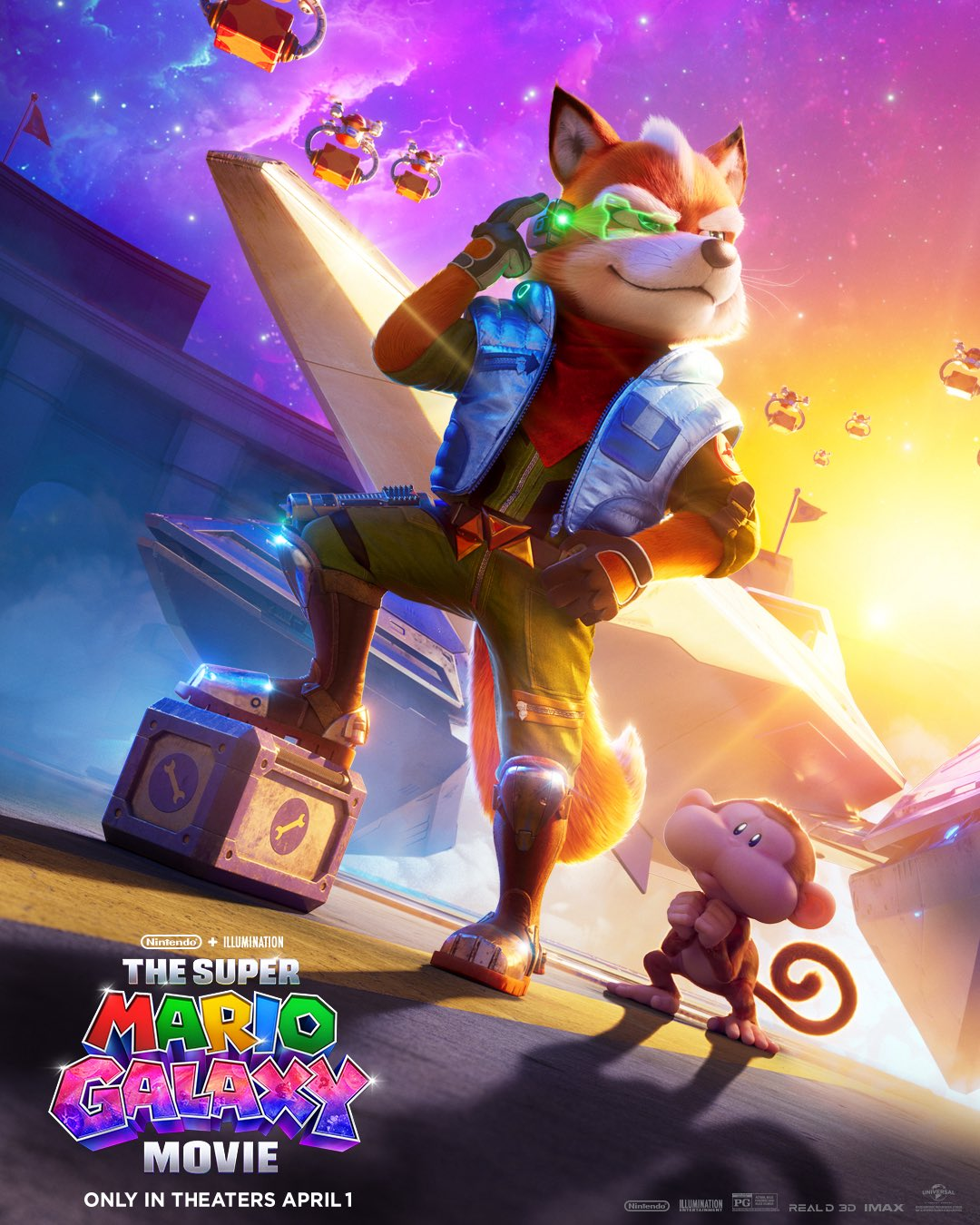
The revelation of Fox McCloud’s crossover came with the unveiling of a new promotional poster. This poster, which also features a monkey character from the Mario universe, signifies a departure from Nintendo’s traditionally segmented approach to character appearances. While Miyamoto’s earlier statements, made approximately a year prior to this announcement, emphasized the distinct nature of Nintendo’s character worlds, citing Pikmin as a notable exception capable of traversing various environments, the inclusion of Fox McCloud in a Mario-centric visual context marks a concrete shift. The specifics of Fox McCloud’s attire in the promotional material have generated considerable discussion among fans, though the immediate focus remains on the implications of this inter-franchise integration.
The Expanding Nintendo Multiverse
Fox McCloud, first introduced to players in the 1993 Super Nintendo Entertainment System (SNES) title Star Fox, has since become a cornerstone of Nintendo’s gaming pantheon. His adventures in space dogfights and planetary assaults have captivated audiences for decades. Many fans, however, first encountered the charismatic fox through Star Fox 64 (known as Lylat Wars in some regions), a critical and commercial success that further cemented his popularity.
Beyond his own series, Fox McCloud has been a consistent presence in the Super Smash Bros. franchise, appearing in every installment since the original Super Smash Bros. on the Nintendo 64. His inclusion in this crossover fighting game series, which itself features characters from disparate Nintendo titles, has long been a source of fan-driven speculation. The sustained presence of Fox McCloud within Super Smash Bros. has naturally led to discussions about a potential Super Smash Bros. film. However, official confirmation regarding such a project remains elusive.
The co-star of the new promotional poster, a monkey from the Mario universe, has also sparked conjecture. Given that similar simian characters have featured prominently in various Yoshi games, particularly the beloved Yoshi’s Island series, some fans, including this publication, are hoping for a standalone Yoshi’s Island cinematic project. This would offer a unique artistic direction and narrative focus, distinct from the established Mario framework.
A Star-Studded Voice Cast Assembled
While Nintendo has yet to officially announce the voice actor for Fox McCloud, the character is set to join an already impressive ensemble cast for The Super Mario Galaxy Movie. This star-studded lineup underscores the significant investment Nintendo is making in its cinematic ventures. The confirmed voice cast includes:
- Chris Pratt as Mario
- Anya Taylor-Joy as Princess Peach
- Charlie Day as Luigi
- Jack Black as Bowser
- Keegan-Michael Key as Toad
- Kevin Michael Richardson as Kamek
- Bennie Safdie as Bowser Jr.
- Brie Larson as Rosalina
- Donald Glover as Yoshi
The inclusion of such prominent Hollywood talent highlights Nintendo’s ambition to reach a global audience and leverage its intellectual property across multiple entertainment platforms. The successful translation of video game characters to the big screen has been a significant challenge in the past, but the caliber of talent involved in The Super Mario Galaxy Movie suggests a renewed effort to overcome these hurdles.

The Imminent Arrival of The Super Mario Galaxy Movie
Adding a layer of immediate relevance to these character discussions, The Super Mario Galaxy Movie is scheduled for release in theaters next week, on April 1st. This date, while potentially raising eyebrows as an April Fool’s joke, has been confirmed as the official premiere. The film’s release represents a significant milestone for Nintendo’s foray into feature-length animation.
The critical and commercial success of The Super Mario Galaxy Movie will undoubtedly serve as a crucial benchmark for future Nintendo cinematic projects. The film’s reception will likely influence the pacing and direction of further adaptations, including those that might feature characters like Fox McCloud in new, unexpected contexts.
Chronology of Nintendo’s Cinematic Ambitions
Nintendo’s journey into cinematic adaptations has been a gradual process, marked by periods of both dormancy and renewed activity.
- 1993: Super Mario Bros. Film: The first major attempt to bring a Nintendo property to the big screen was the live-action Super Mario Bros. movie. Despite featuring prominent actors like Bob Hoskins and John Leguizamo, the film was a critical and commercial failure, often cited as a cautionary tale for video game adaptations.
- 2001-2003: Pikmin Series: As Miyamoto noted, the Pikmin series has been an exception to the "unwritten rule," with its characters appearing in various Nintendo crossovers and even some direct-to-video animated shorts. This demonstrated an early willingness to explore inter-franchise interactions, albeit within Nintendo’s own ecosystem.
- 2015: Super Mario Maker and Captain Toad: Treasure Tracker: While not cinematic, the release of Super Mario Maker allowed players to create and share their own Mario-inspired levels, fostering a sense of creative expression within the existing universe. Captain Toad: Treasure Tracker further explored character-driven narratives in a more focused manner.
- 2017: The Super Mario Bros. Movie (Illumination Partnership Announced): Nintendo announced a partnership with Illumination, the animation studio behind Despicable Me and Minions, to produce animated films based on the Super Mario Bros. franchise. This marked a significant commitment to high-quality animated adaptations.
- 2019: The Legend of Zelda Animated Series Rumors: Persistent rumors circulated about a potential animated series for The Legend of Zelda, though no official confirmation or concrete developments have materialized.
- 2021: The Super Mario Bros. Movie Trailer and Cast Reveal: Nintendo and Illumination officially revealed the cast and released the first trailer for The Super Mario Bros. Movie, generating immense excitement and anticipation among fans worldwide.
- April 1, 2024: Release of The Super Mario Galaxy Movie: The highly anticipated animated feature film arrives in theaters, marking the culmination of years of planning and production.
- Ongoing Speculation: Fox McCloud and Beyond: The recent promotional material featuring Fox McCloud signifies a potential broadening of Nintendo’s cinematic universe, moving beyond individual franchises to explore cross-franchise narratives.
Implications for Nintendo’s IP Strategy
The integration of Fox McCloud into a Mario-centric visual representation, alongside the impending release of The Super Mario Galaxy Movie, signals a potentially significant evolution in Nintendo’s intellectual property management. For years, Nintendo has meticulously guarded its characters, often prioritizing cohesive in-game universes and maintaining a distinct brand identity for each franchise. This approach has ensured the integrity and unique appeal of titles like The Legend of Zelda, Metroid, and Animal Crossing.
However, the success of shared cinematic universes in Hollywood, exemplified by the Marvel Cinematic Universe (MCU) and the DC Extended Universe (DCEU), has undoubtedly influenced strategic thinking across the entertainment industry. By allowing characters from different franchises to interact, even in promotional material, Nintendo may be laying the groundwork for more ambitious crossover narratives in film. This could lead to exciting new storytelling opportunities, allowing beloved characters to engage in unexpected adventures and forge new alliances.
The move also suggests a desire to capitalize on the broader recognition of certain characters. While Mario is arguably Nintendo’s most globally recognized icon, characters like Fox McCloud, Link, and Samus Aran also possess significant fan bases. By strategically placing these characters in proximity, Nintendo could be aiming to boost the visibility and appeal of less universally known, yet still popular, franchises to a wider audience.
Furthermore, this integrated approach could streamline future production efforts. Instead of developing entirely separate cinematic universes for each major franchise, Nintendo might be exploring a more unified approach, allowing for greater synergy and potential for cross-promotion. The vocal talent assembled for The Super Mario Galaxy Movie indicates a commitment to high-quality production values, which could be replicated across future projects, regardless of the specific characters involved.
The inclusion of Fox McCloud in this context, even if currently limited to a promotional poster, is a strong indicator of Nintendo’s willingness to experiment. The success of The Super Mario Galaxy Movie will be a critical factor in determining the future trajectory of these inter-franchise cinematic endeavors. Should the film resonate with audiences, it could pave the way for a more interconnected Nintendo cinematic landscape, where characters from diverse gaming worlds finally have the chance to collide on the silver screen. The unwritten rule may be bending, if not entirely broken, ushering in a new era for Nintendo’s storytelling beyond the confines of their consoles.