A seminal figure in comic book history, Frank Miller, is set to contribute his first-ever official artwork to the Teenage Mutant Ninja Turtles franchise, providing a variant cover for the monumental 300th issue published by IDW. This collaboration represents a full-circle moment for the beloved anthropomorphic heroes, whose very genesis was deeply influenced by Miller’s groundbreaking work on Marvel Comics’ Daredevil in the early 1980s. The announcement has sent ripples of excitement through the comic book community, recognizing the profound historical significance of this artistic confluence.
A Legacy Forged in Homage: The Deep Roots of TMNT
The narrative of the Teenage Mutant Ninja Turtles is inextricably linked to the influential work of Frank Miller. In the early 1980s, creators Kevin Eastman and Peter Laird, then burgeoning talents in their twenties, conceived of the Turtles as a direct, albeit satirical, homage to Miller’s critically acclaimed run on Daredevil. Miller, who redefined the character of Matt Murdock from 1979 to 1983, particularly during his tenure as writer and artist from issue #168, injected a gritty, street-level realism and a profound exploration of martial arts into the superhero genre. His Daredevil saga introduced elements that would become cornerstones of the TMNT universe: a hero imbued with extraordinary abilities following exposure to radioactive materials, the tutelage of a blind martial arts master (Stick), and a formidable ninja adversary clan known as The Hand.
Eastman and Laird, recognizing the creative fertile ground laid by Miller, meticulously borrowed and recontextualized these narrative pillars. Their four turtle protagonists, Leonardo, Donatello, Michelangelo, and Raphael, gained anthropomorphic intelligence and formidable combat skills after being exposed to radioactive ooze. They were mentored by a rat sensei named Splinter, and their primary antagonists became The Foot Clan—a thinly veiled, yet affectionately crafted, parallel to Miller’s Hand. The original Teenage Mutant Ninja Turtles #1, self-published in 1984 by Eastman and Laird’s Mirage Studios, was a raw, black-and-white independent comic that quickly garnered a cult following, laying the foundation for one of the most successful media franchises in history. This direct lineage makes Miller’s eventual contribution to a TMNT cover not just a creative collaboration, but a profound acknowledgement of artistic inspiration and legacy.
Frank Miller: A Titan of the Industry
Beyond his foundational influence on the Turtles, Frank Miller’s career is marked by a series of revolutionary works that reshaped the comic book medium. His Daredevil run, which concluded in 1983, is often credited with ushering in a new era of mature, character-driven superhero storytelling. He subsequently cemented his legendary status with The Dark Knight Returns (1986), a four-issue miniseries for DC Comics that deconstructed the myth of Batman, presenting an older, grittier Caped Crusader in a dystopian future. This work, alongside Alan Moore’s Watchmen, profoundly influenced the tone and thematic complexity of superhero comics for decades, demonstrating the potential for the medium to tackle serious, adult themes.

Miller’s other notable contributions include Batman: Year One (1987), a definitive origin story for the Dark Knight, and the neo-noir crime series Sin City, which began in 1991 under Dark Horse Comics. Sin City was celebrated for its stark, high-contrast black-and-white artwork and unflinching portrayal of a brutal, stylized urban landscape. His distinctive artistic style, characterized by dynamic compositions, dramatic chiaroscuro, and a powerful sense of kinetic energy, became instantly recognizable and widely imitated. Miller’s oeuvre consistently pushed boundaries, both narratively and artistically, earning him a reputation as one of the most important and influential creators in the history of sequential art. The opportunity to witness his unique style applied to the Teenage Mutant Ninja Turtles for the very first time represents a significant cultural event for comic enthusiasts.
The Genesis and Evolution of the Teenage Mutant Ninja Turtles in Print
The journey to Teenage Mutant Ninja Turtles #300 is a testament to the enduring appeal and remarkable adaptability of the franchise. What began as a one-shot parody published by Mirage Studios in 1984 quickly blossomed into an independent comic phenomenon. The initial success of TMNT #1 led to subsequent issues, expanding the lore and introducing iconic characters like Casey Jones and Shredder. Mirage Studios maintained publication of the core TMNT series for decades, establishing a distinct, often darker, continuity that contrasted with the more child-friendly adaptations that soon followed.
The franchise’s meteoric rise truly began with the 1987 animated television series and the subsequent explosion of toys from Playmates Toys. This era introduced the Turtles to a global audience, transforming them from niche indie comic characters into pop culture icons. Concurrent with the animated series, Archie Comics launched Teenage Mutant Ninja Turtles Adventures in 1988, which ran for 75 issues and explored its own unique storylines. In the mid-1990s, Image Comics briefly took over the publication, offering a grittier, more mature take on the Turtles, including significant changes to their designs and backstories. After a hiatus, Mirage Studios briefly revived the series in the early 2000s, followed by Dreamwave Productions for a short run.
In 2011, IDW Publishing acquired the rights to the Teenage Mutant Ninja Turtles comic book license, embarking on a comprehensive and critically acclaimed reboot of the franchise. Under IDW’s stewardship, the Turtles have enjoyed a sustained period of creative renaissance, with a continuity that cleverly integrates elements from various eras while forging new paths. The calculation of "300 issues" for this landmark publication reflects an aggregate count across these myriad publishers and iterations, honoring the collective publishing history of the Teenage Mutant Ninja Turtles since their inception in 1984. This broad tally underscores the franchise’s remarkable longevity and continuous presence in the comic book landscape for over four decades, a feat rarely achieved by independent properties.
Teenage Mutant Ninja Turtles #300: A Collector’s Dream
Scheduled to hit shelves on July 22, Teenage Mutant Ninja Turtles #300 is poised to be a major event for collectors and fans alike. The issue is designed as a comprehensive celebration of the Turtles’ legacy, featuring an array of prestigious creators and multiple collectible covers. Frank Miller’s variant cover is undoubtedly the headline attraction, offering his distinctive vision of the Ninja Turtles for the first time. The released images, showcasing both inked and colored versions, reveal a dynamic, powerful interpretation, hinting at the raw energy and dramatic flair characteristic of Miller’s work. His statement regarding the cover, "It was fun to jump into the playground with the Ninjas for this cover and reminisce that they were born by Peter and Kevin as homage to my Daredevil run. This one is for the fans," perfectly encapsulates the spirit of this historic collaboration – a nod to the past, delivered for the passionate readership.

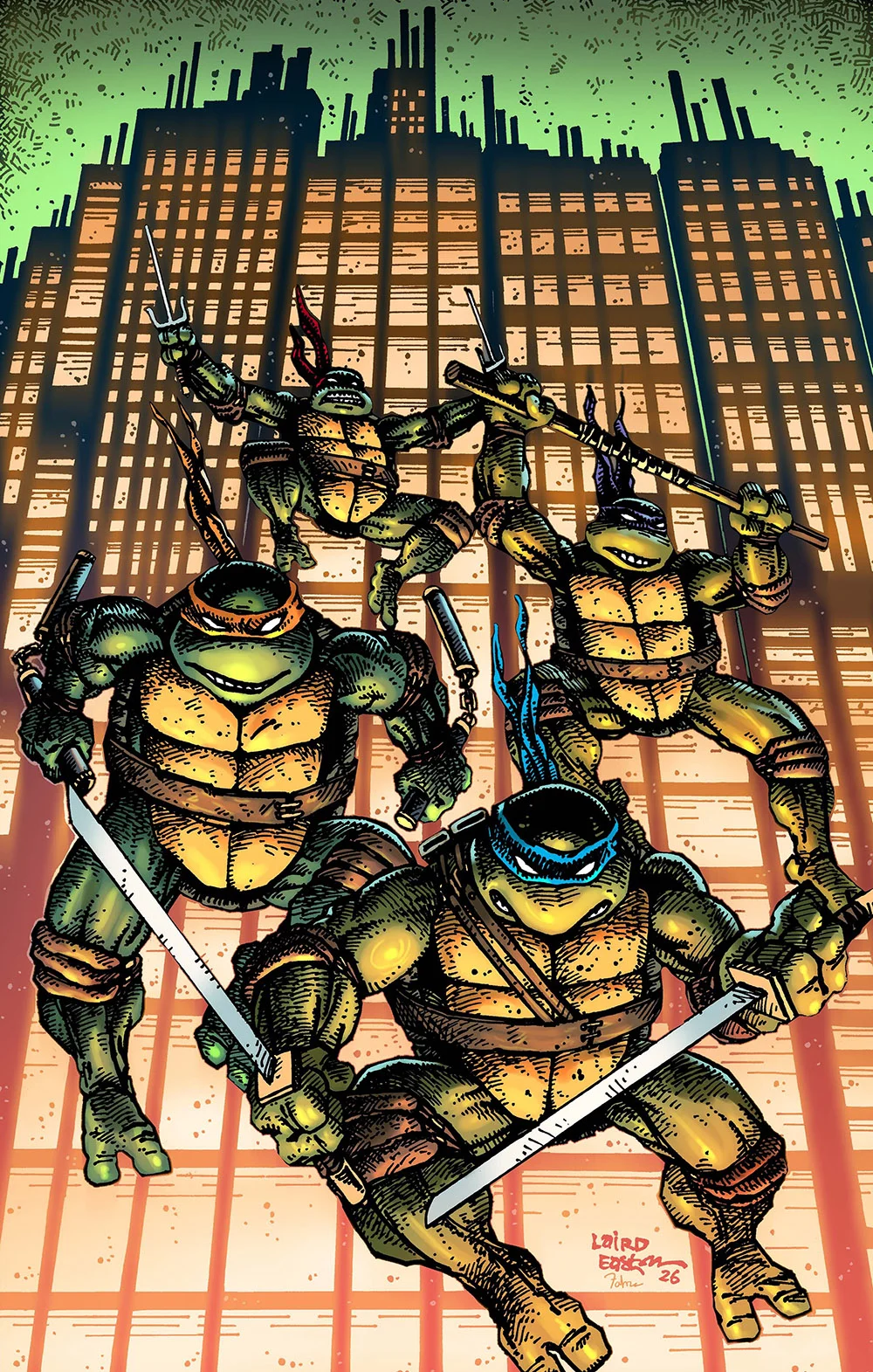
Adding to the issue’s immense appeal is a never-before-seen cover by the original co-creators, Kevin Eastman and Peter Laird. This exclusive artwork represents a rare reunion of the duo’s creative talents on a TMNT cover, providing an invaluable piece of franchise history. Eastman and Laird’s return to the drawing board for such a significant milestone further elevates the issue’s status as a must-have item.
Beyond these marquee contributions, TMNT #300 boasts an impressive lineup of variant covers from other celebrated artists, including J. Scott Campbell and Juan Ferreyra. Campbell is renowned for his dynamic, often pin-up inspired artwork, celebrated for its clean lines and vibrant energy. Ferreyra, known for his expressive, painted art style and atmospheric compositions, promises another distinct visual interpretation of the Turtles. IDW is also implementing a "blind bag" strategy for some of these variant covers, a tactic often employed in the comic industry to create excitement and drive sales by offering randomized covers, encouraging collectors to purchase multiple copies in pursuit of specific rarities. This approach, combined with the star power of the contributing artists, all but guarantees that TMNT #300 will be one of the top-selling independent comic issues of the year.
Inside the Landmark Issue: Story and Substance
Beyond the dazzling array of covers, Teenage Mutant Ninja Turtles #300 is packed with substantial new content. The main narrative will kick off a brand-new storyline helmed by the acclaimed creative team of Gene Luen Yang and Freddie E. Williams II. Gene Luen Yang is an Eisner Award-winning writer, celebrated for his diverse body of work including American Born Chinese, Boxers & Saints, and his impactful run on Superman Smashes the Klan. His ability to weave compelling, character-driven narratives with profound thematic depth promises an exciting new direction for the Turtles. Freddie E. Williams II, known for his dynamic and action-packed art style, particularly his work on various Batman/TMNT crossover series, is a perfect fit to bring Yang’s vision to life, ensuring the interior artwork matches the high standard set by the covers.
Additionally, the issue will feature a special back-up story crafted to celebrate the many eras of TMNT. This segment will bring together veteran TMNT writer Tom Waltz, who has been instrumental in shaping IDW’s successful run, alongside Kevin Eastman and other fan-favorite creators. This multi-generational creative effort aims to honor the rich tapestry of the Turtles’ history, from their gritty indie origins to their global pop culture dominance, providing a nostalgic journey for long-time fans while also setting the stage for future adventures.
Statements and Industry Buzz
Ryan Balkam, IDW’s Director of Sales, articulated the company’s enthusiasm for the milestone issue: “As a lifelong Ninja Turtles fan, it’s awesome to be able to celebrate the landmark 300th issue of TMNT and we’re going all-out to celebrate. From a blind bag with an amazing artist lineup to Frank Miller’s first-ever TMNT drawing and a never-before-seen piece by Kevin and Peter, TMNT No. 300 will be the ultimate reading and collecting experience for TMNT fans this year.” This statement underscores IDW’s commitment to making this issue a truly unforgettable event, catering to both casual readers and dedicated collectors.

The industry response has been overwhelmingly positive. The confluence of such significant figures – Miller, Eastman, and Laird – on a single issue of a property with such a storied history is a rare occurrence. It highlights the enduring power of these characters and the creators who shaped them. The announcement has generated considerable buzz across social media and comic news outlets, driving anticipation for the July release and affirming the Teenage Mutant Ninja Turtles‘ continued relevance in contemporary pop culture.
Coinciding Milestones: Miller’s Enduring Influence
The release of Teenage Mutant Ninja Turtles #300, featuring Frank Miller’s debut TMNT art, arrives amidst other significant milestones for the legendary creator. This year marks the 40th anniversary of The Dark Knight Returns, his seminal 1986 Batman tale that irrevocably altered the landscape of superhero comics. The enduring legacy of The Dark Knight Returns continues to be celebrated, with its themes and aesthetic influencing countless comic books, films, and television series. This simultaneous anniversary serves as a powerful reminder of Miller’s profound and lasting impact on the medium.
Furthermore, July will also see the release of Miller’s memoir, Push the Wall. This highly anticipated book promises to offer readers an intimate look into the mind and career of one of comics’ most enigmatic and influential figures. The memoir’s release alongside TMNT #300 and the Dark Knight Returns anniversary creates a concentrated period of celebration for Miller’s expansive contributions to sequential art, offering fans multiple avenues to engage with his artistic journey and legacy.
In sum, Teenage Mutant Ninja Turtles #300 is more than just another comic book issue; it is a historical landmark, a testament to creative inspiration, and a celebration of a franchise that has defied expectations for over four decades. Frank Miller’s participation is not merely a high-profile variant cover; it is the closing of a symbolic loop, a master artist acknowledging the profound impact his work had on a generation of creators and, by extension, on the cultural landscape itself. The issue promises to be a cherished item for fans and a significant moment in the ongoing narrative of comic book history.