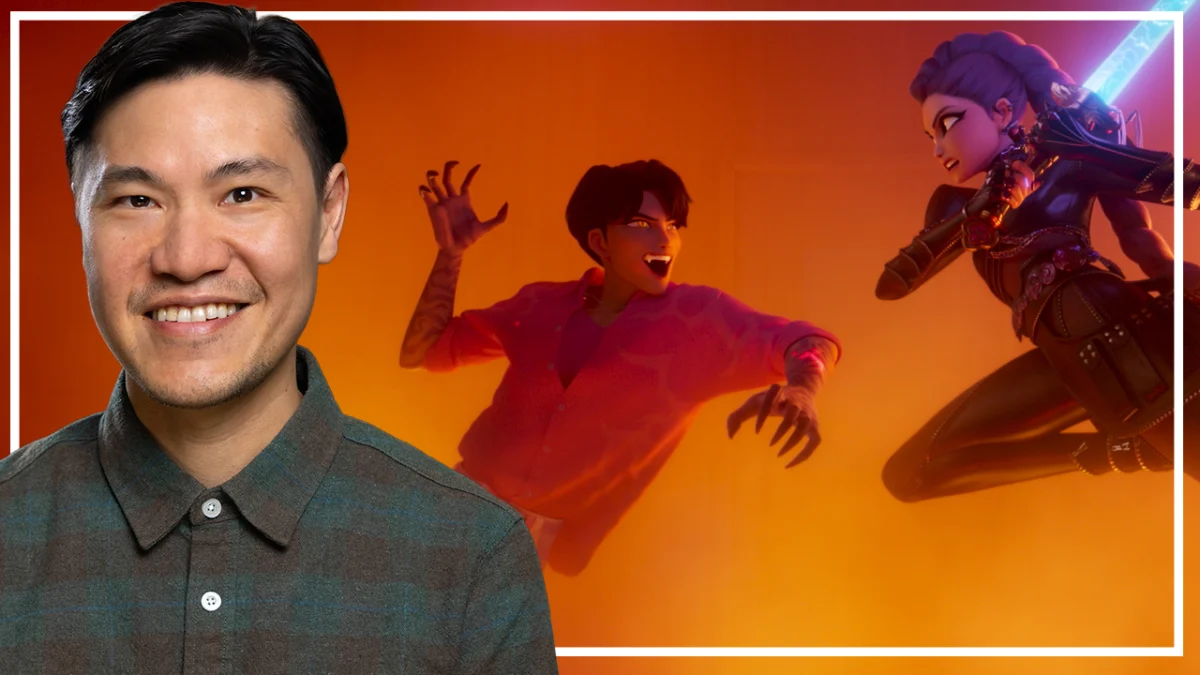
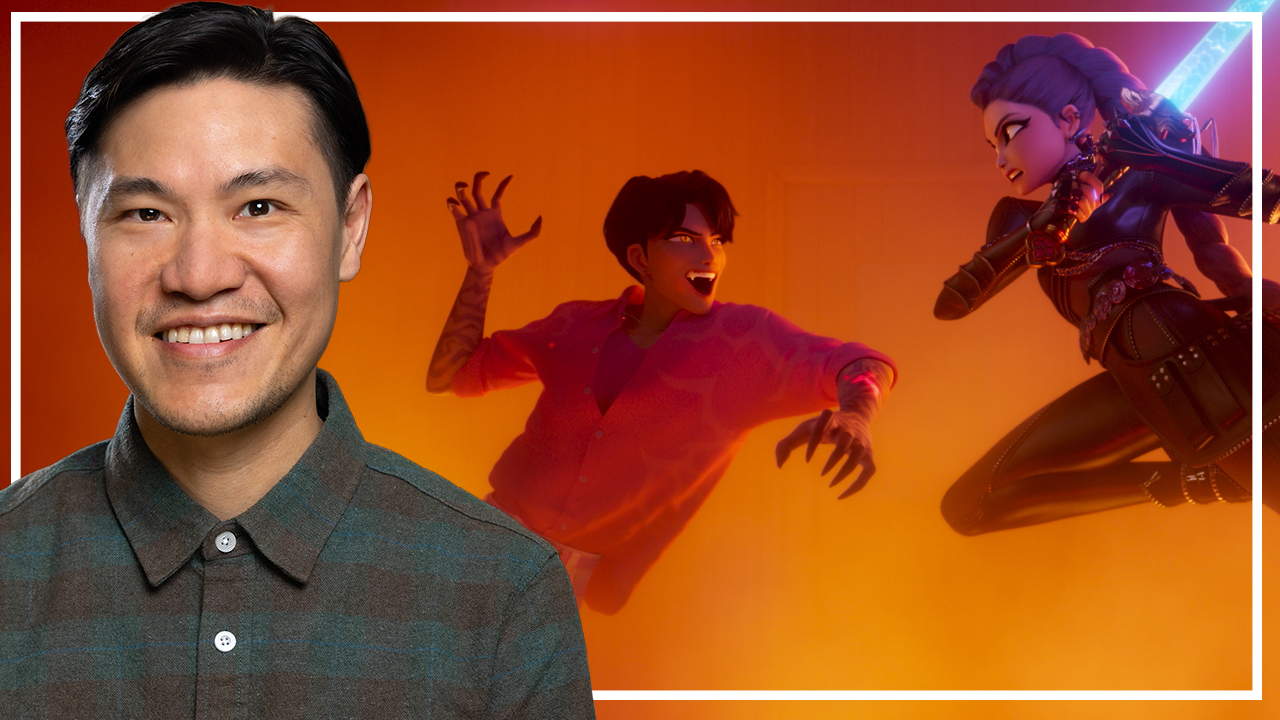
KPop Demon Hunters, the animated feature that captivated audiences worldwide and secured the Academy Award for Best Animated Picture, stands as a testament to audacious visual storytelling. At the heart of its multifaceted aesthetic is the work of cinematographer Gary H. Lee, whose expertise navigated the film’s ambitious blend of high-octane demon-slaying action, heartfelt K-Drama romance, and electrifying K-Pop stadium concerts. Lee’s innovative contributions were recognized with a nomination for Outstanding CG Cinematography at the prestigious Visual Effects Society (VES) Awards, a precursor to the film’s ultimate triumph at the Oscars.
Shortly after the film’s historic Academy Award win, Lee offered insights into his craft and the evolving role of a cinematographer in animation during an exclusive interview with What’s On Netflix. His career, deeply rooted in visual effects, includes pivotal roles as a previs artist on groundbreaking projects such as the Star Wars prequels, Ang Lee’s Life of Pi, and DreamWorks’ Kung Fu Panda. KPop Demon Hunters marks another significant milestone, showcasing his ability to translate diverse narrative tones into a cohesive and visually stunning cinematic experience.
The Vision Behind the Oscar Win: Blending Genres with Cinematic Flair
KPop Demon Hunters defied conventional genre boundaries, presenting a complex narrative tapestry that demanded a fluid and adaptable visual language. The film’s critical and commercial success—reportedly grossing over $450 million worldwide and lauded for its cultural authenticity and vibrant animation—is intrinsically linked to its bold cinematic choices. Lee’s approach ensured that each segment of the film, from the pulse-pounding action sequences to the tender romantic interludes, possessed a distinct yet harmonious visual identity.
"From the camera standpoint, once we do the rough layout blocking, determining the cinematography for how we’re going to shoot the film, a lot of it is based on what was in the storyboards," Lee explained, detailing the initial stages of his involvement. He emphasized the iterative process: "We would do our camera blocking as a rough layout stage, the animation takes over. They do their animations in those shots. Eventually, we’ll get to do our final camera on top of the final animation. Sometimes you do provide another touch that makes the camera feel tangible, stylistic to the theme of what we’re trying to do."
The film’s directors, Chris and Maggie Kang, alongside Chris Appelhans, reportedly praised Lee’s ability to grasp and enhance their ambitious vision. Sources close to the production indicated that Lee’s cinematic pitch for the project was instrumental in establishing a visual blueprint that could seamlessly transition between the film’s disparate elements. "Every different film has its own DNA. Our job is to make sure that the cinematic language reflects the content," Lee affirmed, highlighting the bespoke nature of his craft for KPop Demon Hunters.
A Cinematographer’s Evolving Role in Animation
Lee’s career trajectory underscores a significant shift in the animation industry. Traditionally, the role of a cinematographer in live-action film encompasses both camera operation and lighting design. However, in animation, this process has historically been fragmented across multiple departments due to technical limitations and the sequential nature of production. "In animation, cinematography tends to be broken down into camera and then lighting," Lee elaborated. "But in animation, the process is so detached because it’s divided up into so many different departments."
He outlined the traditional workflow: "We’ll set up the camera, we’ll do our blocking, and then animation can get started on those. Months down the line, when animation’s done, the lighting department will take over and start lighting it. That’s sometimes in collaboration with the production designer, doing color keys. Basically, at the end is when all of that comes together to get you the final pixel on the frame." This multi-stage process, while effective, often means a cinematographer’s direct influence on the final lighting is limited, relying instead on detailed communication and a shared artistic vision with the production design and lighting teams.
The Visual Effects Society’s recognition of "Outstanding CG Cinematography" is itself a testament to the growing acknowledgment of the specialized skill set required for camera work in computer-generated environments. As animation technology advances, particularly with real-time engines, the boundaries between these traditionally separate roles are beginning to blur, promising a more integrated and artistically controlled future for animation cinematographers.
Crafting Tangible Worlds: Cinematic DNA and Stylistic Choices
A core tenet of Lee’s approach to KPop Demon Hunters was to make the camera feel "tangible" despite the animated medium. This involved a deliberate selection of cinematic techniques tailored to each narrative thread. The film’s ambitious scope allowed for a vast palette of visual styles:
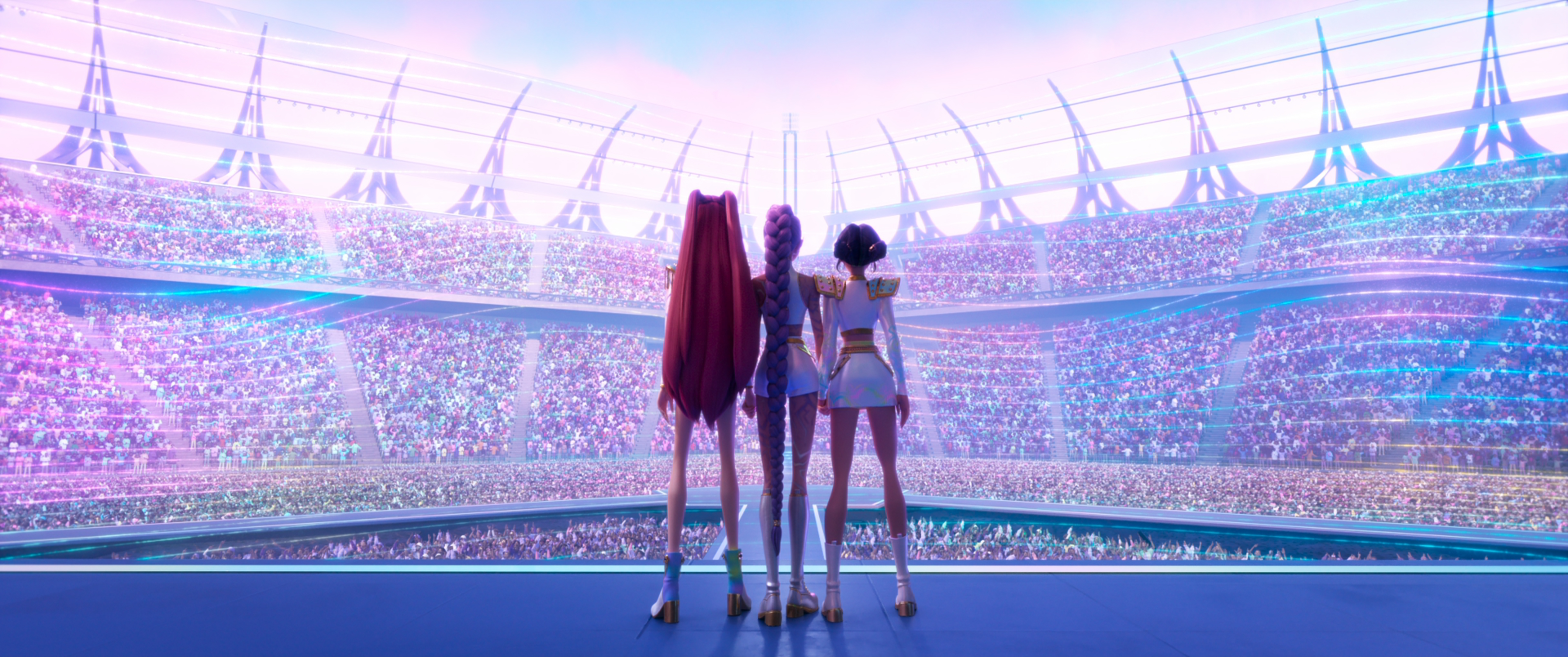
- Live Concert Events: Captured with dynamic camera movements and broad shots, evoking the energy and spectacle of a real K-Pop performance, often using long lenses but with everything in sharp focus to mimic broadcast quality. The global phenomenon of K-Pop, with its meticulously choreographed performances and massive stadium tours, provided a rich source of inspiration, requiring visuals that could convey both intimacy with the idols and the grandeur of their stage presence.
- Flashbacks to Ancient Times: Employing different color grading and camera movements to distinguish historical sequences from the contemporary setting, immersing viewers in a distinct past.
- K-Pop Music Video Sensibility: Characterized by "dynamic, well-choreographed camera style," reflecting the polished and often surreal aesthetics prevalent in modern K-Pop music videos, which are themselves highly cinematic productions.
- K-Drama Aesthetic: For the romantic scenes between characters like Ginu and Rumi, Lee adopted visual cues from popular Korean dramas. This included the use of long lenses to create a shallow depth of field, resulting in a pronounced bokeh effect that blurs backgrounds. This technique, often employed in K-Dramas due to production constraints, has become a distinctive visual language, highlighting character intimacy against softened surroundings. "K-dramas sometimes don’t have a lot of budget, so they will go to a location where they probably don’t have permits. Four people on the crew, two people [on camera] talking, and you blur everything behind them out. So, you have a really shallow depth of field, a really big bokeh, and that almost becomes a visual language on its own," Lee explained.
- Action Sequences: In stark contrast to the precise framing of other genres, the action scenes threw "every rule out the window." The focus shifted to dynamism and impact, prioritizing "punchy action with a choreographed sequence" over strict adherence to lens choices. This flexibility allowed for visceral, high-energy combat that kept audiences on the edge of their seats.
Influences and Artistic Homages: From Gritty Realism to Poetic Intimacy
The diverse visual demands of KPop Demon Hunters led Lee and the creative team to draw inspiration from an eclectic range of cinematic works. For the film’s intense bathhouse sequence, directors Chris and Maggie Kang cited David Cronenberg’s Eastern Promises as an early reference, a film known for its raw, visceral fight choreography and atmospheric setting. Lee added Park Chan-wook’s neo-noir masterpiece Oldboy to the list, further underscoring the team’s willingness to explore darker, more textured aesthetics.
"They were willing to go pretty raw, just on a visual level – not the content or anything like that," Lee clarified, emphasizing the visual texture and tone rather than narrative themes. The bathhouse scene, with its interplay of water, reflections, steam, and demonic presence, presented a complex lighting and compositional challenge. While color choices largely fell to production designers Helen Chen and David Bleich, Lee’s camera work aimed to capture the atmosphere.
Beyond the gritty realism, Lee also found inspiration in the poetic cinema of Wong Kar-wai for the more intimate moments. Describing scenes featuring Rumi and Ginu in locations like Bukchon, Lee recounted: "Whether Rumi and Ginu are under a street lamp in an alleyway or on the rooftops of Bukchon’s historic buildings, we would set it up, take a step back, and go, ‘Wow, that looks like Wong Kar-wai.’" This influence speaks to the film’s nuanced approach to character interaction, where subtle gestures carry profound emotional weight.
Intimacy and Cultural Nuances on Screen
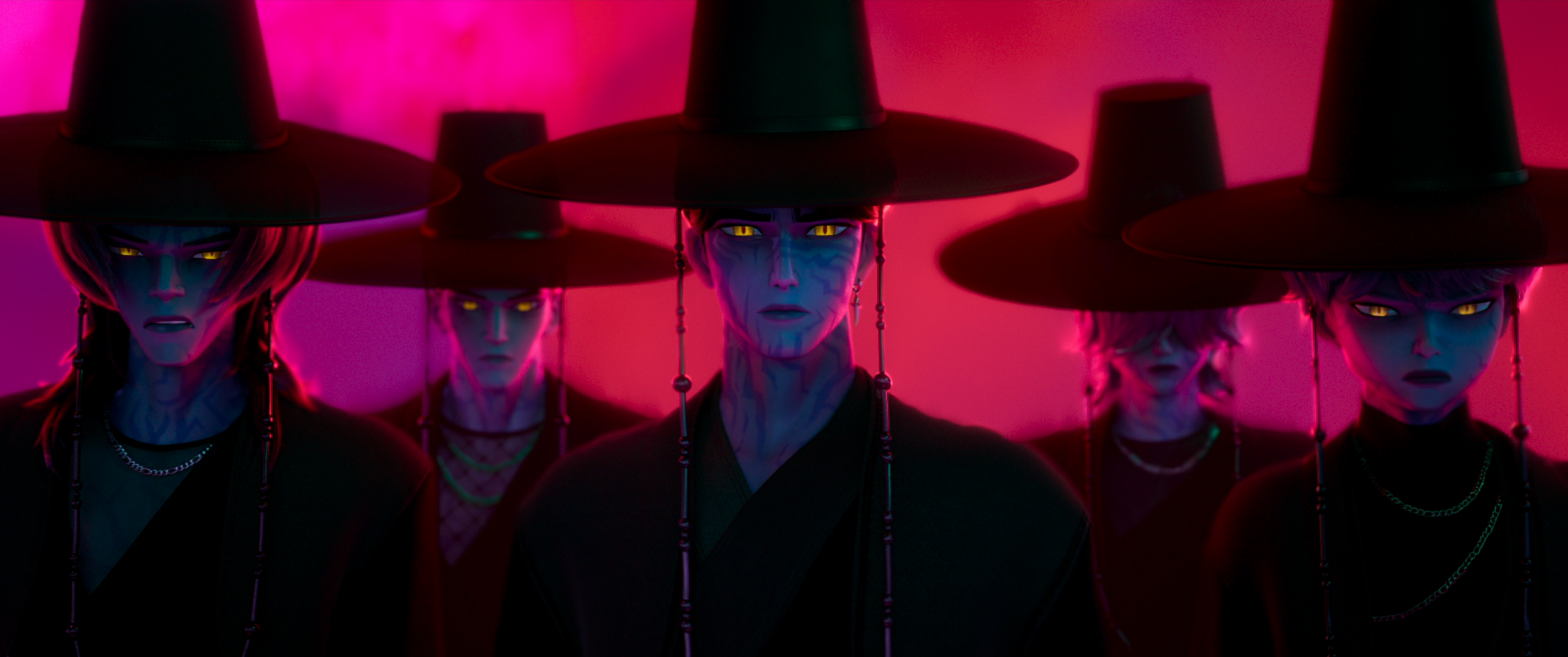
The subtle yet powerful emotional beats, a hallmark of K-Drama, were intentionally amplified through Lee’s cinematography. "You just hit it on the head because one thing we also noticed in K-dramas is they exaggerate the smallest interactions," Lee observed. Unlike Western dramas that often rush to a kiss, Asian dramas find significant meaning in a shared glance or the slightest touch of hands. "With Asian drama, even the slightest handshake or touching hands, it’s like, ‘Whoa, did they just do that?’ That’s fireworks. It’s crazy. We definitely are paying attention to those close-ups, making a huge meal out of something that felt very restrained. It speaks to the cultural aspect of connection."
A prime example of this meticulous attention to detail was a scene at a Korean restaurant where Rumi, Mira, and Zoe gather. "When Rumi was down and lost her voice when they were at the Korean restaurant, that scene took a very long time to shoot," Lee recalled. "It’s an intimate sequence, but you’re trying to capture how they want Rumi, Mira, and Zoe to feel differently at that table." The complexity arose from managing the environment – adjusting focus depth, eliminating distracting background elements like an overly bright fridge, and carefully composing shots to convey each character’s distinct personality through their posture and interaction. This deliberate pacing and emphasis on nuanced character expressions contributed significantly to the film’s emotional depth, a quality often praised by critics for elevating KPop Demon Hunters beyond a mere action-comedy.
Technological Frontiers: Unreal Engine and the Future of Animation Cinematography
The animation industry is on the cusp of a technological revolution, and Gary H. Lee is at the forefront of advocating for the cinematographer’s expanded role within it. While color decisions traditionally rest with production design, Lee sees a future where cinematography and production design collaborate more closely on lighting.
"Again, it’s all due to the fact that traditionally animation is such a separate process," Lee explained. However, the advent of real-time rendering engines like Unreal Engine is rapidly changing this paradigm. "Because of the Unreal Engine now, we can do real-time interactive lighting. I do see the future that the cinematographer on an animated film is starting to become a real cinematographer in the traditional sense, someone who’s in control of the camera and lighting." On KPop Demon Hunters, Lee’s role focused on "blocking cameras, lens choices, f-stops, all those things," but the horizon promises greater integration.
Lee’s excitement for this technological shift is palpable. He revealed his personal initiative to advocate for a dedicated "Cinematography in Animation" category at major awards ceremonies, including the Academy Awards. "Because ever since the very first Toy Story, 3D previs and layout cinematography have become a very pivotal part of animation," he argued. "It’s been three decades, and I think people are still thinking about animation cinematography as traditional layout, which is something that’s done in 2D."
With 3D animation, virtual cameras are manipulated with the same considerations as live-action cameras regarding movement, staging, and lens choices. The current limitation, Lee noted, is the temporal gap between camera work and lighting. "The light is still not a possible realm because lighting wouldn’t start until eight months later, so it’s a different department that takes care of that." Unreal Engine collapses this gap. "Now you can literally set up your shot and light your shot right there. It will get you 75–85% to what the intent of that shot is, then it becomes meaningful information to go down the pipe." This capability offers animation cinematographers unprecedented creative control and efficiency, paving the way for a more unified artistic vision.
A Legacy Forged in Previsualization: From Star Wars to KPop Demon Hunters
Lee’s journey into the forefront of animation cinematography began years ago, working on projects that laid the groundwork for today’s digital filmmaking landscape. His early career as a previs artist on the Star Wars prequels, particularly Episode II – Attack of the Clones, offered him a unique vantage point into the future of cinema.
"Oh my God, that’s a lot to unpack. I really felt that I was born in the right time, the right place," Lee reflected. During that era, the industry was actively seeking individuals who could create rudimentary, yet narrative-driven, visualizations. Lee recalled Francis Ford Coppola’s involvement, discussing the very term "previsualization" and its then-novel concept. "When I was at Lucasfilm, it was with a group of people on that film that really helped define the new generation of cinema. I’m talking about 10 to 12 people, and I feel extremely honored to be part of that. They all became industry giants." This group would go on to establish leading previs companies like The Third Floor and HALON Entertainment, and contribute to major franchises like the Marvel films.
George Lucas, Lee noted, was a relentless innovator, pushing the boundaries of filmmaking, particularly with the transition from film to digital cameras, a landmark achievement on Episode II. "It set so many milestones in a single picture," Lee stated, acknowledging Lucas’s visionary role in shaping modern digital production. This foundational experience equipped Lee with a deep understanding of virtual camera movement and spatial storytelling, skills that are now crucial for projects like KPop Demon Hunters.
The Broader Impact of ‘KPop Demon Hunters’
KPop Demon Hunters‘s Oscar win and critical acclaim have significant implications beyond its box office success. It serves as a powerful example of how animated features can embrace and elevate diverse cultural elements, particularly the global phenomenon of K-Pop and the nuanced storytelling of K-Drama. The film’s bold stylistic fusion, meticulously executed by talents like Gary H. Lee, demonstrates that animation is a boundless medium capable of sophisticated genre blending and emotional depth.
The film’s exploration of K-Pop’s visual language, from concert spectacles to music video aesthetics, resonates with a massive global audience. K-Pop’s estimated global market value, exceeding $10 billion annually, ensures a wide appeal for content that authentically represents its vibrant culture. By seamlessly integrating this with compelling action and heartfelt drama, KPop Demon Hunters set a new benchmark for cross-cultural animation.
Furthermore, Lee’s advocacy for a dedicated cinematography award in animation highlights a crucial ongoing evolution within the industry. As technology like Unreal Engine becomes more prevalent, enabling real-time lighting and camera control, the role of the animation cinematographer is poised to gain greater creative autonomy and recognition. KPop Demon Hunters, through its visual ambition and technical execution, has not only entertained millions but also pushed the boundaries of what animated cinema can achieve, solidifying its place as a defining animated movie of its era and a harbinger of future innovations in visual storytelling.