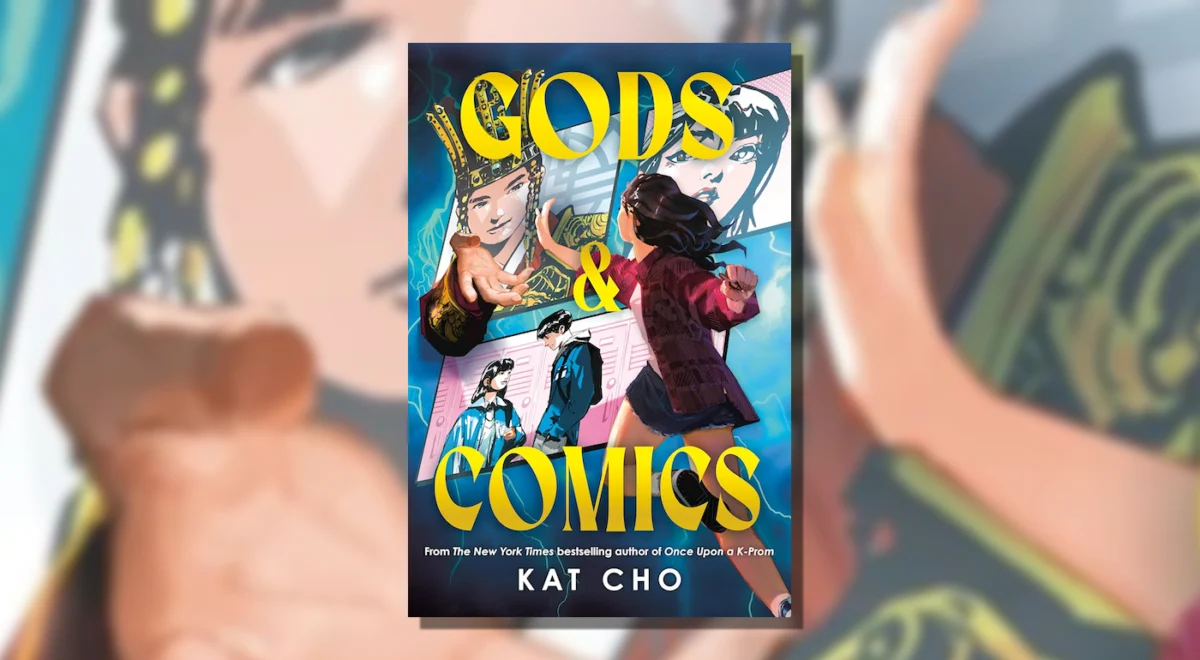
The literary world is abuzz with the impending release of Kat Cho’s latest young adult fantasy novel, Gods & Comics, set to launch on April 21st under the Nancy Paulsen Books imprint. This contemporary fantasy promises to weave ancient Korean mythology into the relatable struggles of modern adolescence, offering readers a unique blend of the mythical and the mundane. The narrative centers on seventeen-year-old Grace Bak, a driven junior class vice president whose meticulously planned future as a doctor is thrown into disarray by debilitating panic attacks and the recent loss of her grandmother, her sole emotional anchor.
A Young Heroine Grapples with Grief and the Unseen
Grace Bak’s life, once a carefully constructed edifice of academic achievement and future aspirations, begins to crumble under the immense pressure of her own expectations. The weight of wanting to emulate her physician parents has led to a growing struggle with anxiety, manifesting in panic attacks that have isolated her from her peers and even her long-time crush. This personal turmoil is amplified by the profound grief following the death of her grandmother, affectionately known as Halmeoni. Halmeoni was not just a grandparent but the vital connective tissue of Grace’s family, particularly after the premature loss of Grace’s mother to cancer when Grace was too young to form lasting memories.
In the wake of this profound second loss, Grace finds solace and an unexpected outlet in the creation of a webcomic. Drawing inspiration from the rich tapestry of Korean myths her grandmother once shared, Grace begins to serialize her digital creation. The story within the comic, titled Sun God, reimagines the legend of the Korean deities Haemosu and Yuhwa. However, Cho introduces a compelling twist: these powerful beings are trapped in the bodies of high school teenagers, burdened by the curse of navigating the bewildering landscape of modern education.
Viral Fame and Mythical Manifestations
What began as a personal coping mechanism quickly escalates beyond Grace’s wildest imaginings. Her webcomic, Sun God, achieves unexpected viral fame, amassing a substantial online following. This burgeoning fandom, however, has an unforeseen consequence: it inexplicably summons the actual Haemosu from the mythical realm into the mortal world. The narrative thrust then centers on Grace’s urgent mission to return the displaced god to his rightful place. Yet, as Grace finds herself drawn to Haemosu, the prospect of sending him home becomes increasingly difficult. The situation intensifies with the reappearance of Haemosu’s ancient adversary, also brought forth by the power of Grace’s comic, who harbors a malevolent agenda to destroy Haemosu and, alarmingly, to unleash a devastating disease upon humanity.
As an epic celestial conflict looms, Haemosu finds himself stripped of his divine powers. This leaves Grace in a precarious position, potentially tasked with confronting a vengeful deity hell-bent on retribution, a stark departure from her carefully planned, ordinary future.
A Glimpse into Grace’s World: An Excerpt
The novel’s excerpt offers an intimate look into Grace’s morning routine, highlighting the immediate pressures she faces. The scene opens with Grace anxiously monitoring the upload progress of her latest webcomic episode on her tablet. The narrative reveals her dedication to her strict posting schedule, a commitment that led her to spend an entire night refining the final panels, resulting in a stiff neck and the looming threat of tardiness.
"Come on, come on, just upload," Grace urges her tablet, her focus entirely on the progress bar. The excerpt details her meticulous work on the webcomic’s latest installment, which features her interpretation of the Korean sun god, Haemosu, and his beloved Yuhwa, depicted as teenagers grappling with the indignancy of high school. This relatable portrayal, combined with the inherent drama of divine beings in mortal predicaments, is identified as the likely catalyst for the comic’s viral success.
The narrative then shifts to a palpable sense of urgency as Grace realizes she is running late. She scrambles to get ready, grabbing the first clean shirt available from a basket of unfolded laundry. The scene is punctuated by the lingering echo of her grandmother’s voice, a comforting yet poignant reminder of her loss and her halmeoni’s constant presence in her life. The worn, rocking chair in the corner, a relic from her mother and a tangible link to her past, underscores the depth of Grace’s familial attachments and the enduring impact of grief.
Her hurried departure is further complicated by the discovery of her father’s forgotten wallet. A quick text message serves as a small act of care amidst her rush, a testament to her responsibilities. The oppressive Florida humidity and gathering storm clouds mirror the internal turbulence Grace is experiencing, foreshadowing further challenges.
A text message from her father, referencing "you guys" for dinner, triggers a wave of discomfort. The realization that it’s been less than six months since her grandmother’s passing makes this slip-up particularly jarring. Grace rationalizes her father’s oversight, attributing it to the immense stress of his work as an emergency medicine physician. Yet, the subtle reminder of her grandmother’s absence is a stark reality she must continually navigate.
Navigating the Labyrinth of Adolescence and Myth
The excerpt then transports Grace to her grandmother’s aging Volvo, a vehicle imbued with memories and a tangible connection to her past. The familiar grooves on the steering wheel, worn from her grandmother’s steady grip, offer a moment of grounding. Grace meticulously follows her driving-prep routine, a practice designed to soothe her nerves and ensure safety, particularly given her relatively new driver’s license and a past mishap with the garage door.

The drive to school is fraught with familiar anxieties: the incessant drizzle, a common occurrence in Central Florida, exacerbates her fear of hydroplaning and further delays her arrival. The school itself is described as a typical suburban institution, a series of brick and concrete structures reflecting the educational infrastructure boom of the early 2000s. The increasing student population, a recurring issue, is evident in the packed parking lot. Grace observes the privileged parking spot reserved for the junior class president, a symbol of a social hierarchy she once aspired to but lost.
Her arrival is met with further frustration as a black BMW aggressively steals a prime parking spot, narrowly missing her bumper. The ensuing confrontation with the driver, Chuck Wilson, highlights Grace’s aversion to conflict, despite her internal frustration. She is ultimately relegated to the overflow lot, a minor inconvenience that nonetheless adds to her already strained morning.
A text exchange with her best friend, Zoe, injects a moment of levity. Zoe’s dramatic pronouncements about the webcomic’s characters reveal the depth of their shared fandom and friendship. Grace’s dedication to her responsibilities, however, contrasts sharply with Zoe’s more relaxed approach, exemplified by the mention of a potential "mental health day."
A Fateful Encounter and the Unraveling of Reality
As Grace crosses the parking lot, engrossed in her webcomic app, she has a near-collision with a strikingly handsome stranger. His appearance is described with vivid detail: tanned skin, thick black hair, and eyes that hold an arresting beauty. His formal Korean greeting, "Nugu-shimnikka?"—a more formal address than Grace is accustomed to from her grandmother—puzzles her. The stranger’s question, "Finally, someone recognizes me," coupled with his expectant grin, suggests an underlying familiarity that Grace struggles to place. His attire, a navy blazer over a white button-down and khaki slacks, hints at a refined demeanor.
Grace’s bewilderment deepens as she tries to reconcile his unfamiliarity with a persistent sense of recognition. His description, a stark contrast to the limited number of Asian students at her school, only amplifies the mystery. The stranger’s sarcastic remark, "Yes, definitely new here," further confounds her.
Just as Grace is about to offer directions to the front office, a notification from Zoe’s text message flashes across her phone. However, the screen quickly reverts to the webcomic app, displaying the image of her main character, the sun god. In that instant, the vague sense of recognition crystallizes into an astonishing realization. The ethereal beauty of the boy before her, rendered more angular and three-dimensional than her drawings, is undeniably the spitting image of Haemosu.
The impossible truth dawns on her: the boy standing before her is Haemosu, materialized from her own creation. Her whispered exclamation of "Impossible" is met with an amused lift of his brow. As she tentatively reaches out, questioning his reality, the voice of her guidance counselor, Mrs. Brown, interrupts. The encounter is abruptly severed as Grace hurries to her appointment, glancing back only to find the mysterious boy has vanished.
Broader Implications and Anticipation
Gods & Comics enters the literary landscape at a time when the young adult fantasy genre continues to thrive, with readers increasingly seeking diverse narratives and culturally rich storytelling. Kat Cho’s novel taps into the enduring appeal of mythology, recontextualizing ancient tales for a contemporary audience. The integration of Korean folklore offers a unique contribution, potentially broadening the genre’s scope and introducing readers to a less explored pantheon.
The novel’s themes of mental health, grief, and self-discovery resonate deeply with the challenges faced by today’s teenagers. Grace’s journey from a driven, anxious student to a reluctant participant in a divine conflict underscores the idea that strength can emerge from unexpected places and that personal struggles can be a catalyst for extraordinary events.
The success of the webcomic as a plot device also reflects the pervasive influence of digital media and online communities in contemporary life. The concept of a fandom literally bringing characters to life is a compelling meta-narrative that speaks to the power of creative expression and the blurring lines between fiction and reality.
The narrative arc, as suggested by the excerpt, promises a thrilling blend of high-stakes action and poignant character development. The impending battle between gods, coupled with Haemosu’s weakened state and Grace’s burgeoning role as a protector, sets the stage for a captivating and emotionally charged story.
Looking Ahead
Gods & Comics is poised to be a significant release, offering a fresh perspective on familiar mythological tropes through the lens of a relatable teenage protagonist. Kat Cho’s ability to weave intricate plotlines with authentic emotional depth has garnered acclaim in her previous works, and this novel is anticipated to further solidify her position as a leading voice in young adult fantasy. The April 21st release date eagerly awaits readers eager to embark on Grace Bak’s extraordinary journey, where ancient myths collide with the everyday realities of high school, and the fate of humanity may rest in the hands of a young artist and a god without his powers.
Excerpted from Gods & Comics, copyright © 2026 by Kat Cho.