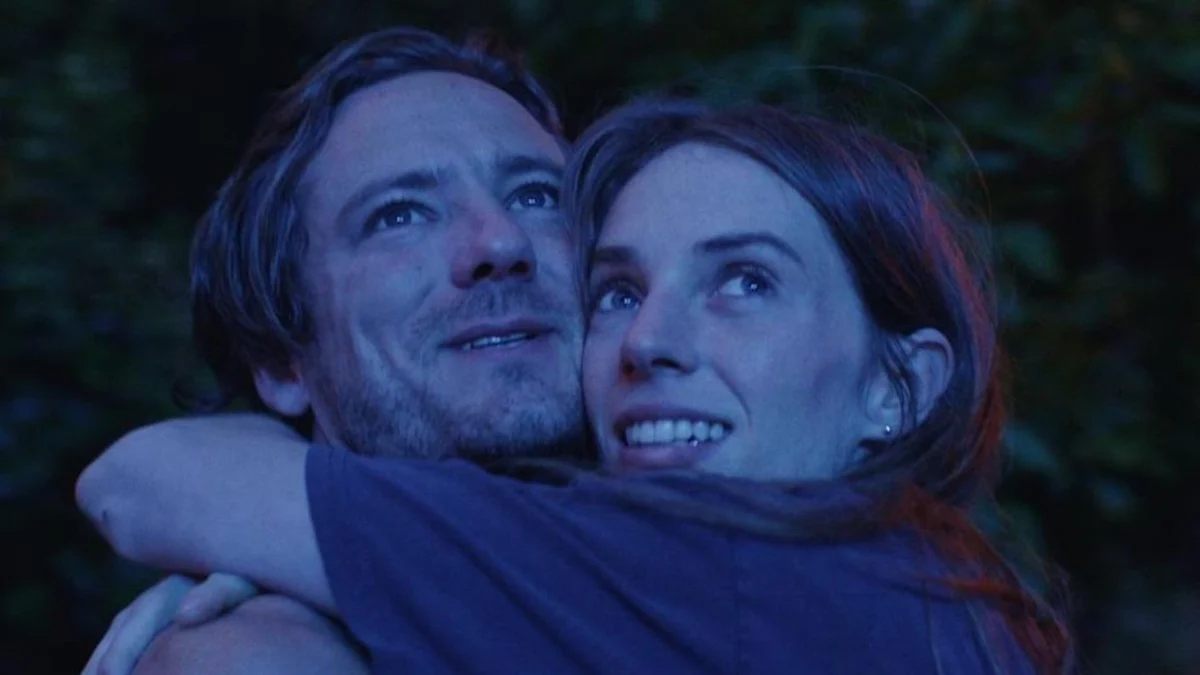
Austin, TX – Graham Parkes’ feature debut, Wishful Thinking, has captivated audiences and critics alike, securing the prestigious Narrative Feature Prize at the recent SXSW Film Festival following its March 12 premiere. The film, a compelling blend of romantic drama and lo-fi science fiction, delves into the potent, sometimes perilous, connection between a couple’s emotional state and the very fabric of their reality. Starring Lewis Pullman as Charlie and Maya Hawke as Julie, the movie presents a unique take on the power of love, anxiety, and the unforeseen consequences of their interplay, set against the beautifully rendered backdrop of Portland, Oregon.
The core premise of Wishful Thinking is as intriguing as it is unsettling: Charlie and Julie discover, after an unusual couples therapy summit, that their relationship possesses the literal power to manifest outcomes in the world around them. Positive sentiments lead to wonderfully fortuitous events, while discord or emotional turmoil can unleash tragically painful, even destructive, consequences. This extraordinary ability transforms their personal struggles into global stakes, forcing them to confront their deepest desires, suffocating anxieties, and often divergent natures, knowing that the world’s stability literally depends on their romantic equilibrium. The film has been lauded for its inventive narrative structure, its evocative use of split-screen cinematography, and its ability to cut deep into the hearts of its troubled protagonists.
The Genesis of a Groundbreaking Concept
Director Graham Parkes revealed that the initial spark for Wishful Thinking came from an unexpected source: a late-night dive into YouTube’s rabbit hole, leading him to Rhonda Byrne’s self-help phenomenon, The Secret. This popular work, a progenitor of the modern "manifesting" movement, posits that one’s thoughts and emotions directly influence reality. Parkes found the concept, while presented as uplifting, deeply unsettling from the perspective of someone grappling with anxiety. "They keep talking about that as though that’s a really uplifting and empowering idea," Parkes noted in a post-premiere interview, "but as somebody who struggles with anxiety and doesn’t always feel in control of my moods, what made me laugh is that actually is such a terrifying concept."
This inversion of a popular self-help philosophy—transforming it into a potential comedic horror scenario where a bad mood could literally trigger a plane crash—formed the initial comedic impulse for the film. Parkes observed the inherent paradox: the intense pressure to be perpetually happy, as advocated by manifesting principles, often makes true happiness more elusive. The idea solidified when he considered the dynamic within a past relationship, leading to the crucial "what if it’s a couple?" revelation. This shift from individual manifestation to a shared, relational power unlocked the story’s dramatic and romantic potential, transforming a dark joke into a profound exploration of human connection. This evolution from a comedic premise to a deeply felt drama is characteristic of Parkes’ creative process, where initial humorous ideas often deepen into resonant emotional narratives.
Crafting the Visual Language: Split-Screens and Cinematography
A standout feature of Wishful Thinking is its innovative and aesthetically pleasing use of split-screen cinematography. This technique, which allows for two or more distinct images to be displayed simultaneously on screen, serves not merely as a stylistic flourish but as a crucial narrative device, enhancing the film’s exploration of dual perspectives and shared emotional landscapes. Parkes elaborated on his collaboration with Director of Photography Christopher Ripley, a long-time friend and creative partner. "I’m just a fan of split-screen. I’ve always liked it and it’s a filmic element I feel has been underexplored," Parkes explained. "I always wanted the movie to be a true two-hander. It was important that it didn’t feel like it was from one person’s perspective… so split-screen was natural. It’s about the sharing of perspective."
The intentional deployment of split-screen allows the audience to be immersed equally in Charlie’s and Julie’s individual experiences, even showcasing simultaneous point-of-view shots to emphasize their shared reality, albeit from distinct vantage points. Ripley’s ingenuity further elevated this technique, particularly in the initial split-screen moments, which feature evocative double exposure images where elements move independently, signaling the fragmentation and convergence of their lives. The film also cleverly uses split compositions of skies, often achieved through meticulous VFX work designed to appear as serendipitous natural alignments, underscoring the film’s theme of external reality mirroring internal states. These visual choices are not just artistic but are deeply integrated into the storytelling, reflecting the intricate, often chaotic, interplay of two lives profoundly intertwined.
Casting Chemistry: Lewis Pullman and Maya Hawke
The authentic and compelling chemistry between Lewis Pullman and Maya Hawke is central to Wishful Thinking‘s success, grounding its fantastical premise in believable human emotion. Parkes had previously collaborated with Lewis Pullman on his short films, making Pullman a natural fit for the role of Charlie. The casting of Maya Hawke as Julie, however, involved a touch of serendipity. Producers Matt Smith and Dan Gedman brought her name forward, and Parkes quickly recognized her suitability for the role. In a stroke of "wishful thinking" coming to fruition, Parkes discovered that Hawke’s manager was someone he had fortuitously met years prior on a plane, fostering an immediate, positive connection when the offer was extended.

Despite limited rehearsal time—Hawke was on set for barely a day before shooting commenced due due to her busy schedule—the synergy between the two actors was instantaneous. Parkes noted, "Me and Maya instantly spoke the same language. She’s so funny, so honest and engaging… Maya and Lewis just had a really intuitive understanding of each other and just enjoyed acting with each other." This natural rapport was crucial, especially given Parkes’ dynamic, fast-paced directorial style, which he humorously describes as "Supermarket Sweep." Eschewing perfectionism, Parkes directs for the edit, prioritizing volume and variety in takes, encouraging improvisation and exploration of character margins. This approach, while challenging, allowed the actors the freedom to discover organic moments, contributing to the raw, authentic feel of their on-screen relationship.
SXSW Triumph and Industry Impact
The win at the SXSW Film Festival is a significant milestone for Wishful Thinking and a strong validation for Graham Parkes’ emerging career as a feature filmmaker. SXSW has long been recognized as a pivotal launchpad for independent cinema, known for its eclectic programming and its ability to spotlight innovative voices. Past Narrative Feature Prize winners have often gone on to achieve critical acclaim, secure significant distribution deals, and even garner awards season attention, establishing the festival as a bellwether for cinematic talent.
For Wishful Thinking, this accolade immediately elevates its profile within the competitive independent film landscape. The Narrative Feature Prize, awarded by a jury of industry professionals, signals a film that stands out for its storytelling, direction, performances, and overall artistic merit. While official statements from SXSW organizers regarding this specific win are typically concise, the festival’s ethos consistently emphasizes supporting original voices and groundbreaking narratives that push the boundaries of filmmaking. The recognition suggests that Wishful Thinking resonated deeply with the jury, likely for its unique premise, the nuanced performances by Pullman and Hawke, and Parkes’ confident direction. This award is expected to generate considerable buzz, attracting potential distributors and ensuring the film reaches a wider audience, positioning Parkes as a filmmaker to watch. It also enhances the marketability of the film, making it a more attractive acquisition for streaming platforms and theatrical releases alike.
Deconstructing Modern Love and Anxiety
Beyond its inventive sci-fi conceit, Wishful Thinking serves as a poignant and often humorous examination of modern love, relationships, and the pervasive impact of anxiety. Parkes describes the film as deeply personal, though not strictly autobiographical, having dispersed aspects of his own vulnerability across both Charlie and Julie. He emphasizes the importance of writing about unresolved emotional territories, where the filmmaker hasn’t "made your mind up yet," allowing for genuine exploration rather than didactic statements. This approach fostered a universality that resonated with his collaborators. "It was just realizing that a lot of what I was writing, that was personal to me, was a universal experience and that everyone could really access it," Parkes reflected.
The film’s narrative structure mirrors its thematic journey, with Parkes and DP Ripley conceptualizing the first half as an "escalating panic attack," characterized by longer lenses and a more chaotic visual style. This gives way to a crucial turning point where the film "suddenly slows down," forcing the characters to confront their internal truths. Parkes views Wishful Thinking as a narrative about "being pragmatic about who you are and accepting that," acknowledging inherent temperaments, moods, and ambitions. While individuals can work on personal growth, there’s an inherent nature that requires adaptation rather than fundamental alteration—a metaphor of adjusting sails to the wind rather than changing the wind itself. The film ultimately suggests that even when painful truths emerge from this self-reflection, leading to inevitable shifts in a relationship, it doesn’t necessarily signify the end of the love that binds two people. It’s a mature, complex take on commitment and self-awareness in a world increasingly fraught with pressures for perfection.
Broader Implications for Contemporary Cinema
Wishful Thinking‘s success at SXSW and its thematic depth position it as a significant entry in contemporary independent cinema. The film exemplifies a growing trend of genre-blending, where traditional romantic dramas are infused with speculative or fantastical elements to explore profound human experiences in novel ways. This approach allows filmmakers to tackle complex emotional landscapes, such as anxiety and relational dynamics, through heightened, allegorical narratives, making them both entertaining and intellectually stimulating.
The film’s focus on mental health, particularly anxiety within relationships, also taps into a broader cultural conversation. As society increasingly acknowledges and discusses mental well-being, films like Wishful Thinking offer nuanced cinematic reflections that resonate deeply with audiences navigating similar challenges. Parkes’ ability to transform a seemingly lighthearted self-help concept into a potent dramatic vehicle underscores the versatility and inventiveness thriving in the independent film sector. This kind of innovative storytelling not only pushes artistic boundaries but also ensures that indie cinema remains a vital platform for diverse narratives and emerging talents, promising a dynamic future for Graham Parkes and films that dare to blend the personal with the fantastical.