The South by Southwest (SXSW) Festival, a renowned nexus for innovation in film, technology, and music, this year played host to the world premiere of the horror anthology Grind. Directed by a trio of filmmakers – Ed Dougherty, Brea Grant, and Chelsea Stardust – the film fearlessly tackles the pervasive anxieties and exploitative realities of contemporary capitalism through a series of interconnected, darkly humorous, and genuinely terrifying short films. Grind uses the genre’s inherent ability to amplify societal fears to explore the psychological and physical toll of working under relentless economic pressures, offering a chilling commentary that resonates deeply with contemporary audiences.
Thematic Core: Capitalism as the Ultimate Horror
At its heart, Grind posits that the fundamental structures of modern capitalism are themselves a source of profound horror. The film’s overarching thesis suggests that the relentless pursuit of profit and efficiency grinds down individuals, leaving them “exhausted, hollow shells of themselves, eager to abandon principle and sense to simply survive.” This perspective aligns with a broader trend in horror cinema, seen in seminal works like John Carpenter’s They Live and more recent offerings such as Alien: Romulus, which have consistently used the genre to critique capitalist exploitation, whether historical, present-day, or extrapolated into dystopian futures. Grind distinguishes itself by focusing on the immediate, often mundane, yet ultimately terrifying experiences of workers within these systems. The film argues that the concept of "ethical consumption" under capitalism is a fallacy, as the entire system is inherently predatory. Despite its grim thematic underpinnings, Grind is also lauded for its substantial entertainment value, described as “heaps of bloody fun” by early critics.
A Unified Vision: Filmmaker Collaboration and Stylistic Cohesion
The production of Grind is notable for its focused directorial talent. Ed Dougherty and Brea Grant are credited with helming the majority of the anthology’s six segments, while Chelsea Stardust masterfully frames the narrative with a prologue and epilogue. This concentrated creative force contributes to Grind‘s unusually strong visual cadence and narrative flow, a common challenge in anthology films where disparate segments can feel disconnected. The filmmakers’ consistent vision allows for smooth transitions between stories, creating a more immersive and cohesive viewing experience. This is achieved through what is described as “confident audiovisual prowess,” ensuring that each segment, while distinct, contributes to the overarching thematic tapestry.
The film’s prologue, directed by Stardust, immediately immerses the audience in a visceral depiction of a modern fulfillment center, heavily implied to be a satirical take on e-commerce giants like Amazon. The segment vividly portrays the dehumanizing conditions and intense pressure faced by workers, highlighting the extreme measures individuals might resort to simply to meet demanding quotas. The depiction of workers resorting to urinating in bottles to avoid losing precious time is a stark and grim illustration of the film’s central critique of exploitative labor practices. This intense opening sets the stage for the subsequent narratives, establishing the pervasive atmosphere of dread and desperation that permeates the film.
Segment Highlights: MLM, Delivery, and Content Moderation
Within the anthology, several segments stand out for their sharp social commentary and effective horror execution.
MLM: The Perils of Pyramid Schemes
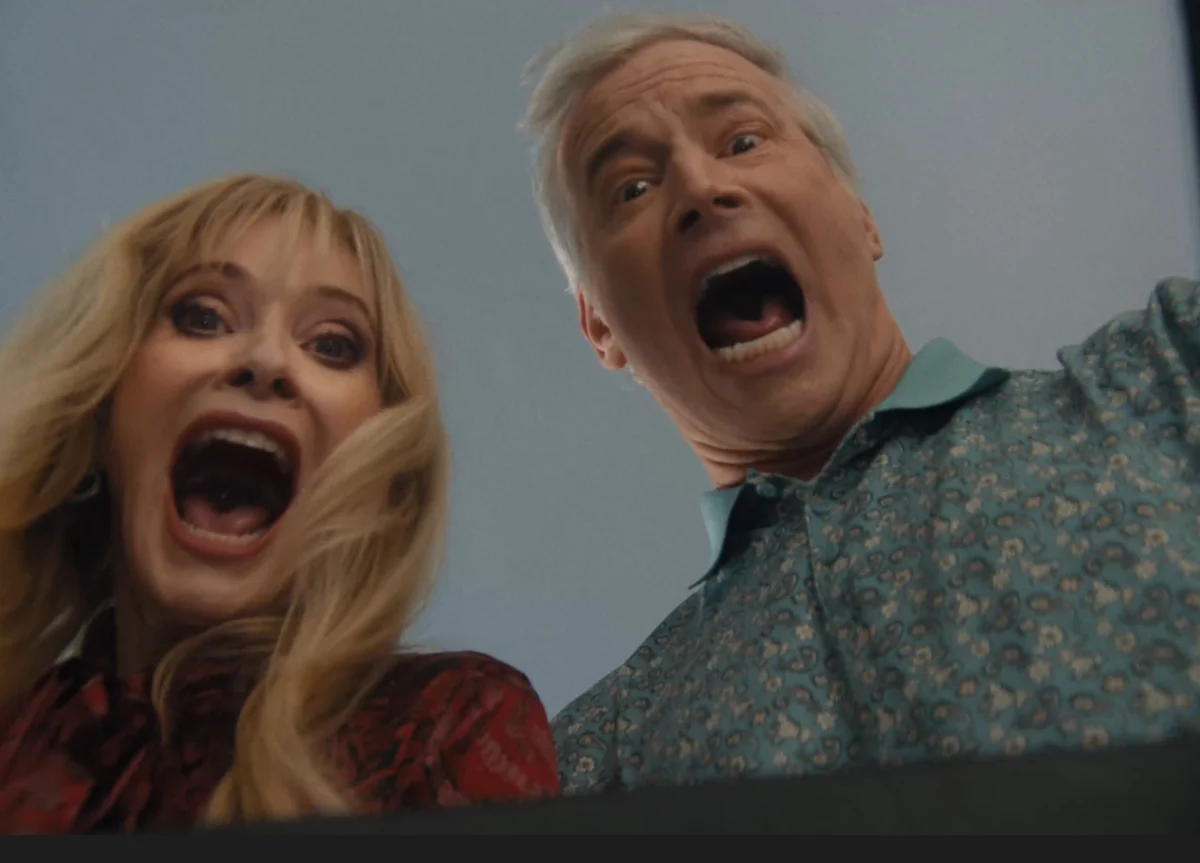
Brea Grant’s segment, “MLM,” is singled out as arguably the strongest entry in the collection. Starring horror veteran Barbara Crampton as the enigmatic leader of a multi-level marketing enterprise called Lala Leggings, the short explores the predatory nature of these schemes, particularly their targeting of vulnerable young women. The segment features Jessika Van as Sarah, a protagonist desperate to climb the MLM ladder. The narrative unfolds through chaotic livestreams and the harsh penalties for perceived failures. The film’s willingness to embrace absurd and darkly comedic consequences for Sarah’s defiance – discarding the company’s cheap polyester products – elevates it beyond simple satire. Grant’s direction ensures that the horror elements are seamlessly integrated with the biting social critique, making for a consistently entertaining and thought-provoking experience. The segment’s success lies in its ability to simultaneously lampoon the superficiality of these schemes and expose the genuine psychological distress they inflict.
![Capitalism Kills in Horror Anthology ‘Grind’ [SXSW 2026 Review]](https://www.dreadcentral.com/wp-content/uploads/2026/03/Rob-and-Barbara-Scream-copy-1.jpg)
Delivery: Navigating the Gig Economy’s Precariousness
Grant also helms the segment titled “Delivery,” featuring Vinny Thomas as Benny. This segment delves into the precariousness of the gig economy, specifically focusing on food delivery services. While Grant’s writing retains the incisive social observation seen in “MLM,” the segment’s foray into science fiction and horror elements is noted as being perhaps too ambitious, creating a structural disconnect from the anthology’s otherwise grounded, albeit heightened, reality. The temporal distortions employed in the segment, while interesting, are perceived by some as detracting from the film’s otherwise consistent tone. Nevertheless, the segment contributes to the film’s broader exploration of how modern economic structures can lead individuals into desperate situations with unforeseen consequences.
Content Moderation: The Psychological Toll of Digital Labor
Ed Dougherty’s segment, “Content Moderation,” is lauded for its disturbing effectiveness and its ability to elicit genuine chills despite the film’s overall darkly comedic tone. The segment focuses on Joel, portrayed by Christopher Rodriguez Marquette, whose path to a promotion within the DRGN corporation involves moderating an overwhelming volume of social media content, ranging from real-life tragedies to disturbing dark web material. Dougherty’s direction skillfully conveys the ceaseless exposure to graphic and psychologically damaging imagery, leading to a harrowing depiction of cognitive decline. Marquette’s performance is highlighted as particularly impactful, showcasing the terrifying mental disintegration of a character subjected to such extreme digital labor. The segment’s inclusion of a recognizable internet meme, the “car flip,” serves as a meta-commentary on the pervasive nature of online content and its potential to desensitize or destabilize viewers.
Union Meeting: A Missed Opportunity for Deeper Critique?
Dougherty’s other contribution, “Union Meeting,” attempts to connect with the film’s themes by depicting baristas, possibly from a popular coffee chain, attempting to unionize. While the segment is thematically linked to the preceding narratives, its satirical impact is noted as being short-lived. The film’s portrayal of gory mayhem, while present, is seen by critics as failing to parallel the real-world struggles and horrors associated with labor disputes and union-busting tactics employed by large corporations. The segment’s conclusion suggests that the actual nightmares of corporate opposition and the fight for workers’ rights can be more terrifying than any fictional monster. This critique implies that while Grind effectively captures the anxieties of modern work, some segments, like “Union Meeting,” could have delved deeper into the systemic injustices rather than relying solely on visceral horror.
Production Context and Festival Debut
The world premiere of Grind at SXSW in March 2026 places it within a landscape where the intersection of horror and social commentary continues to gain prominence. SXSW, known for its forward-thinking programming, provides a platform for films that push boundaries and engage with pressing societal issues. The festival’s selection of Grind underscores the growing appetite among audiences and industry professionals for genre films that offer more than just scares, but also meaningful critiques of the world we inhabit. The timing of the premiere, amidst ongoing discussions about labor rights, the gig economy, and the mental health impacts of digital work, further amplifies the film’s relevance.
Critical Reception and Future Implications
While Grind may not reinvent the anthology format, its strengths lie in its sharp thematic focus and the consistent quality of its core creative team. The film’s unevenness, a common pitfall for anthologies, is acknowledged, but the “wickedly smart thematic throughline” and the “truly exceptional work” from Grant and Dougherty are cited as key factors that allow Grind to overcome these challenges. The film’s success in blending humor, horror, and potent social commentary suggests a promising future for this style of filmmaking.
The implications of Grind‘s premiere at SXSW are significant. It signals a continued trend of horror cinema engaging with complex socio-economic issues, moving beyond traditional supernatural or slasher tropes to explore the anxieties born from contemporary societal structures. The film’s success could encourage further exploration of similar themes by other filmmakers, potentially leading to a subgenre of "capitalist horror" that dissects the systemic issues impacting everyday lives. For audiences, Grind offers a cathartic experience, allowing them to confront the often-unspoken fears associated with modern labor and economic instability through the visceral lens of horror. The film’s enduring message, that the most terrifying monsters are often those we create through our economic systems, is a potent reminder of the need for critical engagement with the structures that shape our lives. The call to "Punch in" at the end of the review serves as a final, punchy reminder of the film’s central message and its stark portrayal of the daily grind.
The production team, including producers and directors, likely aimed to create a film that would not only entertain but also provoke thought and discussion. Early reactions suggest they have succeeded in crafting a horror anthology that is both timely and terrifying, offering a unique perspective on the anxieties of modern life. The film’s engagement with issues like exploitative labor practices, the pressures of the gig economy, and the psychological toll of digital content moderation positions it as a significant entry in the contemporary horror landscape. Its premiere at a prestigious festival like SXSW ensures it will reach a wide audience, sparking conversations that extend far beyond the theater.