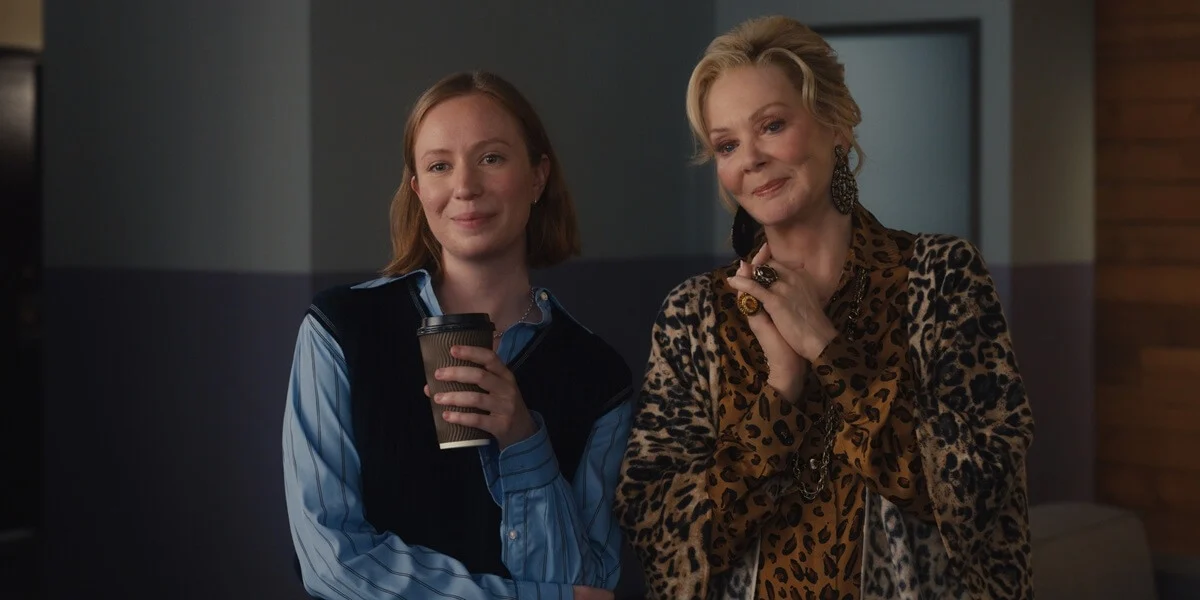
The critically acclaimed Max original series Hacks returns for its fifth and final season, marking the conclusion of a narrative arc that has redefined the "odd couple" trope within the landscape of modern television comedy. Following the dramatic events of the fourth season, which saw Deborah Vance (Jean Smart) exit her late-night hosting position and face a subsequent 18-month hiatus from the comedy circuit, the new season picks up twelve months into this transitional period. The narrative catalyst for the final chapter is as absurd as it is poignant: a series of mistaken news reports claiming that the legendary comedian has passed away. This error serves as the primary motivation for Vance, who, alongside her long-time writer and collaborator Ava Daniels (Hannah Einbinder), returns to Las Vegas with a singular, renewed focus on cementing her permanent legacy in the annals of entertainment history.
Created by the Emmy-winning team of Lucia Anello, Paul W. Downs, and Jen Statsky, the fifth season of Hacks attempts to balance the sharp-tongued cynicism that defined its early years with an earnest exploration of what it means to be an artist in the twilight of a career. While the series has historically thrived on the friction between its two leads, the final season shifts its focus toward the stability of their bond. Having weathered lawsuits, public slander, and personal betrayals, Vance and Daniels are presented as a unified front, navigating a landscape that remains skeptical of Vance’s relevance despite her decades of dominance.
Legacy and the Final Act: The Premise of Season 5
The thematic core of the final season is the concept of a "legacy." For Deborah Vance, a woman who has spent her life chasing the next residency, the next special, and the next accolade, the false report of her death acts as a profound wake-up call. The season tracks her efforts to achieve a level of immortality that transcends mere fame. This quest manifests in several ambitious goals, including the pursuit of an EGOT (Emmy, Grammy, Oscar, Tony), breaking ticket sale records at iconic venues, and the installation of a massive statue in her likeness at the entrance of a Las Vegas casino.
The narrative explores the psychological toll of being "put in a box" by industry gatekeepers like Bob Lipka and the broader media landscape. Despite the 18-month ban on comedy-related activities following her late-night departure, Vance remains undeterred. The season’s central tension arises not from whether she can achieve these goals, but from whether she can identify what she truly wants once the applause fades. Critics and analysts have noted that while the middle episodes of the season occasionally feel aimless—exemplified by a subplot involving a flirtation with rock star Nico Hayes, played by Christopher Briney—the overarching trajectory remains focused on the resolution of Vance’s professional identity.
Chronology of a Comedic Partnership: From Antagonism to Soulmates
To understand the weight of the fifth season, one must examine the evolution of the relationship between Deborah Vance and Ava Daniels. The series began as a forced collaboration between a fading legend and a canceled millennial writer. Over the course of four seasons, their dynamic transformed from mutual exploitation to a deep, albeit dysfunctional, respect.
- The Foundation (Seasons 1-2): The relationship was defined by a power imbalance. Vance viewed Daniels as a disposable tool for modernization, while Daniels viewed Vance as a relic of a bygone era. Their "push and pull" was characterized by insults and legal threats, yet it resulted in Vance’s most critically acclaimed stand-up material in years.
- The Professional Peak (Season 3): The duo reached a professional zenith, culminating in Vance’s pursuit of a late-night talk show. This era tested their loyalty as the stakes moved from the Las Vegas strip to the national stage.
- The Rupture and Reconciliation (Season 4): The events of the episodes "A Slippery Slope" and "Heaven" served as a turning point. The characters demonstrated how far they were willing to go to protect one another, effectively ending the era of internal friction.
- The Unified Front (Season 5): The final season avoids "lazy writing" by refusing to reintroduce manufactured conflict between the leads. Instead, they are depicted as "soulmates" in a professional and platonic sense. This shift, while reducing the show’s traditional comedic tension, allows for a more emotionally resonant conclusion to their shared journey.
Performance Analysis: The Chemistry of Jean Smart and Hannah Einbinder
The success of Hacks has always been inextricably linked to the performances of Jean Smart and Hannah Einbinder. Smart, who has already secured multiple Emmy Awards for her portrayal of Vance, continues to deliver a performance that balances high-camp comedy with devastating vulnerability. In the fifth season, Smart is tasked with portraying a woman who is finally confronting her own mortality and the limitations of her ambition. Industry analysts highlight her ability to maintain a clear line between earnestness and sentimentality, particularly in the season’s final four episodes, which are widely regarded as the strongest of the series.
Hannah Einbinder’s portrayal of Ava Daniels has similarly evolved. Known for her "tongue-in-cheek millennial-isms" and awkward physical comedy, Einbinder provides the "pathos" that serves as the show’s emotional anchor. In Season 5, the character of Ava is no longer just a foil to Deborah; she is her equal and protector. The chemistry between the two actresses is described as "magic," a rare alignment that has made them one of the defining duos of television in the 2020s.

The Business of Comedy: Jimmy and Kayla’s Arc
While the primary focus remains on Vance and Daniels, the secondary plotline involving Jimmy (Paul W. Downs) and Kayla (Megan Stalter) provides a necessary look at the industrial side of entertainment. Their agency, Schaeffer & Lusaque, faces the harsh reality of independent representation. Despite their total devotion to their clients, the firm struggles to remain financially viable.
This subplot serves as a commentary on the changing nature of the talent industry. Jimmy and Kayla, who have historically provided the show’s most absurdist comedic moments, are given a more grounded arc in the final season. Their relationship, mirroring that of Deborah and Ava, evolves from a chaotic assistant-manager dynamic into a genuine partnership built on shared sacrifice. This development ensures that the supporting cast receives a resolution that is consistent with the show’s overarching themes of growth and loyalty.
Supporting Cast and Creative Direction
The fifth season benefits from a robust supporting cast, including Carl Clemons-Hopkins, Mark Indelicato, and Rose Abdoo. The creative team, led by Anello, Downs, and Statsky, maintains the show’s signature aesthetic—a blend of Vegas glitz and gritty behind-the-scenes realism. However, the final season has faced some criticism for its writing consistency. Certain episodes have been described as "hit-or-miss," with specific subplots, such as a B-plot involving sex work, being labeled as "out of touch" or "bizarre" in their execution. Despite these minor narrative detours, the production remains a benchmark for high-end comedy-drama.
Industry Impact and Emmy Prospects
Hacks has been a perennial favorite during award seasons, and the fifth season is expected to continue this trend. As the series concludes, it leaves behind a significant legacy in the television industry. It proved that there is a massive audience for female-led stories that prioritize professional ambition over romantic subplots.
The Emmy prospects for the final season are extensive, with industry experts predicting nominations in the following categories:
- Outstanding Comedy Series: A category the show has consistently contended in.
- Outstanding Lead Actress in a Comedy Series (Jean Smart): Smart remains a frontrunner for her transformative performance.
- Outstanding Supporting Actor/Actress (Paul W. Downs, Hannah Einbinder, Megan Stalter): The cast’s depth provides multiple opportunities for recognition.
- Writing and Directing: The final four episodes, noted for their emotional impact and technical precision, are expected to be the primary submissions for these categories.
Broader Implications and Final Assessment
The conclusion of Hacks signifies the end of a specific era of "prestige comedy." The show successfully bridged the gap between traditional multi-cam sitcom energy and the more nuanced, serialized storytelling of the streaming age. By focusing on the uncertainty of the future rather than the drama of the present, Season 5 provides a conclusion that feels earned.
While some critics argue that the fifth season is "weaker" due to its reduced emphasis on conflict and its occasional lack of comedic density, the general consensus is that the show "stuck the landing." The decision to prioritize the emotional resolution of the Deborah-Ava relationship over cheap laughs is a testament to the creators’ respect for the characters. With a final score of 8/10 from major critics, Hacks Season 5 stands as a poignant, if slightly imperfect, farewell to one of the decade’s most influential series. The legacy that Deborah Vance fought so hard to secure on-screen is mirrored by the legacy the show itself has secured in the real world: a masterclass in character-driven comedy.