Yearning can be a difficult feeling to capture on-screen. Love stories are little without a tragic element, and defining the spaces in between moments of romantic reverie can be a challenge for even the best filmmakers and the most dedicated actors. Director Yun Su-ik, alongside leading performers Han So-hee and Han Hae-in, has taken a surprisingly unconventional approach to a tale of young love with "Heavy Snow," a slight but cutting series of snapshots of a brief high-school fling that has long-lasting ramifications. The film, which has garnered attention on the festival circuit, including a screening at BFI Flare, delves into the complexities of first love, unrequited desire, and the indelible marks left by formative relationships, positioning itself as a significant entry in contemporary South Korean independent cinema.
The Unconventional Narrative of a Coastal Encounter
At the heart of "Heavy Snow" is Su-an, portrayed by Han Hae-in, an acting-major loner residing in a secluded coastal town. Her introduction is immediately striking: she wields a loaded paintball gun during a drama class performance of Shakespeare. Far from a traditional Hamlet, Su-an embodies a more unsettling persona, reminiscent of a school shooter, unsettling her classmates with an extreme, almost alienating commitment to her interpretation of the classic role. She is characterized by unpredictability and high-strung intensity, maintaining a hard, cold exterior that betrays little emotion. This carefully constructed facade, however, begins to crumble upon an after-school encounter with Se-ol, played by Han So-hee.
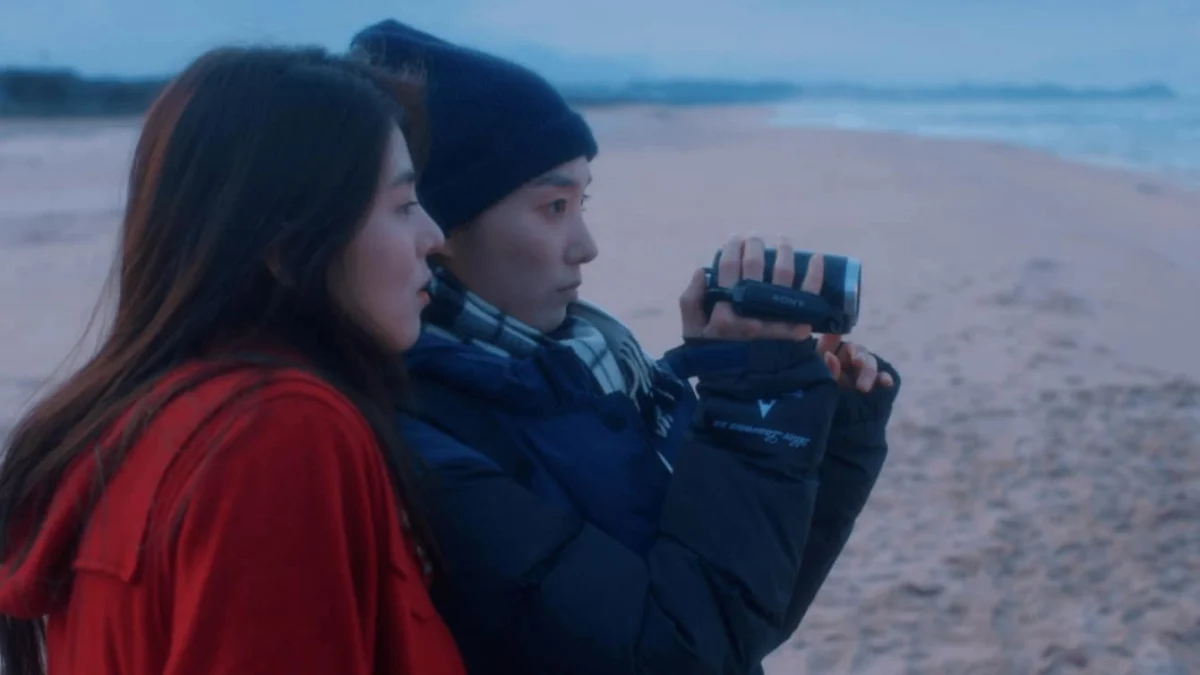
Se-ol is the antithesis of Su-an’s obscurity; she is a burgeoning star, recognizable from fictional yet hilariously accurate K-dramas such as "Teenage Love Counselling" and "School of Hip-Hop." Su-an’s initial starstruck reaction to Se-ol, a figure of widespread adoration, quickly morphs into profound admiration. This meeting marks the genesis of a relationship that, though fleeting, proves to be deeply impactful for both young women. Their burgeoning friendship unfolds against a backdrop of quintessential youthful escapades, including trips to the beach and nocturnal drives to the bustling Myeong-dong district, one of Seoul’s premier shopping destinations. The enthusiastic camaraderie rapidly escalates into a moment of romantic intimacy, a "best kiss" that promises a deeper connection. Yet, as swiftly as this peak arrives, the spark dissipates, with Se-ol retreating to her life as a burgeoning TV starlet, leaving Su-an’s heart fractured and in tatters. This abrupt termination of what promised to be a profound connection sets the stage for the film’s exploration of lingering regret and the ghosts of past affections.
A Three-Act Structure and Cinematic Lineage
"Heavy Snow" is meticulously structured over three distinct chapters: ‘Seol,’ ‘Su-an,’ and ‘The Sea.’ This tripartite division allows Yun Su-ik to explore the evolving dynamics and emotional fallout from different perspectives, choosing moments of beauty and heartbreak with surgical precision. The film’s relatively short running time, a characteristic often associated with the works of acclaimed director Hong Sang-soo, suggests a focus on concentrated emotional impact rather than sprawling narrative. However, Yun’s stylistic and narrative approach draws parallels more closely with two of Korea’s most striking films of recent years: Davy Chou’s "Return to Seoul" (2022) and Celine Song’s "Past Lives" (2023). Both films, while distinct in their narratives, share a common thread of exploring the ache of regret, the what-ifs of estranged connections, and the profound influence of past relationships on present identities. "Heavy Snow" embodies this thematic resonance, allowing the pain of missed opportunities and unfulfilled longing to seep deep into its bones. This is evident in moments of drug-addled clarity or in a Shakespearean soliloquy that reveals more about the actor performing it than the character speaking the lines. The film’s approach is naturalistic and observant, maintaining a quiet simmer of emotions between the estranged would-be couple, allowing the audience to witness the internal struggles rather than overt dramatic declarations.
The film’s journey through the international festival circuit underscores its critical appeal. Premiering at significant festivals like BFI Flare, a renowned LGBTQIA+ film festival, allowed "Heavy Snow" to reach a diverse and receptive audience, validating its themes and artistic merit. Independent films like "Heavy Snow" often rely on such platforms to gain visibility and critical acclaim, especially when tackling nuanced or less conventional narratives. The positive reception from critics at these events highlights a growing appreciation for South Korean cinema that ventures beyond mainstream blockbusters and K-drama tropes.
Exceptional Performances and Thematic Nuances
The film excels in its nuanced portrayal of the imbalance inherent in many first loves, treating this delicate dynamic with profound respect and rich subtext. Se-ol’s established role as a teen icon imbues her with an air of experience beyond her years, yet simultaneously a precociousness that poses a subtle danger to herself and those who orbit her. Han So-hee delivers an excellent, multifaceted performance, seamlessly transitioning between performative emotion – a skill honed by her character’s celebrity – and a cold-hearted bluntness. This duality plays expertly against Han Hae-in’s doe-eyed earnestness as Su-an.
Su-an is depicted as a creatively frustrated individual, a budding director trapped in the guise of a wannabe actor. Her role as an observer and beholder of Se-ol’s beauty functions as a brilliant, subtle mirror image to her crush’s more one-dimensional narcissism. This dynamic creates a compelling tension, where one character’s outward projection of self masks inner turmoil, while the other’s intense gaze uncovers both beauty and vulnerability. Both actors demonstrate remarkable skill in navigating unannounced time jumps, effortlessly conveying how the passage of years has impacted their characters physically and emotionally. This ability to embody the subtle shifts of time and experience, often on a much lower budget than their mainstream counterparts, showcases their profound talent and offers a potent challenge to the stars of more acclaimed Korean dramas. Their performances are a testament to the power of character-driven storytelling, where internal shifts are as impactful as external events.
The Evolution of Love and Genre
By the time "Heavy Snow" reaches its conclusion, the story has undergone a profound transformation, becoming entirely different from its initial premise. A serious and high-stakes generic shift dramatically alters the narrative trajectory, hitting the audience like a plunge into an icy ocean. This bold narrative choice is handled with Yun Su-ik’s deft formal control and the brave commitment of both Han So-hee and Han Hae-in. The metaphorical "love on the rocks" between the two protagonists becomes strikingly literal, opening up the dramatic possibilities to alarming and unexpected ends. This genre pivot is not merely a shock tactic but serves to deepen the film’s exploration of consequence, fate, and the unpredictable nature of life after a formative heartbreak.
The film’s bleak final note is appropriately staged, leaving a lasting impression of feelings fumbled, opportunities missed, and the irreversible paths chosen. Whether audiences will embrace the flow of Yun’s ambitious love story depends on their willingness to cast off conventional expectations of romance and follow him into fresh, often perilous territory—one fraught with dangers of both an existential and physical kind. This narrative risk-taking sets "Heavy Snow" apart, challenging viewers to engage with a more complex, less saccharine vision of love and loss.
South Korean Cinema’s Diverse Landscape and LGBTQ+ Representation
"Heavy Snow" emerges from a vibrant, albeit often challenging, South Korean independent film scene. While the global success of K-dramas and blockbuster films like "Parasite" has put South Korean cinema on the world stage, the indie sector continues to push boundaries, often tackling sensitive social issues or experimental narratives that mainstream productions might shy away from. Films like "Heavy Snow" play a crucial role in diversifying the national cinematic output, offering alternative perspectives and challenging prevailing norms.
In terms of LGBTQ+ representation, South Korean cinema and television have seen gradual but notable progress. While mainstream K-dramas often still feature subtle queer subtext rather than overt representation, independent films have been more forthright in exploring LGBTQ+ themes and characters. Films such as "The King and the Clown" (2005) or "A Frozen Flower" (2008) introduced queer narratives to wider audiences, albeit often within historical or tragic contexts. More recently, films like "Our Love Story" (2016) and "The Handmaiden" (2016) have offered more direct and nuanced portrayals of same-sex relationships. "Heavy Snow" contributes significantly to this evolving landscape, offering a contemporary story of young queer love, its intoxicating beginnings, and its painful aftermath. By focusing on the emotional interiority of its characters and the authentic struggles of their identities, the film adds depth and relatability to LGBTQ+ narratives within Korean cinema. Its inclusion in international festivals further amplifies its message, demonstrating the universal resonance of its themes regardless of cultural specificities.
Broader Implications and Artistic Restraint
Yun Su-ik’s overall picture is a succession of scenes that often feel adrift from one another, occasionally lacking full external context and enticingly mysterious in their restraint. Audiences might be forgiven for wanting more insight into the external lives of Se-ol and Su-an, as they appear to exist almost in a bubble, orbiting each other with little apparent connection to anyone else. Yet, this very artistic choice serves a profound purpose: it encapsulates the essence of first love itself. First love is often obsessive, suffocating, deafeningly singular, and all-enveloping. "Heavy Snow" captures these intense, isolating qualities with remarkable care and affection. The narrative’s deliberate omissions and fragmented structure force the viewer to inhabit the emotional world of the protagonists, mirroring the intense, often insular experience of young love.
This stylistic choice, while potentially challenging for some viewers accustomed to more linear storytelling, is a deliberate and effective means of conveying the subjective nature of memory and longing. It underscores the film’s commitment to portraying the emotional truth of its characters over conventional narrative progression. "Heavy Snow" is not just a story about two young women; it is an evocative meditation on the enduring power of first love, the pain of its loss, and the silent, profound ways in which it shapes our identities long after it has faded. Its contribution to South Korean cinema lies not only in its bold storytelling and exceptional performances but also in its sensitive and unflinching exploration of a universal human experience, framed through a uniquely Korean lens.