The Narrative Framework of the Revival
The four-episode structure of Malcolm in the Middle: Life’s Still Unfair functions as a condensed season, with each installment building toward a singular event: the wedding anniversary of Lois (Jane Kaczmarek) and Hal (Bryan Cranston). For two decades, fans have wondered how the hyper-stressed, lower-middle-class household would adapt to the challenges of the 21st century. The revival answers this by leaning into the "unfairness" that defined the original series’ theme song.
While the original show concluded in 2006 with Malcolm heading to Harvard and working as a janitor to pay his way, the revival finds him in a state of professional success but personal stagnation. The primary conflict of the special involves Malcolm (Frankie Muniz) attempting to integrate his secret life—specifically his teenage daughter, Leah (Keeley Karsten)—with the volatile family environment he spent his youth trying to escape. This tension serves as the emotional backbone of the finale, as the family gathers for an event orchestrated with Lois’s trademark military precision.
Chronology of the Finale: The Anniversary Gala
The final episode of the special focuses almost entirely on the anniversary party, an event Lois insisted on controlling to prevent Hal from bankrupting the family with one of his characteristically grand, romantic gestures. The chronology of the finale unfolds in three distinct acts: the arrival, the tribute, and the inevitable catastrophe.
Act I: The Family Reunion
The first act of the finale serves as a showcase for the returning ensemble cast. Francis (Christopher Masterson) and his wife Piama (Emy Coligado) return, showcasing a matured but still subversive dynamic. Reese (Justin Berfield), whose life path remained a point of curiosity for fans, is depicted as having found a niche that suits his peculiar talents, though he remains a foil to Malcolm’s intellectualism. The introduction of Leah to the broader family serves as the "inciting incident" of the gathering. Having been kept away from her grandparents to avoid "contamination" by their chaotic lifestyle, Leah’s presence forces Malcolm to confront his own elitism and the realization that his daughter may share the family’s inherent penchant for trouble.
Act II: The Video Tribute
The emotional climax of the episode occurs when Lois presents a video tribute to Hal. In a departure from the show’s usual cynical tone, the presentation features heartfelt messages from all the children. This moment highlights the evolution of the parent-child relationships; while the boys spent their childhoods at odds with Lois’s discipline and Hal’s eccentricity, the revival acknowledges the underlying bond of survival that kept them together. Malcolm’s contribution to the video is initially a failure—a stiff, poorly conceived segment that reflects his emotional distance. In a moment of vulnerability, Malcolm is forced to abandon the script and address his father directly from the stage, admitting that despite his efforts to move on, his identity is inextricably linked to the family.
Act III: The Glitter Incident
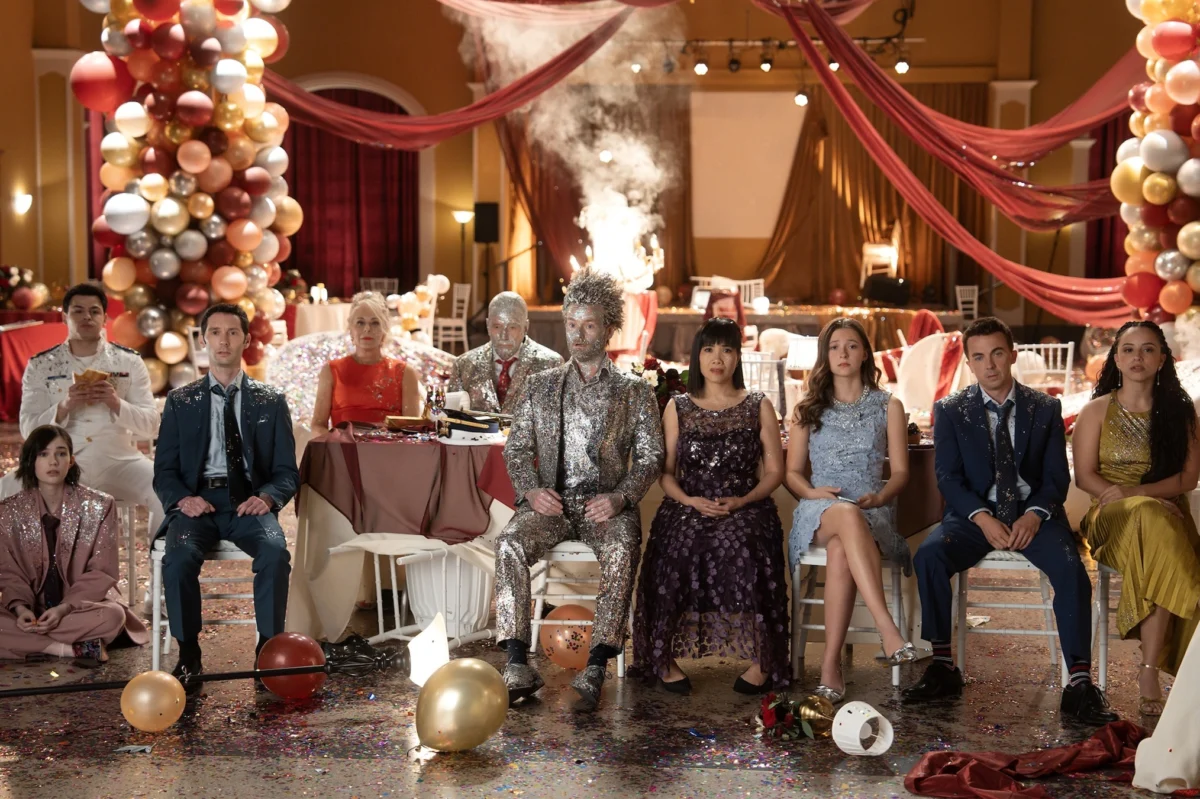
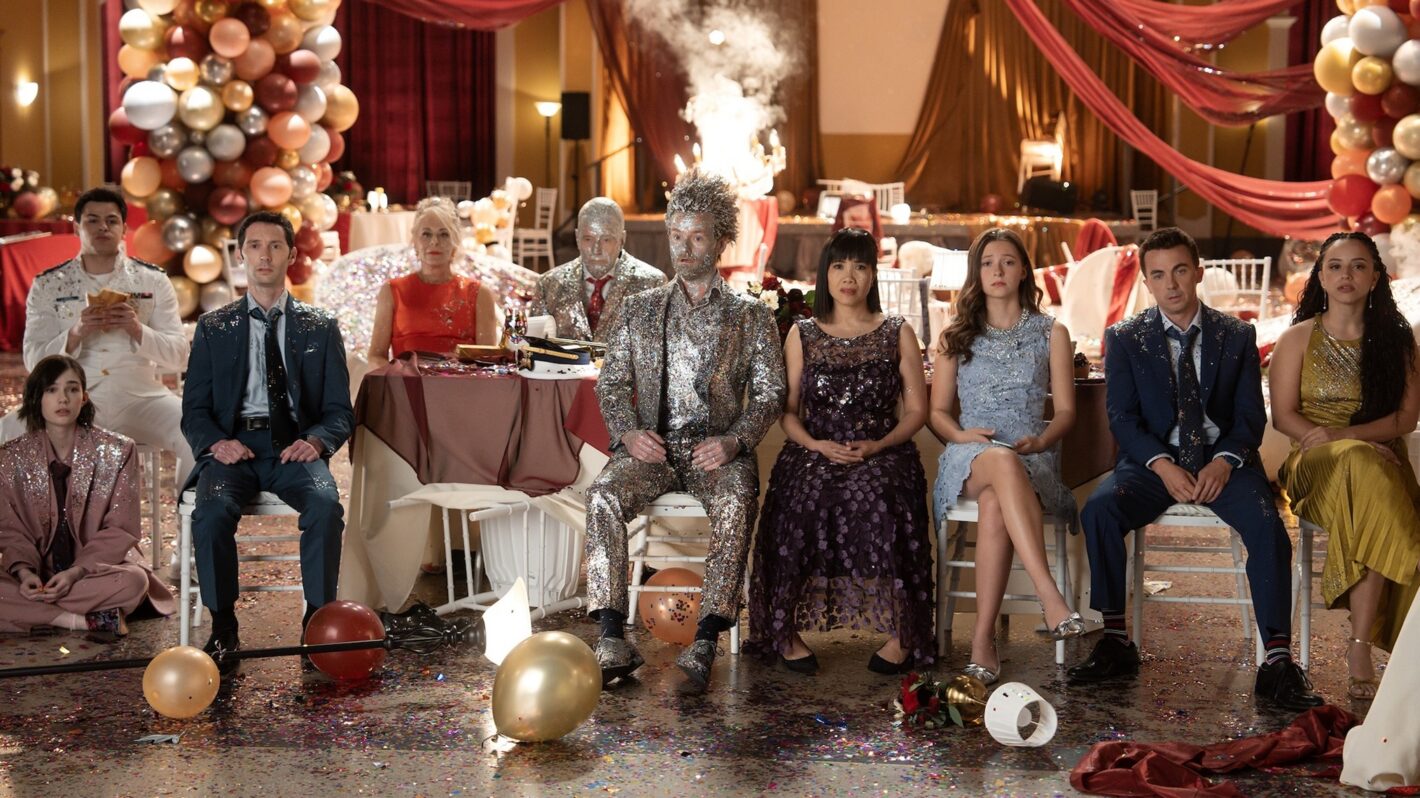
True to the series’ roots, the sentimentality of the second act is immediately undercut by a slapstick disaster. Francis, attempting to assist Hal with a final, unauthorized surprise for Lois, positions himself in the rafters of the rented hall with a massive bag of glitter. The plan—intended to create a romantic moment on the dance floor—fails when the bag’s mechanism jams. In the ensuing struggle, both the bag and Francis fall onto Hal, resulting in a "glitter explosion" that coats the guests and the venue in a difficult-to-remove substance. The episode concludes not with a glamorous exit, but with the family sitting in the ruins of the party, lamenting the loss of their security deposit.
Supporting Data and Production Context
The revival comes at a time when legacy intellectual property (IP) is a primary driver for streaming platforms. According to industry analysis, nostalgic content often sees a 30% higher retention rate among viewers aged 30 to 49 compared to original scripted series. Malcolm in the Middle, which aired 151 episodes over seven seasons, remains a high-value asset for Disney (which acquired the rights via the 21st Century Fox merger).
During its original run, the series was a critical and commercial powerhouse:
- Awards: The show won seven Emmy Awards, a Grammy, and was nominated for seven Golden Globes.
- Ratings: At its peak, the show commanded an average of 15 million viewers per episode, making it one of Fox’s most successful live-action comedies.
- Streaming Performance: Prior to the revival, the series consistently ranked in the top 20 of most-watched library content on Hulu, signaling a strong demand for new material.
The production of Life’s Still Unfair was spearheaded by Bryan Cranston, who has been a vocal advocate for a reunion for several years. Cranston’s involvement as both a lead actor and an executive producer ensured that the revival maintained the aesthetic and tonal consistency of the original series, including the single-camera setup and the signature breaking of the fourth wall.
Analysis of Implications: The Leah Spinoff
The most significant takeaway from the revival’s ending is the meta-narrative shift involving Leah. Throughout the four episodes, Leah is seen observing the chaos of her extended family with a mixture of horror and fascination. In the closing moments of the finale, Leah looks directly into the lens and addresses the audience, utilizing the same fourth-wall-breaking technique that Frankie Muniz’s Malcolm made famous in the early 2000s.
This creative choice serves several functions:
- Generational Handover: It suggests that the "gift" (or curse) of high intelligence and social alienation has passed from Malcolm to his daughter.
- Spinoff Potential: By giving Leah the narrator’s voice, the producers have created a "backdoor pilot." Industry insiders suggest that Disney/Hulu is monitoring the viewership metrics of the special to determine the viability of a full series centered on Leah’s perspective.
- Thematic Continuity: It reinforces the idea that while the players change, the fundamental struggle of the "middle" remains the same.
The character of Leah represents a modern iteration of the Malcolm archetype. While Malcolm’s struggles were rooted in the early digital age and the rigid social hierarchies of the 2000s, Leah’s perspective allows the franchise to explore contemporary themes such as social media, modern educational pressures, and the shifting economic realities of the 2020s.
Industry and Critical Reaction
While official viewership numbers for Malcolm in the Middle: Life’s Still Unfair have not been publicly released by Disney, social media engagement and critical reviews suggest a positive reception. Critics have praised the revival for avoiding the "sanitized" feel of many modern reboots, instead leaning into the grime, noise, and genuine frustration that made the original show a standout.
Jane Kaczmarek’s performance as Lois has been highlighted as a particularly strong point, with reviewers noting that her character’s transition into grandmotherhood has not dampened her legendary intensity. Bryan Cranston’s return to the role of Hal was also met with acclaim, as he successfully channeled the physical comedy and earnestness that defined his career before his dramatic turn in Breaking Bad.
The revival also addressed the absence of certain characters or the changed lives of others with a pragmatism that fits the show’s "life is unfair" mantra. By focusing on the core family unit and the introduction of Leah, the special managed to feel both like a nostalgia trip and a forward-looking narrative.
Conclusion and Future Outlook
The finale of Malcolm in the Middle: Life’s Still Unfair leaves the Wilkerson family exactly where they belong: in a mess of their own making, yet together. The loss of the security deposit serves as a metaphor for the family’s inability to ever truly "get ahead," a theme that resonated with millions of viewers during the show’s initial run and continues to hold relevance today.
As the credits roll on the glitter-covered ruins of the anniversary party, the focus remains on the potential for more stories. Whether through a Leah-centric spinoff or additional limited specials, the revival has proven that the brand’s unique blend of cynical realism and family loyalty remains a potent formula. For now, the series stands as a successful example of how to modernize a classic sitcom without losing the edge that made it a classic in the first place. The ball is now in Disney’s court to determine if the fourth wall will be broken again in the near future.