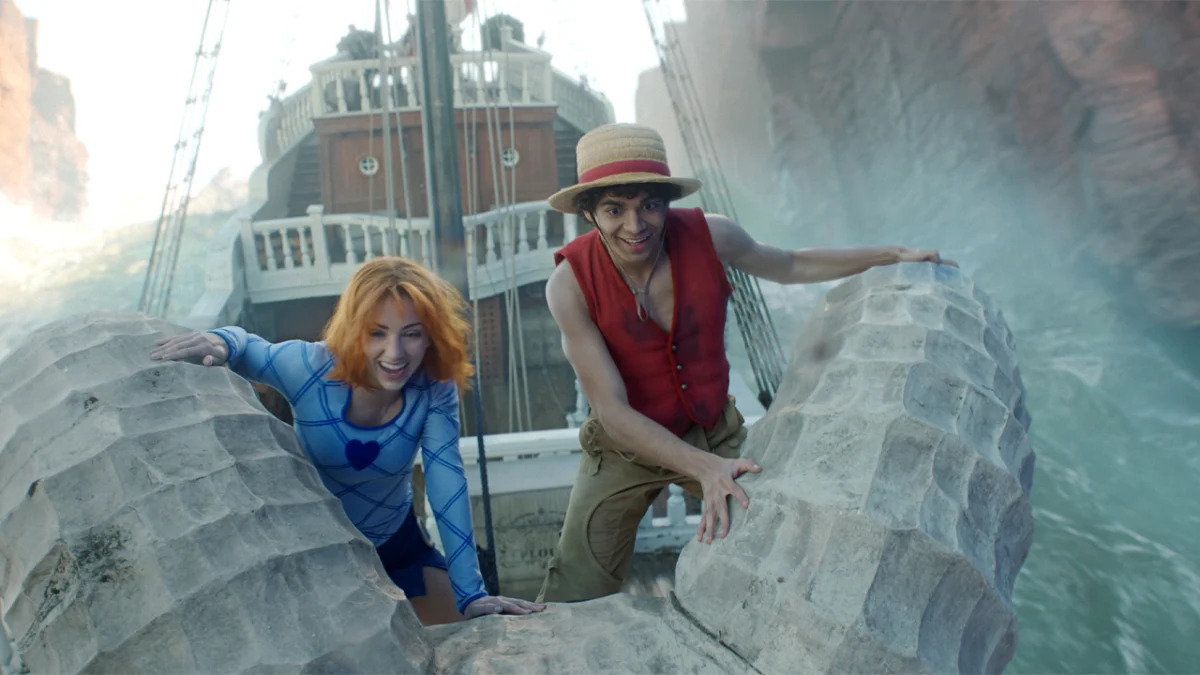
With the third season of One Piece Live Action (OPLA) officially titled The Battle of Alabasta and its release anticipated, the streaming giant Netflix has yet to announce a renewal for a fourth season, prompting renewed discussion among fans, critics, and industry observers regarding the realistic long-term trajectory of the ambitious adaptation. This inquiry delves into the substantial narrative scope of Eiichiro Oda’s original manga, the current pacing of the live-action series, the economic realities of high-budget productions on streaming platforms, and the strategic vision articulated by the creative team behind OPLA.
One Piece, a global cultural behemoth originating from Japan, transcends its various media forms to captivate millions worldwide. Eiichiro Oda’s manga, which began serialization in 1997, stands as the best-selling comic book of all time, boasting over 600 million volumes in circulation. As of the current writing, the manga comprises 1179 chapters, a figure that continues to grow almost weekly, making its narrative depth and longevity unparalleled. The anime adaptation, with over 1000 episodes, further amplifies its global reach and intricate world-building. Adapting such a monumental work into live-action is a task fraught with inherent challenges, from maintaining narrative integrity and visual fidelity to managing the immense production costs and logistics. Tomorrow Studios, in collaboration with Netflix, has undertaken this formidable endeavor, delivering an OPLA series that has garnered significant critical acclaim and robust viewership, defying initial widespread skepticism often associated with live-action anime adaptations.
The Foundational Challenge: Pacing the Grand Line
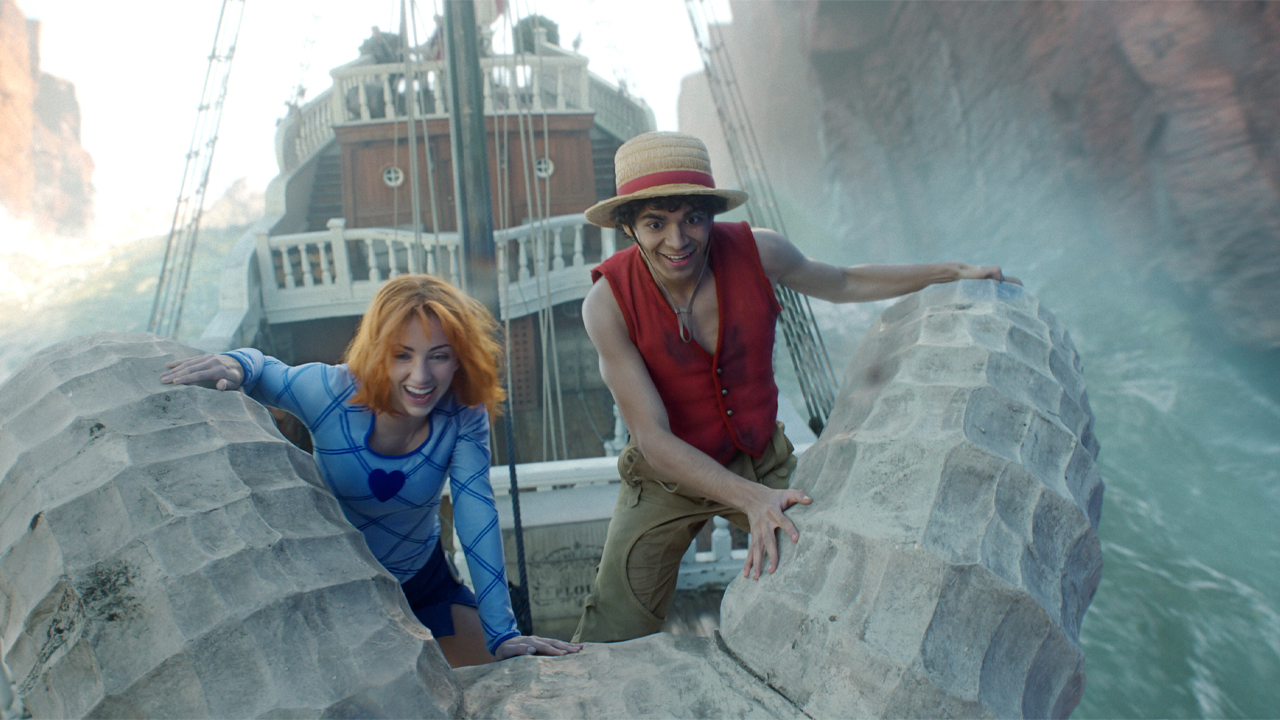
The primary obstacle for OPLA’s longevity is the sheer volume of its source material. The original manga’s nearly three-decade run and its ever-expanding storyline present a unique pacing dilemma for a live-action series constrained by episode counts and production timelines. So far, the OPLA series has demonstrated a deliberate, albeit accelerated, adaptation strategy. Across its first two seasons, comprising 16 episodes and approximately 17.2 hours of content, OPLA has meticulously covered the initial 91 chapters of the manga. This translates to roughly 13.06% of the manga’s current total chapter count, illustrating the vastness of the journey ahead.
- Season 1: East Blue Saga (Chapters 1-95)
- The inaugural season efficiently adapted the entirety of the East Blue Saga, covering foundational arcs such as Romance Dawn, Orange Town, Syrup Village, Baratie, and Arlong Park. This rapid pace was crucial for establishing the core Straw Hat Pirate crew and their initial dynamics, concluding with their departure from the East Blue and entry into the Grand Line.
- Season 2: Beginning of Alabasta Saga (Chapters 96-154)
- Season 2 commenced by concluding the East Blue Saga with the Loguetown Arc and subsequently embarked on the Alabasta Saga, encompassing the Reverse Mountain, Whiskey Peak, Little Garden, and Drum Island Arcs. A significant strategic decision was made to conclude Season 2 at the end of the Drum Island Arc rather than rushing to complete the entire Alabasta Saga. This deliberate choice allowed for more comprehensive character development, particularly for new, beloved additions like Tony Tony Chopper and Princess Vivi, ensuring these critical narrative beats received adequate screen time and emotional resonance. This approach demonstrated the creative team’s commitment to quality storytelling over simply maximizing chapter coverage per season.
The announced title for Season 3, The Battle of Alabasta, confirms its focus on the climactic Alabasta Arc (chapters 155-217). There is ongoing discussion within the fanbase and production circles that Season 3 might also incorporate the Jaya Arc (chapters 218-236) to set up the subsequent Sky Island Saga more effectively. This would represent an acceleration of pacing compared to Season 2’s truncated saga coverage, potentially signaling a dynamic adaptation strategy aimed at reaching key narrative milestones within a reasonable timeframe.
Executive Vision and Strategic Benchmarks
The long-term viability of OPLA is not solely a function of narrative length but also of strategic planning by its producers and the commercial performance on Netflix. Becky Clements, President of Tomorrow Studios and an executive producer for OPLA, has offered significant insights into the production’s ambitions. While humorously ruling out a 20-season run, Clements expressed a strong desire for a substantial series, stating, "I’m going to want to do 10, 12, 15, 20. I think there are certain parts of it that, just from a live-action construction, there are certain moments where it makes sense to get to them. Others, it doesn’t make quite so much sense. But you want to see that story. So we have many years ahead."

Crucially, Clements also referenced a prior statement about aiming for 16 seasons, clarifying, "I think we almost feel like we’ve already broken through season eight, and then we can figure it out from there." This "season eight" benchmark is particularly telling. It strongly suggests that the production team’s primary, and perhaps most realistic, goal is to adapt the entirety of the "pre-time skip" One Piece narrative. The pre-time skip era, culminating in the Summit War Saga, represents a natural narrative conclusion point, offering a powerful, emotionally resonant climax for the Straw Hats’ initial journey.
Following the Alabasta Saga, the pre-time skip story encompasses four major sagas:
- Sky Island Saga (Chapters 218-302)
- Water 7 Saga (Chapters 303-441)
- Thriller Bark Saga (Chapters 442-489)
- Summit War Saga (Chapters 490-597)
If OPLA were to adapt roughly one major saga per season, this would lead to approximately seven seasons post-East Blue. However, given the creative team’s willingness to split sagas (as seen with Alabasta) to ensure narrative quality, an eight-season plan covering the pre-time skip narrative becomes highly plausible.
A Detailed Pre-Time Skip Projection (Seasons 4-8):

An eight-season structure could unfold as follows:
- Season 4:
- Jaya Arc (Chapters 218-236)
- Sky Island Arc (Skypiea) (Chapters 237-302)
- This season would introduce the fantastical elements of Skypiea, a significant visual and narrative challenge for live-action, requiring considerable special effects and world-building.
- Season 5:
- Long Ring Long Land Arc (Chapters 303-321)
- Water 7 Arc (Chapters 322-374)
- The Water 7 Saga is a fan-favorite, renowned for its emotional depth, complex political intrigue, and character development, particularly for Nico Robin and Usopp. Splitting it across two seasons would allow for the necessary narrative space.
- Season 6:
- Enies Lobby Arc (Chapters 375-430)
- Post-Enies Lobby Arc (Chapters 431-441)
- This season would house the emotional peak of the Water 7 Saga, the iconic "declaration of war" against the World Government, and the subsequent fallout, demanding high-stakes action and character focus.
- Season 7:
- Thriller Bark Arc (Chapters 442-489)
- Sabaody Archipelago Arc (Chapters 490-513)
- Thriller Bark introduces horror-comedy elements and Brook, while Sabaody Archipelago sets the stage for the global conflict to come, introducing critical new characters and escalating the Straw Hats’ notoriety.
- Season 8 (Part 1 & 2): The Summit War Saga
- Amazon Lily Arc (Chapters 514-524)
- Impel Down Arc (Chapters 525-549)
- Marineford Arc (Chapters 550-580)
- Post-War Arc (Chapters 581-597)
- Return to Sabaody Arc (Chapters 598-602) (Bridging to Post-Time Skip)
- This climactic saga, widely considered a narrative high point in the manga, is dense with major events, character introductions, and monumental battles. To do it justice, a split final season, akin to Netflix’s approach for other tentpole series like Cobra Kai and Stranger Things, would be a logical and necessary decision. The Return to Sabaody Arc serves as a perfect transition into the post-time skip era, marking a significant milestone for the crew.
The Post-Time Skip Conundrum: An Uphill Battle
While an eight-season run to cover the pre-time skip story is ambitious yet plausible, the prospect of adapting the "post-time skip" narrative presents an entirely new set of challenges that significantly diminish its likelihood. The post-time skip story accounts for more than 50% of the One Piece manga, featuring increasingly grander scales, more complex power systems, and extended sagas.
- Unprecedented Length: To adapt the post-time skip content (manga chapters 598 to ongoing), OPLA would realistically need to extend far beyond eight seasons, potentially reaching 15 or more. Such a prolonged run for a high-cost, non-procedural drama is virtually unheard of in contemporary television, especially on Netflix. Even critically acclaimed series like Breaking Bad and Stranger Things concluded within five seasons, and Game of Thrones concluded at eight, albeit with much smaller source material to adapt in their later stages.
- Actor Aging: A critical logistical hurdle is the aging of the cast. The young actors portraying the Straw Hats would age significantly over a decade or more of production. While the manga incorporates a two-year time skip, the continuous aging of actors beyond that specific narrative point could become increasingly difficult to reconcile with the characters’ established appearances and storylines.
- Escalating Budgets: The later arcs of One Piece feature increasingly elaborate battles, intricate environments, and a vast array of characters, demanding exponentially higher production budgets. Maintaining such a costly series for an extended, unprecedented number of seasons would require OPLA to sustain astronomical global popularity, perhaps surpassing even its current impressive performance.
The post-time skip sagas include:
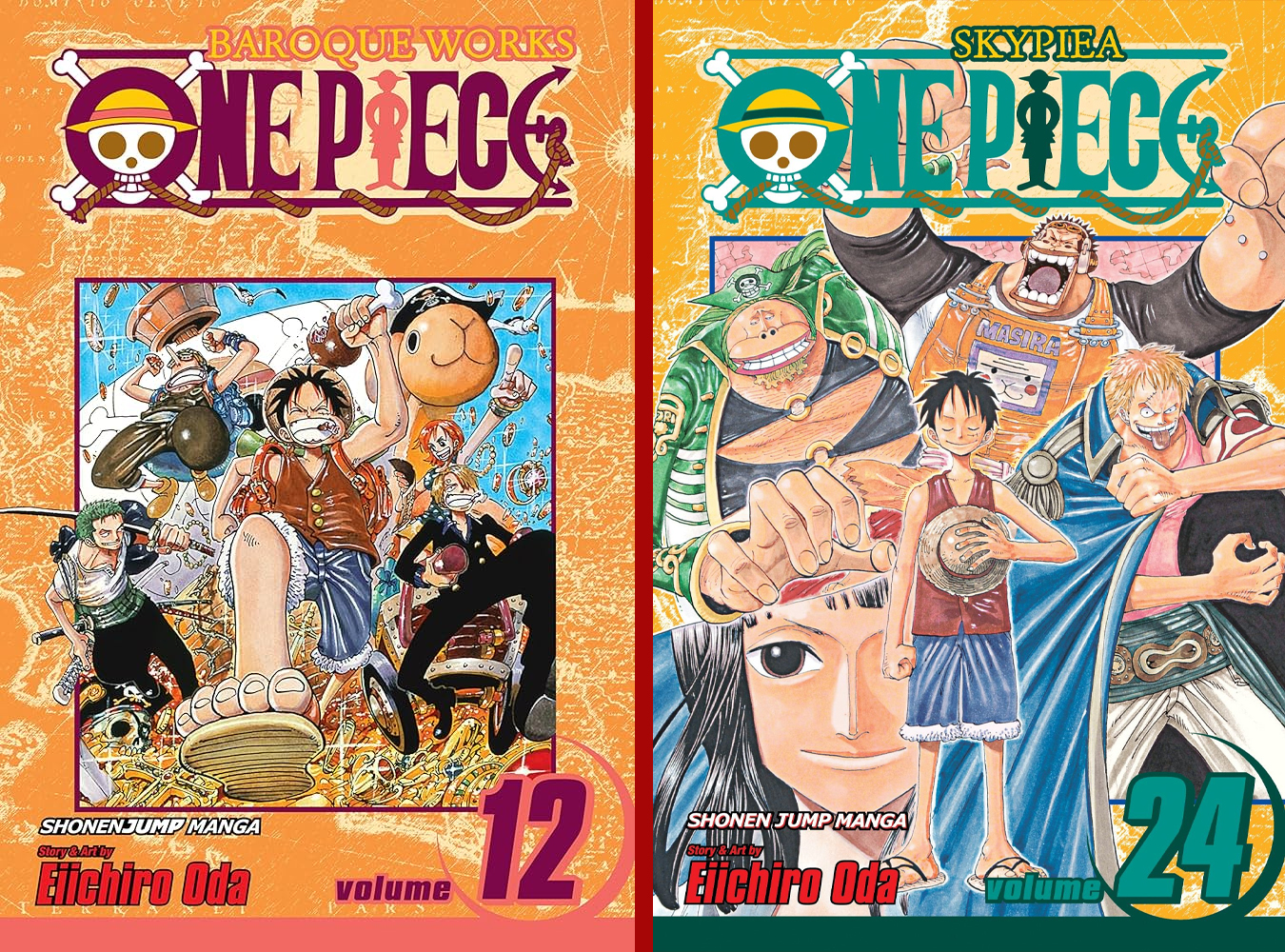
- Fish-Man Island Saga (Chapters 598-653)
- Dressrosa Saga (Chapters 654-801)
- Whole Cake Island Saga (Chapters 802-908)
- Wano Country Saga (Chapters 909-1057)
- Final Saga (Chapters 1058 – Ongoing)
Netflix’s Data-Driven Renewal Strategy
Netflix’s decisions on renewals are heavily influenced by viewership data, completion rates, and cost-effectiveness. The first season of OPLA demonstrated exceptional performance, amassing over 60 million views within its first 40 days of release. However, the second season, which faced a two-and-a-half-year production gap and an unconventional Tuesday release schedule, saw a notable decline in viewership. While it retained an impressive 66.3% of its Season 1 audience, translating to being 33.7% behind in viewing data, this downward trend is a factor Netflix will closely monitor. For a show as expensive as OPLA, sustained high viewership and completion rates are paramount for continued investment. It is plausible that Netflix is awaiting the performance metrics of Season 3 before committing to any renewals beyond that point, especially as the series approaches the "season eight" benchmark mentioned by Clements.
Manga-Exclusive Adaptation: No Filler Content
A crucial aspect of OPLA’s adaptation strategy, confirmed by co-showrunner Joe Tracz, is its strict adherence to the manga as the primary source material. Tracz explicitly stated in an interview, "I see a lot of people talk about our show as an anime adaptation. In fact, we’re adapting the manga… the manga is the original source material, that’s the Bible." This means that any content exclusive to the anime, such as filler arcs, will not be incorporated into OPLA. This decision is strategically sound, as it prevents unnecessary elongation of an already extensive story and maintains canonical consistency with Oda’s original vision. While some anime-exclusive content, like the popular G-8 Arc, has its fans, its inclusion in OPLA would only add to the logistical and financial burdens without advancing the core narrative, thus serving no practical purpose beyond fan service through references or Easter eggs.

Conclusion: An Ambitious but Measured Future
The future of Netflix’s One Piece Live Action is a complex interplay of creative ambition, immense fan expectation, stringent financial realities, and logistical constraints. The statements from the production team, coupled with the series’ current pacing, suggest a realistic and highly ambitious goal of adapting the entire pre-time skip saga, likely spanning around eight seasons. This would provide a complete and emotionally satisfying narrative arc for the Straw Hats’ initial journey, concluding at a natural high point.
Beyond this eight-season horizon, the prospect of adapting the post-time skip story becomes increasingly tenuous. The sheer volume of material, the practical challenges of actor aging, and the escalating production costs for increasingly grander arcs would necessitate an unprecedented commitment from Netflix and a sustained, exceptional global performance from the series. While the dream of seeing the entire One Piece saga brought to live-action remains potent for fans, the practicalities of television production suggest that the series will likely conclude its epic voyage well before reaching the manga’s ongoing narrative. For now, the focus remains on the immediate future: the highly anticipated Battle of Alabasta in Season 3 and the strategic decisions that will determine how much more of the Grand Line the Straw Hats will realistically sail on Netflix.