The 2024 edition of the Berlinale, one of the world’s most prestigious film festivals, found itself navigating a complex landscape of cinematic artistry and charged political discourse. While celebrating diverse narratives and groundbreaking filmmaking, the festival was simultaneously embroiled in significant controversy regarding its official stance, or perceived lack thereof, on the Israel-Hamas conflict. This tension underscored a perennial debate about the role of cultural institutions in addressing global political crises, particularly in a nation with Germany’s historical sensitivities.
A Retrospective’s Resonance: Lost in the 90s
Prior to the official competition announcements, the Berlinale launched a compelling retrospective titled Lost in the 90s. This curated series offered a sweeping exploration of a transformative decade, placing particular emphasis on the profound geopolitical shifts that followed the collapse of the Soviet Union and the reunification of Germany after the fall of the Berlin Wall. The program, notable for its wide geographic reach, assembled an eclectic collection of both documentaries and fiction films. It featured works from acclaimed directors such as Harun Farocki and Jean-Luc Godard, alongside lesser-known but equally significant pieces like the Belarusian documentary Orange Vests and Collapse, reportedly the first fiction feature addressing the Chornobyl catastrophe. This retrospective served as a poignant reminder of cinema’s power to document and interpret historical upheaval, showcasing formally daring directors with a distinct activist spirit. It implicitly set a high bar for the festival’s engagement with contemporary political issues, a bar that many attendees felt the main program struggled to meet.
The Political Crucible: Berlinale’s Stance on Palestine
The calls for the Berlinale to adopt a more explicit and openly political rhetoric, particularly in support of Palestine, intensified significantly during the 2024 edition. This sentiment had been brewing since the previous year, when initial appeals to condemn Israel’s actions were perceived by many as having been ignored by the festival leadership. Hopes for a shift in this stance were repeatedly dashed throughout the 2024 event, culminating in a series of highly publicized incidents.
The opening jury press conference quickly spiraled into a contentious affair, characterized by cautious statements and speeches that many perceived as compromising. A key moment of contention arose from director Wim Wenders’ remark, suggesting that cinema should ideally remain outside the realm of politics. This statement was met with palpable unease and disillusionment among many attendees, who argued that art and politics are inextricably linked, especially in times of global crisis. The discomfort reached an awkward climax during the closing ceremony. Several award recipients used their acceptance speeches to express pro-Palestine sentiments, a move that drew swift and sharp condemnation from German officials in the aftermath. This sequence of events highlighted the deep divisions within the cultural sector and between artists and governmental bodies regarding freedom of expression and political engagement.
Official Responses and Broader Fallout
Following the pro-Palestine speeches at the closing ceremony, German officials publicly denounced the statements. This reaction underscored the sensitive political climate in Germany, where the government maintains a strong stance in support of Israel, often citing historical responsibility linked to the Holocaust. The official denouncement sparked further debate about censorship and the limits of artistic expression within state-funded cultural events. Critics argued that such condemnations risked chilling free speech and undermined the very essence of a platform meant to foster diverse perspectives. The controversy also raised questions about the future independence of major cultural institutions in Germany and their ability to navigate complex international political landscapes without fear of reprisal or withdrawal of support. The incident became a case study in the broader global struggle for cultural institutions to balance artistic freedom with national political allegiances and public pressure.
The Forum Sidebar: A Haven for Daring Cinema
Amidst the swirling political controversies, the Berlinale’s Forum sidebar emerged as a crucial counterpoint, offering a space dedicated to political and experimental cinema. For many disillusioned attendees, the Forum proved to be a sanctuary, a place to encounter ideologically daring and formally inventive cinematic gems. This section of the festival has historically championed films that push boundaries, both in their thematic content and their aesthetic approach, providing a vital platform for voices that might otherwise be marginalized. The 2024 selection was no exception, delivering a powerful collection of documentaries that directly engaged with pressing social and political issues, often through innovative narrative techniques.
Deep Dive into Forum Selections
Scenario: Unpacking German Defense Politics
A distinctly Farockian spirit permeated Scenario, arguably the most politically incisive documentary of the edition. Directed by Marie Wilke, her third feature adopted an observational approach to critically interrogate the logic underpinning contemporary German, and by extension, European, defense politics. Wilke’s film takes viewers inside Europe’s largest military training ground, a sprawling complex where the mechanics of war are actively researched, rehearsed, and reflected upon. Through static, long takes, Wilke’s camera lingers on the meticulously choreographed combat rehearsals, then shifts to looser close-ups of civilian visitors absorbing information with a mix of curiosity and anxiety.
The masterful editing of Scenario, drawing from footage shot over an entire year, constructs a nuanced portrait of this institution’s vast scale and multifaceted operations. Wilke meticulously highlights the historical discourses embedded within military training, particularly when Bundeswehr troops deliver moral lessons referencing Germany’s Nazi past. This prompts a productive reflection on the cyclical nature of war. In this context, the familiar postwar mantra of "never again" begins to sound increasingly uncertain, eliciting nervous laughter from audiences during public screenings. The seemingly playful nature of the military training, combined with its pedantic assurance that such a manufactured system can adequately prepare for real conflict, appears increasingly and uncomfortably naive, especially given the escalating geopolitical tensions and the frequent incursions of Russian drones near NATO borders. Scenario thus serves as a chilling commentary on the preparedness and ethical considerations of modern military endeavors.
River Dreams: Voices from Kazakhstan’s Aksay River

Another profound exploration of political immersion through the national landscape came in River Dreams, from Kazakh director Kristina Mikhailova. Utilizing the Aksay River as a symbolic axis, Mikhailova recorded a series of intimate talking-head interviews with teenagers, activists, and artists, collectively assembling a powerful portrait of the contemporary Kazakh woman. Their reflections starkly reveal a depressingly misogynistic culture, with interviewees recounting experiences of banned feminist marches and the pervasive impunity surrounding gender-based violence. River Dreams also offers rare glimpses of anti-colonial sentiment, notably through the deliberate and prominent presence of the Kazakh language onscreen, challenging the historical dominance of Russian. Much like the stubborn flow of the river itself, these resilient voices navigate numerous obstacles, coalescing into an urgent and compelling activist force.
What truly distinguishes River Dreams is the very context of its arduous existence. As the first Kazakh film to compete at the Berlinale, its journey to the screen was a testament to perseverance against formidable odds. While Kazakhstan’s domestic film industry primarily focuses on low-brow genre productions, festival ambitions, particularly for documentaries, remain largely unprioritized. Despite winning a national pitching competition, the promised funding evaporated within opaque bureaucratic schemes, severely limiting opportunities for European co-production. However, the film’s commitment to social justice extended into its own production conditions. Over a lengthy development period, Mikhailova and her producer, Dana Sabitova, not only secured new industry connections but also launched "Women Make Docs," an initiative that has already achieved unprecedented international visibility for Kazakhstan’s nascent documentary sector, fostering a new generation of filmmakers.
Beaucoup Parle: Navigating French Immigration’s Labyrinth
A fierce struggle against bureaucratic systems forms the central subject of Beaucoup Parle, directed by Pascale Bodet, a film director and former film critic. The film immersively follows Amr Hanafy, an Egyptian-born man trapped in the Kafkaesque labyrinth of French immigration law. Adopting a vérité-like approach, Bodet chronicles Hanafy’s life as an undocumented resident who has lived and worked in a Parisian bakery for 17 years. A central challenge for Amr is his imperfect French—eloquently mirrored in the film’s title, "Beaucoup Parle" (roughly, "Much Talked About" or "Speaks A Lot," but also hinting at the struggle with language itself)—a symptom of his mental block before the perpetually foggy prospect of legalization.
The film’s modest yet immersive camera tracks Amr across various Parisian settings: terraces filled with cigarette smoke, dimly lit lawyer’s offices, and the mundane routines of his daily life. Through these casual observations, Beaucoup Parle assumes a charmingly tragicomic tone. In essence, the film unfolds as a productive exchange between Amr and Pascale, a symbiotic relationship where both parties benefit. Amr receives linguistic assistance during phone calls and invaluable speaking practice through their routine conversations, while Bodet gains a sharply contemporary and internationally resonant subject, embodied in an irresistibly charismatic protagonist. Their personal dynamic is equally compelling. Pascale frequently corrects Amr’s grammatical slips or poses seemingly banal questions about his exhaustion. Yet, within these exchanges, the subtle privilege gap between them becomes palpable, paradoxically granting Amr additional authority over his own story and, by extension, the broader migrant perspective it represents.
Crocodile: The Ingenuity of Nigeria’s "The Critics"
Pietra Brettkelly, known for documenting prolific subjects, turned her lens to an unusually dynamic group in Crocodile. The film offers a curious and inspiring portrait of "The Critics," a collective of young Nigerian filmmakers who gained prominence through their inventive, low-budget sci-fi films shared on YouTube. Renowned for their spectacular and fearlessly creative approach, The Critics ingeniously integrate everything from their younger siblings to stray props and the apocalyptic landscapes of their surroundings into dizzyingly inventive diegetic worlds.
Montaging excerpts from over fifty short films produced over the past 13 years, alongside remotely-conducted interviews, Brettkelly masterfully conveys their infectious bravado and burgeoning success, much of which has resonated internationally. During its 100-minute runtime, Crocodile delves into the intricate social conditions that have shaped the group. Brettkelly emphasizes the growth of their political awareness, offering a compelling reading of their sci-fi obsession not merely as escapism, but as a search for solace amidst chronic power outages, community skepticism, and the profound unrest surrounding the EndSARS protests against police brutality. Where the film truly excels is in capturing The Critics’ unique creative trajectory. Their focus is less on achieving "professionalism" as defined by Western standards and more on the authentic refinement of their own understanding of filmmaking – a sincere zeal and raw talent that no budget can manufacture.
If Pigeons Turned to Gold: A Deep Dive into Addiction
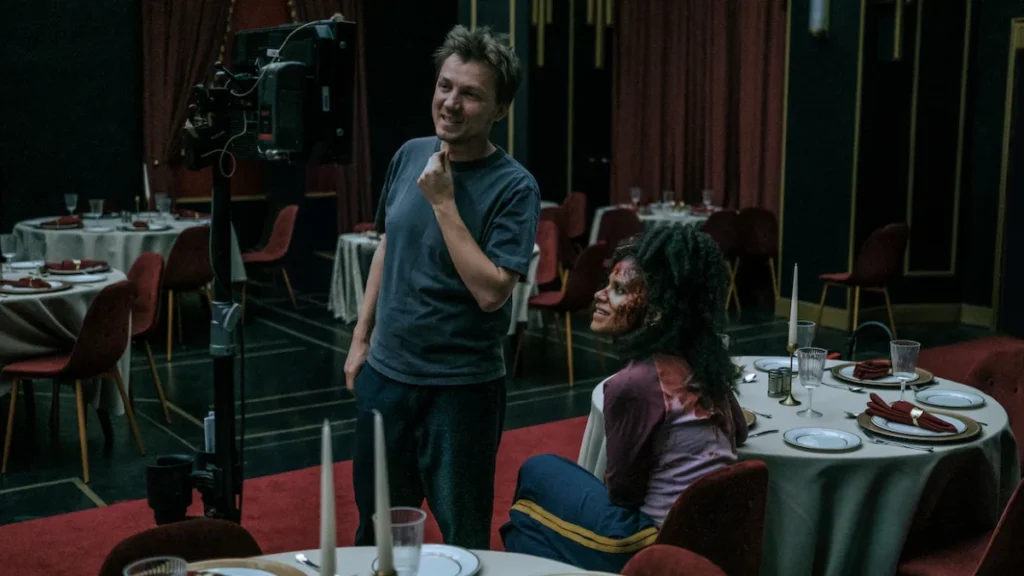
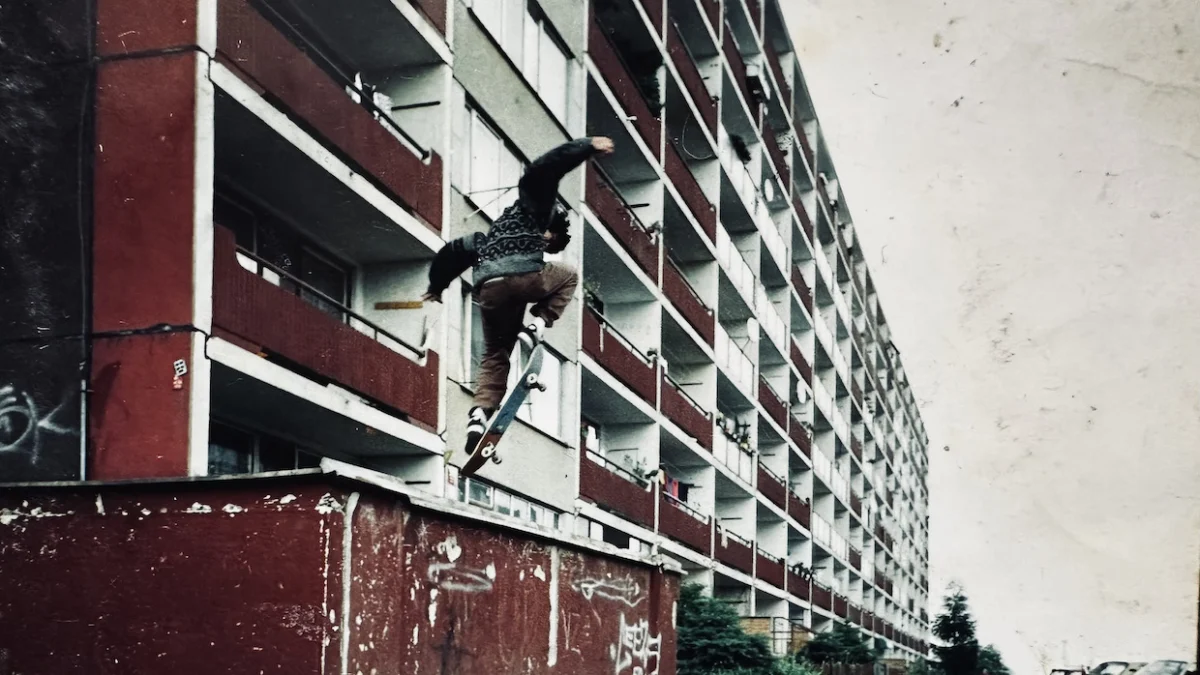
My personal Forum favorite, If Pigeons Turned to Gold, a film formally scandalous and striking in its psychological depth, hails from Czech debutant Pepa Lubojacki. A recent graduate of FAMU (Film and TV School of the Academy of Performing Arts in Prague), Lubojacki’s film also secured the festival’s main documentary award, marking a significant debut. Beginning production over five years ago, Lubojacki’s film courageously excavates the roots of her intergenerational struggle with addiction, focusing on her deceased father, her cousins, and, most prominently, her older homeless brother. Pepa finds herself inexorably drawn to her brother’s fate by a relentless yet often futile desire to help. This vicious cycle, compounded by a pressing sense of shame, becomes an inexhaustible and profoundly personal creative source for Lubojacki.
Pigeons adopts a narcotic, kaleidoscopic mode of narration, assembling its story through a dizzying array of techniques: AI-animated photographs, raw iPhone-shot documentation, stark graphic intertitles, absurd synth-infused beats, and wordplay bordering on nonsense. This multimedia arsenal is unleashed across two hours of controlled chaos, fusing childlike playfulness with an adult seriousness. The film’s flow undulates, mimicking the effects of psychoactive substances, at times erupting into hysterical flux, at others receding into moments of teary, profound observation. Lubojacki masterfully navigates the inherent risks of addiction-themed films, which often collapse into moralizing didacticism. Instead, her film openly admits the absence of any clear answers for how to live with and cope with such a complicated disease. It is precisely within this torrent of disordered consciousness, this abundance of expression unashamed of its experimental and emotional excess, that the director’s subjectivity finds its most lucid and compelling cinematic form.
Unavoidable Truths: Abdallah Al-Khatib’s Powerful Statement
A notable regret for many attendees was missing Abdallah Al-Khatib’s Chronicles From the Siege from the Perspectives program. This Algerian-French-Palestinian docu-fiction hybrid explores the harrowing realities of survival in a war zone. Al-Khatib’s powerful acceptance speech at the closing ceremony, upon winning the section’s top prize, delivered precisely the kind of direct political statement that the festival leadership had seemingly sought to avoid. He declared: "I will say my final word to German government: you are partners in the genocide in Gaza by Israel. I believe you are intelligent enough to recognize this truth, but you choose to not care. Free Palestine, from now until the end of the world." This unequivocal statement served as a stark, undeniable reminder of the political realities confronting the world and the role artists feel compelled to play in addressing them, directly challenging the notion that cinema can or should remain apolitical.
Broader Implications for Film Festivals and Political Discourse
The 2024 Berlinale underscored the increasingly difficult position of major cultural institutions in a globally interconnected and politically charged world. The tension between artistic freedom, political advocacy, and institutional neutrality became a central theme, casting a long shadow over the celebrations of cinematic achievement. While the festival successfully showcased a diverse array of groundbreaking films, particularly within its Forum sidebar, the controversies surrounding its political stance highlighted the complex ethical and practical challenges of navigating humanitarian crises.
The events at the Berlinale are emblematic of a broader trend where artists and audiences increasingly expect cultural platforms to take clear moral and political stands, challenging the traditional separation of art and politics. The German government’s reaction to the awardees’ speeches also illuminated the specific sensitivities and pressures faced by institutions in nations with complex historical legacies. As film festivals continue to evolve, they will undoubtedly face renewed scrutiny regarding their curatorial choices, their platforms for expression, and their willingness to engage with the pressing global issues of our time, ensuring that the dialogue between cinema and society remains as vibrant and challenging as ever.