Jack El-Hai, the acclaimed author of "The Nazi and the Psychiatrist," delves into the profound complexities surrounding the Nuremberg Trials and the psychological examination of its most notorious defendants, a subject now brought to global audiences through James Vanderbilt’s visceral drama, Nuremberg, currently streaming on Netflix. El-Hai’s seminal work forms the bedrock of the film, focusing on the unprecedented mission of U.S. Army psychiatrist Dr. Douglas M. Kelley, portrayed by Rami Malek, as he navigated the minds of captured German war criminals, most notably Hermann Wilhelm Göring, powerfully embodied by Russell Crowe.
El-Hai, whose literary contributions also include "The Lobotomist" and the forthcoming "The Case of the Autographed Corpse," meticulously chronicled decades of Dr. Kelley’s life for his book. While the film adaptation, helmed by Zodiac screenwriter James Vanderbilt, necessarily condenses Kelley’s expansive journey into a more focused narrative, El-Hai expresses a profound respect for the adaptation’s fidelity to the core truths. "When people ask me how factual it is, I say it’s mostly factual, or it’s factual enough," El-Hai shared in an interview with What’s On Netflix. He acknowledged that certain dramaturgical liberties were taken, asserting that "the inaccuracies, which are there for dramatic purposes, help make it the good movie that it is." Following the film’s significant success on Netflix, El-Hai reflected on Dr. Kelley’s life, the enduring legacy of the Nuremberg Trials, and the critical questions he hopes Nuremberg will ignite in its viewers.
Dr. Douglas M. Kelley’s Unprecedented Mission and Ethical Tightrope
Dr. Douglas M. Kelley found himself in an extraordinary and historically unprecedented position following World War II. Tasked with assessing the mental states of the Nazi high command held captive in Nuremberg, Kelley was arguably the first military psychiatrist ever assigned to suspected war criminals. This novel role meant he operated without established precedents or clear guidelines, forcing him to define his professional boundaries in real-time.
El-Hai’s extensive research, including privileged access to Kelley’s personal effects, illuminates the profound ethical tightrope Kelley walked. His library, inherited by his son Doug, contained numerous books by the German defendants, many of them signed in prison – a unique collection of artifacts actively pursued by Kelley. Beyond these, 15 boxes of materials revealed a treasure trove of historical documents: medical records, handwritten autobiographies from each defendant, memos exchanged between Kelley and the court, and extensive notes from his interviews, including the results of Rorschach inkblot tests. Most intriguingly, a vial labeled "Hermann Göring’s paracodeine" sat decades later, a stark reminder of the close, yet professionally ambiguous, relationship Kelley cultivated.
Kelley viewed some of these men, Göring included, as his patients. He successfully helped Göring overcome his addiction to paracodeine and even aided in improving his physical fitness before the trial. This doctor-patient dynamic, however, clashed with his obligations as a U.S. Army officer and his role serving the tribunal. Later, he developed a relationship with the prosecution, an aspect subtly portrayed in the film. "It wouldn’t be acceptable behavior now from a psychiatrist," El-Hai conceded, "but I tend to want to cut him some slack because no one had ever been through this before." Kelley’s professionalism, viewed through a modern lens, might be questioned, but within the unique historical context, his actions were a pioneering, if sometimes blurred, exploration of the human mind at its darkest hour.

The Nuremberg Trials: A Landmark in International Justice
The Nuremberg Trials, officially known as the International Military Tribunal (IMT), represent a pivotal moment in the history of international law and justice. Convened by the Allied powers – the United States, Great Britain, France, and the Soviet Union – from November 20, 1945, to October 1, 1946, these trials sought to hold accountable the surviving leadership of Nazi Germany for their atrocities. This ambitious undertaking was unprecedented, marking the first time in history that leaders of a defeated nation were tried for "crimes against peace," "war crimes," and "crimes against humanity."
The trials took place in the Palace of Justice in Nuremberg, Germany, a city symbolically chosen for its historical association with the Nazi Party’s propaganda rallies. The primary aim was not merely to secure convictions but to publicly document the overwhelming evidence against these men, ensuring that the historical record of Nazi barbarity was irrefutable. Defendants faced charges ranging from the planning and execution of aggressive warfare to the systematic extermination of millions in the Holocaust. Of the 24 high-ranking Nazi officials indicted, 12 were sentenced to death by hanging, three to life imprisonment, four to lesser prison terms, and three were acquitted. Robert Ley committed suicide before the trial began, and Gustav Krupp von Bohlen und Halbach was deemed medically unfit for trial.
Jack El-Hai underscores the profound significance of this collaborative international effort. "Something like this had never been done before," he stated, emphasizing its success despite its flaws. The trials, though criticized by some for being "victor’s justice," were generally regarded as fair, allowing defendants to mount a defense. Their enduring legacy lies in establishing fundamental principles of international law, including the concept that individuals can be held criminally responsible for war crimes and crimes against humanity, regardless of their official position. This laid the groundwork for future international tribunals and the establishment of the International Criminal Court (ICC).
Kelley’s Post-Nuremberg Life and the Uncomfortable Truth of "22 Cells"
The experience in Nuremberg irrevocably altered Dr. Kelley, both professionally and personally. His initial hope that psychiatry could provide a definitive explanation for the Nazis’ depravity was shattered. His extensive tests and interviews revealed no shared psychiatric disorder among the defendants; they largely fell within a normal range of personality. This shocking realization led him to a disturbing conclusion: if psychiatry couldn’t explain their evil, then what could? He dedicated the remainder of his life to pursuing this elusive answer.
Kelley documented his findings in his book, "22 Cells in Nuremberg," which, upon its release, was met with public indifference, even hostility, and ultimately flopped. The public, still reeling from a long and bloody war that claimed tens of millions of lives, was unwilling to accept Kelley’s message: that these men were not "madmen" or "monsters" but rather ordinary individuals, capable of extraordinary evil. His unsettling implication was that such individuals, and the potential for authoritarianism, could exist "all around us." Kelley never suggested everyone possessed this capability, but rather that a subset of individuals in any society did.
His return to the United States was marked by a profound sense of disillusionment. He viewed his own country through newly critical eyes, observing the rise of demagogues in the Southern states, enforcing Jim Crow laws and legislating restrictions on Black voters. These phenomena eerily echoed the authoritarian tendencies he had witnessed and studied in Germany. He began to fear that America harbored the potential for a homegrown authoritarian movement, believing it had already taken root in the South.

These dire warnings, woven into "22 Cells in Nuremberg," were not what the post-war public wanted to hear. The notion that Nazism or fascism could rise again, or that their defeat in World War II was not a permanent global eradication, was profoundly unwelcome. Kelley’s book sold poorly, leaving him feeling unappreciated and deeply disappointed. This personal and professional setback plunged him into a downward spiral throughout the 1950s, characterized by heavy drinking, marital difficulties, and a challenging relationship with his son, Doug. Tragically, Dr. Douglas M. Kelley took his own life in 1958, a stark testament to the immense psychological toll of his unique experience.
Contemporary Resonance: Authoritarianism as a Human Phenomenon
El-Hai passionately articulates two critical messages he hopes the film successfully conveys, both central to his original book. The first highlights the enduring importance and efficacy of international cooperation in the pursuit of justice, exemplified by the Nuremberg Trials. He laments the current global landscape where such concerted international efforts are less common, particularly with major powers like the United States withholding widespread support from bodies like the International Criminal Court. A stronger, more unified ICC, he argues, could significantly enhance accountability for leaders’ actions worldwide.
The second, and perhaps most urgent, message directly echoes Kelley’s unsettling conclusion: authoritarianism is not confined to specific nationalities like German, Italian, or Japanese. Instead, it is a "human phenomenon," a recurrent threat that societies must be prepared to confront. This insight gains particular resonance in the current political climate, as El-Hai observes a significant shift since his book’s 2013 publication. Back then, he notes, far-right extremist groups were largely at the "edge of political discourse"; today, they occupy a more central position.
The film’s scene where Justice Jackson explains the trial’s importance to Kelley amidst the ruins of Nuremberg Stadium, expressing his desire for a better future, strikes El-Hai as particularly poignant. Jackson’s idealistic vision, born from a period of immense cynicism and lack of empathy, carries a powerful modern parallel. War, as El-Hai notes, is the antithesis of empathy, prioritizing self- or national interest over the broader interests of humanity. This scene, though set decades ago, serves as a timeless reminder of the need for principled action against forces that threaten human dignity.
Cinematic Accuracy and the Essence of Truth
While acknowledging the inherent need for dramatic license in film adaptations, El-Hai praised Nuremberg for capturing the "essence of the truth." He cited a scene early in the movie where Justice Jackson visits the Vatican to solicit support from the Pope. This particular encounter, El-Hai believes, is an invented scene, yet it serves a crucial narrative purpose. It illuminates Jackson’s fervent motives for establishing the trial and aptly portrays the "gray area" of neutrality and complicity that many institutions, including the Vatican, navigated during the Nazi era. It’s an example, El-Hai notes, where an "inaccurate" detail effectively conveys a deeper, contextual truth.
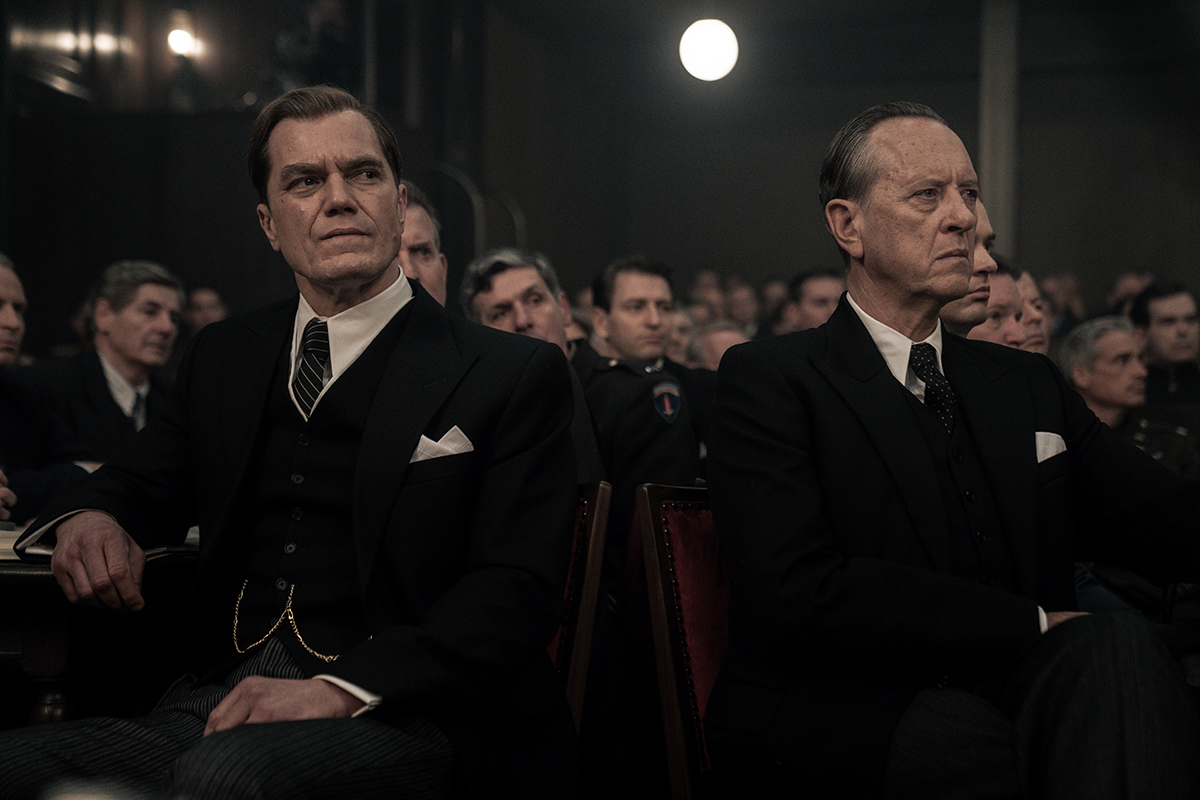
His visit to the film’s set in Hungary during spring 2024 provided further insight into the meticulous production design by Eve Stewart. El-Hai was struck by the accuracy of the Nuremberg courtroom set, which, though appearing smaller than he imagined, was built to scale. The prison cells were also remarkable in their authenticity, constructed as full four-walled enclosures rather than typical cutaway sets. This ensured that scenes depicting interactions between Rami Malek’s Kelley and Russell Crowe’s Göring in Göring’s cramped cell felt genuinely claustrophobic and historically precise.
El-Hai also touched upon the deliberate silences of Göring in the film, reflecting his historical reticence. In his research, El-Hai understood that Göring was meticulously crafting his defense even during his psychiatric evaluations. He sought to present himself and his colleagues not as agents of hatred or antisemitism, but as patriots driven by nationalism and loyalty to Hitler—a dangerous rationale that nonetheless shaped his narrative. Göring strategically withheld details about his true feelings regarding the Holocaust, which he undoubtedly sanctioned, and maintained a guarded stance on his relationships with other defendants, such as Rudolf Hess. This selective disclosure ensured that much of Göring’s internal world and motivations remained, and largely still remain, a mystery.
The Enduring Questions for Audiences
Ultimately, Jack El-Hai hopes Nuremberg prompts audiences to grapple with fundamental questions that transcend the historical context of the trials. "What makes people do evil?" he asks. "What do we think of people who do evil? What do we do when we see others doing evil?" He emphasizes the significance of the dialogue, particularly Leo Woodall’s character’s extended monologue towards the film’s end, concerning the dangers of societal complacency and the collective responsibility when people "let it happen."
As global politics continue to evolve, El-Hai hopes viewers will critically examine these questions. The film and its source material serve as a powerful cautionary tale, urging introspection about the societal conditions that allow authoritarianism to flourish and the individual and collective actions required to prevent it. "Most of us do not want a state like that in America," El-Hai concludes, acknowledging that some might. "What can we do to prevent it? That’s another question I hope people will ask." The story of Douglas M. Kelley and the Nuremberg Trials, therefore, is not merely a historical recounting but a resonant warning, prompting contemporary audiences to reflect on vigilance, justice, and the perpetual struggle against human evil.