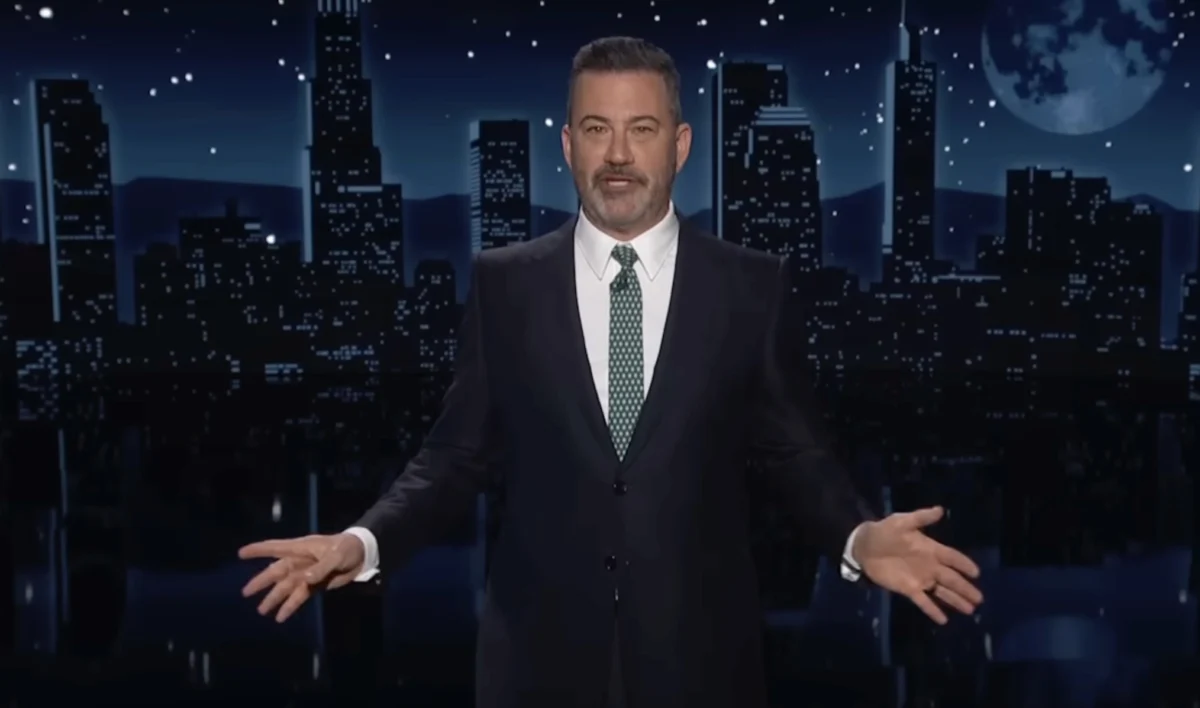
Jimmy Kimmel used his Tuesday night broadcast of Jimmy Kimmel Live! to deliver a scathing critique of former President Donald Trump’s latest legislative push, the Safeguard American Voter Eligibility (SAVE) Act, characterizing the move as an attempt to "hijack" the upcoming midterm elections. During the March 17 episode, the late-night host dissected the former president’s rhetoric regarding election integrity, specifically focusing on a series of social media posts in which Trump demanded that Congressional Republicans pass the act or face the loss of his political endorsement. Kimmel’s monologue blended political commentary with a fact-based rebuttal of the claims surrounding non-citizen voting and the logistical realities of mail-in ballots, marking a significant moment in the ongoing cultural and political debate over American voting systems.
The Monologue: Analysis of the SAVE America Act Critique
Kimmel opened his segment by addressing the former president’s recent activity on Truth Social, where Trump has been aggressively promoting the SAVE America Act. Kimmel referred to the former president using the moniker “King Hungry VIII,” suggesting that the push for the legislation is rooted in a fear of poor performance in the upcoming midterm cycle. According to Kimmel, the act is less about securing elections and more about creating barriers to entry for legitimate voters.
The late-night host specifically highlighted a post where Trump described the SAVE America Act as "one of the most important and consequential pieces of legislation in the history of Congress and America itself." Trump’s post further claimed that the United States is the "only country in the world" that allows "rigged mail-in voting." Kimmel immediately challenged this assertion, noting that dozens of democratic nations, including Canada, Spain, Germany, and Switzerland, utilize mail-in or absentee balloting systems to facilitate citizen participation.
Kimmel also pointed out a linguistic error in Trump’s social media rhetoric, specifically the use of the word "mutilization" in a post regarding transgender issues and sports. Kimmel noted that the word does not exist in the English language and questioned the relevance of including social issues like "men in women’s sports" within a discussion ostensibly focused on the mechanics of mail-in voting. "Maybe he’s confusing M.A.I.L. with M.A.L.E., I don’t know," Kimmel quipped, suggesting a lack of focus in the former president’s policy demands.
Legislative Context: What is the SAVE Act?
The legislation referred to by both Trump and Kimmel is the Safeguard American Voter Eligibility (SAVE) Act. Introduced by Republican lawmakers, the bill seeks to amend the National Voter Registration Act of 1993 to require individuals to provide documentary proof of U.S. citizenship in person when registering to vote in federal elections. Proponents of the bill argue that it is a necessary measure to prevent non-citizens from influencing American elections, citing concerns over border security and the potential for illegal registration.
Under the proposed act, acceptable forms of identification would include a U.S. passport, a birth certificate proving U.S. birth, a naturalization certificate, or a Consular Report of Birth Abroad. The bill also mandates that states establish a program to periodically clean their voter rolls of non-citizens and provides for private rights of action, allowing citizens to sue election officials who fail to follow these requirements.
However, critics, including many Democratic lawmakers and voting rights advocates, argue that the bill addresses a problem that is statistically non-existent. They contend that the legislation would disproportionately affect low-income voters, students, and the elderly—groups who may not have easy access to passports or original birth certificates. Kimmel echoed these concerns, stating that the act "doesn’t protect your right to vote. It does the opposite. It makes voting so difficult, a lot of people won’t bother to do it."
Supporting Data: The Reality of Non-Citizen Voting
A central pillar of Kimmel’s monologue was the presentation of data regarding the actual frequency of non-citizen voting in the United States. To illustrate his point, Kimmel cited statistics from the state of Michigan during the 2024 election cycle. He noted that out of approximately 8 million registered voters in the state, only 0.0028% of the votes cast were found to be illegal.
"That’s 15 people in a state with 8 million registered voters," Kimmel emphasized. This data aligns with numerous independent studies conducted by academic institutions and non-partisan organizations. For example, a study by the Brennan Center for Justice analyzed 42 jurisdictions in the 2016 general election and found that out of 23.5 million votes, election officials referred only an estimated 30 incidents of suspected non-citizen voting for further investigation or prosecution. This represents 0.0001% of the votes cast.
Furthermore, federal law already prohibits non-citizens from voting in federal elections. The Illegal Immigration Reform and Immigrant Responsibility Act of 1996 makes it a federal crime for non-citizens to vote, punishable by fines, imprisonment, and deportation. Most states have similar laws for state and local elections. Kimmel argued that because the mechanism to prevent non-citizen voting is already in place and effectively functioning, the SAVE Act serves as a solution to an "imaginary problem."
Logistical Challenges: The Passport and Birth Certificate Requirement
Kimmel’s critique also delved into the logistical hurdles that the SAVE Act would impose on the American electorate. He highlighted the fact that a significant portion of the U.S. population does not possess a valid passport. According to the U.S. Department of State, as of 2023, there were approximately 160 million valid U.S. passports in circulation. Given a total population of over 330 million, this leaves more than half of the country without this specific form of citizenship proof.
The alternative requirement—a birth certificate—presents its own set of challenges. Kimmel shared a personal anecdote, stating, "Do you know where your birth certificate is? Mine is with my baby teeth. I have no idea where it is." While intended as a joke, the comment touches on a serious issue for many voters. Obtaining a certified copy of a birth certificate often requires a fee, a trip to a government office, or a lengthy mail-in process, which can serve as a functional "poll tax" for those with limited financial means or mobility.
Research from the Center for Democracy and Civic Engagement at the University of Maryland suggests that roughly 1 in 10 adult U.S. citizens do not have easy access to documents proving their citizenship. For these individuals, the SAVE Act could represent a total barrier to exercising their right to vote, potentially disenfranchising millions of eligible citizens in the name of stopping a handful of illegal votes.
Political Pressure and the 2026 Midterm Strategy
The timing of Trump’s push for the SAVE Act is significant as the political landscape shifts toward the midterm elections. By making the endorsement of Republican candidates contingent on their support for the bill, Trump is effectively setting a litmus test for the party. During his monologue, Kimmel noted the "all-caps" nature of Trump’s threat: "I WILL NEVER (EVER!) ENDORSE ANYONE WHO VOTES AGAINST SAVE AMERICA!!!"
This strategy serves two purposes for the former president. First, it reinforces his narrative that the 2020 and 2024 elections were marred by fraud, a claim that continues to resonate with a core segment of his base despite being rejected by dozens of courts and election officials from both parties. Second, it puts Congressional Republicans in a difficult position, forcing them to choose between supporting a controversial voting bill or risking a primary challenge from a Trump-endorsed opponent.
Kimmel characterized this as a "sore loser" mentality, suggesting that Trump is "just making stuff up" because he cannot accept past electoral defeats. The host specifically mocked Trump’s claim that Democrats in California receive up to eight ballots while Republicans are lucky to receive one. Kimmel compared these claims to "coupons from Bed, Bath, and Beyond," highlighting the absurdity of the allegation that a state’s mailing system would discriminate based on party affiliation in such a manner.
Official Responses and Broader Implications
While the SAVE Act has gained traction among House Republicans, it has faced stiff opposition in the Senate and from the White House. The Biden administration has previously signaled that it views such measures as unnecessary and harmful to voter participation. In a statement regarding similar voter ID initiatives, the administration emphasized that "the right to vote is the foundation of our democracy" and that efforts to restrict that right based on unfounded claims of fraud undermine the democratic process.
Civil rights organizations, including the ACLU and the NAACP, have also voiced strong opposition. These groups argue that the SAVE Act targets marginalized communities who are less likely to have the required documentation. They point to the history of the United States, where "proof of citizenship" requirements were often used in the Jim Crow South to prevent Black citizens from voting.
Conversely, supporters of the bill, such as Speaker of the House Mike Johnson, have defended the measure as a common-sense safeguard. Johnson has argued that with the current situation at the southern border, the risk of non-citizens registering to vote has increased, making the SAVE Act a proactive necessity rather than a reactive one.
Conclusion: The Intersection of Entertainment and Politics
Jimmy Kimmel’s monologue reflects a broader trend in American media where late-night entertainment serves as a primary vehicle for political fact-checking and commentary. By using humor to dismantle complex legislative proposals and highlight statistical realities, Kimmel reaches an audience that may not be engaged with traditional news outlets.
The debate over the SAVE America Act is likely to intensify as the midterm elections approach. As Kimmel concluded in his segment, the clash is not merely about the mechanics of voting, but about the fundamental narrative of American democracy. Whether the legislation is a "consequential piece of history" or an "attempt to hijack the election" remains a point of deep partisan divide, with Kimmel firmly placing himself on the side of those who view it as an unnecessary barrier to the ballot box.
As the video of Kimmel’s monologue continues to circulate on social media, it adds another layer to the national conversation regarding election integrity, voter access, and the influence of the former president over the legislative priorities of the Republican Party. For now, the SAVE Act remains a central flashpoint in the lead-up to the next major test of the American electoral system.