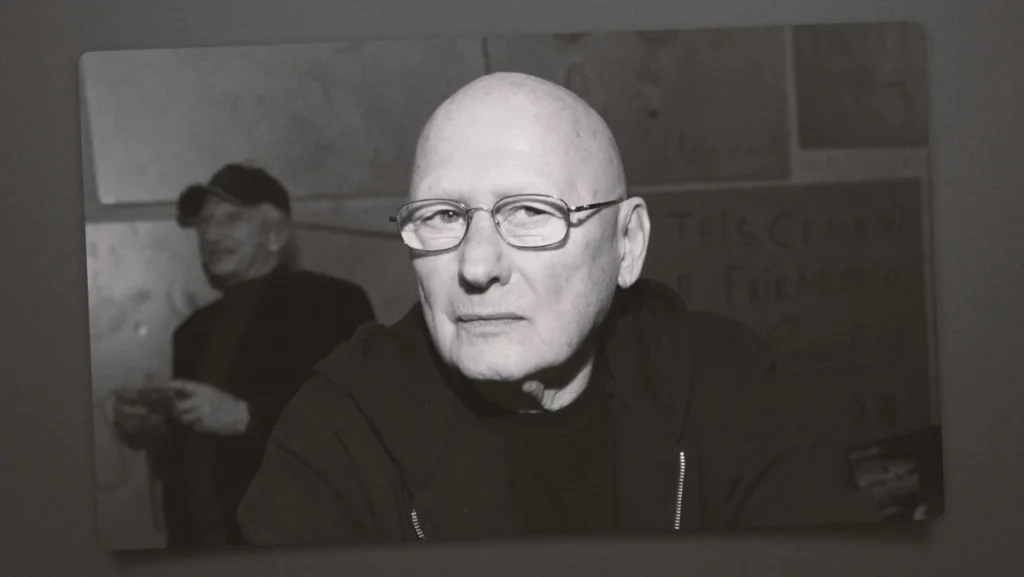
Veteran British actor John Nolan, a distinguished figure in theatre, television, and cinema, whose career spanned over six decades and included notable collaborations with his nephews, filmmakers Christopher and Jonathan Nolan, passed away on Saturday at the age of 87. The news of his death was first reported by the Stratford-Upon-Avon Herald. Nolan leaves behind a rich legacy defined by his versatility, his commitment to the craft, and his profound influence on a generation of performers and creators, including his globally acclaimed nephews.
A Career Forged in British Theatre Excellence
Born John Francis Nolan on May 22, 1938, in London, his journey into acting began with a deep immersion in the vibrant and rigorous British theatrical tradition. Nolan’s early passion for performance saw him touring Ireland with a "Fit Up" traveling company, gaining invaluable experience on the road. He honed his craft at the prestigious Drama Centre London, an institution renowned for its intense, method-acting-based training that has shaped many prominent British actors. This foundational training instilled in him the discipline and depth that would characterize his extensive career.
Following his studies, Nolan quickly made his mark on the London stage. He was cast as Romeo opposite Francesca Annis’s Juliet at the Richmond Theatre, a role that showcased his early promise and romantic leading man potential. His talent soon led him to the Royal Court Company, a seminal institution known for its groundbreaking new writing and innovative productions, which played a crucial role in the post-war British theatre renaissance.
His tenure with the Royal Shakespeare Company (RSC) further solidified his reputation as a serious and capable classical actor. The RSC, an organization synonymous with theatrical excellence and the interpretation of Shakespearean works, provided Nolan with a platform to tackle challenging roles. During his two years with the company, he performed as Clitus in Julius Caesar and took on roles in diverse productions such as The Merry Wives of Windsor, Arthur Kopit’s Indians, and Colley Cibber’s restoration comedy The Relapse, the latter directed by the acclaimed Trevor Nunn. Nunn, who would later lead the RSC and the National Theatre, was known for his innovative and often definitive stagings, and Nolan’s involvement underscored his standing within the theatrical community. Later in his career, Nolan would also be a member of Nunn’s innovative National Theatre ensemble company, further cementing his association with the pinnacles of British theatre.
Television Breakthroughs: From Period Drama to Sci-Fi Thriller
The 1970s marked a significant period for Nolan as he transitioned into television, capturing national attention with a series of prominent roles. In 1970, he starred in the title role of the BBC miniseries Daniel Deronda, an acclaimed adaptation of George Eliot’s complex 1876 novel. Eliot’s work, known for its psychological depth and social commentary, presented a formidable challenge, and Nolan’s portrayal of the heroic young man garnered significant praise. The miniseries format, a staple of the BBC, allowed for nuanced character development and detailed storytelling, and Daniel Deronda was a critical success, establishing Nolan as a leading man on the small screen.
Immediately following Daniel Deronda, Nolan took on another impactful role as the scientist Geoff Hardcastle in the first two seasons (1970-71) of the BBC environmental drama Doomwatch. This groundbreaking series, which explored the ethical implications of scientific advancements and environmental degradation, was ahead of its time, tackling themes that resonate even more strongly today. Doomwatch achieved considerable popularity and cult status, demonstrating Nolan’s ability to navigate diverse genres and portray complex characters. In 1973, he continued his television prominence as Nick Faunt in the romantic Depression-era ITV miniseries Shabby Tiger, further showcasing his range.
His extensive television resume also included appearances in iconic British series such as The Prisoner, known for its surreal and allegorical storytelling; The Sweeney, a gritty police drama; General Hospital; Target; Return of the Saint; Enemy at the Door; and the long-running crime drama Silent Witness, illustrating his consistent presence and adaptability across various formats and eras of British television.
A Diverse Theatrical and Cinematic Portfolio
Beyond his early RSC and Royal Court work, Nolan maintained a robust career on stage, demonstrating his enduring commitment to live performance. In 1980-81, he notably co-wrote and played the title role in a Dostoyevsky trilogy for the Bristol New Vic company, a regional theatre known for its innovative programming and strong ensemble work. This venture highlighted his creative ambitions beyond acting, showcasing his talents as a writer and adapter. He also starred as Henry David Thoreau in Jerome Lawrence and Robert E. Lee’s The Night Thoreau Spent in Jail, a play exploring themes of civil disobedience and individualism, and as Doc in Tennessee Williams’s Small Craft Warnings, a poignant character study. These roles underscored his intellectual curiosity and his ability to inhabit characters of profound psychological depth.
Nolan’s cinematic presence, though less prolific than his stage and television work in certain periods, included roles in films such as Bequest to the Nation (1973), a historical drama about Lord Nelson; the horror film Terror (1978); and The World Is Full of Married Men (1979). However, it was his later collaborations with his nephews, Christopher and Jonathan Nolan, that brought him wider international recognition in the 21st century.
The Nolan Family Cinematic Legacy: A Unique Collaboration
The relationship between John Nolan and his nephews, Christopher and Jonathan Nolan, provided a unique dimension to his later career, connecting him to some of the most critically and commercially successful films and television series of the modern era. Christopher Nolan, known for his intricate narratives and grand cinematic vision, frequently included his uncle in his projects, a testament to their close personal bond and John Nolan’s reliable acting prowess.
Their first cinematic collaboration was in Christopher Nolan’s debut feature, Following (1998). This low-budget, independent neo-noir thriller, shot on weekends over a year, provided an early glimpse of Christopher Nolan’s distinctive directorial style. John Nolan’s involvement in this foundational project underscored the family’s collaborative spirit from the very beginning of Christopher’s illustrious career.
John Nolan gained significant global exposure through his recurring role as Douglas Fredericks, a member of the Wayne Enterprises board, in two installments of Christopher Nolan’s iconic "Dark Knight Trilogy." He appeared in Batman Begins (2005) and The Dark Knight Rises (2012), both starring Christian Bale as Batman. Batman Begins revitalized the superhero genre, earning critical acclaim and grossing over $374 million worldwide. The Dark Knight Rises, the epic conclusion to the trilogy, was an even greater commercial phenomenon, achieving over $1.08 billion globally and solidifying the trilogy’s place as one of the most influential superhero sagas in cinematic history. Nolan’s subtle yet impactful presence in these blockbusters, often seen in tense boardroom scenes discussing the fate of Wayne Enterprises, added a layer of gravitas and an intimate family connection to these monumental productions.
His collaboration with Christopher Nolan continued with Dunkirk (2017), the critically acclaimed historical war film. Dunkirk, lauded for its innovative storytelling and immersive sound design, was a commercial success, grossing over $527 million worldwide and earning multiple Academy Award nominations. Nolan’s appearance in this film further cemented his place within his nephew’s celebrated filmography.
A Pivotal Role in Person of Interest
John Nolan also played a crucial and memorable role in the CBS drama Person of Interest, co-created by his nephew Jonathan Nolan, who also served as an executive producer and co-wrote The Dark Knight Rises. Joining the series in its second season in 2013, John Nolan portrayed the enigmatic and formidable John Greer. Greer was introduced as a former MI6 agent who later became the leader of Decima Technologies, a shadowy organization dedicated to developing and controlling the Samaritan AI, a powerful and malevolent artificial intelligence system designed for mass surveillance and control.
Over 28 episodes through the fifth and final season, Nolan’s portrayal of Greer was a masterclass in understated menace. His character became a primary antagonist, embodying the show’s complex themes of surveillance, artificial intelligence, and moral ambiguity. Greer’s calm demeanor, sharp intellect, and unwavering belief in Samaritan’s vision made him a chilling and compelling villain, leaving a lasting impression on the series’ dedicated fanbase. Person of Interest was critically praised for its intricate plotting, exploration of contemporary technological anxieties, and strong performances, and Nolan’s contribution was integral to its success and narrative depth.
Beyond the Screen: Voice Work and Enduring Presence
In addition to his visible acting roles, John Nolan’s distinctive voice also found a platform. He was recognized by international airline passengers as the voice of The Discovery Channel’s in-flight entertainment, a testament to his clear diction and authoritative yet engaging vocal quality. This particular role highlighted his versatility and his ability to connect with audiences through various mediums.
A Family Man and His Legacy
John Francis Nolan was the younger brother of Brendan Nolan, Christopher and Jonathan Nolan’s late father, making the familial ties central to his personal and professional narrative. He was married to actress Kim Hartman in 1975, known for her roles in the children’s drama Grange Hill and the popular sitcom ‘Allo ‘Allo!. Together, they raised two children, Miranda and Tom, and were doting grandparents to Dylan and Kara. His family was a cornerstone of his life, providing a foundation for his extensive career.
Industry figures and colleagues are expected to remember John Nolan for his profound dedication to his craft, his versatile talent, and his warm personality. Tributes from the Royal Shakespeare Company, his co-stars from Daniel Deronda and Doomwatch, and the cast and crew of Person of Interest are anticipated, reflecting on his professional integrity and collegiality.
Christopher and Jonathan Nolan, who were profoundly influenced by their uncle’s career and wisdom, are anticipated to share their personal reflections on his impact. Their collaborative work stands as a testament not only to their shared creative vision but also to the deep familial bond that underpinned their professional endeavors. John Nolan’s legacy will undoubtedly be remembered through his significant contributions to British theatre and television, his impactful roles in globally renowned cinematic works, and his enduring influence as a patriarch of a remarkably talented artistic family. He leaves behind a body of work that will continue to be appreciated by audiences and studied by aspiring actors for generations to come.