Less than one week after ascending to the role of Chief Executive Officer at The Walt Disney Company, Josh D’Amaro has been thrust into a series of high-stakes corporate crises and strategic pivot points that threaten to reshape the company’s immediate trajectory. From the collapse of a billion-dollar artificial intelligence partnership to significant layoffs at a key gaming partner and the cancellation of high-profile television content, D’Amaro’s "honeymoon period" has been replaced by an urgent need for crisis management and strategic recalibration.
The most immediate blow to Disney’s technological roadmap came on Tuesday, when news broke that a planned $1 billion partnership with OpenAI had collapsed. The deal, which was intended to integrate OpenAI’s Sora video-generation technology into the Disney+ platform and allow for the use of Disney’s vast IP library within the Sora ecosystem, was terminated just twenty-four hours before it was slated to close. The dissolution of the agreement coincided with OpenAI’s decision to shutter the Sora AI video application, citing technical hurdles and shifting internal priorities. For Disney, the exit represents more than just a lost partnership; it is a significant setback for the company’s stated goal of leading the entertainment industry in generative AI integration.
The Collapse of the OpenAI-Sora Partnership
The partnership with OpenAI was a cornerstone of the strategy laid out by D’Amaro’s predecessor, Bob Iger. Iger had frequently signaled to Wall Street that Disney intended to lean aggressively into AI to modernize its content creation and distribution models. During a recent earnings call, Iger emphasized that Disney should "get on board" with disruptive technologies to "advantage our company and our shareholders." The vision for Sora was particularly ambitious: it aimed to allow Disney+ subscribers to interact with characters in a generative digital environment and eventually enable users to create their own short-form content using Disney-sanctioned AI tools.
However, the deal faced significant internal and external friction. Creative professionals within Disney’s animation and film divisions expressed deep-seated concerns regarding the "slop" produced by early iterations of Sora and the potential for AI to devalue human artistry. Furthermore, legal concerns regarding IP guardrails and the rights of creators remained a sticking point. While Disney’s official statement on Tuesday noted that the company will "continue to engage with AI platforms" in a responsible manner, the loss of the OpenAI partnership leaves a vacuum in Disney’s digital innovation strategy that D’Amaro must now fill.
Turbulence at Epic Games and the Gaming Strategy
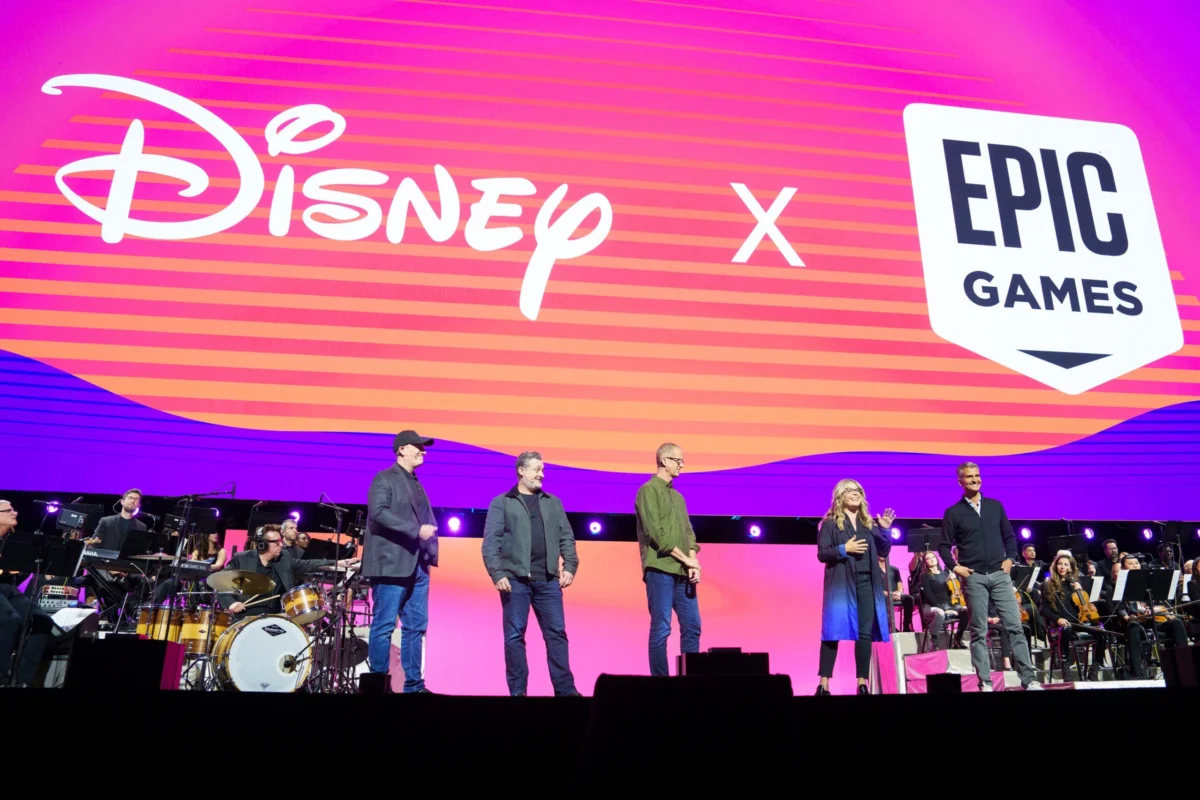
Simultaneously, D’Amaro is navigating a crisis involving one of his most significant strategic bets: the $1.5 billion investment in Epic Games. On Tuesday, Epic Games announced it was laying off approximately 20 percent of its workforce, totaling over 1,000 employees. Epic CEO Tim Sweeney cited a significant downturn in engagement and revenue from the company’s flagship title, Fortnite, as the primary driver for the cuts. Sweeney’s memo to staff was blunt, stating that the company was "spending significantly more than we’re making" following a post-2024 decline in user activity.
This development is particularly problematic for D’Amaro, who was the primary architect of the Disney-Epic partnership. D’Amaro, who serves as an observer on Epic’s board, has long championed the idea of a "Disney Universe" built within the Fortnite ecosystem—a persistent digital world where fans can interact with Marvel, Star Wars, and Pixar franchises. Kevin Mayer, former Disney strategy chief and current co-lead of Candle Media, noted that D’Amaro views the digital realm as a "comprehensive way to monetize" fan interest in a manner that mirrors the immersive experience of a physical theme park.
Despite the layoffs, Epic Games has maintained that the Disney project remains on track. However, the financial instability at Epic raises questions about the scale and timeline of the collaboration. To signal his continued commitment to the sector, D’Amaro recently elevated Sean Shoptaw, Disney’s games chief, into the leadership circle of Dana Walden, placing gaming on an equal organizational footing with film and television.
Content Risks and the Cancellation of The Bachelorette
The challenges of the past week have extended into Disney’s traditional media assets as well. ABC, a subsidiary of Disney, made the last-minute decision to pull an essentially completed season of The Bachelorette from its broadcast schedule. The move followed the emergence of a video involving the season’s star, Taylor Frankie Paul, related to an alleged domestic violence incident.
While the decision to scrap the season was made by executives within the television division, the financial and reputational fallout reaches the CEO’s office. Estimates suggest that the cancellation could cost the company upwards of $30 million in lost production costs and advertising revenue. There is ongoing speculation that Disney may attempt to recoup some of these losses by moving a re-edited version of the footage to Hulu, but the incident adds to the "flurry of major events" D’Amaro must manage as he seeks to maintain the prestige of Disney’s legacy brands.
Geopolitical Instability and the Abu Dhabi Expansion
In the "Experiences" division—the segment of the company where D’Amaro built his reputation—new risks are emerging on the international stage. Last year, Disney announced plans for a landmark theme park in Abu Dhabi, developed in partnership with the Miral Group. The project was intended to be the centerpiece of Disney’s expansion into the Middle East, capitalizing on Abu Dhabi’s status as a global transit hub.
However, the escalating conflict between Israel and Iran has cast a shadow over the project. With the United Arab Emirates (UAE) positioned in a volatile geographic region, the potential for regional war poses a direct threat to international tourism and the long-term viability of the Yas Island development. During Disney’s annual shareholder meeting last week, D’Amaro alluded to the project as the "first new park in a decade in a brand new corner of the world," though he notably omitted the name "Abu Dhabi" from his remarks, a move interpreted by analysts as a cautious response to the current geopolitical climate.
Chronology of a Crisis: The First 14 Days
To understand the magnitude of the challenges facing D’Amaro, a timeline of the past two weeks reveals a rapid succession of events:
- March 18: D’Amaro addresses shareholders, outlining his vision for Disney+ as a "digital centerpiece" and emphasizing a "category of one" status for the company.
- March 20: Reports surface of domestic violence allegations involving the star of The Bachelorette, prompting emergency meetings at ABC.
- March 22: Disney officially pulls The Bachelorette from its lineup, signaling a potential $30 million loss.
- March 24: Tension rises in the Middle East, prompting internal reviews of the Abu Dhabi theme park’s construction timeline and security protocols.
- March 25 (Morning): Epic Games announces a 20% workforce reduction, citing a "downturn in Fortnite engagement."
- March 25 (Afternoon): OpenAI announces the shuttering of Sora; Disney subsequently pulls out of the $1 billion partnership agreement.
Strategic Implications and the Path Forward
The convergence of these events suggests that D’Amaro’s tenure will be defined by his ability to adapt to a "fragmented and disrupted world." Analysts suggest that while the OpenAI deal’s collapse is a setback, it may provide Disney with an opportunity to develop more proprietary AI tools or seek partners with more robust IP protections. The company’s $1.5 billion stake in Epic Games remains a long-term play, but its success is now tied to the recovery of the broader gaming market and the stabilization of Fortnite.
Furthermore, the shift in leadership style from Iger to D’Amaro is already becoming evident. While Iger was known for high-profile acquisitions (Pixar, Marvel, Lucasfilm), D’Amaro appears focused on the "interactivity" of those assets. His strategy relies on the synergy between the "digital centerpiece" of Disney+ and the physical experiences of the parks.
As D’Amaro told shareholders last week, the next chapter of Disney will be driven by "world-class creativity, enhanced by technology." However, the reality of his first week suggests that the technology side of that equation remains volatile. The new CEO must now prove that Disney can remain a "category of one" while navigating the very real constraints of global economics, technological failures, and geopolitical unrest.
The immediate task for D’Amaro will be to reassure investors during the next quarterly earnings call that these setbacks are temporary "course corrections" rather than systemic failures. With the gaming division reorganized and the AI strategy in flux, the industry will be watching closely to see if D’Amaro can maintain the "sense of optimism" championed by Iger while executing the pragmatic pivots required by the present reality.