French writer-director Julia Ducournau, celebrated for her visceral and boundary-pushing films, presents her third feature, Alpha, a work she describes as "a very grounded family drama," yet one that undeniably resonates with the thematic intensity of her previous acclaimed projects. The film, released on March 27 via NEON, has sparked considerable discussion regarding its perceived tonal shift from her earlier, more overtly body horror-centric narratives, Raw (2016) and the Palme d’Or-winning Titane (2021). However, in conversation with filmmaker Robert Eggers, Ducournau asserts, "To me it’s not really a shift… Though I completely understand why it might feel like one." This statement encapsulates the film’s nuanced position within her evolving oeuvre, demonstrating a continuous exploration of identity, transformation, and the complex facets of love, albeit through a distinctly different stylistic and narrative approach.
From Cannibalism to Marble: Ducournau’s Evolving Thematic Landscape
Julia Ducournau burst onto the international film scene with Raw in 2016, a coming-of-age story that shocked and captivated audiences with its unflinching portrayal of a vegetarian veterinary student who develops a taste for human flesh. The film, a collegiate cannibal breakout, garnered significant critical attention for its bold direction and allegorical depth, earning accolades such as the FIPRESCI Prize at the Cannes Film Festival. It established Ducournau as a fearless voice, unafraid to confront societal taboos and explore the grotesque as a means of understanding the human condition.
Her follow-up, Titane, released in 2021, further solidified her reputation as a visionary auteur. A provocative blend of body horror, surrealism, and dark humor, Titane told the story of Alexia, a woman who develops a sexual fetish for cars after a childhood accident and becomes pregnant by one. The film’s audacious narrative, coupled with its stunning visual artistry, earned Ducournau the prestigious Palme d’Or at the Cannes Film Festival, making her only the second female director to receive the award. Titane was praised for its radical exploration of gender identity, parental love, and the concept of chosen family, all filtered through a lens of extreme physical transformation. Both Raw and Titane employed explicit bodily changes as central narrative devices, leading audiences to associate Ducournau with a distinct brand of body horror that pushes emotional and physical limits.
With Alpha, Ducournau delves into familiar territory—physical transformation remains integral—but recontextualizes it within the framework of a deeply personal family drama. This shift from the overt genre trappings of her previous works to a more "grounded" narrative is what prompts audience and critical re-evaluation. Yet, for Ducournau, the underlying thematic concerns remain consistent: "What I’m always trying to dissect is love: what it means, what shapes it takes, how unconditional love can bond two people who are strangers to each other." This continuity underscores her artistic integrity, demonstrating that her interest lies not merely in shock value, but in the profound exploration of human connection, however unconventional its manifestation.
"Alpha": A Grounded Family Drama Amidst a Metaphorical Epidemic
The narrative of Alpha centers on the titular character, Alpha (Mélissa Boros), a 13-year-old of French and Algerian descent, a background shared with the now-41-year-old Ducournau. The film places Alpha at a crucial juncture of adolescence, further complicated by a pervasive public health crisis. This fictional viral outbreak, where organic tissue is bizarrely replaced by marble and blood morphs into red sand, serves as a poignant mirror to the AIDS epidemic that severely impacted France throughout the 1980s and 1990s. This historical context is vital for understanding the film’s deeper social commentary. The AIDS crisis in France, as in many parts of the world, was characterized by profound societal fear, misinformation, and intense stigma directed at affected communities, particularly queer men and intravenous drug users. This historical parallel imbues Alpha‘s narrative with a powerful resonance.
In the film, Alpha’s mother (Golshifteh Farahani) is one of the few compassionate doctors working in a hospital ward where the care for these patients is often neglected by other staffers. The scenes within the quarantined hospital starkly depict the stigma and neglect faced by the afflicted: meals "forgotten" in hallways, heart rate monitors flatlining for hours, all driven by an irrational fear of contagion. Unsurprisingly, the atrophying patients are predominantly queer men and addicts, a direct echo of the demographic most heavily impacted by AIDS. Among them is Alpha’s uncle, Amin (Tahar Rahim), a chronic heroin user who has been living with the disease for years.
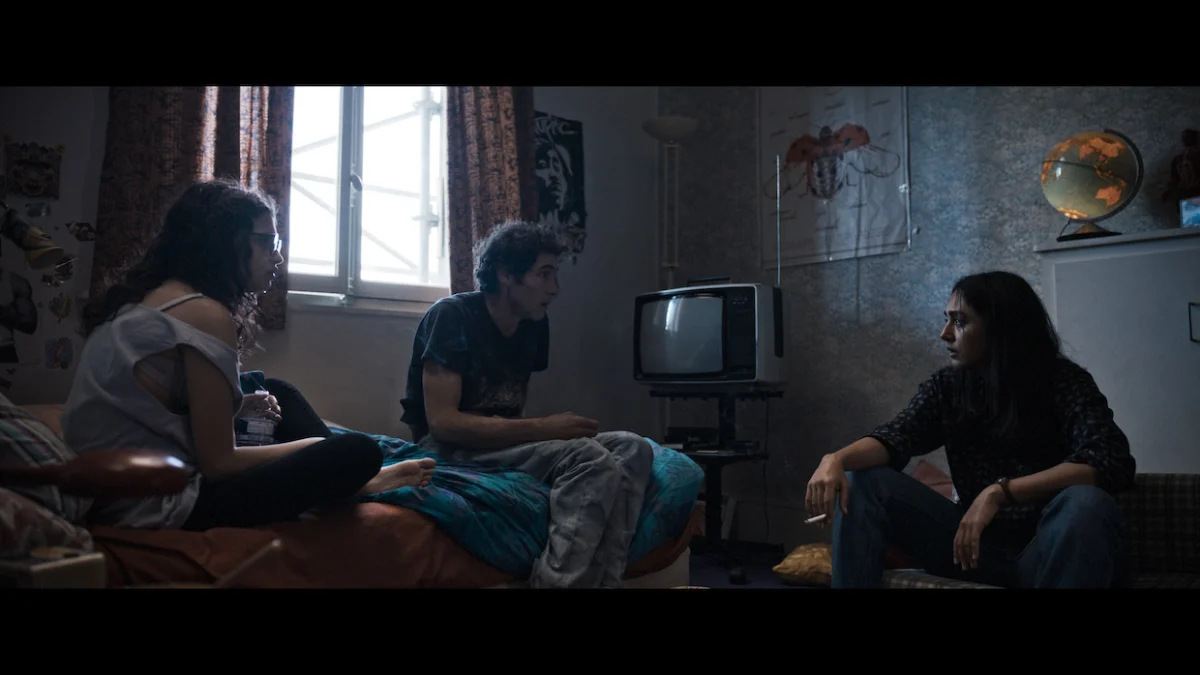
The familial tension escalates when Alpha receives a crude stick-and-poke tattoo at a house party. This seemingly minor act ignites her mother’s deep-seated paranoia, triggering fears that Alpha’s fate might tragically parallel that of her estranged brother, Amin. The core of Alpha then unfolds as the three characters—Alpha, her mother, and Amin—are forced to coexist under one roof. Through this forced proximity, the film masterfully converges past and present timelines, illustrating the immense mental and emotional toll exacted by years of repressed grief and unresolved trauma within the family unit. Ducournau’s personal connection to the story, particularly her own mixed heritage and the chaotic yet loving dynamics of her childhood, infuse the film with an authentic emotional core. The struggles of Alpha to find her place in a family marked by bickering, laughter, and an unspoken history reflect a universal search for belonging amidst complex emotional landscapes.
Crafting Authenticity: Casting and Performance Dynamics
The success of Alpha hinges significantly on the nuanced, moving, and grounded performances delivered by its cast. Ducournau’s casting process for the film highlights her commitment to both established talent and fresh faces, fostering a dynamic on-screen chemistry.
For the pivotal roles of Alpha’s mother and uncle, Ducournau wrote the parts specifically for Golshifteh Farahani and Tahar Rahim, respectively. Both actors are highly recognized figures in French cinema and have successfully built international careers, making them strong anchors for the film. Rahim, known for his critically acclaimed performance in A Prophet (2009) and subsequent roles in films like The Mauritanian (2021), brings a profound physicality and intensity to his characters. Farahani, with a diverse filmography including Paterson (2016) and Pirates of the Caribbean: Dead Men Tell No Tales (2017), is celebrated for her powerful and empathetic portrayals. Ducournau specifically notes their public presence and activism—Farahani’s vocal advocacy for women’s rights, particularly Iranian women, and Rahim’s brave engagement in public discourse—as aligning with the spirit she sought for her characters. Their shared physical approach to acting, prioritizing embodied performance over intellectualization, also resonated deeply with Ducournau’s directorial philosophy.
For the role of Alpha, Ducournau made a deliberate choice to cast a newcomer, Mélissa Boros, who was 19 years old during filming, despite the character being 13. This decision was rooted in ethical considerations, as Ducournau felt the dark subject matter and the exploration of nascent sexuality within the context of a pandemic (and disease transmission through bodily fluids) was too sensitive for an actual minor. Casting a younger-looking adult allowed for a safer environment to explore these themes without making an unintended "political statement about fear spreading in society and trickling down to younger generations." Boros, who is neither a trained ballerina nor an actress, brought a genuine awkwardness and quirky physicality to the role, authentically embodying the vulnerability and confusion of a teenager grappling with a rapidly changing body and challenging circumstances. This mix of experienced and emerging talent, Ducournau explains, often leads to a productive synergy, where newcomers are motivated by their seasoned counterparts, and established actors are invigorated by the unpredictable energy of new talent.
Ducournau’s rehearsal process, strikingly different from that of Robert Eggers, further informs the authenticity of the performances. While Eggers favors extensive blocking rehearsals to lock in physical grammar and pacing (as evident in The Lighthouse), Ducournau adopts a more organic approach. She avoids formal blocking, believing that the way characters move in a room should emerge naturally, attuned to the actors’ physical and emotional states on any given day. This method is particularly crucial for depicting physical transformation, which she insists should not be a "gimmick." Instead, the actor must "appropriate the new body, to experience the pain and the new feelings that come with it, and to work with it on set in real time." The only exceptions are stunts and precise choreography, such as the synchronized sleeping sequence in Alpha, which requires meticulous planning. Beyond these, Ducournau relies heavily on extensive conversations with her actors, building an intimate relationship based on trust and a shared understanding of the story’s emotional core. This intensive dialogue, exemplified by her regular meetings with Tahar Rahim during pre-production, ensures that by the time filming begins, "it clicked immediately. Full trust on both sides."
The Aesthetics of Transformation: Marble, Light, and Artistry
One of the most striking visual elements in Alpha is the "marbleization" imagery, the bizarre transformation of organic tissue into marble and blood into red sand. This concept was central to Ducournau’s vision from the very inception of the film, serving not merely as a grotesque visual but as a profound symbolic statement.

Ducournau explains that the idea of marble bodies stemmed from a desire to elevate the lives and deaths of people marginalized by society. Traditionally, marble has been reserved for depicting figures of nobility, saints, kings, and heroes—those considered "more than human." By applying this "noble material" to the patients suffering from the fictional disease, Ducournau consciously seeks to "reveal them, to show respect for their journey, and in a way to memorialize them." This artistic choice directly counters the societal stigma that historically demonized victims of epidemics like AIDS. It transforms the perceived horror of their condition into a form of tragic beauty, compelling the audience to confront their humanity rather than recoil in fear.
This approach was a deliberate effort to avoid the "actively harmful" reactions (like fainting) that some audiences experienced during her previous, more explicit body horror films. For Alpha, Ducournau’s central concern was to ensure that viewers "be able to relate to the humanity of these patients, see it and never lose touch with it. I didn’t want them to become ‘other.’" This careful navigation of genre elements distinguishes Alpha from being a mere genre film, solidifying its identity as a "very grounded family drama" where even the unrealistic iconography feels deeply real within the film’s established world.
The concept of beauty itself became a conundrum for Ducournau during the writing process. Initially, she aimed for the audience to find the marbleized bodies explicitly beautiful, but she recognized the inherent subjectivity of beauty. Her resolution came in a powerful scene where Alpha encounters a marbleized teacher in a waiting room. While others react with fear and rejection, Alpha looks at him with "pure curiosity" and genuine conviction, stating, "No, but you’re beautiful. That’s true." This moment, Ducournau realized, shifts the directorial point of view to the character’s, allowing Alpha’s innocent perception to guide the audience’s understanding of beauty in unexpected forms.
Ducournau’s visual language is further enriched by her profound engagement with art history, an influence she shares with her long-time Director of Photography. While acknowledging David Cronenberg’s "education" on her early filmmaking sensibilities, she emphasizes that her primary visual touchstones are paintings and photography rather than other films. Artists like Francis Bacon, known for his raw and unsettling portrayals of the human form; Robert Mapplethorpe, celebrated for his stark and sensual photography; Frida Kahlo, with her deeply personal and often painful self-portraits; and Louise Bourgeois, whose sculptures explore themes of the body, family, and trauma, continuously inspire her. She cites a Winslow Homer painting as an example of how she and her DP approach lighting and composition, seeking daring movements that challenge viewer expectations of focus. This deep artistic wellspring allows Ducournau to craft a unique aesthetic that elevates her narratives beyond mere storytelling, transforming them into rich, multi-layered visual experiences.
The Filmmaker’s Process: Writing, Directing, and the "Ecstasy" of Creation
The creative process, particularly writing, is often described by filmmakers as a solitary and arduous journey. Robert Eggers, who sometimes writes with a partner, acknowledges the "loneliness of the long-distance runner." Julia Ducournau echoes this sentiment, vividly characterizing writing as "ninety-eight percent despair and chaos—no hope, no glory—and two percent ecstasy." This slim margin of exhilaration, she believes, is what writers must cling to, a reward earned through immense effort and isolation. The alienating nature of the process, where thoughts about the script consume one’s waking moments, making them "less available for the people in your life," is a sacrifice many writers understand.
Ducournau’s journey into directing was almost accidental. Originally aspiring to be a screenwriter, she found herself picking up cameras and gathering small crews in film school, discovering that directing was a natural "extension of writing." The camera became another tool for storytelling, sentences replaced by on-set choices. For her, "it’s constant writing," with even post-production serving as a "sharpening" of the initial intention. Every decision—from camera angles to shot lists, storyboards, and actor direction—contributes to sculpting the narrative. She firmly believes that if the finished film precisely mirrors the script, something has been missed; true cinematic magic occurs when the story transcends its written form through the myriad choices made during production.
This commitment to the evolving nature of her work is evident in her relentless fight for specific scenes that resonate deeply with her vision, even if they challenge production constraints. She describes writing as a "masochistic" act, driven by an attachment to those one or two scenes that feel "so alive, so right." For Alpha, the lunch scene became one such battleground. Narratively, it doesn’t advance the plot, and its two days of filming represented a significant cost for a 41-day shoot. Yet, Ducournau fought fiercely for it, understanding its essential role in providing "such a deep sense of this family—the way they’ve denied parts of their history in order to keep standing and loving each other, the way taboo operates within the family unit."
The scene is profoundly autobiographical, drawing from her own childhood experience of growing up in a chaotic yet loving French-Algerian family where language barriers (French, Berber) did not impede an "animal communication" of emotions. The interplay of simultaneous bickering, love, yelling, and laughter, often set against the backdrop of Beethoven, directly mirrors her upbringing. For Ducournau, this scene encapsulates the question of "elected family"—the daily, conscious work of choosing and nurturing familial bonds, intertwining blood ties with elective connections. This personal investment in the material underscores the emotional depth she strives for in her filmmaking, transforming individual experiences into universally resonant themes.
Implications and Legacy: Redefining Genre and Human Connection
Alpha represents a pivotal moment in Julia Ducournau’s burgeoning career, solidifying her position as a singular and essential voice in contemporary cinema. While it may appear as a departure for audiences accustomed to the overt body horror of Raw and Titane, it is, for Ducournau, a deeper dive into her consistent obsessions: the nature of love, the complexities of identity, and the transformative power of the human experience.
The film’s exploration of a metaphorical public health crisis, rooted in the historical context of the AIDS epidemic, allows Alpha to transcend simple genre classification. By using the fantastical element of marbleization to elevate and memorialize the marginalized, Ducournau effectively redefines what "body horror" can be—moving beyond visceral shock to profound empathy and social commentary. This approach challenges traditional genre boundaries, proving that even the most extreme physical transformations can serve a deeply humanistic purpose.
Alpha‘s focus on a "grounded family drama" offers a rich tapestry of emotional complexity, exploring repressed grief, societal stigma, and the arduous yet rewarding work of forming familial bonds. The meticulous casting, particularly the decision to feature a talented newcomer like Mélissa Boros alongside established stars like Tahar Rahim and Golshifteh Farahani, reflects Ducournau’s commitment to authentic, nuanced performances that anchor the film’s emotional core. Her unique directorial process, prioritizing organic discovery and deep actor-director trust over rigid blocking, allows for a raw and genuine portrayal of human connection.
Critically, Alpha is likely to be received as a mature evolution of Ducournau’s style. While some may miss the overt shock elements of her earlier films, many will appreciate the refined thematic depth and the sophisticated use of metaphor. The film’s aesthetic influences, drawn heavily from fine art and photography, contribute to a visually stunning and intellectually stimulating experience that further establishes Ducournau’s unique artistic vision.
Ultimately, Alpha is poised to spark important conversations about public health, societal prejudice, the multifaceted nature of grief, and the enduring power of family, both by blood and by choice. It reinforces Ducournau’s legacy as a filmmaker who is not afraid to confront the uncomfortable truths of the human condition, always pushing the boundaries of cinematic expression to reveal the extraordinary within the seemingly ordinary. Her ability to sculpt complex narratives from deeply personal experiences, transforming "despair and chaos" into moments of "ecstasy," ensures her continued relevance and impact on the global film landscape.