Following the unprecedented critical and commercial success of its debut season, the experimental comedy series created by Lee Eisenberg and Gene Stupnitsky returns with a significantly expanded scope and a new central figure. The sophomore installment, titled Jury Duty Presents: Company Retreat, shifts the action from the confined setting of a Los Angeles County courthouse to the sprawling, high-stakes environment of a corporate team-building event. At the heart of this elaborate ruse is Anthony, a recently hired temporary worker who remains entirely unaware that his new colleagues, his supervisors, and the very company he is representing are part of a meticulously scripted theatrical production.
The Evolution of the Scripted Hoax Format
The return of the series marks a pivotal moment for Amazon and its Freevee brand, which found an unlikely juggernaut in the original Jury Duty. That series, which followed the earnest Ronald Gladden through a fake trial, managed to revitalize the "hoax" genre of television. Unlike predecessors such as Punk’d or The Joe Schmo Show, which often leaned into mean-spirited pranks or humiliation, Eisenberg and Stupnitsky’s approach prioritized a "hero narrative." The goal was not to make the subject look foolish, but to provide a platform for their inherent goodness to shine through amidst escalating absurdity.
The second season aims to replicate this alchemy while navigating the "sophomore slump" common in high-concept reality hybrids. The primary challenge facing the production team—which includes director Jake Szymanski—was the increased difficulty of maintaining the illusion now that the show has become a cultural touchstone. To combat potential recognition, the production upscaled its logistical operations, moving away from a public-facing civic duty setting to a private, controlled corporate retreat. This shift allowed for a more immersive, "Big Brother" style surveillance apparatus, utilizing hidden cameras embedded in everyday objects, false walls, and remote control rooms to monitor Anthony’s reactions 24/7.
Chronology of Production and Development
The development of Company Retreat began shortly after the first season’s conclusion in early 2023. Following three Primetime Emmy nominations—including Outstanding Comedy Series—and a Peabody Award win, the creators were tasked with identifying a setting that felt as mandatory and structured as a court of law but offered more room for physical comedy and interpersonal drama.
By late 2024, the fictional entity "Rockin’ Grandma’s Hot Sauce" was conceived. The production team spent months developing a comprehensive corporate history, complete with branding, product lines, and a complex internal hierarchy. The casting process for the ensemble was equally rigorous, requiring actors who were not only skilled in traditional scripted comedy but also capable of sustained, high-level improvisation for days at a time.
The filming took place over the course of a single week at a secluded resort. Anthony was brought into the fold under the impression that he had been hired as a temporary administrative assistant to help facilitate the annual retreat for Rockin’ Grandma’s Hot Sauce. From the moment he arrived, every interaction was choreographed to test his patience, leadership, and moral compass.
Supporting Data: The Impact of Season One
To understand the stakes of Company Retreat, one must look at the data trailing its predecessor. Season one of Jury Duty was a statistical anomaly for the Freevee platform. According to internal streaming metrics and third-party analytics, the show experienced a "word-of-mouth" growth pattern rarely seen in the era of peak TV.
- Awards Performance: The series secured two Golden Globe nominations and three Emmy nominations, a first for a series originating on a free, ad-supported streaming service (FAST).
- Cultural Reach: The show generated over 300 million views across social media platforms like TikTok and Instagram, where clips of Ronald Gladden’s genuine reactions went viral.
- Genre Resurgence: Industry analysts noted a 15% uptick in the development of "unscripted-hybrid" pilots following the show’s success, as networks sought to replicate its low-cost, high-engagement model.
This success provided the budget for Season Two to "up the ante," as described by the production notes. The scale of the "Company Retreat" is estimated to be nearly double that of the courthouse set, involving a 14-member ensemble cast and a vastly more complex technical infrastructure.
Character Dynamics and the Ensemble Cast
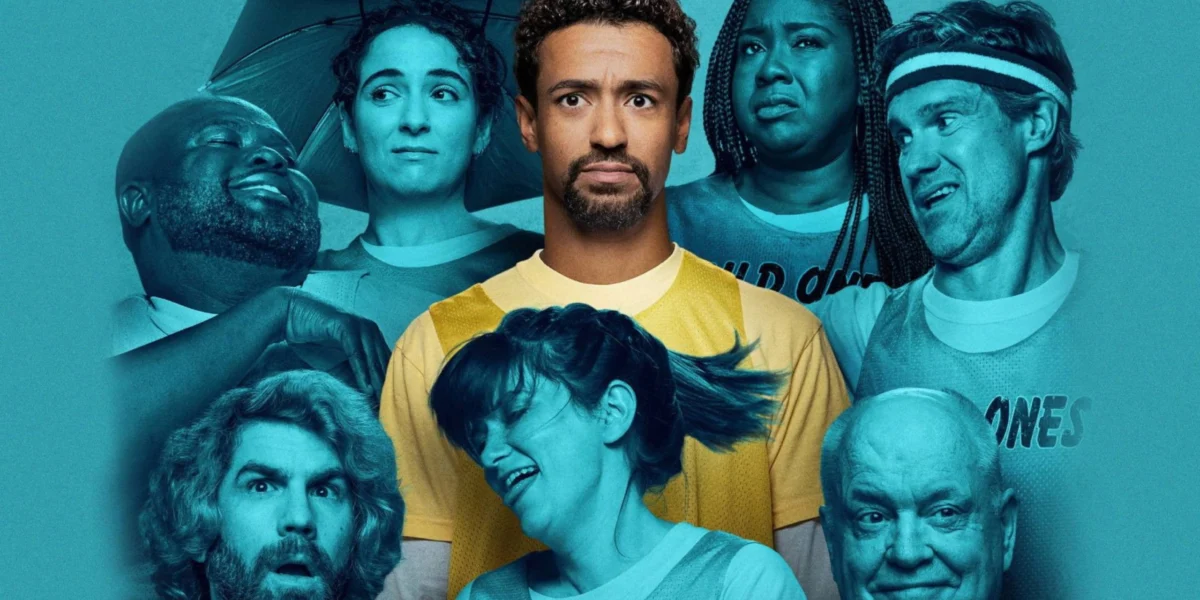
The success of Company Retreat hinges on the interactions between Anthony and the faux employees of Rockin’ Grandma’s Hot Sauce. The ensemble is designed to represent various corporate archetypes, pushed to comedic extremes.

- The Leadership: Alex Bonifer portrays the ill-prepared incoming CEO, whose lack of competence creates a vacuum that Anthony is forced to fill. Wendy Braun plays a corporate executive whose rigid adherence to "synergy" and "branding" provides the bureaucratic friction necessary for the plot.
- The Office Outcasts: Rachel Kaly plays an agoraphobic remote worker who is meeting her colleagues in person for the first time, adding a layer of social awkwardness to the proceedings. Marc-Sully Saint-Fleur portrays PJ, a "snack enthusiast" who documents the retreat via a vlog, a device used by the production to explain the presence of some cameras.
- The Emotional Anchor: Stephanie Hodge plays a long-suffering, chain-smoking veteran employee. It is with her character that Anthony forms the most significant bond, mirroring the "father-figure" or "mentor" relationships seen in the first season.
The production team refers to Anthony as the "Hero" of the season. This designation is critical; the comedy arises not from mocking Anthony, but from watching him navigate the "objective insanity" of his coworkers with a level of grace and leadership that eventually earns him the nickname "Captain Fun."
Technical Execution and Production Challenges
Executing a staged reality show in a resort setting presents unique technical hurdles. Unlike a courtroom, where participants are seated and stationary for long periods, a retreat involves movement across multiple indoor and outdoor locations.
To maintain the illusion, the production team utilized:
- Hidden Control Rooms: Built into the architecture of the resort to allow director Jake Szymanski to give real-time prompts to the actors via hidden earpieces.
- Prop Integration: "Rockin’ Grandma’s Hot Sauce" merchandise and office supplies were manufactured to look weathered and authentic, preventing Anthony from spotting any "newness" that might suggest a set.
- Scripted Contingencies: The writers, led by Eisenberg and Stupnitsky, developed "branching" scripts. If Anthony reacted in an unexpected way (e.g., if he tried to quit or became overly suspicious), the actors had pre-rehearsed "pivot" maneuvers to bring the narrative back on track.
One major plot point involves the sudden departure of Anthony’s immediate superior on the first day. This was a calculated risk by the writers to force Anthony into a leadership role, testing whether a "temp" would have the courage to manage a group of strangers in a high-pressure environment.
Broader Industry Impact and Implications
Jury Duty Presents: Company Retreat arrives at a time when the traditional sitcom and the traditional prank show are both undergoing a metamorphosis. The "Office-esque" mundanity of the humor in Company Retreat suggests a path forward for workplace comedies that feel more authentic than standard multi-camera shows.
Furthermore, the series represents the potential for FAST (Free Ad-Supported Television) platforms to compete with premium subscription services. By creating "event television" that encourages binge-watching, Amazon is leveraging Freevee to capture a demographic that is increasingly resistant to rising subscription costs.
However, some critics point out the inherent limitations of the format. As the "hoax" becomes more famous, the pool of potential "heroes" who have never heard of the show shrinks. This necessitates more elaborate setups and deeper "deep-cover" operations, which could eventually lead to a sense of diminishing returns. The "manufactured" feel of certain episodes in Season Two suggests that the balance between organic reaction and scripted narrative is becoming harder to maintain.
Critical Analysis and Award Prospects
The critical consensus for Company Retreat has been generally positive, though it reflects the challenges of a second season. With a score of 6/10 from several early reviews, the show is praised for its ambition and the quality of its cast but critiqued for its reliance on "low-hanging comedic fruit" and juvenile gags.
Despite these criticisms, the series remains a strong contender for the upcoming awards season. Its unique blend of improv and scripted narrative places it in a category of its own for "Outstanding Writing for a Comedy Series." The performance of the ensemble, who must remain in character for 24 hours a day, is frequently cited as a feat of endurance and skill that transcends traditional acting.
Conclusion
Jury Duty Presents: Company Retreat stands as a testament to the enduring appeal of human decency in the face of chaos. By placing a regular person like Anthony in an extraordinary, albeit fake, situation, the show continues to explore the social dynamics of the modern workplace. While the scale has increased and the production has become more complex, the core of the show remains the same: a celebration of the "everyman" who, when called upon to lead a group of eccentric strangers through a hot sauce corporate retreat, does so with compassion, humor, and an unexpected sense of duty. As the series moves forward, it will likely serve as a blueprint for the future of reality-hybrid programming, proving that the best comedy often comes from the most earnest of places.