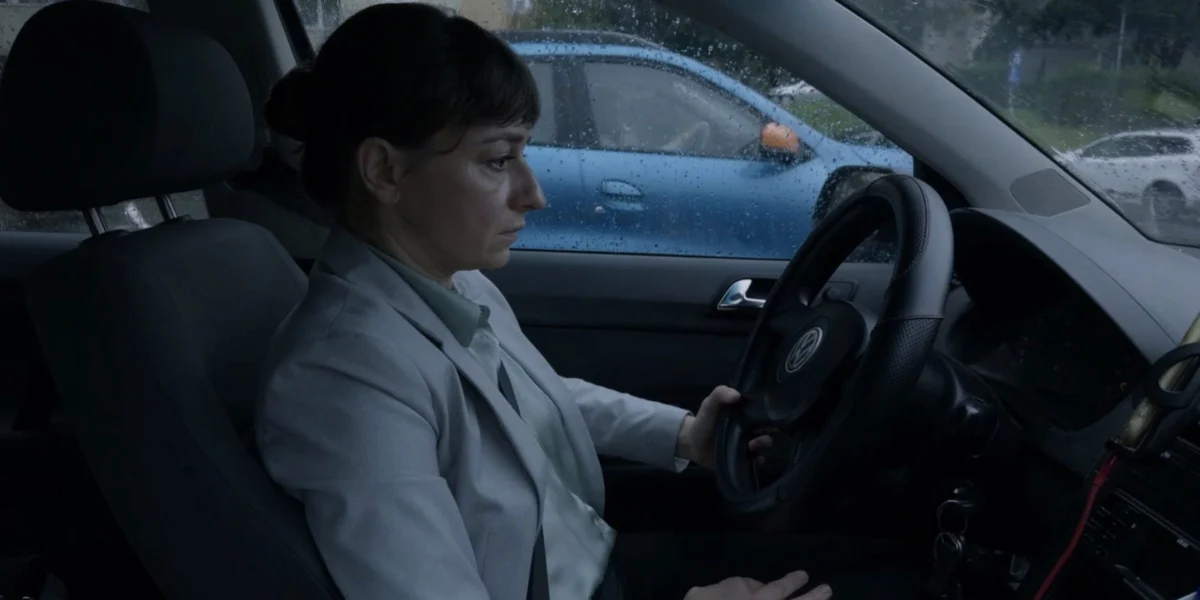
The Romanian cinematic landscape has been further solidified on the international stage with the release and critical success of Radu Jude’s latest feature, an absurdist black comedy-drama that explores the intersection of bureaucracy, personal guilt, and systemic failure. Written and directed by Jude, the film follows the narrative of a bailiff named Maria, portrayed by Eszter Tompa, operating in the city of Cluj-Napoca. The plot centers on a profound moral crisis triggered when a homeless man, whom Maria has recently evicted, takes his own life. This event serves as the catalyst for a narrative that dissects the modern European social contract, blending bleak realism with the biting, satirical humor that has become Jude’s directorial trademark.
The film’s title and thematic underpinnings are a deliberate homage to Roberto Rossellini’s 1952 masterpiece Europe ’51. Where Rossellini’s film examined a wealthy woman’s spiritual awakening and subsequent institutionalization following a family tragedy in post-war Italy, Jude transposes these themes of social conscience and alienation into the hyper-capitalist reality of 21st-century Romania. Produced as an ambitious international co-production involving entities from Romania, Brazil, Switzerland, the United Kingdom, and Luxembourg, the film reflects a growing trend of cross-continental collaboration in the financing of auteur-driven European cinema.
The 2025 Berlinale and Critical Recognition
The premiere of the film took place at the 75th Berlin International Film Festival (Berlinale) in February 2025. Competing in the main competition, the film was immediately identified by critics as a frontrunner for its sharp dialogue and uncompromising structural ingenuity. The festival’s international jury eventually awarded Radu Jude the Silver Bear for Best Screenplay, marking another significant achievement in a career already distinguished by high-level festival accolades, including the Golden Bear for Bad Luck Banging or Loony Porn in 2021.
The jury’s decision to honor the screenplay highlighted Jude’s ability to weave complex legal jargon and administrative minutiae into a narrative that remains deeply human and tragically absurd. The script was noted for its "unflinching look at the mechanics of dispossession," according to festival reports. By winning the Silver Bear, the film secured its place as one of the most significant works of the 2025 festival circuit, reinforcing the "Romanian New Wave’s" evolution from minimalist realism toward more experimental and satirical forms of storytelling.
Narrative Structure and Thematic Depth
The narrative of the film is meticulously paced, focusing on the daily routines of Maria, the bailiff. In Cluj-Napoca—a city often cited as Romania’s burgeoning IT hub and a symbol of economic modernization—the film highlights the stark disparity between the city’s outward prosperity and the invisible populations marginalized by rising property values. Maria is depicted not as a villain, but as a cog in a legal machine, a professional who views eviction as a procedural necessity rather than a personal act.
The turning point occurs early in the second act when Maria learns of the suicide of an elderly man she had removed from a condemned property. The remainder of the film avoids traditional melodrama, opting instead for an absurdist exploration of Maria’s attempts to reconcile her professional duties with her newfound sense of culpability. This journey leads her through a series of increasingly bizarre encounters with legal officials, social workers, and the city’s elite, all of whom are indifferent to the tragedy.
The influence of Europe ’51 is evident in how Maria’s burgeoning empathy is viewed by her peers as a form of madness or professional incompetence. Jude utilizes this parallel to critique contemporary society’s inability to process genuine compassion within a framework of rigid economic logic.
Chronology of Production and Distribution
The development of the film began in late 2023, following the success of Jude’s previous experimental works. The production was structured to leverage the diverse strengths of its international partners:

- Late 2023: Script finalization and casting of Eszter Tompa.
- Early 2024: Principal photography commenced on location in Cluj-Napoca. The choice of location was strategic, utilizing the city’s unique blend of Austro-Hungarian architecture and modern glass-and-steel developments to visualize social stratification.
- Mid to Late 2024: Post-production took place across facilities in Switzerland and the United Kingdom, focusing on a sound design that emphasizes the cold, echoing spaces of administrative buildings.
- February 2025: World premiere at the Berlin International Film Festival.
- Spring 2025: Theatrical rollout handled by 1-2 Special, a distributor specializing in high-concept international cinema.
The multi-national funding model was essential for a project of this scale. By involving Brazil and Luxembourg, the production accessed a wider pool of subsidies and tax incentives, allowing Jude the creative freedom to maintain his uncompromising stylistic approach while ensuring high production values.
Socio-Economic Context: The Real Cluj-Napoca
The film’s setting in Cluj-Napoca provides a vital layer of social commentary. In the last decade, Cluj has seen the highest real estate price growth in Romania, driven by its status as a technology center and a university town. This rapid gentrification has led to a housing crisis, with vulnerable populations frequently facing displacement.
Data from Romanian social housing advocacy groups suggests that evictions have increased by approximately 15% annually in major urban centers since 2021. By centering the story on a bailiff, Jude places the audience in the uncomfortable position of witnessing the administrative execution of these statistics. The film serves as a fictionalized documentation of the friction between neoliberal urban development and the human right to housing.
Official Responses and Industry Impact
Following the Silver Bear win, Radu Jude addressed the press regarding the film’s intentions. While Jude typically avoids definitive interpretations of his work, he noted that the film aims to "investigate the language of the law and how it can be used to distance ourselves from the suffering of others." He emphasized that the absurdity in the film is not a stylistic choice for the sake of humor, but a reflection of the "inherent absurdity of a system that prioritizes property over life."
Eszter Tompa’s performance has also received widespread acclaim. Industry analysts suggest that her portrayal of Maria—characterized by a controlled, understated intensity—will likely lead to increased international visibility for the actress. Critics have compared her performance to the stoicism found in the works of the Dardenne brothers, though filtered through Jude’s more caustic lens.
Representatives from 1-2 Special expressed confidence in the film’s theatrical performance, noting that "audiences are increasingly seeking cinema that challenges the status quo while providing a sophisticated narrative experience." The distributor has planned a rollout that includes major European capitals and select North American markets, banking on the "Berlinale bump" to attract art-house audiences.
Broader Implications for Global Cinema
The success of the film underscores several key trends in the 2025 film industry:
- The Resilience of the Romanian New Wave: Despite predictions that the movement might lose momentum, directors like Jude continue to reinvent the aesthetic, moving into more confrontational and genre-bending territories.
- The Vitality of Co-Productions: The five-country model demonstrates how independent cinema can survive in a market dominated by streaming giants. By diversifying financial sources, filmmakers can protect their editorial independence.
- The Return to Political Cinema: As global inequality becomes a more pressing public concern, there is a visible shift in cinema toward themes of labor, housing, and institutional accountability.
The film stands as a testament to the power of cinema to act as both a mirror and a magnifying glass. By taking inspiration from the neo-realist traditions of Rossellini and injecting them with the cynicism of the modern era, Jude has created a work that is simultaneously a period piece of the present and a timeless moral fable. As the film continues its theatrical run, it is expected to spark continued debate regarding the ethics of urban development and the personal responsibility of those who serve the state.
The reception of this work suggests that international audiences remain hungry for challenging, intellectually rigorous content that does not shy away from the complexities of the human condition. With its Silver Bear win and successful distribution strategy, the film is poised to be one of the defining cinematic contributions of the mid-2020s.