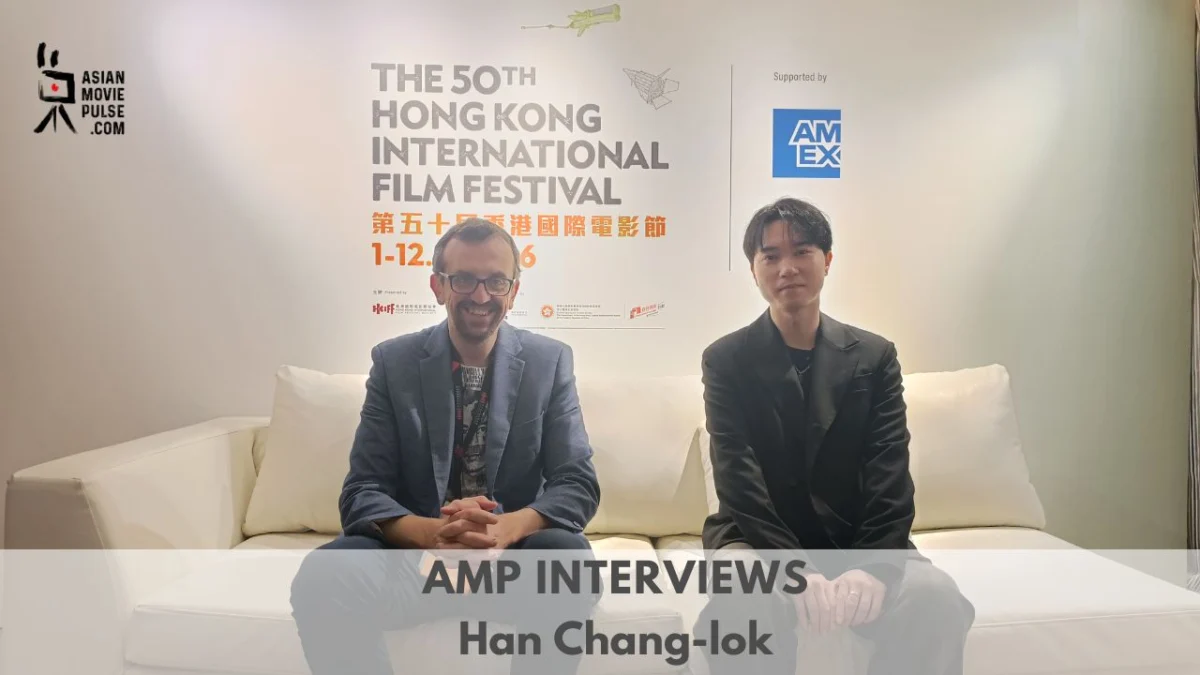
At this year’s Hong Kong International Film Festival (HKIFF), acclaimed Korean director Han Chang-lok presented his latest cinematic offering, "Funky Freaky Freaks," a gritty and unflinching exploration of teenage violence, profound loneliness, and the deep fissures running through contemporary Korean society. Following a compelling screening, Han engaged in an insightful interview, shedding light on the film’s genesis, its deliberately provocative style, and his urgent concerns for both the younger generation and the evolving landscape of Korean cinema. His candid reflections offered a window into the thematic undercurrents of a film poised to ignite critical conversations about the pressures faced by modern youth.
The Hong Kong International Film Festival, a venerable institution in the Asian cinematic calendar, serves as a crucial platform for showcasing diverse voices and groundbreaking works from across the globe. For decades, HKIFF has been instrumental in introducing new talents and significant films to international audiences, fostering cultural exchange and critical discourse. Han Chang-lok’s selection to present "Funky Freaky Freaks" at such a prestigious event underscores the film’s immediate relevance and its potential to resonate far beyond Korean borders, tapping into universal anxieties about youth and societal well-being. The festival, typically held in spring, provides a vibrant backdrop for premieres and industry discussions, placing films like Han’s at the forefront of contemporary cinematic dialogue.
The Generational Chasm: A Silent Accusation
One of the most pressing inquiries Han faced revolved around whether "Funky Freaky Freaks" constitutes a direct indictment of parents and educators, who often appear conspicuously absent or ineffective as their children navigate profoundly traumatic life experiences within the film’s narrative. Han, however, meticulously framed the issue not as a simplistic act of blame but as a complex manifestation of a profound generational divide. He articulated a significant divergence between the upbringing of his own generation and the stark realities confronting young people today. In his youth, physical discipline from both parents and teachers was a common, albeit often harsh, pedagogical tool. While such practices have largely diminished in contemporary Korean society, Han argued that the underlying pressures and emotional distance have not vanished but rather transformed into more insidious forms.
Han emphasized his intent to depict how the older generation frequently shies away from confronting the problems faced by the younger one. This avoidance, he posited, stems not necessarily from cruelty but from a fundamental incomprehension and a tendency to avert uncomfortable truths. This widening gap in understanding, Han suggested, lies at the very core of the emotional and moral disintegration evident in the film’s teenage characters. For Han, this represents a deeply intricate social predicament, far removed from a straightforward accusation. The film’s harsh and often brutal moments are designed precisely to compel viewers to confront what is habitually overlooked or willfully ignored in everyday life. This perspective resonates with broader societal discussions in South Korea, where rapid economic development has often outpaced social adaptation, leading to immense pressure on youth to succeed academically and professionally, often at the expense of emotional well-being. Studies consistently highlight high rates of stress, anxiety, and depression among Korean adolescents, with some research indicating that academic pressure and family expectations are significant contributing factors to these mental health challenges, further exacerbating the generational communication gap Han identifies.
Real-World Echoes: Crimes as Creative Catalyst
Han revealed that the initial spark for "Funky Freaky Freaks" originated from real-world crime reports, a testament to his commitment to grounding his narrative in observable societal phenomena. He specifically cited a chilling case involving a killing among teenagers in a remote village in Washington State, which left an indelible impression on him. The sheer brutality of children turning against each other prompted him to envision a Korean analogue of such crimes and to critically examine how similar tensions might be simmering beneath the surface of his own society.
Every pivotal incident and character within the film was meticulously shaped by actual crime news and documented instances of teenage violence, collected from various sources. Han’s objective was to channel the unsettling sensation that such events, though extreme and often sensationalized, remain uncomfortably close to the fabric of reality. The central characters of the narrative, including Ji Suk and Yong Gi, are not products of pure invention but are meticulously constructed upon this foundation of plausibility, lending an eerie authenticity to their struggles and destructive actions. This approach reflects a growing trend in Korean cinema to tackle sensitive social issues head-on, often drawing from real-life events to provoke thought and encourage dialogue about systemic problems. The prevalence of school bullying (haggyo pokryeok) and juvenile delinquency in South Korea has been a consistent concern, leading to public debates about preventative measures, the effectiveness of the juvenile justice system, and the underlying causes of such aggressive behaviors among youth.
The Primal Wound: Fear of Abandonment
When queried about the complex relationship between Ji-sook and Yong-gii—specifically, whether Ji-sook merely exploits Yong-gii or harbors deeper, hidden affections for him—Han’s response delved into a profound psychological wound. He characterized Ji-sook’s paramount fear as that of abandonment, vividly comparing her emotional state to that of a child utterly lost and alone in a vast playground. This powerful metaphor underscores the deep-seated vulnerability that drives her actions.
This overwhelming, existential fear of being left alone, Han explained, morphs into a distorted survival instinct that fundamentally warps all her relationships. Incapable of fully comprehending or reciprocating the genuine feelings of others, she instinctively resorts to manipulation and emotional cruelty as a desperate means to maintain control and protect her fragile self. For Han, this fear-driven behavior is far from unique to Ji Suk; rather, it is emblematic of a significant number of young people who grow up feeling unseen, unheard, and misunderstood by adults, and perpetually judged or ostracized by their peers. This psychological insight taps into broader discussions about attachment theory and the impact of perceived parental or societal neglect on adolescent development, particularly in highly competitive societies where emotional support might be overshadowed by demands for achievement.
Social Media: A Dangerous, Amplifying Mirror
Social media occupies a prominent and undeniably dark role in "Funky Freaky Freaks," and Han Chang-lok unequivocally addresses its detrimental impact. He views these platforms as particularly perilous for children and teenagers, precisely because they expose, exaggerate, and often distort their inherent desires, insecurities, and nascent identities.
According to Han, social media inexorably pushes young users towards living a performative, often superficial existence, constantly compelled to compare themselves against idealized versions of others. This relentless cycle of comparison erodes their nascent self-confidence, fostering deep-seated frustration and resentment. He noted that in Korea, there are already ongoing discussions and active efforts towards implementing legal measures to control or mitigate the pervasive damage inflicted by such platforms. This reflects a growing global concern about the mental health implications of excessive social media use among adolescents, with numerous studies linking it to increased rates of anxiety, depression, and body image issues. In South Korea, where smartphone penetration and internet usage are among the highest globally, the discussion around digital well-being and potential regulation for minors is particularly intense, involving government agencies, educators, and parents’ associations striving to find a balance between connectivity and protection. For Han, this collective, often unspoken, frustration among youth belongs squarely on the cinematic screen. "Funky Freaky Freaks" masterfully employs social media not merely as a background detail but as a poisonous, omnipresent environment that amplifies every emotional crack and vulnerability within its young characters, accelerating their descent into conflict and despair.
Crafting Authenticity: Violence, Safety, and Young Actors
The film features several intensely violent and emotionally charged scenes, prompting questions about Han’s approach to these moments and his methodology for working with his young cast. He emphatically stressed that open communication and an unwavering commitment to safety were paramount considerations throughout the production.
Prior to filming any physically demanding sequence, Han ensured that all actors possessed a clear and comprehensive understanding of what would transpire, and that they provided their full, enthusiastic consent. He highlighted the inherent dangers of certain fight scenes, including a significant confrontation involving Woo-joo and Yong-gi, and spoke of the constant vigilance required to ensure everyone remained physically safe and emotionally comfortable. This rigorous approach to safety protocols aligns with industry best practices, particularly when minors are involved in sensitive or potentially hazardous scenes, often requiring on-set supervision and psychological support.
In terms of casting, Han described a meticulous and lengthy audition process involving numerous meetings. Joo Min-hyeong, the actor cast as Yong-gi, was initially introduced to Han by the cinematographer and ultimately selected after four to five intensive auditions, underscoring the director’s dedication to finding the perfect fit. Han deliberately chose performers who most closely embodied the characters he had envisioned, prioritizing an authentic reflection of contemporary youth over star-driven casting. Three weeks before principal photography commenced, he orchestrated multiple meetings and rehearsals, not just for scene blocking but crucially to build trust and foster robust communication within the ensemble, ensuring a cohesive and emotionally secure environment for the young actors.
Visual Language: Music Video Energy and Nineties Influences
Visually, "Funky Freaky Freaks" is undeniably striking and distinctive. The film boldly embraces edgy cinematography, incorporates sequences that mimic the frenetic energy of music videos, employs rapid and fragmented editing rhythms, and even integrates evocative black and white passages. Han explained that these stylistic choices were meticulously deliberate attempts to capture and convey the raw energy, restlessness, and often chaotic inner world of teenagers.
He consciously drew inspiration from music videos and films from the 1990s, a decade he intrinsically associates with intense social anxiety and profound societal shifts. Han vividly recalled the palpable atmosphere around the turn of the millennium, specifically the year 2000, when pervasive rumors about the "end of the world" intertwined with heightened global competition, creating a tense, almost suffocating environment. To him, the underlying mood of that particular era bears a striking resemblance to the present-day anxieties. This deliberate invocation of a 90s sensibility, further augmented by Japanese cinematic influences, particularly from directors like Shunji Iwai known for his evocative portrayals of youth, serves to powerfully convey the pervasive frustration and urgent desperation of young people who feel increasingly trapped between impossible societal expectations and a looming sense of collapse. The aesthetic choices are thus not merely stylistic flourishes but integral components of the film’s thematic depth, enhancing its exploration of youth angst and societal dysfunction.
Korean Cinema at a Crossroads: A Future in Flux
When questioned about the current health and trajectory of the Korean film industry, Han Chang-lok did not mince words, openly expressing his profound concern. He characterized the present period as exceptionally difficult, marked by a noticeable decline in cinema attendance and a corresponding reduction in the number of films being produced. The term "crisis" emerged as he reflected on the formidable challenges now faced in sustaining film production and ensuring viable theatrical exhibition in the post-pandemic landscape. The rise of streaming platforms has fundamentally altered consumption habits, presenting both opportunities and existential threats to traditional cinema.
Despite these significant headwinds, Han maintained a cautious yet discernible sense of hope. He firmly believes that audiences inherently retain a deep love for movies and that the communal, shared experience of cinema will ultimately endure. He articulated a sincere wish that the industry will eventually navigate its current difficulties, recover its footing, and discover innovative new pathways to connect with and captivate viewers. This sentiment is shared by many industry veterans grappling with a global shift in entertainment consumption, where blockbusters often dominate theatrical releases, leaving independent and arthouse films struggling for screen time and audience attention. The Korean government, through agencies like the Korean Film Council (KOFIC), has also been actively exploring measures to support the domestic film industry, including subsidies for independent productions and initiatives to encourage cinema attendance, recognizing the cultural and economic importance of its vibrant cinematic output.
Looking Ahead: The Director’s Next Chapter
Regarding his own professional trajectory, Han shared that he is currently engaged in a project as a scriptwriter, though not in the director’s chair for this particular endeavor. He remains in the very nascent stages of developing his next directorial film, actively searching for compelling ideas and meticulously shaping new concepts. After delivering a film as intensely charged, confrontational, and socially resonant as "Funky Freaky Freaks," whatever Han Chang-lok chooses to deliver next is certain to be observed with considerable interest and anticipation. His work, which courageously holds up a bold and often unsettling mirror to the complex realities of today’s youth, promises to continue pushing boundaries and sparking essential conversations about the future of society and cinema alike. His commitment to authenticity and tackling challenging themes solidifies his position as a significant voice in contemporary Korean filmmaking.