Sarmad Sultan Khoosat’s latest feature, Lali, has made history as Pakistan’s first entirely local production to premiere at the prestigious Berlinale, captivating international audiences in the festival’s Panorama section. This genre-defying film, which masterfully weaves supernatural horror with black comedy and folk music, presents a compelling and visually rich narrative rooted deeply in provincial Pakistani culture. Its debut signals a significant moment for South Asian cinema, showcasing the region’s burgeoning talent and willingness to explore complex, culturally specific stories through a unique artistic lens.
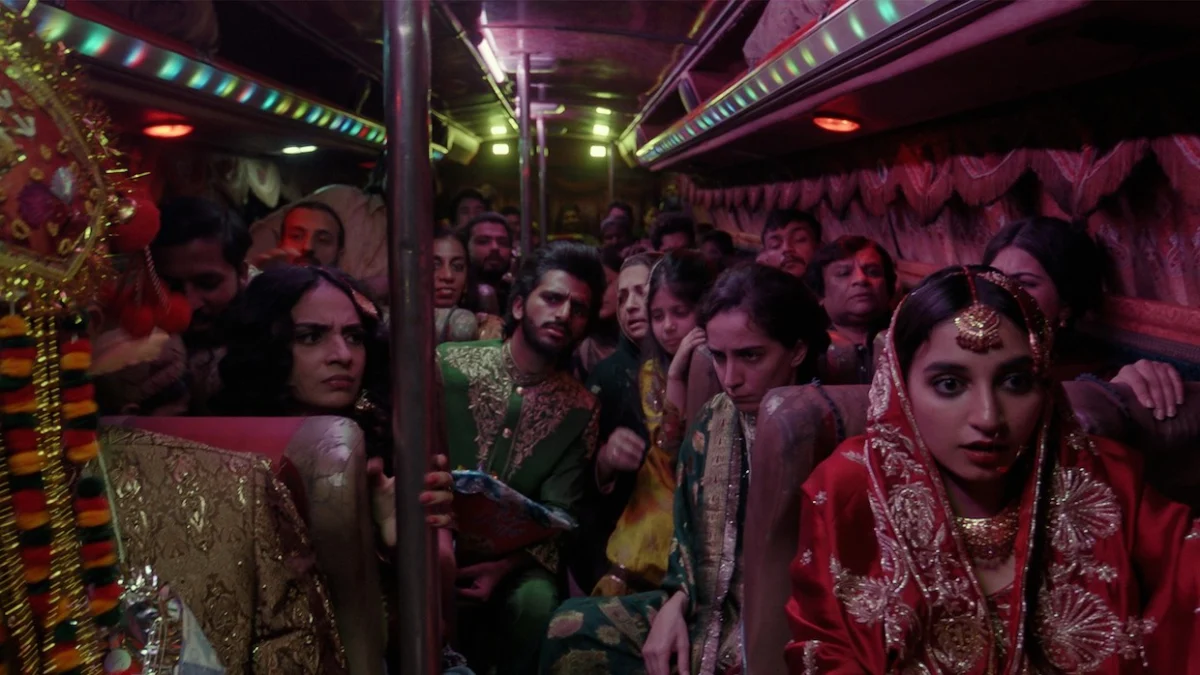
The film’s intricate plot centers on Zeba (Mamya Shajaffar), a bride whose past is shadowed by a chilling reputation: her previous two engagements ended tragically with the mysterious deaths of her fiancés. This "curse" follows her into her third marriage with Sajawal (Channan Hanif), a man grappling with his own internal turmoil and a prominent facial birthmark. The narrative is immediately set into motion by a seemingly celebratory bullet that grazes the shin of matriarch Sohni Ammi (Farazeh Syed) at the wedding. In this rural Pakistani setting, firing guns into the air is a traditional expression of joy, replacing fireworks. However, the incident is swiftly blamed on Zeba’s alleged curse, further deepening the sense of foreboding that permeates the story. Her last fiancé, Zeba later confides to Sajawal, was fatally stung by a scorpion during an intimate moment on a sand dune, an admission that fuels Sajawal’s existing shame and resentment.
A Tapestry of Genre: Supernatural Horror Meets Black Comedy
Lali distinguishes itself through its audacious blend of genres, a characteristic that Khoosat himself describes as a deliberate and at times challenging fusion. Inspired by "Kaala Kambal" ("Black Shawl"), a short story by Khoosat’s aunt, the film evolves from its initial dark and eerie foundation to incorporate elements of dark comedy and live musical performances. This stylistic agility prevents the film from adhering to conventional genre tropes, offering a fresh perspective on storytelling from the subcontinent. The film’s aesthetic has been aptly described as "South Asian gothic," characterized by a vibrant "mushaira" (symposium) of colors that leaves a lasting visual impression on the viewer.
Khoosat, known for his nuanced approach to storytelling and his role as a producer on Saim Sadiq’s Queer Palm-winning Joyland (2022), explores universal themes of lust, death, grief, and loathing with a raw intensity. These emotional landscapes are depicted against a backdrop rich with cultural signifiers: the mythical jinns, traditional shawls, ominous hawks, and the omnipresent "neighborly mutterings" that symbolize societal judgment and inherited burdens. The film’s genre fluidity is not merely an artistic flourish but a deliberate choice to reflect the multifaceted nature of life and belief in the region, where the supernatural often intertwines with daily reality.
Cultural Narratives and Subverted Tropes
Beyond its genre innovation, Lali offers a critical yet empathetic examination of Pakistan’s sociocultural legacies. The film challenges conventional portrayals of familial relationships, particularly the often-antagonistic dynamic between mothers-in-law and daughters-in-law prevalent in South Asian media. Instead, it presents a refreshingly loving and supportive bond between Sohni Ammi and Zeba. Sohni Ammi, an "emancipated woman of today" who nonetheless harbors her own superstitions, sees Zeba not as a rival but almost as an opportunity to relive aspects of her own life. This subversion of a common trope provides a powerful commentary on the evolving roles of women and intergenerational connections within traditional societies.
The film also subtly incorporates a "queer gaze" through its casting and thematic undertones, evident in characters like the "homoerotically hot" milkman. This deliberate inclusion, building on the precedent set by Joyland, signifies a progressive stride for Pakistani cinema in addressing diverse sexualities within a predominantly conservative cultural context. It allows for a broader spectrum of human experience to be represented on screen, challenging restrictive norms without being overtly didactic. Khoosat’s work consistently demonstrates a commitment to expanding the narrative possibilities of Pakistani storytelling, making space for marginalized voices and perspectives.
The Director’s Vision: Crafting Lali‘s Unique Aesthetic
Sarmad Sultan Khoosat’s directorial approach to Lali is characterized by meticulous planning blended with an openness to organic evolution during production. The initial conceptualization involved a constant struggle to seamlessly integrate the disparate tonal elements—horror, comedy, and music. Khoosat initially carried the "burden" of ensuring a conscious fusion, but eventually found liberation in allowing a more "fragmented feel" to the film, letting the tonal shifts occur without explicit warning. This artistic decision contributes to the film’s unpredictable and immersive viewing experience.
The transformation of the narrative’s perspective is another key aspect of Khoosat’s creative process. While initially conceived from Sajawal’s point of view, the film gradually shifted to center Zeba’s experience in execution, largely due to the insightful editing contributions of Saim Sadiq. Sadiq’s influence is also evident in the film’s structural elements, such as the introduction of chapters and the audacious placement of the film’s title at the 25-minute mark. This unconventional approach, initially met with humorous concern about audience perception of film length, ultimately serves to demarcate the drastic tonal shifts and guide the viewer through Lali‘s complex emotional journey.

Character Depth and Symbolic Elements
The characters in Lali are imbued with significant depth and symbolic resonance. Sajawal’s pervasive anger, for instance, is rooted in both external and internal factors. His prominent facial birthmark, referred to as "lali" (red), is a constant source of shame in a culture that highly values physical beauty. This external scar mirrors an internal wound, exacerbated by a complex relationship with his "alpha" mother, Sohni Ammi, who herself carries an unresolved past trauma. Sajawal’s interactions with his vocal sister and, subsequently, with Zeba—whom he initially perceives as a disadvantage he could exploit—reveal a deeply conflicted individual. Khoosat views Sajawal as a relatable figure, meandering through life with a mixture of pride, anger, and vulnerability.
The character of Bholi (Rasti Farooq), a nonverbal presence, serves as a crucial "punctuation" and harbinger of premonitions throughout the film. Khoosat drew inspiration from a real-life individual from his childhood, envisioning Bholi and Sajawal as intrinsically linked, almost growing up together. Bholi embodies a certain freedom that Sajawal perhaps admires, and her expressive "howl" in the final act acts as a catalyst, offering Sajawal a flash of realization about what he has suppressed. Her dynamic arc, from silent observer to an active participant in the film’s unfolding drama, underscores the director’s intent to weave in characters that challenge conventional narrative roles and contribute to the film’s unique tonal reality. Even Sajawal’s distinct, almost beaky-edged scar was meticulously designed, a theatrical detail subtly referencing the bird he keeps, demonstrating the profound attention to symbolic detail throughout the production.
The Significance of Color and Visual Storytelling
One of Lali‘s most striking features is its bold and evocative color palette, which acts as a powerful storytelling device. Red and purple, though not Khoosat’s personal favorites, became integral to the film’s visual identity, driven by cultural symbolism and narrative necessity. The color red, traditionally associated with weddings (shaadi) in Pakistan, forms the film’s starting point, mirroring Sajawal’s birthmark. This "lali" then transitions into purple at various points, linking to symbolic elements like the jamuns (java plum fruit) of the courtyard tree and Zeba’s significant purple attire during key emotional scenes, such as when Sohni Ammi recounts her life story.
The collaboration between Khoosat and his production team—including production designer Kanwal Khoosat, art director, costume designers, cinematographer, and colorist Fatimah Sattar—was crucial in realizing this vision. The cinematographer’s preference for darker walls and the colorist’s expertise in handling the challenging nature of red, which tends to bleed and jump out, were vital. Khoosat also subverted expectations, replacing the "Kaala Kambal" (black shawl) of the original story with a red blanket, drawing inspiration from the ubiquitous red blankets found in Pakistani government hospitals, a detail that adds a layer of cultural authenticity. As the film progresses and the mood darkens, the color palette subtly depletes, yet the core hues persist, culminating in a significant return of red in the film’s climax, meticulously crafted to underscore the narrative’s emotional arc. The director initially envisioned a more bizarre, Lanthimos-esque aesthetic, but ultimately chose to ground the visual language in a believable, authentic Punjabi setting, resulting in his "warmest film" to date.
Broader Implications for Pakistani and South Asian Cinema
Lali‘s premiere at the Berlinale marks a pivotal moment for Pakistani cinema, signaling its growing prominence on the global stage. For an "all-local production" to achieve such international recognition underscores the increasing maturity and artistic ambition within the industry. This follows the critical success of Joyland, further solidifying Pakistan’s presence in international film festivals and opening doors for future collaborations and distribution opportunities. The Berlinale, one of the "Big Three" film festivals alongside Cannes and Venice, provides an unparalleled platform for independent and arthouse cinema, granting Lali significant visibility among critics, distributors, and a global audience.
The film’s genre-bending nature also positions it as a trailblazer within South Asian cinema. While the region has a rich tradition of storytelling, films that boldly fuse supernatural horror with social commentary and dark comedy remain relatively rare. Lali‘s success could inspire other filmmakers in Pakistan and the broader subcontinent to experiment with genre and narrative structures, pushing the boundaries of conventional filmmaking. Its exploration of complex themes—such as curses, societal judgment, and queer identity—within a distinctly local context, yet with universal appeal, demonstrates the power of authentic cultural storytelling to resonate across borders.
Looking Ahead: Lali‘s Place in Global Cinema
The critical acclaim and festival exposure garnered by Lali are likely to have profound implications for its future. International distribution deals could bring the film to wider audiences, fostering a greater appreciation for Pakistani storytelling. Economically, such recognition can attract further investment in local productions, strengthening the infrastructure of Pakistani cinema and empowering more filmmakers to pursue ambitious projects. Beyond its commercial prospects, Lali serves as a powerful artistic statement, proving that deeply rooted cultural narratives can be translated into innovative and compelling cinematic experiences that challenge, entertain, and provoke thought.
As Lali continues its festival run and moves towards broader release, it stands as a testament to Sarmad Sultan Khoosat’s visionary direction and the collective talent of its cast and crew. It is a film that not only makes history but also redefines expectations for what Pakistani cinema can achieve, inviting audiences worldwide into a richly textured, emotionally charged, and uniquely South Asian gothic world. Its legacy will undoubtedly be felt for years to come, inspiring a new generation of filmmakers to explore their own cultural narratives with courage and creativity.