Xavier Giannoli’s ambitious new film, Les Rayons et les Ombres (Rays and Shadows), plunges audiences into the morally complex landscape of post-World War II France, offering a searing portrayal of Corinne Luchaire, a celebrated French actress whose life became irrevocably entwined with the Nazi regime. The narrative unfolds through Luchaire’s own introspective recordings on a borrowed tape recorder, as she grapples with the devastating consequences of her father’s collaboration and subsequent execution for treason in 1946. The film not only examines her personal anguish but also ignites a potent national debate about the lingering shadows of the Vichy era.
The Weight of a Father’s Legacy and a Nation’s Shame
At the heart of Rays and Shadows lies Corinne Luchaire’s desperate struggle to reconcile her deep filial devotion with the stark reality of her father, Jean Luchaire’s, fate. Once a powerful press baron and a figure of considerable influence, Jean Luchaire’s legacy is now irrevocably tainted by his active collaboration with the German occupation. The film’s unflinching gaze forces Corinne, played with remarkable debut intensity by Nastya Golubeva Carax, to confront the devastating truth that her father’s actions led to his execution for treason. This internal conflict is amplified when a Jewish director, instrumental in launching Corinne’s own promising career, visits her modest dwelling. Her tentative inquiry about his sister elicits a gut-wrenching revelation: she perished in a concentration camp. Corinne’s bewildered "I didn’t know" is met with the director’s devastating retort, "Did you even try to find out?" This exchange serves as a pivotal moment, shattering her carefully constructed denial and forcing her to confront the profound moral void left by her family’s complicity.
A Cinematic Success and a Societal Divisive Force
Despite its formidable three-hour-plus runtime, Rays and Shadows has resonated deeply with French audiences, drawing over 300,000 spectators in its opening week alone. However, its success has been accompanied by a fervent and often acrimonious debate concerning the Vichy period and the film’s nuanced portrayal of its key figures. While critics on the centre and right have lauded the film for its historical depth and sophisticated exploration of moral ambiguity, left-leaning publications such as Libération and L’Humanité have voiced sharp criticism. These outlets argue that the film risks relativizing the actions of those who actively served the Nazi regime, effectively downplaying the severity of their complicity in atrocities.
Deconstructing the Collaborator: Beyond Ideology to Amorality
A central point of contention is the film’s portrayal of Jean Luchaire. Rather than presenting him as a staunch ideologue who zealously embraced his role as commissioner for information and propaganda for the French government-in-exile, Giannoli depicts him as a disillusioned spendthrift whose personal failings ultimately hasten his downfall. This interpretation challenges the prevailing narrative of overt political conviction, suggesting instead a more insidious descent into moral compromise driven by personal weakness and avarice.
Director Xavier Giannoli articulated his motivations, stating, "I wanted to make this film to show all the traps that a human being can fall into. How suddenly your own little fears and cowardice can make history." This sentiment underscores the film’s thematic exploration of how individual vulnerabilities can have profound historical consequences.

A Legacy of Media Manipulation and Moral Decay
Giannoli, himself the son of a prominent French journalist who passed away in 2022, has long been captivated by the corrupting influence of media empires and the insidious ways in which wealth can be leveraged to promote destructive agendas. His previous critically acclaimed film, an adaptation of Honoré de Balzac’s Lost Illusions, meticulously chronicled the 19th-century transformation of Parisian journalism from an instrument of enlightenment to a profit-driven engine of misinformation. In Rays and Shadows, Giannoli extends this examination, tracing the moral erosion of a once-pacifist journalist who ultimately succumbs to antisemitism and active complicity with an extremist regime.
The role of Jean Luchaire is brought to life by Oscar-winning actor Jean Dujardin (The Artist). Giannoli emphasizes the strategic importance of casting such a popular and charismatic figure. "Luchaire embodied a certain Parisianism that can be found in Jean Renoir’s La Règle du Jeu," explains screenwriter Jacques Fieschi, who developed a deep fascination with the period through his university studies of its literature. "He had a lot of mistresses and was part of this amoral fringe of society. If he had been played by someone with an ugly face and no charm, it would not have corresponded to the reality of the character." This casting choice highlights the film’s intention to portray the seductive nature of collaboration, a betrayal that could ensnare even those with seemingly sophisticated sensibilities.
The Genesis of Collaboration: From Pacifism to Propaganda
The film’s narrative genesis is rooted in the complex relationship between Jean Luchaire and Otto Abetz (portrayed by August Diehl), a Francophile former art teacher who ascended to the position of German Ambassador to France. Their shared past, beginning in the early 1930s in the Black Forest, is depicted as a period of shared left-wing pacifism, forged in the crucible of World War I’s horrors. Together, they founded the Sohlberg Congress, a Franco-German youth forum that, chillingly, later provided the structural foundation for their lethal propaganda alliance.
"There is no Jean Luchaire without Otto Abetz," Giannoli observes, underscoring the symbiotic nature of their destructive partnership. It was Abetz who appointed Luchaire as the "press tsar" of occupied France, providing him with the financial backing to launch the collaborationist daily newspaper Les Nouveaux Temps. A significant source for Giannoli’s research was the memoir of Rudolf Rahn, a high-ranking Nazi diplomat. Rahn’s account emphasized Abetz’s profound appreciation for French culture and the "bohemian" atmosphere he cultivated at the German embassy in Paris, a calculated strategy to seduce French elites into embracing Franco-German collaboration.
A Decadent Descent: The Allure of Compromise
Rays and Shadows does not shy away from depicting the sensational aspects of this collaboration, into which both Jean and Corinne Luchaire are inexorably drawn. The film vividly portrays scenes of black-market millionaires mingling with Nazi dignitaries, lavish embassy parties fueled by endless champagne, drug-fueled orgies, and opulent dining at exclusive establishments like Maxim’s and Fouquet’s. Giannoli elaborates on the meticulous attention to detail, noting, "We spent a lot of money with the food designer to find just the right caviar. There was no food at this time in France, and it felt necessary to show how immoral and corrupt these elites – these beautiful people – had become." This deliberate emphasis on the decadent lifestyle underscores the moral bankruptcy that permeated the collaborationist circles, a stark contrast to the widespread suffering and deprivation experienced by the broader French population.
Historical Context: The Lingering Taboo of Collaboration in French Cinema
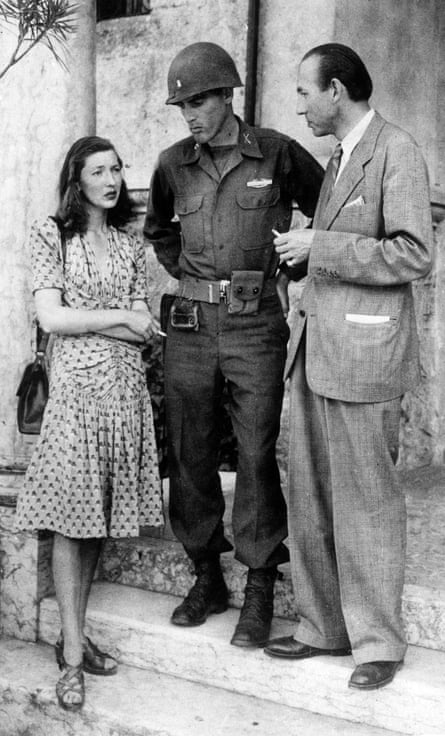
Historically, French filmmakers have often exhibited a reluctance to confront the complexities of collaboration head-on. This reticence can be partly attributed to the enduring influence of the "résistancialisme" myth, carefully cultivated by Charles de Gaulle in the post-war era to foster national unity. This narrative, which emphasized widespread resistance against the occupation, effectively rendered collaborators a taboo subject in public discourse and artistic representation.
The profound societal impact of confronting this taboo was evident in the critical backlash faced by filmmaker Louis Malle. When he dared to explore the moral compromises and everyday betrayals of occupied France in his 1974 film Lacombe, Lucien, the ensuing controversy was so severe that it compelled him to relocate to the United States for several years. Giannoli himself admits to experiencing profound anxiety during the making of Rays and Shadows, confessing, "Sometimes at night I was thinking, ‘Oh my God, what am I doing? What’s happening?’" This highlights the deeply ingrained sensitivities surrounding the period and the courage required to revisit these painful historical truths.
Expert Perspectives: Nuance vs. Historical Accuracy
Laurent Joly, a leading French historian specializing in the Vichy regime and state antisemitism, has commended Giannoli’s film for its "blur" and "ambiguity." However, Joly expresses reservations regarding the film’s depiction of Jean Luchaire’s motivations. "It was not pacifism that pushed Luchaire over [into collaboration], but his fundamental amorality and venality," Joly states. "From a very young age, when his father, a university professor, directed the French Institute in Florence, he had problems with theft. He was always a conman. That is the key to his path. Very early, Jean Luchaire was corrupted by Nazi Germany and by 1935 he was already an outcast among most of his former pacifist-left friends." Joly’s assessment suggests that the film may have overemphasized pacifist roots as a catalyst, potentially overlooking a more deeply ingrained propensity for corruption.
Joly also questions the film’s portrayal of Corinne Luchaire as a victim of relentless post-war purges. While acknowledging that Corinne Luchaire’s appearance was indeed ravaged by tuberculosis during her 1946 trial, Joly points out that her condition had improved by 1948. He notes that she published her memoirs, Ma Drôle de Vie (My Funny Life), a year later, a work that has since been consistently reissued by far-right publishers. "She was not the wretched victim shown on screen," Joly asserts, while acknowledging the tragedy of her early death in 1950. This perspective suggests that the film might have amplified her victimhood to a degree that diverges from historical accounts.
The Delicate Balance: Fascination and Indignation
Giannoli himself grappled intensely with the challenge of striking "a balance between fascination and indignation." He recounts seeking counsel from Pascal Ory, a distinguished historian of fascism. "I told him I wanted to ask him a lot of questions because nobody would forgive me if I told just one lie," Giannoli recalls. Ory’s pragmatic, albeit stark, advice encapsulates the profound difficulty of portraying such a fraught historical period: "Neither would anybody forgive me if I told the truth." This paradox highlights the enduring power and sensitivity of the collaborationist narrative in France, where historical accuracy can be as contentious as artistic interpretation.
Les Rayons et les Ombres stands as a significant cinematic achievement, provoking necessary conversations about a dark chapter in French history. By delving into the personal lives of figures like the Luchaires, the film compels audiences to confront the human capacity for both immense moral failing and profound personal reckoning, leaving a lasting impact on the ongoing discourse surrounding memory, complicity, and the enduring search for truth.