Thierry Frémaux, the distinguished 65-year-old French cultural arbiter, embodies a rare confluence of historical stewardship and contemporary cinematic leadership. As the influential delegate-general of the Cannes Film Festival, an institution poised to announce its 79th edition in the coming weeks, Frémaux orchestrates one of the world’s most prestigious showcases for new films. Simultaneously, he presides over the venerable Lumière Institute and its associated Lumière Festival in Lyon, twin pillars dedicated to the rigorous study and extensive exhibition of film history. This dual mandate positions Frémaux uniquely at the nexus of cinema’s foundational past and its evolving future, a role unparalleled among leading figures in the global film community.
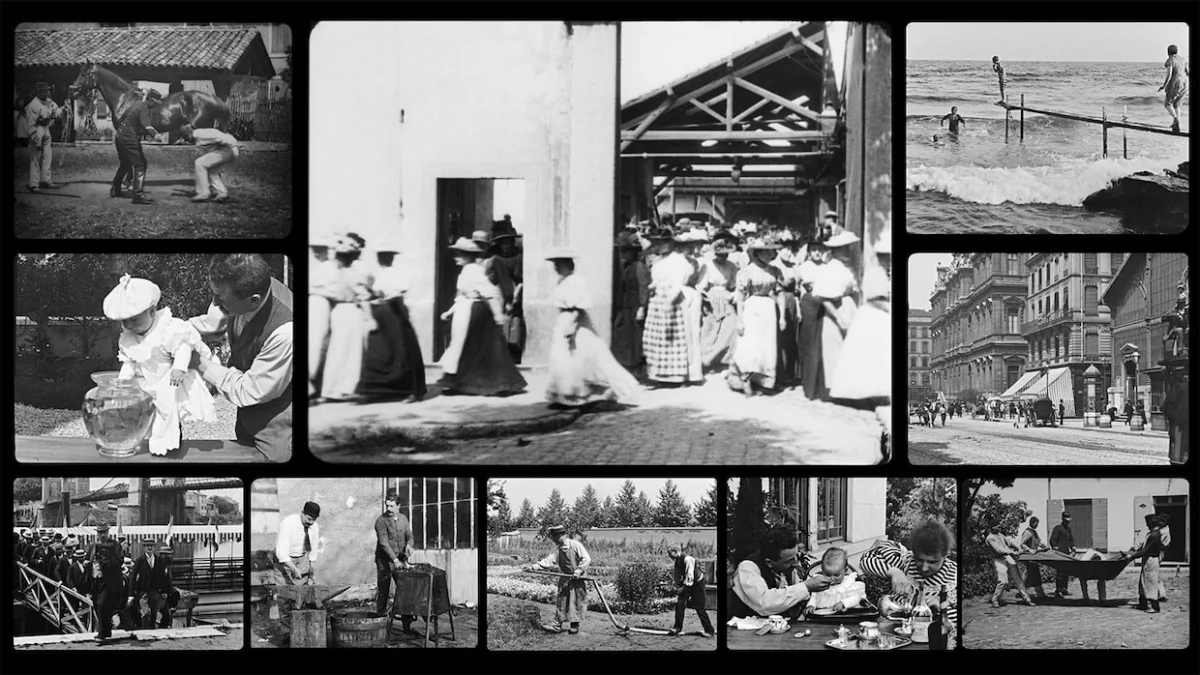
Beyond his executive responsibilities, Frémaux occasionally ventures into filmmaking himself. His latest endeavor, the newly-released Lumière, Le Cinema!, serves as an essayistic exploration into the revolutionary work of the legendary Lumière brothers, Auguste and Louis. These pioneering siblings, whose invention of the Cinématographe over 130 years ago, marked a pivotal breakthrough in projecting moving images onto the big screen for a collective audience. The film, which is technically a follow-up to a similar project released in 2016, meticulously compiles and presents approximately 100 short films originally shot by the brothers during the nascent years of the medium. Through a reflective voiceover, Frémaux offers profound insights into the enduring significance of their monumental achievements, connecting their early innovations to the complexities of modern cinema.
A Deep Dive into Cinematic Genesis
The Lumière brothers’ contribution to cinema is often distilled to the invention of their Cinématographe and the iconic public screening on December 28, 1895, at the Salon Indien du Grand Café in Paris. This event, featuring films such as Workers Leaving the Lumière Factory, The Arrival of a Train at La Ciotat Station, and L’Arroseur Arrosé (often cited as the first comedic narrative film), stunned audiences, ushering in an entirely new form of entertainment and artistic expression. Frémaux’s film delves into these early works, showcasing their remarkable simplicity and efficiency. He argues that the core strength of Lumière cinema lies in this very simplicity, echoing Pablo Picasso’s famous sentiment: "All my life, I tried to draw like a child." For Frémaux, the essence of cinematic language resides in "good, beautiful, efficient shots," a mastery that the Lumières grasped intuitively from the outset.
The historical context of the Lumières’ work is crucial. Their invention was not in a vacuum; other pioneers, notably Thomas Edison with his Kinetoscope, were also exploring moving images. However, a fundamental distinction emerged in their approaches to exhibition. Edison’s Kinetoscope was designed for individual viewing, requiring a coin for each private experience—a model Frémaux provocatively labels "the very American way of life." The Lumières, conversely, championed the communal experience of the projected image in a shared space. This seemingly minor difference had profound implications for the development of cinema as a social and cultural phenomenon. While Edison reportedly doubted the long-term viability of public screenings, believing audiences wouldn’t return after a single viewing, the Lumières confidently asserted, "Yes, they will be back, because we will make more movies." Their subsequent production of some 2,000 films validated this vision, establishing the foundation for cinema as a continuous stream of content consumed collectively.
Bridging the Past and Present: Frémaux’s Curatorial Philosophy
Frémaux’s unique position allows him to draw direct parallels between the earliest days of film and contemporary cinema. He views his role, whether curating historical retrospectives at the Lumière Institute or selecting films for Cannes, through a consistent lens: to describe a film "for what it is" and to assess its "importance." This objective approach, he contends, transcends personal preference, focusing instead on the inherent qualities and cultural resonance of a work. He applies this same rigor to The Cabinet of Dr. Caligari, questioning its historical importance within silent German cinema, as he does to the myriad submissions for Cannes. This philosophy underscores a deep commitment to understanding cinema as a dynamic historical continuum, where foundational principles remain relevant even amidst radical shifts in form and technology.
The question of the Lumière brothers’ legacy from a 21st-century perspective is particularly pertinent. They were not "traditional storytellers" in the narrative sense that would later dominate cinema. Yet, Frémaux notes that even their early work included fictional elements, citing L’Arroseur Arrosé as a prime example of early cinematic narrative. More profoundly, he observes that "most people who capture images these days aren’t" traditional storytellers either, drawing an implicit parallel between the Lumières’ observational, documentary-style shorts and the ubiquitous, non-narrative visual content of the digital age. This suggests that the Lumières’ initial impulse to simply "describe the world" through moving images resonates strongly with contemporary practices, from social media videos to avant-garde installations.
The Enduring Challenge to the Communal Screen
Frémaux candidly addresses the ongoing struggle for the communal cinema experience in an era defined by individual consumption. He acknowledges that while audiences were once "shocked by the moving image," a sensation largely absent today, the fundamental desire "to gather together and watch cinema on the big screen" persists. However, this desire faces unprecedented challenges. The "second invention of Lumière," the screening room, finds itself in a "most fragile situation," having weathered the advent of television, video, the internet, DVD, and now, a multitude of streaming platforms.
The French delegate general echoes Jean-Luc Godard’s famous query about the "death of cinema" from the 1980s, but offers a more nuanced perspective. "Cinema won’t die. Cinema is everywhere," Frémaux asserts, pointing to how even an Instagram post incorporates cinematic language. This expansion of moving images, however, does not necessarily equate to the survival of the cinema industry or the theatrical experience. He describes platforms like Netflix as potentially "the revenge of Thomas Edison against Lumière," where the individual, on-demand viewing model triumphs over the collective, shared experience. This shift represents a significant threat to the legacy of communal film-watching, turning the "defeat of Lumière" into a contemporary battle.

Safeguarding Cinema: Cultural Support and Artistic Resilience
France, a nation renowned for its robust cultural policies, provides a unique backdrop for Frémaux’s optimistic outlook. French cultural commentator and government support for the arts, including cinema, is often cited as a crucial factor in the resilience of its film industry. "You’re not pessimistic because you’re French!" is a common refrain Frémaux hears, acknowledging his country’s long-standing commitment to "fighting for cinema." This institutional support helps maintain a vibrant ecosystem for film production, distribution, and exhibition, fostering an environment where the "big screen" remains a cherished cultural practice.
Despite the proliferation of "content" and the shifting viewing habits of younger generations, Frémaux retains his optimism. He notes that while today’s filmmakers may have first encountered cinema on television rather than the big screen, the allure of the theatrical experience remains potent. "If you say to a child today that we’ll go to the movies next Saturday, they will be very happy," he observes. This enduring enchantment, coupled with the conviction that "whenever cinema has faced a crisis, we have always said that it will be saved by the artists," forms the bedrock of his confidence. Industry leaders, from Sony’s Tom Rothman to filmmakers like Sean Baker, consistently advocate for the theatrical experience, highlighting its irreplaceable value.
The Evolution of Filmmaking and Festival Curation
Frémaux’s roles at Cannes offer a firsthand perspective on the evolving landscape of filmmaking. He notes a generational disconnect: filmmakers like Godard, Bresson, Scorsese, and Tarantino, born closer to the Lumière era, were arguably more connected to early cinema than many contemporary practitioners. Yet, he believes a reverence for film history persists, motivating new generations to pursue cinematic artistry.
The operational aspects of Cannes also reflect technological and industry shifts. Frémaux recounts how, in the past, he would have to screen films like Clint Eastwood’s Mystic River in January, making a commitment before the film was fully completed for its May premiere. Today, the process is far more fluid, with filmmakers able to make changes "until a week before their screenings in Cannes." This flexibility, while offering creative freedom, also speaks to the heightened pressures and rapid pace of modern film production and post-production.
Looking ahead, the discussion inevitably turns to Artificial Intelligence (AI) and its potential impact on filmmaking. Frémaux remains steadfast in his belief in human artistry. He posits that while AI can serve as a tool for writing or creating, it cannot replicate the unique genius of a James Joyce, Faulkner, Hemingway, or Marcel Proust. "Nothing will replace that," he declares. For Frémaux, cinema, despite technological advancements, remains an inherently human endeavor: "One morning, an artist gets up, calls their producer with an idea. A shot to start with. And then you have a film." This encapsulates his enduring faith in the individual vision and creative spark that first ignited with the Lumière brothers and continues to drive cinema forward.
Broader Implications and the Future of Film Culture
Thierry Frémaux’s film Lumière, Le Cinema! is more than a historical retrospective; it is a vital commentary on the enduring relevance of cinema’s origins in shaping its future. His dual roles at Cannes and the Lumière Institute underscore the critical importance of preserving film history while championing its evolution. The ongoing debate between the individual consumption of media and the collective experience of cinema in a dedicated space highlights a fundamental tension in contemporary culture. Institutions like the Lumière Institute and festivals like Cannes play an indispensable role in safeguarding the theatrical tradition and promoting film literacy.
The film’s exploration of the Lumière brothers’ pioneering spirit serves as a reminder that cinema, from its simplest beginnings, has always been about capturing and sharing human experience. As the industry grapples with technological disruption and shifting audience behaviors, Frémaux’s unwavering optimism, rooted in France’s cultural commitment to cinema and the enduring power of artistic vision, offers a compelling perspective. The legacy of the Lumière brothers, celebrated and re-examined through Frémaux’s lens, continues to inform and inspire, proving that the language of cinema, born from simple shots, remains as potent and necessary as ever.