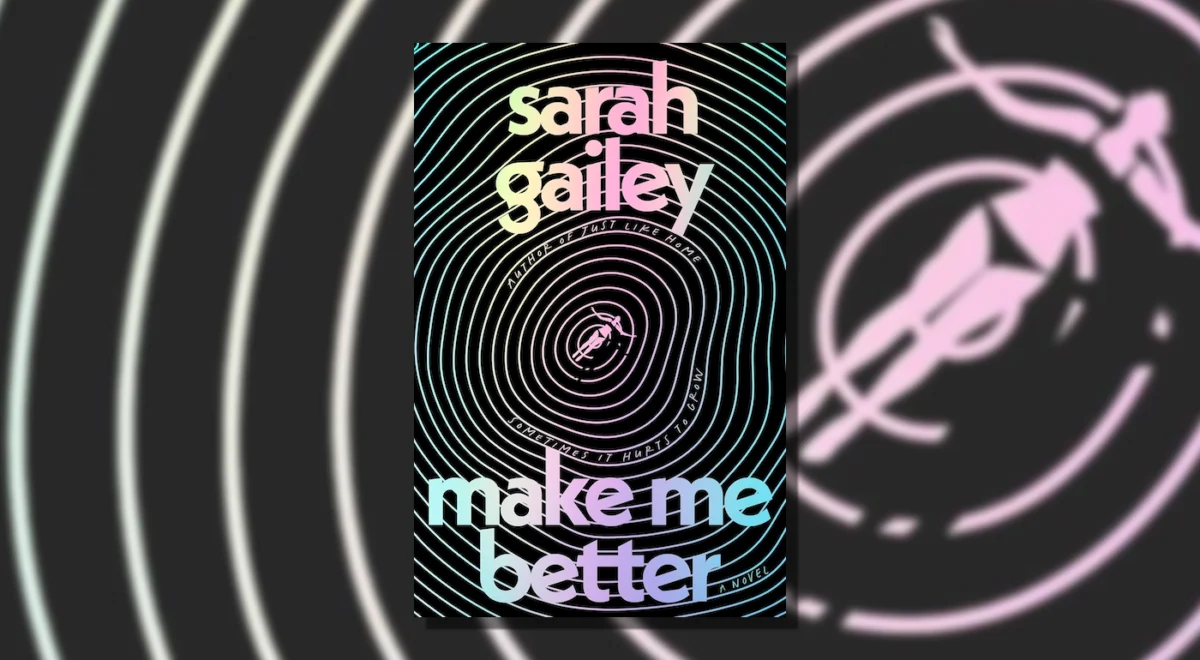
Sarah Gailey’s highly anticipated new horror novel, "Make Me Better," is set to launch with Tor Books on May 12th, offering readers a chilling glimpse into a secluded community with a promise of profound transformation. An excerpt released ahead of the publication date introduces Celia, a protagonist driven by a deep yearning for belonging and family, who seeks solace and healing at Kindred Cove during its annual Salt Festival. The community, shrouded in mystery and surrounded by an "impossible, ever-growing reef," purports to offer an escape from grief and suffering, asserting that "nothing is ever lost."
The narrative unfolds on the first day of the festival, detailing Celia’s arrival by water shuttle. The scene is set with a palpable sense of unease as a crowd gathers on the shore, their presence both imposing and unsettling. The stark banner proclaiming "Welcome Salt Festival Visitors" contrasts with the guarded demeanor of the islanders, hinting at a complex dynamic beneath the surface of their purported hospitality. Celia’s internal monologue reveals her struggle to overcome anxiety and negative thinking, a core theme that will likely resonate throughout the novel.
The Arrival at Kindred Cove
As Celia’s shuttle approaches the shore, she is met by a man named William, whose weathered appearance and piercing gaze immediately command attention. His initial greeting, "Welcome to Kindred Cove," carries an ambiguous tone, neither overtly friendly nor hostile, which fuels Celia’s suspicion. This initial interaction sets a tone of cautious observation for the visitors, including Celia, who are navigating an environment that promises much but reveals little.
The dialogue between William and the young shuttle pilot, whose visible goiter raises Celia’s concern about potential dietary deficiencies, further underscores the insular nature of Kindred Cove. The pilot’s mention of a missing dock and the need to tie up at a "black gum" tree points to the island’s unique, perhaps precarious, relationship with its surroundings. William’s insistence on ensuring everyone is "in the right place" and "ready to step into an experience that will change their lives" amplifies the sense of anticipation and underlying pressure. He elaborates on the festival’s purported aims: connection, purification, cleansing, community, and release from anchors. The emphasis on "celebration" is delivered with a wide, warm smile that Celia finds herself envying, a subtle indicator of the community’s persuasive power.
The collective response from the shuttle passengers – a "lukewarm shout" – reflects a hesitant engagement, a stark contrast to the expected enthusiasm. Celia’s internal critique of forced displays of excitement highlights her own internal struggles and her desire for genuine connection, which she hopes to find at Kindred Cove. The narrative tension escalifies as William wades into the water to secure the shuttle, his movements efficient and purposeful. The unexpected physical contact with a fellow visitor, who steadies Celia as she nearly loses her balance, introduces a brief moment of human connection amidst the growing strangeness.
Unraveling the Island’s Embrace
William’s interaction with Caleb, another islander, reveals a coordinated effort to dock the shuttle, suggesting a practiced routine for receiving visitors. The mention of an unseen structure beneath the water, enabling them to walk rather than swim, adds another layer of mystery to Kindred Cove’s infrastructure. Celia’s act of handing the bowline to William, a seemingly small but practical gesture, offers her a fleeting sense of purpose and contribution. This moment of helpfulness, however, is quickly overshadowed by the unsettling silence and stillness of the crowd on the shore. Unlike typical gatherings, this group remains remarkably composed, observing the shuttle’s arrival with an unnerving lack of fidgeting or conversation.
This observation leads to a poignant moment of doubt from another visitor, who mutters, "Cleansing… I’m so fucking sure," a stark counterpoint to the islanders’ pronouncements. Celia’s brief interaction with this woman, who retreats into a placid demeanor when directly addressed, hints at a shared skepticism among some newcomers, though it is quickly suppressed by Celia’s own desperation for resolution.
The journey from the water to the shore is described as a controlled descent, with William assisting each passenger. His direct address to Celia, "I’m glad you came," and his observation that she "need[s] it" and "will benefit so much from what we do here," is both unsettling and oddly validating for Celia. His words tap into her deep-seated pain, confirming her suspicion that her internal struggles are visible to others. This recognition, while discomfiting, also fuels her hope for the transformation she desperately seeks. The cold shock of the lake water, initially a physical jolt, quickly transforms into an urge to dive deeper, to "follow the path of her own body heat," a metaphorical representation of her desire to confront and understand her own emotional depths.

The Rules of Kindred Cove
Upon reaching dry land, visitors are instructed to leave their shoes and belongings on designated tarps. This act of relinquishing personal possessions signifies a symbolic shedding of their former lives, a necessary step towards embracing the community’s ethos. William’s address to the assembled visitors reveals the exclusivity of the Salt Festival, noting that new faces are welcomed only once a year, with all other comings and goings requiring special permission. This strict control over access underscores the isolated and tightly-knit nature of Kindred Cove.
The introduction of "buddies" for each visitor, tasked with guiding them through the community’s guidelines and answering questions, establishes a system of close supervision. The curt dismissal of a visitor’s raised hand by William, and his pointed stare, suggest an intolerance for dissent or deviation from the established order.
The introduction of "Easy," Celia’s assigned buddy, offers a different dynamic. Easy’s slightly rebellious demeanor and playful teasing, particularly in her interaction with William, suggest a more nuanced perspective within the community. However, her insistence on collecting personal items, including phones, wallets, and photographs, in the name of safety and adherence to community guidelines, raises further questions. Her assertion that Celia "belong[s] here," based on an unseen "something… Right around your eyes," is a powerful and unsettling declaration that resonates with Celia’s deepest desires.
The Path Forward
Celia’s compliance with Easy’s request to relinquish her belongings, despite her initial hesitation, is driven by her desperate need for the healing that Kindred Cove promises. The exchange culminates in a seemingly casual agreement to sue the community if her items are not returned, a statement that, while potentially humorous, carries an undercurrent of distrust.
William’s assignment of Celia to Easy, and his questioning of the wisdom of visiting the "office," hints at hidden aspects of Kindred Cove that are not meant for visitor eyes. Easy’s playful defiance of William, her assertion that Celia can be trusted, and her suggestion that Celia "belong[s] here," further solidify Celia’s complicated feelings. The moment William looks at Celia, she experiences a surge of panic, reminiscent of her grief over pregnancy loss. This panic is linked to the feeling of being "in danger of vanishing" and the overwhelming desire to "lose myself altogether," a passage that deeply affected her. The knowing tilt of William’s head, suggesting he can "hear" her internal struggle, instills a complex mix of fear and hope that he might be the one to finally silence her inner turmoil. Her whispered assurance, "You can trust me," and William’s nod, provides a fragile sense of reassurance, a muffling of her inner scream.
As Celia follows Easy into the island’s interior, the narrative shifts to a more immersive exploration of Kindred Cove. Easy’s dismissive explanation regarding the visitors’ belongings and her casual assertion that "we have everything ready for you" reinforces the idea that external possessions are irrelevant within the community. Her directive that "we don’t do that here" in response to Celia’s request to retrieve her shoes signifies a radical departure from conventional norms. Easy’s philosophical justification for going barefoot—that shoes "separate you from the ground beneath you" and prevent "a real experience"—introduces a new facet to the community’s ideology, emphasizing a primal connection to nature.
The sudden appearance of "Tom," a creature that attempts to "get your ankles," adds a primal, wild element to the environment. The question about the whereabouts of the children, who were present at the shore but have now seemingly vanished, elicits a response from Easy that highlights the community’s structured approach to child-rearing, emphasizing that "structure is important for a child’s growth and development." This statement, delivered with a slightly pointed tone, suggests a potential lack of understanding from Celia, who is not a parent.
Celia’s probing questions about the mine collapse and potential losses are met with Easy’s gentle but firm rebuttal: "No one is ever lost." This recurring phrase, central to Kindred Cove’s philosophy, serves as a constant reminder of their belief system, which appears to offer an ultimate solution to grief and suffering, but at an unknown cost. The excerpt concludes with Celia following Easy into the shadowed interior of Kindred Cove, the weight of William’s gaze still upon her, and the promise of transformation hanging heavy in the air, leaving readers to ponder the true nature of the healing and belonging that awaits her.