"Marattam," a 1988 Malayalam television work directed by Govindan Aravindan, stands as a seminal piece within Indian parallel cinema, offering a profound exploration of identity, illusion, and performance. Adapted from a one-act play by the renowned playwright Kavalam Narayana Panicker, this production, originally created for national television (Doordarshan) rather than theatrical release, presents a unique fusion of traditional Kathakali performers and contemporary theatre artists. Titled "Masquerade" in English, the work transcends a mere televised stage play, evolving into a meditative experience that blurs the lines between artifice and reality.
The Visionary Behind the Lens: G. Aravindan and Indian Parallel Cinema
Govindan Aravindan (1935-1991) remains one of the most distinctive voices in Indian cinema, celebrated for his poetic sensibility, minimalist narratives, and deep engagement with philosophical and cultural themes. A central figure in the New Indian Cinema movement (also known as parallel cinema), Aravindan, alongside contemporaries like Satyajit Ray, Shyam Benegal, and Mrinal Sen, championed an alternative filmmaking tradition that prioritized artistic merit, social commentary, and experimental forms over commercial mainstream productions. His filmography, including acclaimed works like "Kanchana Sita" (1977), "Thampu" (1978), and "Esthappan" (1980), consistently pushed the boundaries of cinematic storytelling, often incorporating elements of folklore, mythology, and regional performance traditions.
"Marattam" emerged in the latter part of Aravindan’s career, showcasing his continued commitment to experimental forms even within the medium of television. The commissioning of such works by Doordarshan, India’s public service broadcaster, during the 1980s was crucial. This period saw Doordarshan actively supporting cultural programming, including telefilms and serials that provided a platform for avant-garde artists to reach a wider national audience, thereby democratizing access to high-quality, thought-provoking content that might not have found commercial distribution.
The Theatrical Roots: Kavalam Narayana Panicker and Kathakali
The foundation of "Marattam" lies in the theatrical genius of Kavalam Narayana Panicker (1928-2016), a towering figure in modern Malayalam theatre. Panicker was instrumental in revitalizing traditional Kerala performing arts, particularly Kathakali and Koodiyattam, by integrating their aesthetics and techniques into contemporary playwriting and direction. His plays often drew heavily from folk traditions, local myths, and the rich linguistic heritage of Kerala, employing a distinctive poetic language and non-realistic staging. His one-act play, from which "Marattam" is adapted, would have inherently challenged conventional narrative structures, making it a natural fit for Aravindan’s cinematic vision.
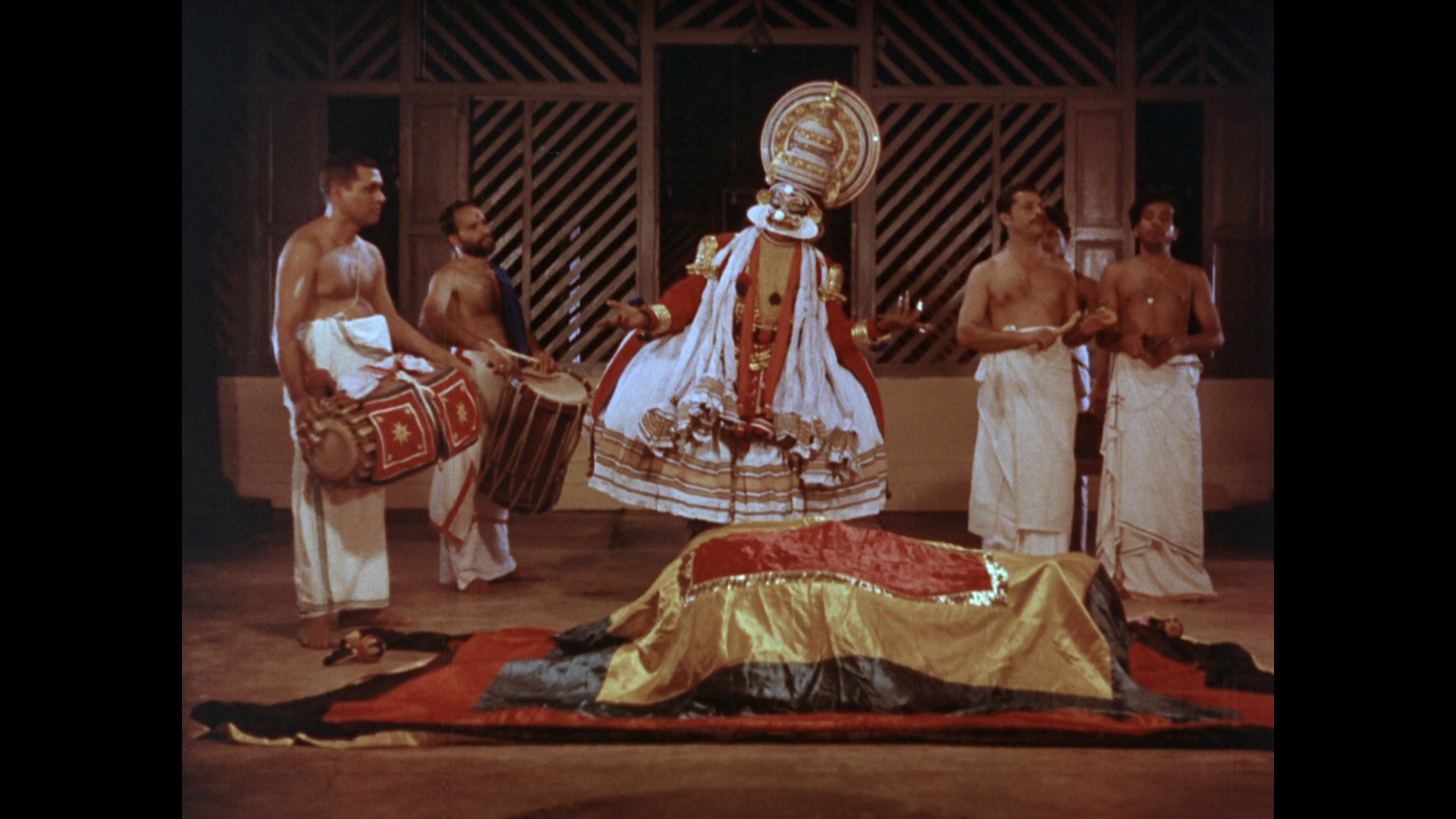
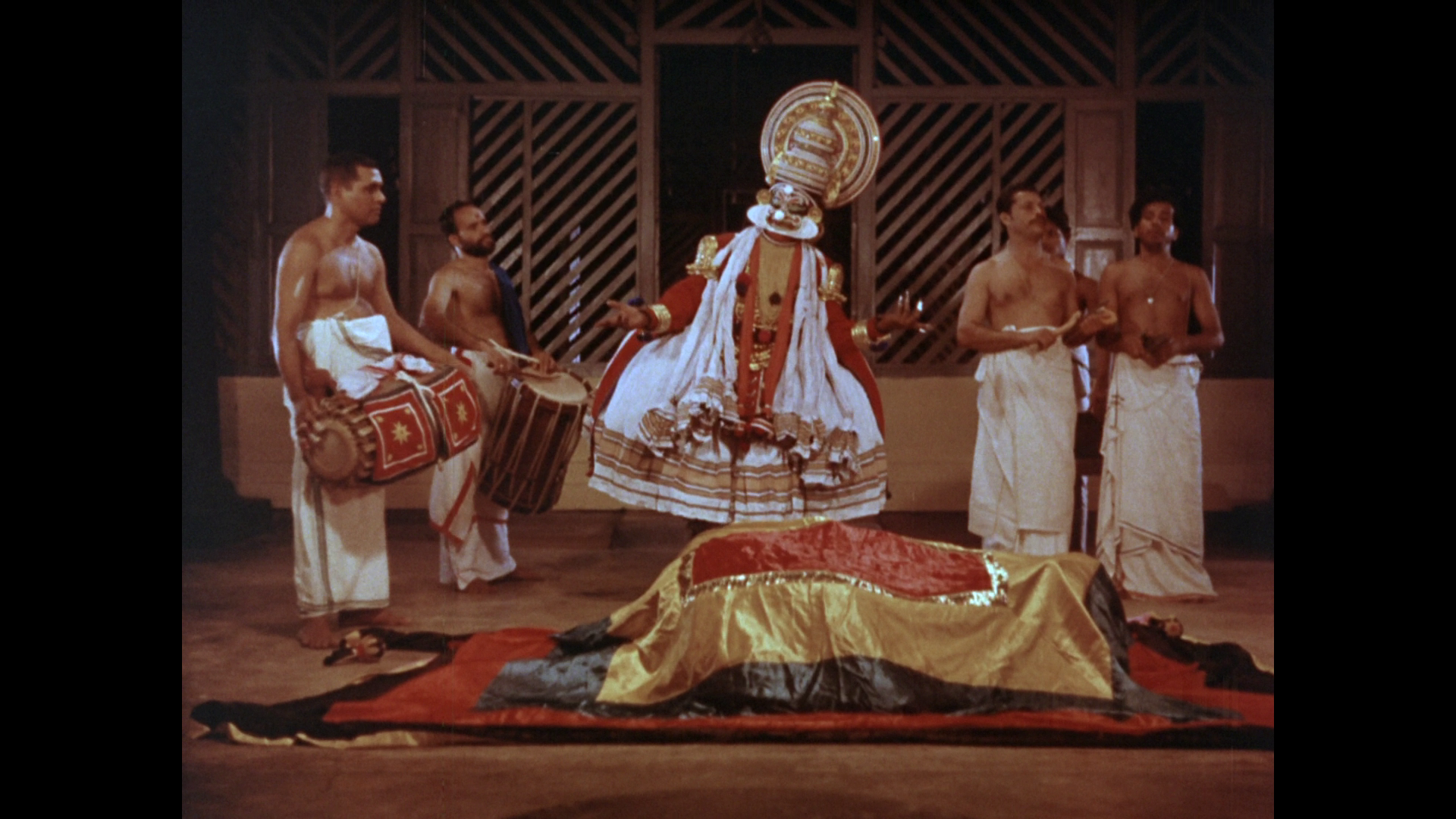
Kathakali, the classical dance-drama of Kerala, serves as more than just a backdrop in "Marattam"; it is a foundational element that informs the film’s thematic and stylistic choices. Known for its elaborate costumes, vibrant makeup, intricate hand gestures (mudras), and expressive facial movements (rasas), Kathakali is a highly stylized art form where performers embody mythological characters, often blurring their personal identities with the roles they portray. The specific Kathakali performance referenced in "Marattam" is "Keechakavadham" (The Killing of Keechaka), a popular episode from the Mahabharata epic. Keechaka, a powerful commander, lusts after Draupadi, who, disguised as Sairandhri, seeks revenge through Bhima. The narrative of "Keechakavadham," with its themes of injustice, disguise, desire, and retribution, provides a potent symbolic framework for the film’s exploration of a murder and its complex motivations.
Unraveling the Narrative: A Polyphonic Investigation
The narrative of "Marattam" commences on the cusp of a "Keechakavadham" Kathakali performance. However, what begins as a glimpse into the preparations for a traditional art form quickly diverges into a labyrinthine murder mystery. A shocking announcement shatters the artistic serenity: the actor slated to portray Keechaka has been murdered. A policeman arrives on the scene to investigate, initiating an inquiry that is anything but straightforward.
What unfolds is not a linear detective procedural but a series of three distinct, contradictory versions of the same event, none of which are ever definitively reconciled. This polyphonic structure is central to Aravindan’s artistic intent, deliberately disorienting the viewer and challenging the very notion of objective truth.
- The Avenger’s Implication: In the first account, suspicion falls upon the actor playing the avenger within the Kathakali narrative, implicitly suggesting a blurring of the lines between the character’s righteous fury and the performer’s potential real-world aggression. This version hints at a direct, albeit symbolic, transference of dramatic action into a tangible crime.
- The Confession of Devotion: The second version introduces a woman who confesses to the killing. Her motive, however, is not rooted in personal animosity towards the actor but rather a fervent, almost pathological devotion to the character of Keechaka. She claims to have killed the man behind the role, driven by a desire to preserve the character’s idealized form or perhaps to prevent the perceived desecration of the role by its flawed human vessel. This narrative introduces a psychological dimension, exploring the audience’s internalization of performance and the dangerous blurring of fantasy and reality.
- The Collective, Symbolic Execution: The third account shifts from individual agency to a collective voice, suggesting a more symbolic "execution" of the "artist" within the performer. This perspective elevates the act beyond a personal crime, framing it as a ritualistic purging or a commentary on the inherent tensions between the performer’s ego, the character’s demands, and the collective expectations of the artistic community or audience. It implies that the "death" is not merely physical but perhaps an artistic or existential one, a sacrifice made at the altar of art.
As these divergent narratives unfold, the boundaries between the staged performance and the "real" events dissolve, transforming the film into a profound meditation on identity, illusion, and the subjective nature of perception. The policeman, initially a figure of authority seeking concrete facts, becomes an unwitting participant in a philosophical inquiry, his quest for truth mirroring the audience’s own struggle to reconcile the conflicting realities presented.
Thematic Depths: Identity, Illusion, and the Performer’s Predicament
At its core, "Marattam" serves as a penetrating examination of the fragile and often dangerous relationship between the performer and the role. Aravindan’s particular interest lies in how audiences internalize performance – how admiration, desire, or even resentment can blur into confusion, distorting perceptions of the individual behind the mask. The film posits that art itself possesses the power to shape, distort, or even dictate reality, not just for the audience but potentially for the performers themselves.
This thematic concern resonates deeply within the socio-political context of southern India, particularly Kerala, Tamil Nadu, and Andhra Pradesh. In these regions, cinema and performing arts have historically intersected powerfully with political power, with actors frequently ascending to influential public figures and even chief ministerial positions. Figures like M.G. Ramachandran (MGR) and J. Jayalalithaa in Tamil Nadu, and N.T. Rama Rao in Andhra Pradesh, transitioned from celebrated screen idols to formidable political leaders, leveraging their popular image and the public’s identification with their heroic onscreen personas. The suggestion in "Marattam" that one might "punish" an actor for the actions of a character, while seemingly absurd, becomes disturbingly plausible in a cultural landscape where the boundaries between public persona, character portrayal, and political identity are profoundly permeable. It underscores the immense potency of representation and the often-unspoken compact between performer and audience.
Furthermore, the film delves into philosophical questions regarding the very nature of existence for an actor. Do performers experience a kind of death when their character dies on stage? Is there an existential toll in repeatedly embodying and then shedding diverse identities? This meta-level inquiry adds a profound philosophical dimension to the narrative, intensifying the avant-garde approach and challenging viewers to consider the psychological and spiritual implications of artistic creation.
Stylistic Innovations: A Ritualistic Cinematic Experience
Stylistically, "Marattam" is as daring and unconventional as its thematic concerns. In a radical departure from conventional filmmaking, dialogue is almost entirely absent. Instead, the narrative is driven by sparse narration and a pervasive musical score, reinforcing the sense that what viewers are witnessing is less a conventional drama and more a ritualistic experience. The film integrates brief, conventional "movie-like" moments, but these function primarily as intros to the vignettes that follow, setting a mood or introducing a shift in perspective. Similarly, intertitles appear throughout, guiding the audience through the shifting narratives without relying on spoken words.
Each of the three contradictory versions of the story is accompanied by a distinct musical tradition. This ingenious choice not only differentiates the narratives but also embeds them deeply within Kerala’s rich folk heritage. While Kathakali has its own specific musical accompaniment, Aravindan’s decision to utilize a broader spectrum of traditional forms, rather than strictly adhering to Kathakali music, allows for greater stylistic flexibility and a richer tapestry of cultural identity. This musical diversity accentuates the emotional tenor of each version, transforming sound into a crucial narrative device. The constant presence of music, though potentially challenging for some viewers accustomed to conventional narrative pacing, is integral to the film’s ritualistic and immersive quality.
The Art of Performance: Kathakali and Theatrical Abstraction
The performances in "Marattam," delivered largely by seasoned practitioners of Kathakali and traditional theatre, are appropriately stylized, emphasizing gesture, posture, and expression over naturalistic acting. This approach is not merely an artistic choice but a reflection of the Kathakali tradition itself, where emotion and narrative are conveyed through a highly codified system of movements and facial expressions. The actors’ intense looks, almost constantly exhibited, along with their elaborate hair, costumes, and makeup, contribute significantly to this purposeful exaggeration. This visual language creates a heightened sense of theatricality, blurring the distinction between the performer and the symbolic representation.
Figures such as Sadanandan Krishnamurthy and Kalamandalam Kesavan, renowned for their mastery of traditional art forms, embody both the character and the performer, reinforcing the central duality at the heart of the narrative. Their profound understanding of classical aesthetics allows them to convey complex emotions and identities with subtlety and power, even in the absence of dialogue. The presence of Urmila and other talented performers further enhances the film’s sense of authenticity, grounding its abstract themes in the tangible reality of Kerala’s artistic landscape, while simultaneously contributing to its overall theatrical abstraction.
Cinematography and Pacing: Documenting the Stage
The cinematography by Shaji N. Karun, who would later become an acclaimed director himself ("Piravi," "Vanaprastham"), plays a pivotal role in shaping the film’s unique aesthetic. Karun employs mostly steady cameras, contributing to the sense that "Marattam" is a documentary recording of a stage play. This deliberate choice underscores the film’s exploration of performance as a primary subject. However, camera movement does appear judiciously when the performances require it, adding emphasis or shifting perspective without disrupting the overall observational tone.
In line with this approach, the scenes are often quite lengthy, with cuts being rare. This deliberate pacing intensifies the aforementioned sense of a live, unfolding ritual, allowing the viewer to absorb the intricate details of the stylized performances and the nuanced interplay of light, shadow, and movement. The long takes demand patience from the audience but reward it with an immersive, almost hypnotic viewing experience, mirroring the sustained engagement required by traditional Kathakali performances.
Legacy and Contemporary Relevance: A Niche Masterpiece
When viewed today, particularly from a global perspective, "Marattam" emerges as a profoundly unique work within the canon of Indian cinema and television. It is not a film designed for mass appeal but rather a specialized piece of art that demands a discerning audience. Its experimental structure, the near-absence of dialogue, and its reliance on traditional musical and performative aesthetics mean that it requires a certain openness and perhaps even a familiarity with Kerala’s rich cultural heritage. The loud and constant nature of its traditional music, while integral to its artistic vision, can be an acquired taste.
Consequently, "Marattam" might primarily appeal to cinephiles, scholars of Indian parallel cinema, enthusiasts of world theatre, and those interested in cross-cultural studies of performance and media. It is a testament to Aravindan’s uncompromising artistic vision and his courage to experiment with form and content. Far from being merely a "curio," it is a significant philosophical and artistic statement that continues to provoke thought on the nature of identity, the power of illusion, and the profound relationship between art and life. Its enduring value lies in its bold exploration of these universal themes through a distinctively Indian, and specifically Keralite, artistic lens, securing its place as a niche masterpiece for those dedicated to the deeper currents of cinematic and theatrical expression.