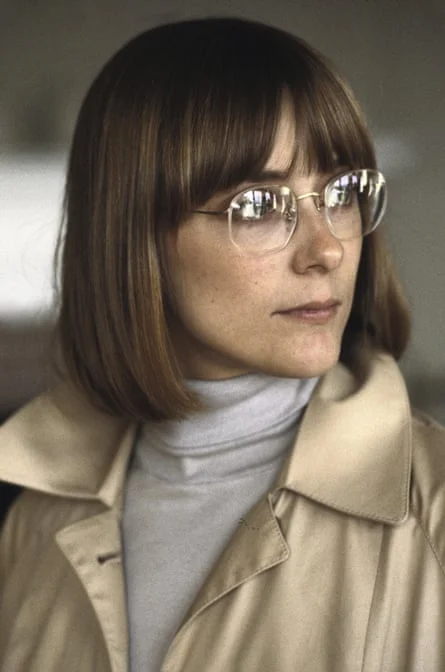
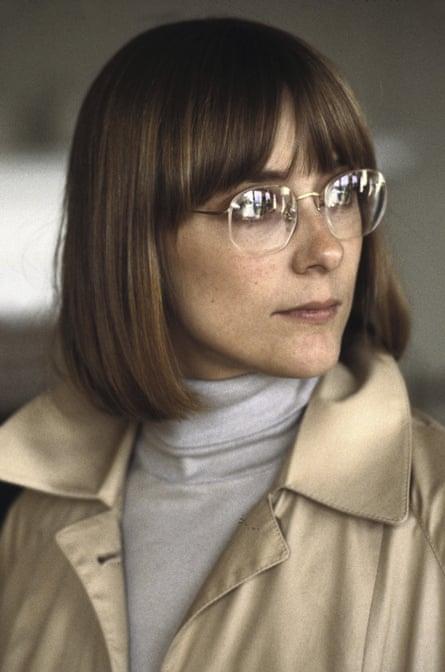
The passing of Mary Beth Hurt, a profoundly gifted and nuanced actress whose career gracefully intersected with a particularly fertile period in American cinema, marks the end of an era for thoughtful filmmaking. Hurt, who died at the age of 79, leaves behind a legacy of performances characterized by their quiet power and authentic emotional resonance. Her early work, in particular, showcased her ability to navigate complex narratives and imbue her characters with a palpable inner life, even amidst the grand ambitions of auteurs.
Hurt’s cinematic debut arrived in 1978 with Woody Allen’s Interiors, a starkly philosophical drama often described as Allen’s homage to Ingmar Bergman. In this ensemble piece, which explored the fractured dynamics of a wealthy family through the lens of three estranged sisters, Hurt took on the role of Joey, the directionless daughter grappling with her overbearing mother, portrayed with formidable intensity by Geraldine Page. The film, despite its somber tone and challenging thematic explorations, achieved a modest commercial success, grossing $10 million against a $3 million budget. For Hurt, this early foray into a Bergman-esque landscape proved to be more than just a debut; it was a significant artistic statement. Her performance as Joey, a character seeking purpose amidst familial discord, earned her a BAFTA nomination in the Most Promising Newcomer category. While she ultimately did not win, losing to Christopher Reeve for his iconic portrayal of Superman, the nomination served as a potent precursor to her four-decade-long presence on the silver screen.
A Career Forged in Artistic Ambition and Critical Acclaim
Hurt’s early career was marked by a series of roles that demanded significant emotional depth and an ability to convey complex internal states. Interiors established her as an actress capable of holding her own in a serious, art-house production, a skill that would serve her well throughout her career. The film’s critical reception, though mixed, acknowledged the maturity of Hurt’s performance, a testament to her burgeoning talent.
Following Interiors, Hurt’s trajectory continued to ascend with a role in John Irving’s The World According to Garp (1982). This film, adapted from Irving’s acclaimed novel and directed by George Roy Hill, presented a darkly comedic and often shocking tapestry of life. Hurt played Helen Holm, the wife of Robin Williams’ eccentric protagonist, T.S. Garp. Her character was central to one of the film’s most indelible and tragic scenes: Garp’s frenzied car crash, a devastating consequence of his suspicion of infidelity, which resulted in the death of one child and the blinding of another, while Helen’s lover was severely injured. It was a role that allowed Hurt to explore a more volatile and sexually charged aspect of her acting range, a departure from the more introspective characters she had previously embodied. In an interview, Hurt herself noted the rarity of such a part for her, stating, “I’ve never been cast as a mistress. I’m the girl men marry, not the girl they have affairs with.” This role provided a potent contrast to her previous work, demonstrating her versatility and willingness to embrace challenging and unconventional characters.

The World According to Garp was a critical and commercial triumph, garnering Oscar nominations for John Lithgow and Glenn Close, both of whom were friends of Hurt’s from her Broadway days. The film’s success solidified Hurt’s position as a significant talent in Hollywood, capable of delivering compelling performances in both independent and mainstream productions.
Navigating Early Career Setbacks
Despite these early successes, Hurt’s career was not without its challenges. A notable stumble occurred with Head Over Heels (1979), directed by Joan Micklin Silver. Hurt had been cast in the lead role, a married woman who captivates a civil servant played by John Heard, beating out Jamie Lee Curtis for the part. However, the film was plagued by studio interference, resulting in significant re-editing and the imposition of an ultimately unsatisfying happy ending. The esteemed New York Times critic Vincent Canby, while recognizing the talent involved, lamented the film’s narrative shortcomings, stating, “Mr Heard and Miss Hurt are two of our best young actors, but the material is either thin and unfocused or rich and besides the point.” This experience underscored the unpredictable nature of filmmaking and the impact of external pressures on artistic vision.
A more significant misstep followed with the 1980 marital melodrama A Change of Seasons. This film, which featured an unusually assembled cast including Shirley MacLaine, Anthony Hopkins, and Bo Derek, was marred by on-set discord and directorial changes. Hurt played the daughter of MacLaine and Hopkins’ characters, witnessing firsthand the acrimonious atmosphere. The film’s troubled production history, including the firing of its original director and the addition of reshoots featuring Hopkins and Derek in a hot tub, did little to salvage its commercial prospects or critical reception. These early setbacks, however, did not derail Hurt’s commitment to her craft; instead, they seemed to steel her resolve.
Roots in the Midwest and Early Theatrical Training
Born Mary Beth Supinger in Marshalltown, Iowa, on November 28, 1943, Hurt’s formative years were shaped by a small-town upbringing and an early exposure to the allure of Hollywood. Her family lived in a community where the meteoric rise of Jean Seberg, another Iowa native, was a subject of considerable local fascination. Hurt herself recalled a childhood memory of Seberg, who was a babysitter for a time, returning to Marshalltown after filming Otto Preminger’s Saint Joan. The event was met with such local excitement that a parade was held in Seberg’s honor, a vivid illustration of the distant glamour of the film industry filtering into everyday life.
Hurt’s pursuit of acting led her to formal training at the University of Iowa, followed by studies at the prestigious New York University School of the Arts. It was during this period that she crossed paths with William Hurt, another aspiring actor, whom she would later marry in 1971. Her early theatrical experiences laid a strong foundation for her screen work, demonstrating an extraordinary range and a willingness to experiment. Her stage debut in 1973 was in Jim Steinman and Michael Weller’s rock musical More Than You Deserve, where she played a 98-year-old Vietnamese man, a role that showcased her transformative abilities.
Broadway Acclaim and a Growing Filmography
Hurt’s transition to Broadway was swift and impactful. Her 1974 debut in a revival of William Congreve’s Love For Love, opposite Glenn Close, quickly established her as a formidable stage presence. This was followed by a series of television roles, including a stint as a police officer in Ann in Blue (1974) and a role in a two-part Kojak episode in 1976 that depicted a troubled figure skater.
Her theatrical career continued to flourish, earning her critical accolades. In 1976, she received her first Tony nomination for her performance in Pinero’s Trelawny of the ‘Wells’, a production that also marked the Broadway debut of Meryl Streep. A second Tony nomination followed in 1982 for her work in a revival of Beth Henley’s Crimes of the Heart. These nominations underscored her consistent excellence and her ability to inhabit a diverse array of characters on the legitimate stage.
Her personal life also saw significant developments during this period. After her divorce from William Hurt in December 1982, she married director Paul Schrader in August of the following year. This union would lead to further collaborations, with Hurt appearing in several of Schrader’s films, including Light Sleeper (1992), Affliction (1997), and The Walker (2007). Her involvement in these projects further diversified her acting portfolio and demonstrated her commitment to working with filmmakers whose visions she admired.
A Resurgence in the 1990s and Beyond
The 1990s saw Hurt continue to build upon her impressive body of work, taking on roles that showcased her mature artistry. She earned a third Tony nomination in 1986 for Michael Frayn’s Benefactors. In 1989, she appeared in Bob Balaban’s darkly comedic Parents, playing a woman who suspects her husband of cannibalistic tendencies, a role that highlighted her ability to navigate the nuances of black humor.
Her presence in two significant films of 1993, Martin Scorsese’s The Age of Innocence and Fred Schepisi’s Six Degrees of Separation, further cemented her status as a respected character actress. In these films, she portrayed sophisticated Manhattan socialites, demonstrating her adeptness at embodying women of a certain class and demeanor.
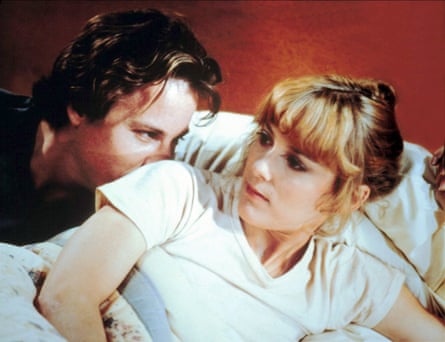
A particularly poignant role came in Mark Rappaport’s From the Journals of Jean Seberg (1995), where Hurt finally had the opportunity to portray her childhood neighbor, the iconic actress Jean Seberg, in a tribute to the star’s life and career. This performance offered a full-circle moment, connecting her early fascination with Seberg to her own established career. In 2006, she received an Independent Spirit Award nomination for her role as a wife suspecting her husband of murder in Karen Moncrieff’s The Dead Girl, a film praised for its feminist undertones and compelling narrative.
Hurt’s final stage performance was in a 2011 revival of John Guare’s The House of Blue Leaves. Her last cinematic appearance, prior to her diagnosis with Alzheimer’s disease, was in the 2018 independent film Change in the Air, a small-town drama that offered a quiet capstone to a distinguished career.
The Philosophy of the Secondary
Throughout her career, Mary Beth Hurt often gravitated towards supporting roles, a preference she articulated with insightful humility. In a 2009 interview, she explained her attraction to these parts: "I never felt very beautiful or incredibly smart or witty, so I was always looking for something about [these roles] that intrigued me… You walk down the street and you see people and you realize that every person chose the clothing they’re going to wear for the day. It means you’ve costumed yourself, and that you’re presenting yourself in a way that you want the world to see you. And I find that fascinating; more fascinating, really, than the gold medal moments. It’s the secondary things.” This perspective reveals a profound appreciation for the subtle details of human existence and the quiet dignity of everyday lives, a sensibility that permeated her most memorable performances.
Mary Beth Hurt is survived by her husband, Paul Schrader, and their two children, Molly and Sam. Her legacy is that of an actress who, through her understated brilliance, illuminated the complexities of the human spirit, leaving an indelible mark on the landscape of American cinema and theater.