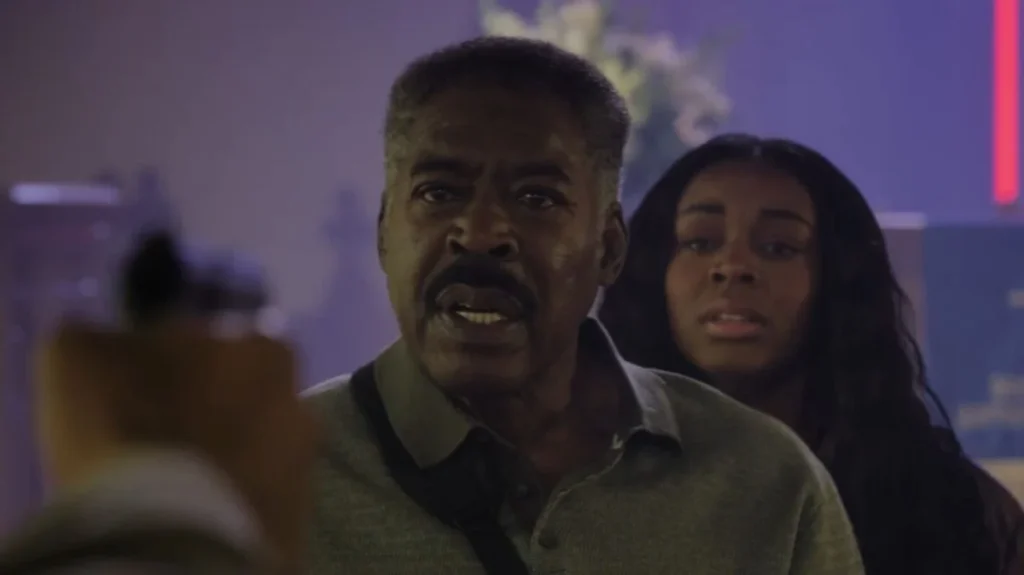
The third installment of the 2024 reimagining of The Forsytes presents a pivotal shift in the fortunes of the central clan, moving from the established stability of the previous episodes into a period of acute personal and professional volatility. At the center of this upheaval is Jo, portrayed by Danny Griffin, whose position as the presumptive heir to the Forsyte legacy has been compromised by the revelation of his domestic secrets. Having previously occupied the role of the family’s "shining beacon," Jo now faces the social and legal ramifications of fathering two illegitimate children. This development serves as the primary catalyst for the episode’s dual narratives: a corporate coup orchestrated by James Forsyte and a strategic, albeit emotionally complex, marriage between Soames Forsyte and Irene.
The Corporate Power Struggle: The Boardroom as a Battlefield
The episode’s primary conflict is centered on the leadership of Forsyte & Co. James, played by Jack Davenport, recognizes Jo’s personal scandal as a strategic opening to consolidate power. In a move that highlights the ruthless pragmatism of the Victorian-era upper class, James conspires with his son, Soames, to have Jo expelled from the firm’s board of directors. The stated grounds for this expulsion—that Jo is "unfit" due to his moral transgressions—serves as a thin veil for James’s ambition to place Soames at the helm of the family business.
The board meeting acts as the episode’s dramatic centerpiece. James leverages the prevailing social mores of the time, arguing that Jo’s relationship with Louisa, a former serving maid, constitutes a threat to the firm’s reputation and its relationship with its high-status clients. The language used by the board members—labeling the affair "distasteful" and "scandalous"—reflects the rigid class hierarchies of the late 19th century, where a man’s professional viability was inextricably linked to his private adherence to social decorum.
However, the corporate maneuver faces an unexpected obstacle in the form of the family matriarch, Ann. Her intervention in the "inner sanctum" of the firm provides a rare glimpse into the hidden power dynamics of the era. By reminding the board that her capital provided the foundation for the company’s existence, Ann effectively silences the opposition. This moment underscores a recurring theme in the series: the tension between the public face of male-dominated commerce and the private reality of female-controlled wealth. Despite James’s aggressive lobbying, the board ultimately votes in Jo’s favor, allowing him to retain his seat. While Jo survives the immediate attempt at his removal, the vote exposes a deep and perhaps irreparable schism within the family leadership.
The Matrimonial Strategy: Soames and Irene’s Union
Parallel to the corporate drama is the accelerated courtship and marriage of Soames and Irene. Soames’s proposal to Irene represents a significant departure from his usual calculated demeanor. His infatuation with her beauty and "nature" is presented as an obsession that blinds him to the precariousness of their emotional connection. Irene, meanwhile, enters the union under a cloud of uncertainty. Her lack of social standing compared to the Forsytes makes her skeptical of Soames’s intentions, yet she is swayed by his promises of a life in Paris and support for her aspirations in dance.
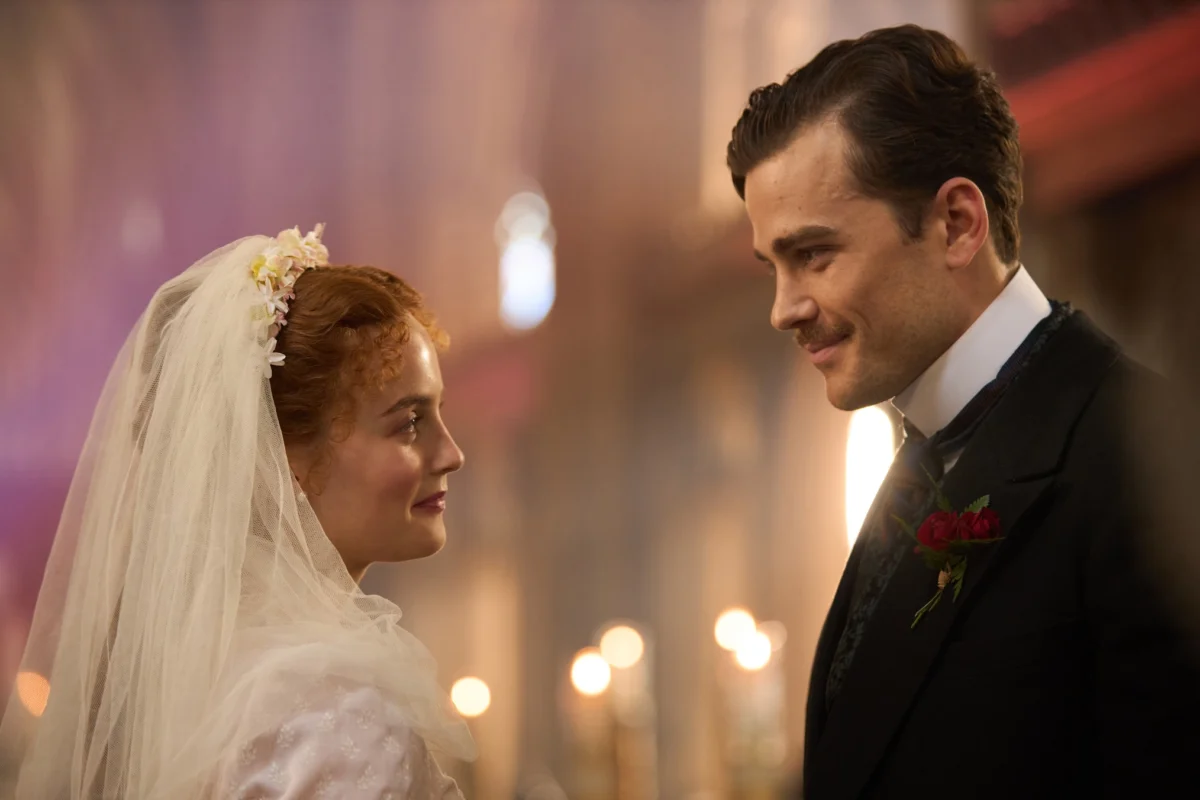
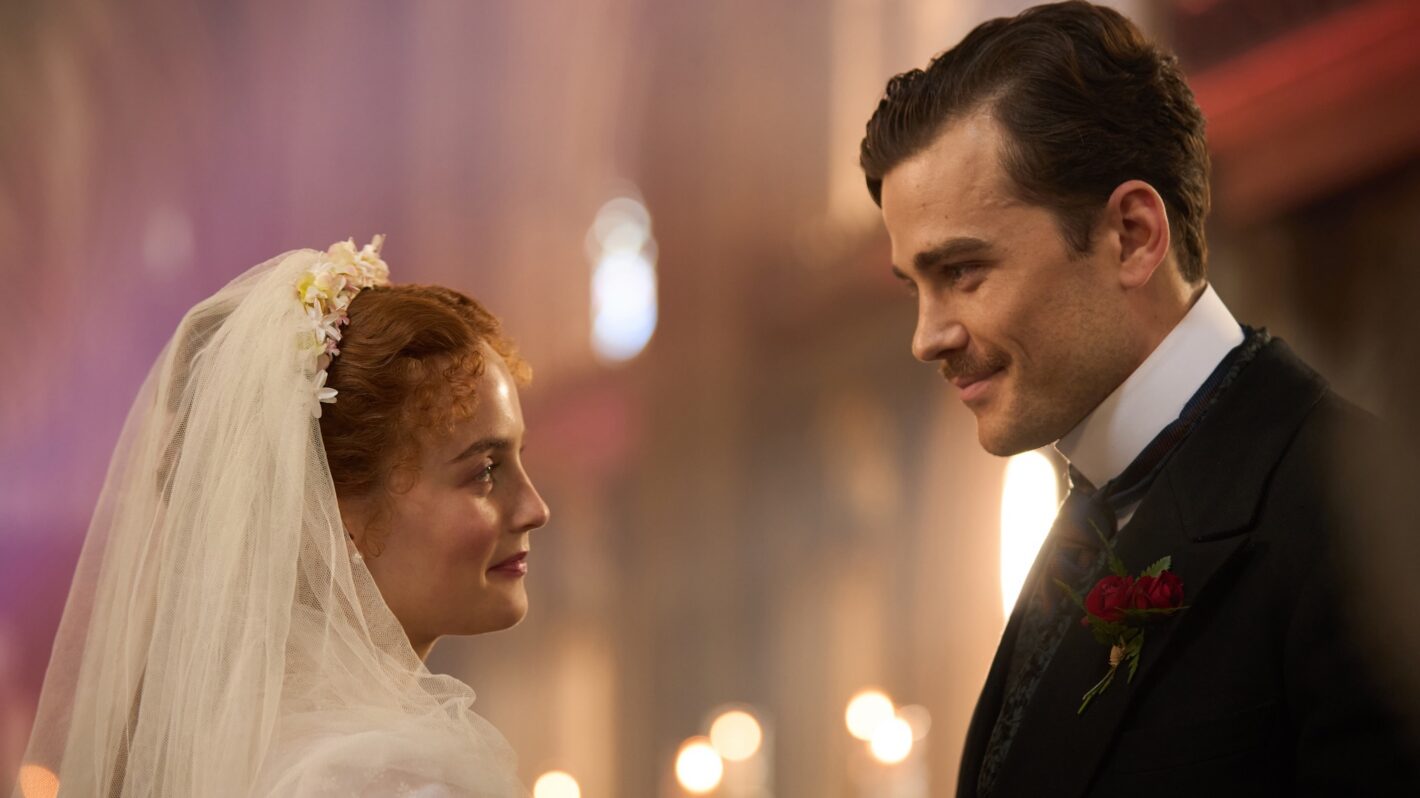
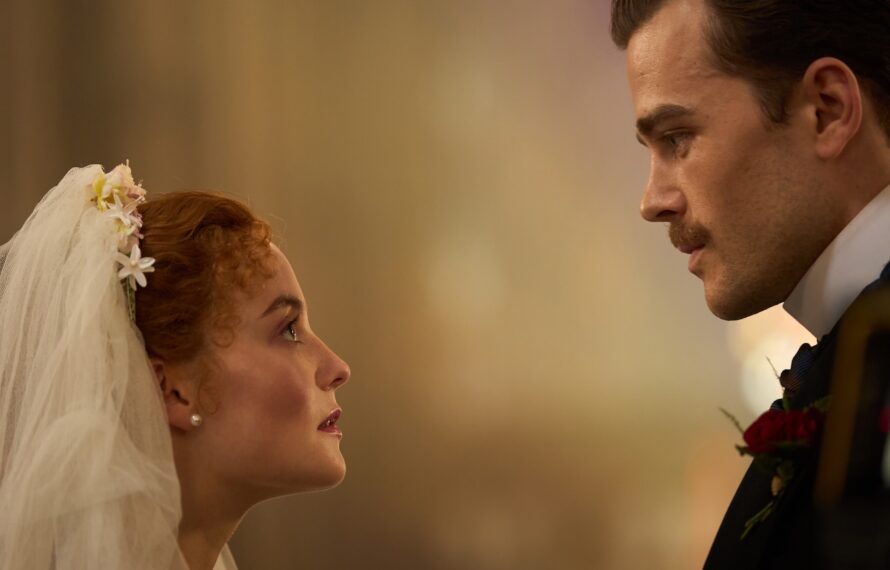
Crucially, the narrative emphasizes that Irene remains unaware of Soames’s role in her financial ruin. This omission serves as the foundation of their marriage, suggesting that the union is built on a fundamental deception. The wedding itself is portrayed not as a celebration of mutual affection, but as the acquisition of a prized asset. Soames views Irene as the final piece of his "ideal life package"—a sentiment that aligns with the broader Forsyte philosophy of viewing people and relationships through the lens of property and ownership.
The ceremony is marked by a palpable sense of unease. James, despite his preoccupation with the firm, expresses concern that Irene will be a distraction for Soames. The matriarch Ann, however, offers a different perspective, acknowledging the rarity of a Forsyte being truly "taken" by another. The episode concludes with the consummation of the marriage, a scene that suggests a fleeting moment of passion but leaves the underlying disconnect between the two characters unresolved.
Domestic Consequences and the Role of Frances
While the corporate and romantic plots move forward, the domestic fallout for Jo and his wife, Frances, reaches a breaking point. Tuppence Middleton’s portrayal of Frances highlights the specific vulnerabilities of a woman whose social status is entirely dependent on her husband’s reputation. For Frances, Jo’s scandal is not merely a personal betrayal but an existential threat to her security and her daughter’s future.
In a climactic confrontation, Frances delivers an ultimatum to Jo, demanding that he sever all ties with Louisa and his illegitimate children. Her directive to "kill" that love or "face the consequences" illustrates the cold reality of Victorian marriage. In an interview regarding these scenes, Middleton noted that Frances is acting from a place of desperation to preserve a "solid foundation" that existed before the scandal. The stakes for Frances are high: if Jo’s reputation falls, she loses her standing in society and the future she has worked to build for her daughter, June.
Jo’s admission that his children were conceived in love complicates the moral landscape of the episode. Unlike James or Soames, who operate on principles of acquisition and reputation, Jo’s actions are driven by genuine, albeit socially unacceptable, emotion. This distinction sets the stage for future conflict, as Jo must choose between the "respectable" life demanded by his wife and family and the authentic connections he has formed outside of those boundaries.
Historical Context and Socio-Economic Implications
To fully understand the gravity of the events in Episode 3, one must consider the historical context of the 1880s. During this period, the concept of "the family name" was the primary currency of the middle and upper classes. A scandal involving a "serving maid" was not just a moral lapse; it was a breach of the class barrier that could lead to social ostracization and financial ruin.
- The Law of Property: The series title, The Forsyte Saga, originally subtitled The Man of Property, refers to Soames’s worldview. In the late Victorian era, women had limited legal rights regarding property and their own autonomy within a marriage. Irene’s decision to marry Soames, despite her doubts, is influenced by the lack of viable alternatives for a woman in her financial position.
- Corporate Governance: The structure of Forsyte & Co. reflects the transition from purely family-owned businesses to more formal corporate entities. However, as the board meeting demonstrates, family influence still outweighed professional merit.
- Illegitimacy: The social stigma attached to Jo’s children would have been permanent. Louisa’s refusal to be "rescued" by Jo is a significant act of defiance, suggesting a burgeoning sense of independence among the working class that contrasts with the stifling expectations placed on the Forsytes.
Narrative Chronology and Key Milestones
- The Revelation: The episode opens with the immediate aftermath of the scandal, with Jo attempting to reconcile his duties to his new family and his existing household.
- The Conspiracy: James and Soames meet to discuss the removal of Jo from the board, establishing the episode’s corporate stakes.
- The Proposal: Soames proposes to Irene, promising her a life of luxury and artistic support, despite her reservations about their class difference.
- The Boardroom Confrontation: The meeting at Forsyte & Co. occurs, featuring Ann’s dramatic intervention and the failed attempt to oust Jo.
- The Wedding: Soames and Irene marry in a ceremony that underscores the tension between the family’s expectations and Soames’s personal obsession.
- The Ultimatum: Frances confronts Jo, demanding the total abandonment of his past life to secure their future.
Analysis of Broader Impacts
The events of Episode 3 set a trajectory for the remainder of the season that emphasizes the fragility of the Forsyte empire. While the family appears to be at the height of its influence, the internal rot—characterized by deception, betrayal, and obsession—is becoming increasingly apparent.
The failure of James’s coup suggests that the older generation (represented by Ann) still holds the ultimate veto power, which may lead to further resentment from James and Soames. Furthermore, the marriage of Soames and Irene is presented as a ticking time bomb. The "disconnect" noted in the narrative—where Soames loves Irene as an object rather than a person—is a central theme of Galsworthy’s original work and is being meticulously reconstructed in this adaptation.
For Jo, the "survival" at the board meeting is a hollow victory. His reputation remains "hanging by a thread," and his domestic life is defined by an ultimatum that requires the suppression of his true feelings. The episode effectively illustrates that for the Forsytes, the cost of maintaining the "family name" is often the sacrifice of individual happiness and moral integrity. As the series progresses, the tension between these personal desires and the demands of the Forsyte "machine" will likely serve as the primary engine for the unfolding drama.