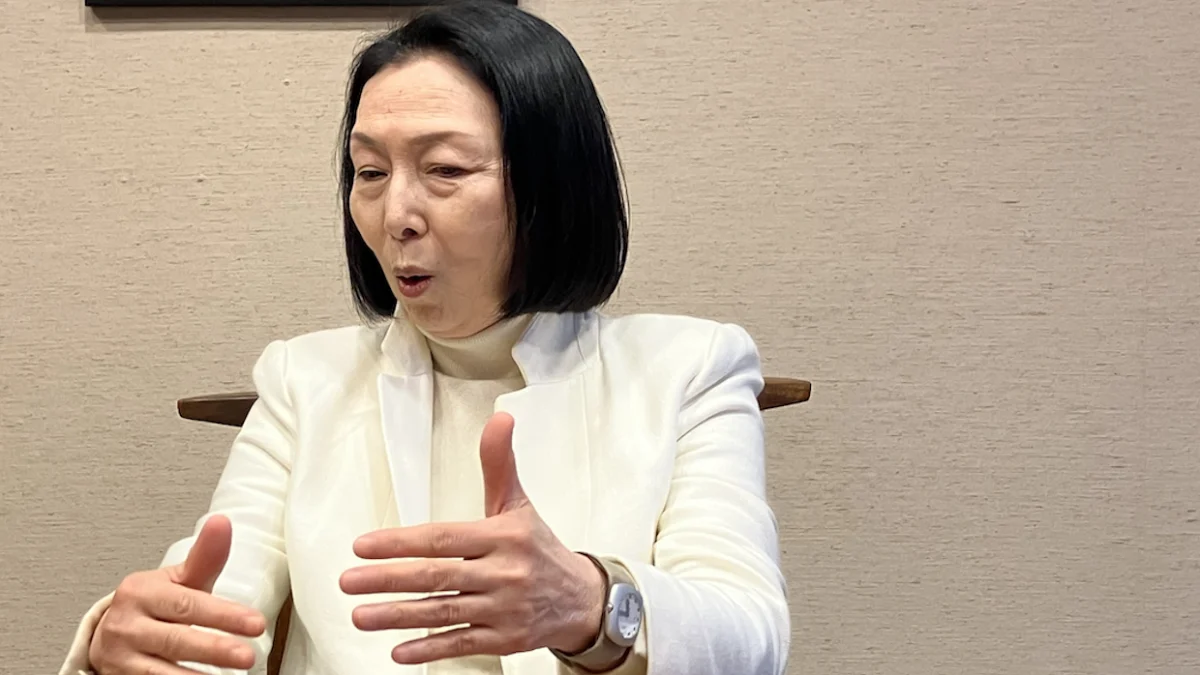
Meiko Kaji, a cinematic force who blazed a trail through the Japanese film industry starting in the 1970s, recently made a rare visit to New York, attending sold-out screenings and engaging with enthusiastic audiences during a comprehensive retrospective of her work at Japan Society. Her presence underscored her enduring status as an icon whose powerful performances continue to resonate across generations and continents, notably influencing acclaimed filmmakers like Quentin Tarantino. This pivotal visit provided a unique opportunity to reflect on a career spanning over six decades, marked by fierce independence, artistic resilience, and an unwavering commitment to portraying characters that challenged societal norms.
A Retrospective of Rebellion: Kaji’s Enduring Legacy
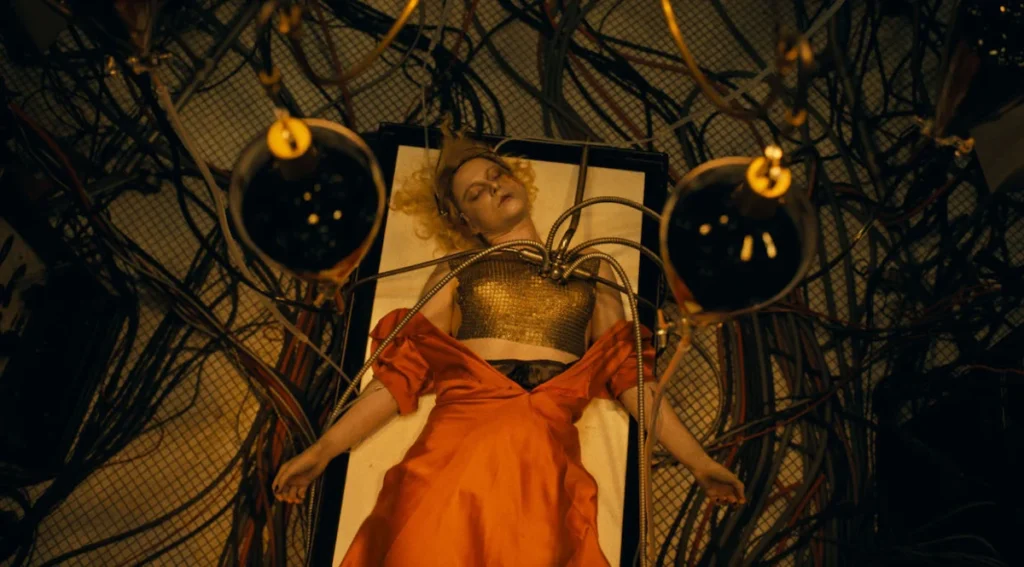
The Japan Society retrospective, titled "Meiko Kaji: A Retrospective," showcased a curated selection of her most impactful films, drawing significant attention from film enthusiasts and critics alike. Among the celebrated titles were Blind Woman’s Curse, often cited as her breakout role, alongside three entries from the seminal Female Prisoner Scorpion series. Also featured were The Love Suicides at Sonezaki, which Kaji herself identifies as her favorite role, and the globally influential Lady Snowblood. The latter’s stark aesthetic and vengeful protagonist famously served as a direct inspiration for Tarantino’s two-part martial arts epic, Kill Bill.
Kaji, now in her advanced years, presented a captivating figure in person. Audiences described her as simultaneously fierce and unyielding, candidly expressing lingering bitterness over her treatment within the industry decades ago. Yet, this formidable demeanor was frequently punctuated by an unexpected, self-deprecating humor. During Q&A sessions, she charmed attendees by performing a range of songs, from the haunting "Urami Bushi" – prominently featured in Kill Bill – to the classic American pop standard "Sentimental Journey." This duality, a blend of hardened resolve and disarming warmth, mirrored the complex characters she brought to life on screen. Her visit, the first to New York in decades, was a significant cultural event, allowing a new generation of fans and longtime admirers to connect with the legendary actress.
Forged in Fire: The Early Years and Nikkatsu Studio System
Kaji’s entry into the unforgiving world of Japanese cinema in the 1960s was far from conventional. Unlike actors who benefited from formal training or a nurturing apprenticeship, Kaji was "scouted" and almost immediately thrust before the camera. This baptism by fire was characteristic of the prevailing studio system, particularly at Nikkatsu, one of Japan’s major film studios during its golden age and subsequent decline into genre filmmaking. She recalled a stark environment where "there was no such thing as training actors or nurturing them to become professionals." Directors demanded immediate professionalism, dismissing any expression of inexperience with the retort, "You’re standing in front of the camera, so I’m treating you like a pro. Don’t say to me that you can’t do something."
This intense, sink-or-swim approach extended to her physically demanding action roles. Kaji revealed that she received "no training" for her action scenes, learning "everything on set." Choreographers would demonstrate intricate sequences just moments before filming, leaving her to execute them flawlessly in a single take. This was the reality of the Japanese studio system of the era, particularly at Nikkatsu, which was known for its rapid production cycles and genre-specific output, from yakuza films to Roman Porno features. The studio environment, she noted, was overwhelmingly "a man’s world," where efficiency and output often superseded actor development. She expressed admiration for her male counterparts who could commit complex choreography to memory with such speed, highlighting the immense pressure she, too, was under to perform at an elite level without the preparatory support common in other film industries.
The Silent Roar of Scorpion: A Bold Artistic Choice
Kaji’s career trajectory took a definitive turn with the Female Prisoner Scorpion series, which cemented her status as an anti-heroine icon. Prior to Scorpion, she had starred in the Wandering Ginza Butterfly series, which shared the same producer. When offered the lead role of Matsu "Sasori" Scorpion, Kaji seized a rare opportunity for creative input. She proposed a radical idea: the heroine would speak no dialogue. This was a monumental gamble for an actor, as it risked alienating her from future roles and viewers who expected verbal expression.
"In the back of my mind, I realized this might end up becoming a very unpleasant film to watch," Kaji confessed, reflecting on the audacious concept. Yet, she was "very confident that it would be an interesting, worthy effort." Collaborating with director Shunya Ito, this decision to render the protagonist largely silent became a defining characteristic of the series, imbuing Matsu with an enigmatic power. Her silence forced audiences to interpret her motivations and emotions through her piercing gaze, stoic demeanor, and brutal actions, creating a character who felt almost supernatural in her implacability. As Kaji noted, "The only way she could show or signal her sense of pride and honor was through this image or presentation of worthlessness, of ignoring or being oblivious to what was happening to her." Her enemy was "the establishment," a symbolic challenge that resonated deeply.
The success of this daring artistic choice was partly attributed to the series being an adaptation of a popular manga. The world of manga allowed for narratives that could diverge significantly from typical film drama, where "the heroine doesn’t speak, where things could happen that seem perhaps distant from reality." This creative freedom provided the fertile ground for Kaji and Ito to experiment with a protagonist whose defiance was expressed not through words, but through sheer, unyielding presence. The international acclaim and lasting popularity of the Scorpion series, particularly among directors in France and America, attest to the enduring freshness and impact of this silent hero concept.
Battling the Pigeonhole: Navigating a Shifting Industry
While the Scorpion series brought Kaji immense popularity and international recognition, it also presented a significant professional challenge: the risk of being irrevocably pigeonholed. In the rigid Japanese studio system, a hit role often led to a barrage of offers for similar characters, stifling an actor’s versatility. "The challenge became: How am I going to distance myself from being pigeonholed into this character?" Kaji explained. Recognizing this trap, she made the bold decision to leave the Scorpion series on her own accord, a move she described as leading to "absolute hell" in the subsequent four or five years.

"I was totally bashed as an actor," she recalled, facing criticism and a struggle to secure diverse roles. Her attempts to pivot to television were met with resistance, as executives deemed her "too dark" and her image not "lively enough to be beamed into living rooms." This period highlights the severe limitations placed upon actors who dared to deviate from successful formulas within the studio-dominated entertainment landscape.
However, Kaji possessed another talent that provided a lifeline during these trying times: her singing. Leveraging this skill, she ventured into pop music, releasing successful singles and albums that allowed her to maintain a career when acting opportunities were scarce or undesirable. This diversification was crucial. Despite the difficulties, Kaji proudly noted that "in the 61 years of my career, I’ve never had a year where I didn’t work." Her journey became a "constant process of trying to find a new direction or way to pivot," battling a system that quickly confined actors to specific archetypes, much like the long-running Tora-san character she referenced.
Redefining Femininity: Kaji’s Intentional Persona
Throughout her diverse filmography, a consistent persona emerges in Kaji’s roles: that of a strong, rebellious woman who refuses to conform to societal expectations. This consistency was not accidental but "very intentional," a conscious artistic and personal statement against the prevailing gender norms of 1970s Japan. Kaji articulated the restrictive environment for women during that era: "Japanese society during that time was a place where women in particular weren’t encouraged to express themselves in a very direct way. In fact, it was a place where you were supposed to be one or two steps behind men, both figuratively and literally. A woman was seen as a doting wife, kind of following in her husband’s tracks."
Kaji staunchly rejected these prescribed roles. "I was not interested in pursuing that kind of role. I certainly didn’t want to be pigeonholed that way," she asserted. While societal ideas about women were slowly evolving, Japanese society often lagged, making open rebellion or self-expression by women subject to severe criticism. Her decision to portray defiant, vengeful, and independent characters on screen was a powerful, if indirect, form of social commentary and activism. The "hell" she experienced after leaving Scorpion was the professional cost of this intentional divergence, but one she was prepared for, believing it was essential for her long-term artistic survival and diversification.
Breaking Through: Television and Beyond
Despite the initial resistance from television producers, Kaji eventually broke through, further demonstrating her adaptability and determination to expand her artistic range. A pivotal moment came with the offer for a role in the domestic drama Terauchi Kantaro Ikka (Let’s Meet The Kantaro Terauchi Family). She was to play a daughter who becomes permanently disabled after an accident at her father’s company. Kaji, ever mindful of her "Scorpion" image, expressed skepticism to the director: "I’m The Scorpion. Are you sure I’m right for this role?"
The director’s response was insightful and challenging: "I’m not looking for someone as bright as the sun." This comment, seemingly a jab at her perceived "darkness," ignited Kaji’s resolve. She countered, "If I’m offered this role, I’d like to play it as brightly as possible." The exchange, ending with her direct challenge, "Are you offering me the role or not?", highlighted her fierce negotiation for creative autonomy. Ultimately, she embraced the opportunity, and it proved to be a turning point. "It was through that role that people started to kind of accept and empathize with me," she recounted. This role helped soften her public image and demonstrated her capacity for nuanced, vulnerable performances, successfully broadening her appeal beyond the confines of her action-heroine past.
Global Resonance and Lasting Impact
Meiko Kaji’s influence extends far beyond Japan, particularly through the global reach of films like Lady Snowblood. Quentin Tarantino’s open acknowledgment of its direct inspiration for Kill Bill brought Kaji’s work to a new, worldwide audience in the early 2000s, sparking renewed interest in her entire filmography. The thematic resonance of a lone, vengeful woman seeking retribution against a corrupt system, coupled with the stylized violence and striking visuals of Lady Snowblood, provided a blueprint for one of Hollywood’s most celebrated modern action films. The re-use of "Urami Bushi" in Kill Bill further solidified this connection, introducing her musical talent to an international audience.
Her characters, often operating outside the bounds of conventional morality and societal expectations, resonated deeply with counter-culture movements and feminist critiques across the globe. From delinquents and gang bosses to daughters sold into slavery and unrepentant killers, Kaji portrayed women who, despite immense suffering, never surrendered their agency. Her performances were not merely about vengeance; they were about survival, self-definition, and an uncompromising pursuit of justice in a world dominated by corrupt and perverse men.
Meiko Kaji’s career stands as a testament to artistic perseverance and an unwavering commitment to authenticity. She battled the rigid studio system, defied gender stereotypes, and consciously shaped her own narrative, both on and off screen. Her unique blend of stoicism, vulnerability, and explosive power has cemented her place not just as a cult figure, but as a pioneering female action star and a profound influence on cinema worldwide. Her recent visit to New York was not just a celebration of past achievements, but a vivid reminder of her enduring power and the timeless relevance of her rebellious spirit.