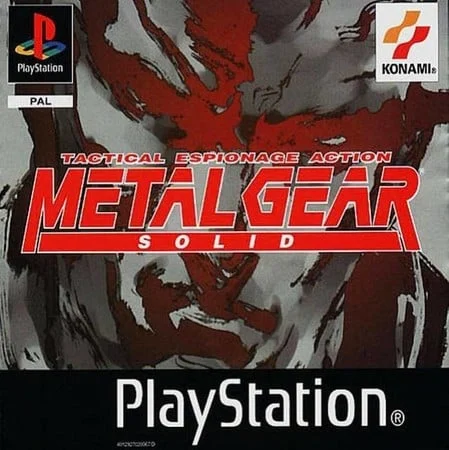
The highly anticipated live-action film adaptation of the iconic Metal Gear Solid video game franchise has officially tapped directors Zach Lipovsky and Adam B. Stein to helm the project for Sony Pictures. The duo, previously recognized for their work on Final Destination: Bloodlines, are set to bring Hideo Kojima’s acclaimed stealth-action universe to the silver screen. This development marks another significant step in the long and complex journey of bringing the beloved game series to Hollywood.
Lipovsky and Stein expressed their enthusiasm and honor in a statement that underscored the profound impact of the original Metal Gear Solid games. "Metal Gear Solid was nothing short of a groundbreaking cinematic masterpiece that forever revolutionized video games," they stated. "We are thrilled and honored to bring Hideo Kojima’s iconic characters and unforgettable world to life." This sentiment reflects the deep respect and admiration many hold for Kojima’s narrative depth, intricate gameplay mechanics, and distinctive cinematic presentation, which have long set Metal Gear Solid apart in the gaming landscape.
The film continues under the stewardship of producers Avi Arad and Ari Arad, veteran Hollywood figures with extensive experience in adapting popular franchises. Their continued involvement suggests a commitment to navigating the intricate path of video game adaptations, a genre that has seen a mixed but increasingly promising trajectory in recent years.
A Decade-Long Road to the Big Screen
The journey of a Metal Gear Solid film to fruition has been a protracted one, spanning over a decade and involving multiple creative teams and strategic shifts at Sony Pictures. The initial seeds for a cinematic adaptation were planted as far back as 2006 when series creator Hideo Kojima first publicly announced plans for a Metal Gear Solid movie, with an ambitious target release date of 2011. This early announcement generated considerable excitement among fans, who eagerly anticipated seeing the clandestine operations and philosophical undertones of the games translated into a visual medium.
However, by 2010, the project encountered significant hurdles. Michael De Luca, then a production president, announced that planning for the film had been postponed indefinitely, signaling a period of uncertainty for the adaptation. This hiatus underscored the challenges inherent in translating the complex narrative and gameplay of Metal Gear Solid into a mainstream cinematic format.
A renewed push for the film began in August 2012, when Kojima announced that Arad Productions, founded by Avi Arad and Ari Arad, was officially producing the movie. This partnership brought a new wave of momentum, with Kojima himself slated to have a supervisory role, ensuring his vision remained central to the adaptation.
The script development process has seen several notable writers attached over the years. In March 2015, Jay Basu, known for The Dinosaur Project and Fast Girls, closed a deal with Sony Pictures to pen the script. This was followed by Variety reporting in November 2017 that Derek Connolly, a writer with a strong track record in blockbuster franchises like Jurassic World and Kong: Skull Island, was working on the "latest draft" of the screenplay. Connolly’s involvement, alongside his experience with large-scale action and adventure narratives, suggested a focus on the franchise’s signature blend of espionage and spectacle.
The casting of the iconic protagonist, Solid Snake, has also been a subject of significant speculation and reports. In December 2020, Deadline reported that Oscar Isaac, acclaimed for his roles in Star Wars and Dune, was slated to portray Solid Snake. Isaac’s gravitas and physical presence have long made him a fan-favorite choice for the role, and his potential involvement further amplified anticipation for the film.
Furthermore, the directorial chair has seen previous occupants. In 2014, Jordan Vogt-Roberts, who would later direct Kong: Skull Island, was reported to be in talks to helm the Metal Gear Solid film. His previous work, particularly in building immersive and visually striking worlds, indicated a potential for a distinct directorial approach.
The latest appointment of Lipovsky and Stein suggests a deliberate move towards a directorial team known for their ability to navigate genre conventions while injecting fresh creative energy. Their experience with Final Destination: Bloodlines indicates a capacity for crafting suspenseful narratives and delivering impactful visual sequences, which will be crucial in translating the stealth and combat elements of Metal Gear Solid.
The Enduring Legacy of Metal Gear Solid
The Metal Gear Solid franchise, conceived by Hideo Kojima, is renowned for its sophisticated storytelling, philosophical themes, and innovative gameplay. The series first captivated audiences in 1998 with the release of the original Metal Gear Solid on the PlayStation. This seminal title introduced players to Solid Snake, a highly skilled special forces operative tasked with infiltrating a remote nuclear disposal facility in Alaska to neutralize a terrorist threat posed by the rogue special forces unit, Foxhound. The game was lauded for its groundbreaking stealth mechanics, cinematic cutscenes, and complex narrative that delved into themes of nuclear proliferation, genetic engineering, and the nature of warfare.
The franchise continued to evolve, with titles like Metal Gear Solid 2: Sons of Liberty, Metal Gear Solid 3: Snake Eater, and Metal Gear Solid 4: Guns of the Patriots pushing the boundaries of storytelling and gameplay. Metal Gear Solid 3: Snake Eater, released in 2004, is particularly celebrated for its prequel narrative, set during the Cold War, and its introduction of Naked Snake (later Big Boss), a mentor figure to Solid Snake. The recent announcement of a remake of Metal Gear Solid 3: Snake Eater for PlayStation 5, Xbox Series X|S, and PC, slated for August 2025, underscores the enduring popularity and critical acclaim of this installment, suggesting a renewed focus on the series’ rich lore.
Hideo Kojima’s final Metal Gear title developed under Konami was Metal Gear Solid V: The Phantom Pain, released in September 2015 across multiple platforms, including PlayStation 3, PlayStation 4, Xbox 360, Xbox One, and PC. This critically acclaimed game achieved significant commercial success, shipping over six million copies worldwide. Kojima’s subsequent departure from Konami in December 2015 marked a significant turning point for the franchise and his career, leading him to establish his own independent studio.
Following Kojima’s departure, Konami released Metal Gear Survive in February 2017, a spin-off title that ventured into survival horror and cooperative gameplay. This was the first Metal Gear console game announced after Kojima’s exit from Konami, and it represented a departure from the core stealth-action formula that defined the series.
Implications and Future Prospects
The appointment of Zach Lipovsky and Adam B. Stein signals a new chapter for the Metal Gear Solid film adaptation. Their fresh perspective, combined with the established production team of Avi Arad and Ari Arad, and the potential involvement of Oscar Isaac as Solid Snake, creates a compelling foundation for the project. The success of recent video game adaptations such as The Super Mario Bros. Movie and HBO’s The Last of Us series has demonstrated the viability and potential of translating beloved gaming IPs to other mediums, setting a higher bar for future projects.
The Metal Gear Solid film has the potential to capture a massive global audience, drawing from the franchise’s dedicated fanbase and appealing to a broader cinematic audience through its compelling narrative, intricate world-building, and thrilling action sequences. The challenge for Lipovsky and Stein will be to distill the complex lore and philosophical underpinnings of Metal Gear Solid into a cohesive and engaging cinematic experience that satisfies both long-time fans and newcomers alike. The series’ reputation for its cinematic presentation within the games themselves provides a strong blueprint, but translating its unique blend of stealth, espionage, and philosophical commentary into a feature film will require a delicate balance of faithfulness and cinematic innovation.
The long gestation period of this film adaptation highlights the complexities of Hollywood development and the specific challenges of bringing a property as unique and influential as Metal Gear Solid to the screen. However, with a new directorial team at the helm and a clear path forward, the prospect of seeing Solid Snake’s iconic missions unfold on the big screen appears closer than ever. The ongoing developments will undoubtedly be closely watched by fans and industry observers alike, eager to witness the next stage of this ambitious cinematic undertaking.