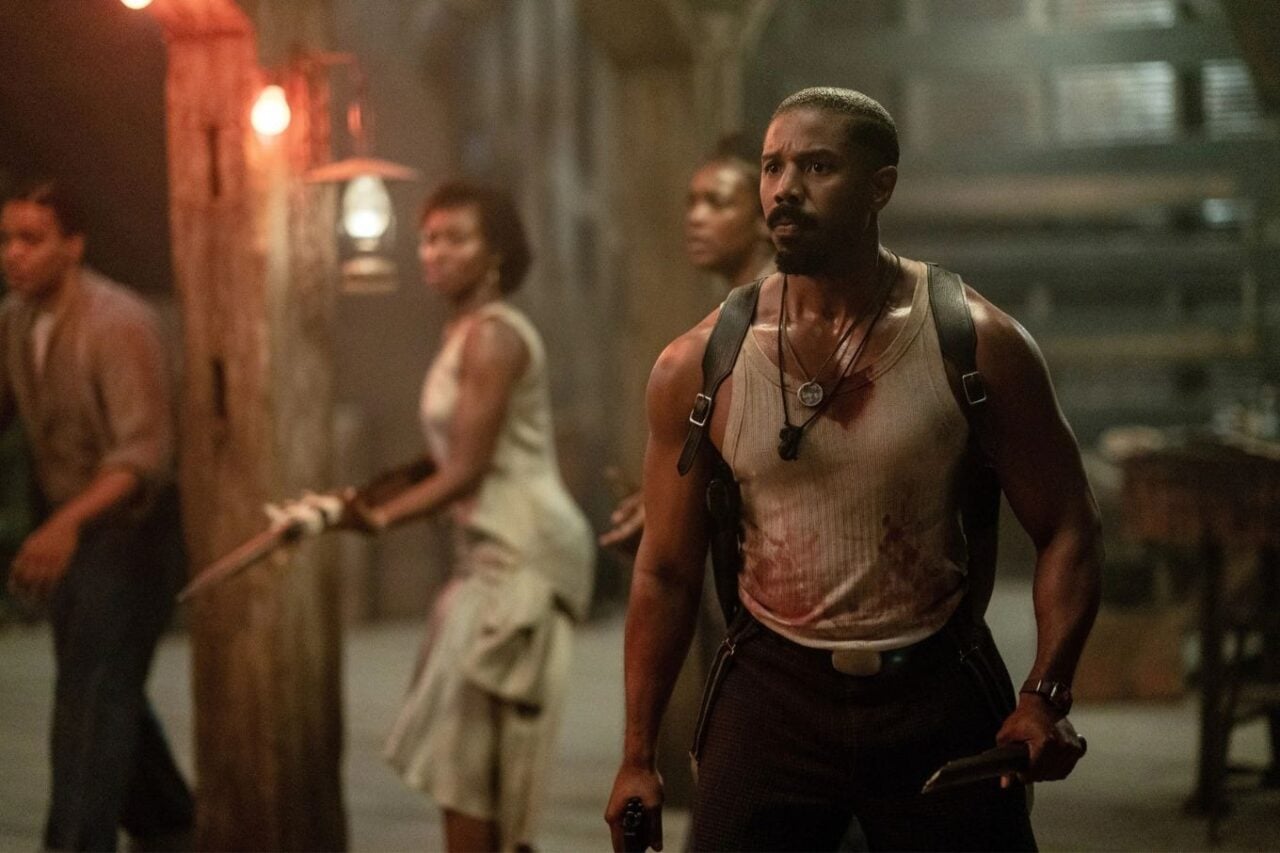
The 98th Academy Awards, held on March 16, 2026, marked a significant moment for both the horror genre and Black representation in cinema, as Michael B. Jordan clinched the Oscar for Best Actor for his critically acclaimed dual performance as Smoke and Stack in Ryan Coogler’s vampire thriller, Sinners. While Sinners did not take home the coveted Best Picture award, it was a formidable presence at the ceremony, securing multiple accolades. Ryan Coogler was honored with the Academy Award for Best Original Screenplay, Autumn Durald Arkapaw received the award for Best Cinematography, and Ludwig Göransson was recognized for Best Original Score. Jordan’s victory, however, resonated with a broader cultural significance, highlighting a new era of achievement for Black actors within the horror landscape.
The announcement of Jordan’s win for Outstanding Male Actor in a Leading Role, a category also recognizing his exceptional performances at the Actor Awards, Best Actor in a Horror Movie at the Critics’ Choice Awards, and Outstanding Actor in a Motion Picture at the NAACP Image Awards, was met with widespread elation. This triumph is not merely a personal milestone for Jordan but a potent symbol of evolving industry perceptions and opportunities for Black talent in genres historically characterized by underrepresentation or stereotypical portrayals. The online and in-person reactions from horror movie enthusiasts underscored the deep appreciation for this recognition.
The palpable excitement in the Dolby Theatre as Adrien Brody announced Jordan’s name was a testament to the actor’s career trajectory and the emotional weight of the moment. Jordan, a familiar face on screen since his youth, visibly absorbed the significance of his achievement. His visible emotion, shared with co-stars Wunmi Mosaku and Delroy Lindo, as well as fellow nominees Emma Stone and Paul Mescal, who offered enthusiastic support, painted a picture of camaraderie and mutual respect within the industry. Jordan’s acceptance speech, which included heartfelt embraces with his mother and director Ryan Coogler, was a moment of profound gratitude. He specifically acknowledged the dedicated horror fanbase that championed Sinners throughout its release, underscoring the vital role of genre enthusiasts in elevating such projects. The film’s enduring appeal and repeated draws to theaters were attributed, in part, to the complexity and depth of the roles Jordan embodied.
The Significance of Jordan’s Win for the Horror Genre
Michael B. Jordan’s performance in Sinners transcended the typical demands of a dual role. While the ability to portray distinct characters within a single film is a recognized feat—exemplified by the cast of Us inhabiting both their primary characters and their doppelgängers, or Jeremy Irons and Rachel Weisz in their varied portrayals of twins in Dead Ringers—Jordan’s contribution to the horror genre was marked by an infusion of genuine compassion and warmth into his characters, Smoke and Stack.
The horror genre often features protagonists with unyielding resilience and antagonists with formidable determination. Recent cinematic releases in 2025, such as the I Know What You Did Last Summer reboot, Final Destination: Bloodlines, Weapons, and Companion, showcased a range of characters who exhibited toughness and a willingness to confront threats with various implements. These characters, while compelling, frequently operate within established archetypes of strength and direct confrontation.
However, Jordan’s portrayal of Smoke, a gangster who transitions into a vampire, and his formidable counterpart Stack, offered a nuanced exploration of character. Smoke displayed an open affection for Annie and a deep connection to his community in the Mississippi Delta, demonstrating a vulnerability rarely afforded to characters in such roles. Even Stack, whose demonic persona was accentuated by his glowing eyes, exhibited a flicker of tenderness when contemplating the potential separation from his brother in the mortal realm.
This distinction is particularly impactful given prevalent media narratives that often depict Black men as inherently ruthless, aggressive, or selfish. Furthermore, Jordan’s success directly confronts the deeply ingrained and problematic "Black Guy Dies First" trope that has historically plagued the horror genre. This trope, a particularly egregious manifestation of tokenism, often relegates Black characters to brief, unceremonious demises early in the narrative, denying them meaningful development or agency.
The Black Horror Legacy and Jordan’s Impact
The "Black Guy Dies First" trope, and its broader manifestation as the "Token Black Character Trope," has resulted in Black characters being marginalized, serving primarily as plot devices before their inevitable and often swift elimination. Examples abound throughout horror history: Frost in Aliens, Dick Halloran in The Shining, and Josh in Midsommar all met untimely ends, often serving to establish the threat of the antagonist or to advance the plot for white protagonists. In some instances, Black characters are killed so rapidly that their names are not even revealed, as seen with the unhoused Black man encountered by Patrick Bateman in American Psycho, the victim drained by Lestat in Queen of the Damned, or the first victim of the sentient car in Christine.
Jordan’s Oscar win for his portrayal of Smoke and Stack signifies a crucial acknowledgment of the demand for fully realized, complex roles for Black individuals within the horror genre. This achievement is a direct result of visionary creators like Ryan Coogler providing opportunities for Black talent to shine within original narratives that offer dignity and depth.

Dual Roles That Redefine Tropes
The opportunity to witness Black characters imbued with integrity and possessing substantive dialogue is a rarity. Similarly, portrayals of Black men exhibiting deep love and respect for their partners are less common, standing in contrast to more simplistic or stereotypical depictions. However, it is important to navigate these advancements with a critical eye, avoiding the pitfalls of "respectability politics," a term coined by Evelyn Brooks Higginbotham to describe the pressure on minority groups to conform to dominant societal norms to gain acceptance. As a film enthusiast, particularly within the horror community, the desire is not for sanitized or unblemished representation, but for authentic and compelling storytelling.
One of the most significant aspects of Jordan’s win is its reinforcement of his artistic synergy with Ryan Coogler. As Coogler’s muse, Jordan has consistently been offered roles that explore morally ambiguous anti-heroes, characters who possess thought-provoking perspectives and a compelling rationale for their actions, even when those actions are extreme.
The journey to this point has not been instantaneous. The evolution of Black representation in horror has been gradual, with incremental steps taken by various filmmakers. Wes Craven, in Scream 2, subtly addressed the trope through Maureen Evans’s monologue, played by Jada Pinkett-Smith, as she expressed resistance to seeing the fictional Stab movie due to the predictable fate of Black characters in horror films. More recently, Jordan Peele’s seminal works, Get Out and Nope, provided Black characters with the agency to be Final Boys and Final Girls. This momentum has continued with performances like Sophie Wilde’s in Talk to Me, Naomi Ackie’s leading role in Blink Twice, and Ayo Edebiri’s performance in last year’s Opus.
Anticipating the Future of Black Creatives in Horror
Michael B. Jordan’s Oscar win fuels optimism for the future trajectory of Black creatives within the horror genre. In his acceptance speech, Jordan paid tribute to a lineage of influential Black actors who have navigated genre films, including Jamie Foxx, Sidney Poitier, Will Smith, and Denzel Washington. Foxx’s forays into science fiction and horror include They Cloned Tyrone and Day Shift. Poitier starred in the intense film noir No Way Out. Will Smith’s legacy in science fiction encompasses Men in Black and I Am Legend. Denzel Washington’s impactful roles include his Oscar-winning performance in Training Day and his chilling turn in the serial killer saga Fallen. Jordan’s victory solidifies his position among these esteemed actors, marking a new chapter for Black male leads in the horror and thriller genres on the silver screen.
"Thank you, everybody in this room, and everybody at home for supporting me over my career," Jordan stated in his acceptance speech. "I feel it. I know you guys want me to do well, and I want to do that because you guys bet on me. So thank you for betting on me. And I’m gonna keep stepping up." This sentiment echoes the broader anticipation for Jordan’s future projects and the burgeoning opportunities for Black talent in the expansive and evolving landscape of horror cinema. The industry is poised for a new era, one where diverse voices and complex characters are not exceptions but integral to the genre’s continued innovation and appeal.