The recent release of the Hulu film Mike & Nick & Nick & Alice has ignited a conversation about genre hybridization in contemporary cinema. Marketed as a genre-bending spectacle, the movie has garnered considerable buzz from festival circuits, including South by Southwest, with many early reactions and reviews highlighting its ambitious fusion of science fiction, action, romance, and buddy comedy. This ambitious melding of disparate genres, however, has prompted scrutiny into the execution and effectiveness of its comedic elements, with some critics suggesting a reliance on a limited and ultimately uninspired comedic toolkit.
The Nature of the Comedy
At the heart of the critique leveled against Mike & Nick & Nick & Alice is its reliance on three primary comedic modes, which are perceived by some as repetitive and lacking in genuine wit. The first mode involves characters displaying an unexpected and often incongruous familiarity with pop culture. An early scene, for instance, depicts a scientist engrossed in his time-travel device while humming along to "Why Should I Worry?," a deep cut from the Disney animated film Oliver & Company. Later, the narrative features an extended dialogue sequence where hardened criminals exhibit an in-depth knowledge of the television series Gilmore Girls. This juxtaposition, intended to be humorous, is seen by some as a superficial attempt at generating laughs through pop culture references rather than organic character development or situational comedy.
The second comedic strategy, according to critical analyses, is the inverse of the first: characters demonstrating a lack of knowledge regarding widely recognized cultural touchstones. Writer-director BenDavid Grabinski employs gags where individuals are unfamiliar with figures like Winnie-the-Pooh, the proper term for chloroform, or even the meaning of common English words like "comeuppance." These moments, involving different characters, are perceived as attempts to subvert audience expectations but are often characterized as falling flat.
The third and arguably least sophisticated comedic approach identified is the pervasive use of profanity. The film is noted for characters frequently resorting to expletives, a tactic that, in the view of some critics, substitutes for actual comedic writing. This is further exemplified by character nicknames, such as "Dumbass Tony," which some interpret as a heavy-handed attempt at irreverence and a desperate bid to distinguish the film from more conventional screenplays. The overall impression conveyed is one of a screenwriter struggling to achieve a desired effect, straining for originality and a sense of edgy coolness.
A Troubling Trend in Contemporary Cinema
The perceived shortcomings of Mike & Nick & Nick & Alice are not isolated incidents but appear to be symptomatic of a broader trend in recent cinematic releases. This spring has seen a proliferation of films employing similar comedic strategies and thematic preoccupations. The film Ready or Not 2: Here I Come, released in March, features Samara Weaving once again pitted against wealthy elites with nefarious intentions, employing a narrative rife with profanity and ironic musical cues. Critics have pointed out the film’s reliance on predictable gags, such as a character using a public address system to issue crude evacuation orders, expecting audience laughter rather than genuine suspense or thematic depth.
Following closely in its wake, They Will Kill You presents a strikingly similar premise: a young woman must navigate a gauntlet of wealthy and powerful antagonists who worship Satan, all within a confined setting, to protect herself and her younger sister. This film also leans heavily on quasi-irreverent, profanity-laden humor. While it allows some scenes to unfold with minimal dialogue, its comedic efforts are ultimately judged as falling short, with lines like "who the fuck are you?" and the gratuitous addition of "bitch" to sentences marking its perceived low point.
Even in films with a more ostensibly positive reception, such as the critically acclaimed Project Hail Mary, a similar vein of screenwriter-driven humor is evident. In this film, Ryan Gosling’s character, a genius scientist, communicates with an alien life form primarily through witty banter. While the humor here is more family-friendly and endearing, the underlying principle remains the same: showcasing the filmmakers’ perceived cleverness and ability to subvert conventional narrative structures. This style of filmmaking has been colloquially termed "Ain’t It Cool News-core," referencing a once-influential fan website that championed films perceived as thinking outside the box and catering to a geek audience’s sensibilities. This approach, however, differs from 90s-style ironic detachment, as these films often aim for genuine emotional engagement with their protagonists, resulting in a "half-ironic attachment."

Tracing the Roots of This Cinematic Style
The resurgence of this semi-ironic comedic sensibility can be attributed to a confluence of influences in recent film history. For an extended period, the ubiquity of warmed-over blockbuster quips was largely blamed on figures like Joss Whedon and his numerous imitators within the Marvel Cinematic Universe, whose films were often perceived as frantically engaging in studio-mandated punch-ups. However, the current iteration of this comedic style appears more intentional and less susceptible to executive rewrites. It seems to stem from a genuine creative impulse rather than contractual obligation, a distinction that, for better or worse, defines its character.
This trend also frequently embraces an R-rating, drawing comparisons to 90s auteurs such as Kevin Smith and, particularly, Quentin Tarantino. Tarantino became renowned for punctuating scenes of graphic violence with dialogue laden with minutiae or, conversely, using inane chit-chat to build suspense. While contemporary films often juxtapose violence with trivial conversations, their writers arguably lack the daredevil energy of vintage Tarantino. Moreover, Tarantino’s own recent work has moved away from the pop-culture-heavy, debate-driven dialogue that characterized films like Pulp Fiction, favoring more character-focused and suspenseful narratives.
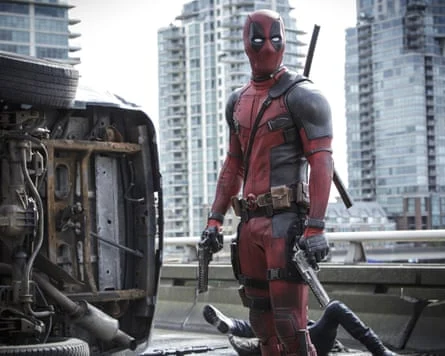
Shane Black is another significant, though perhaps undercounted, influence on screenwriters adept at blending action and comedy. His style may well be a touchstone for many contemporary writers. However, when combined with edgy gore and frenetic shoot-outs, the influence of the Deadpool films becomes undeniable. In these movies, Ryan Reynolds portrays a meta-commentary superhero who delivers a constant stream of jokes amidst hyper-violent action sequences. The connection is particularly salient in films like They Will Kill You, where star Zazie Beetz, having appeared in Deadpool 2, plays a character whose villains can be brutally dismembered without succumbing, mirroring Deadpool’s own regenerative abilities.
The Insidious Impact of the Deadpool Model
While these new films may not break the fourth wall with direct address as Deadpool does, this limitation arguably makes them feel more artificial. They attempt to present screenwriter-driven interjections as organic character behavior rather than a deliberate narrative conceit tied to a specific character’s established traits. The potential tedium of Deadpool‘s relentless snark is offset by a clear, discernible sensibility. The Deadpool films effectively translate the antic, in-joke-laden energy of certain comic books designed to resonate with a specific demographic, appealing to a sense of knowing amusement.
The more insidious consequence of Deadpool‘s decade-old success lies in its transformation of an R-rated superhero film into a de facto substitute for genuine studio comedies. While audiences clearly still desire humor, the practice of infusing action, horror, and sci-fi films with smarmy, self-aware comedy allows movies to tap into that comedic energy without fostering or supporting authentic comic talent. Similarly, the involvement of filmmakers whose primary strengths lie in choreographing action sequences (as in Kirill Sokolov’s They Will Kill You), crafting fast-paced horror (Radio Silence’s Ready or Not), or whose comedic acumen is less clearly defined (BenDavid Grabinski of Mike & Nick & Nick & Alice), explains why these films often fail to achieve genuine comedic impact.
The humor in Project Hail Mary, by contrast, is more successful, partly due to the directorial experience of Philip Lord and Christopher Miller, who possess a background in comedy stretching back to Clone High and The Last Man on Earth. However, the commercial triumph of Project Hail Mary may inadvertently reinforce the notion that comedy is best integrated as an add-on to large-budget spectacles, leading to the proliferation of formulaic irreverence often found in screenwriting workshops.
The Future of Comedy in Blockbuster Cinema
While comic relief will undoubtedly continue to be a component of many films, particularly those featuring actors like Ryan Gosling, who has successfully reinvented himself as a comedic lead, the trajectory is concerning. Numerous action comedies and horror comedies have demonstrated the viability of genuine genre hybrids. However, films such as Mike & Nick & Nick & Alice and Ready or Not 2 struggle to qualify as such. They appear to be more about attitude than about crafting a cohesive joke, or cleverness in search of a compelling subject. The underlying motivation, some critics suggest, may be less about artistic ambition and more about screenwriters seeking development deals in a market saturated with a particular kind of pre-packaged irreverence. The industry’s reliance on this formulaic approach risks a future where genuine comedic innovation is sidelined in favor of predictable, genre-mashing entertainment.