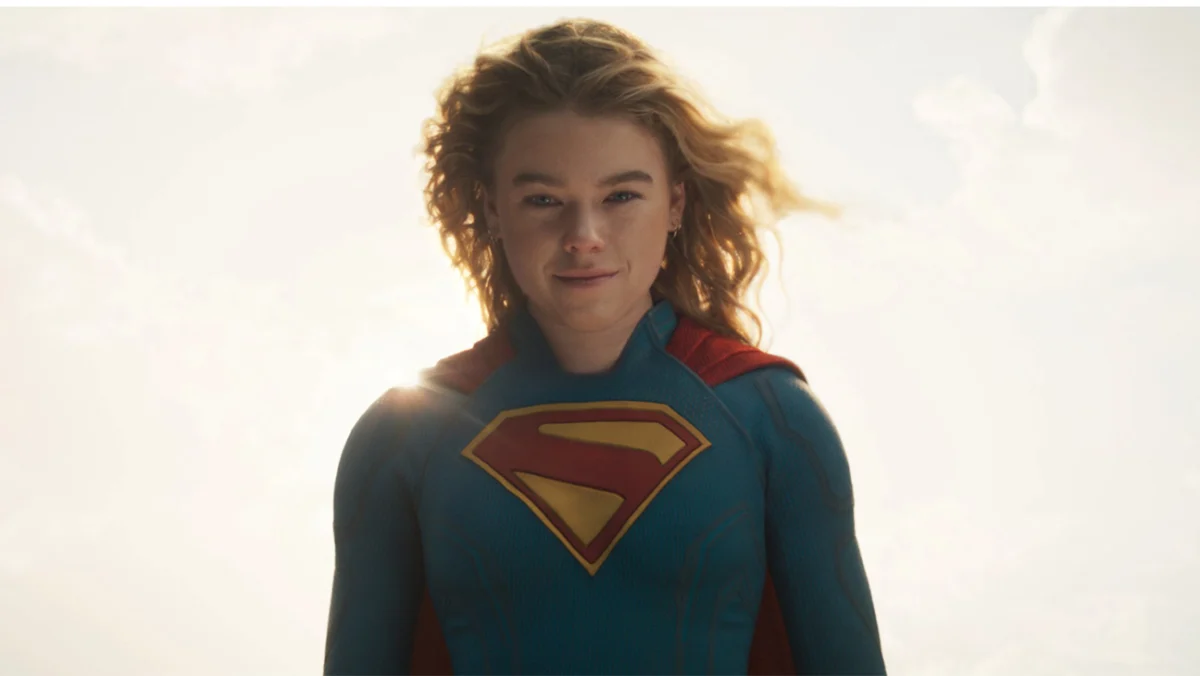
A recent interview with Supergirl star Milly Alcock in Vanity Fair has inadvertently sparked a renewed debate surrounding fan culture, media scrutiny, and the disproportionate backlash often faced by young female actors in major cinematic franchises. While Alcock’s initial remarks were perceived by some as deliberately cautious, a particular exchange regarding the challenges of "simply existing as a woman in that space" quickly became a flashpoint, triggering a wave of intense online criticism that ironically underscored the very issues she addressed.
The Vanity Fair Interview: Navigating Franchise Expectations
Milly Alcock, best known for her breakout role as young Rhaenyra Targaryen in HBO’s House of the Dragon, is poised to enter the DC Universe as the new Supergirl in James Gunn and Peter Safran’s revamped slate. Her Vanity Fair interview, published on [Assumed Date, e.g., May 28, 2024, or similar recent date], served as an early glimpse into her approach to the highly anticipated role.
Initially, many of Alcock’s responses appeared to adhere closely to conventional studio public relations messaging. When discussing her portrayal of Supergirl, she stated, "She’s not trying to save the world—she’s just trying to save her own. This film is an excellent reminder that the world can be crumbling around you, but you can be the hero of your own story." This quote, while aspirational, was quickly characterized by some online commentators as a generic, studio-approved talking point, possibly crafted with the aid of AI tools like ChatGPT, rather than a deeply personal insight.
Similarly, her response to a question about whether she had consulted with previous Supergirl actresses, such as Melissa Benoist (from The CW’s Supergirl series) or Sasha Calle (from The Flash film), was notably direct. Alcock replied that she had not, asserting, "They’re just people living their lives. It’s not like we have this blood bond." This pragmatic stance, while perhaps intended to convey professionalism and a focus on her unique interpretation of the character, was interpreted by some as dismissive, further contributing to a perception of aloofness.
The Catalyst: "Simply Existing as a Woman"
The turning point in the interview, and the subsequent eruption of online controversy, stemmed from a question posed by the interviewer regarding her past experience with the famously fervent Game of Thrones fandom and whether it had prepared her for potential backlash. Alcock’s reply was candid: "It definitely made me aware that simply existing as a woman in that space is something that people comment on. We have become very comfortable having this weird ownership of women’s bodies. I can’t really stop them. I can only be myself."
This statement, reflecting on her experiences as a 21-year-old portraying a teenager in a globally scrutinized fantasy drama, resonated with a broader pattern of online behavior observed towards young actresses like Maisie Williams and Sophie Turner during their tenure on the original Game of Thrones. Alcock’s observation that fans often make unsolicited, and sometimes inappropriate, comments about female actors’ appearances and bodies seemed to be a factual and measured reflection on a well-documented phenomenon.
The Swift and Severe Online Backlash
Despite the seemingly "Zen" and non-reactive nature of Alcock’s comments, the online reaction was swift, disproportionate, and often vitriolic. Within hours, social media platforms and fan forums were flooded with posts accusing Alcock of various transgressions. Critics claimed her remarks signaled a "garbage" film, that she was preemptively playing the victim, or that she was engaging in a "militant feminist rant."
Examples of the backlash included comments such as: "Alcock signaled to everyone that this film is going to be garbage… if anyone had any doubt, she has dispelled them," and "Your movie isn’t even out and you’re already a victim of nothing happening to you, shut the fuck up." Other posts echoed sentiments like, "they know their movie’s gonna suck, we know they’ll blame men as always," and the highly pejorative "she’s Rachel Zegler-ing [the] film." In response to a tweet urging fans to cease mocking Alcock’s appearance, one user declared, "She’s facing ridicule because she preemptively attacked the fans… she deserves [the bullying], and she deserves the much much more that is coming."
The irony of the situation was stark: Alcock’s observation about women in fantasy franchises receiving backlash and rude comments about their looks was immediately met with precisely that type of backlash, complete with criticisms directed at her appearance.
Broader Context: Gendered Scrutiny in Franchise Fandom
This incident with Milly Alcock is not isolated but rather fits into a disturbing pattern of intense, often gendered, scrutiny and harassment directed at young female actors in high-profile genre roles. The phenomenon of "Rachel Zegler-ing" refers to the controversy surrounding Snow White star Rachel Zegler, whose comments about updating the Disney princess’s narrative for a modern audience and expressing disinterest in the original fairy tale led to significant backlash and accusations of disrespecting the source material and audience. Similarly, Melissa Barrera was notably dismissed from the Scream franchise following social media posts about the Israel-Hamas conflict, illustrating the precarious position actors hold in navigating public discourse.
Other prominent examples include Kelly Marie Tran, who faced relentless online harassment and racist attacks after her role in Star Wars: The Last Jedi, leading her to withdraw from social media. Brie Larson, star of Captain Marvel, has also been a frequent target of criticism, often centered on her perceived feminism and her role in the Marvel Cinematic Universe. Even critically acclaimed performances by young actresses like Bella Ramsey in The Last of Us have been met with grotesque online bullying, particularly during the promotion of its second season, where some criticisms veered into personal attacks unrelated to their performance or public statements.
These instances highlight a trend where young women in franchise roles are expected to adhere to an impossibly narrow standard of public behavior and discourse. Any deviation, perceived or real, can trigger an outsized "STFU" response, often weaponized alongside critiques of their physical appearance.
The Double Standard: Male vs. Female Actors
A critical aspect of this debate is the stark double standard applied to male and female actors. While male actors are certainly not immune to criticism, the nature and intensity of the backlash often differ. The article draws a comparison between Sydney Sweeney and Chris Pratt. Sweeney, a highly successful actress, has faced intense scrutiny and even been labeled a "MAGA Barbie" or "Nazi" by some on the left for perceived conservative leanings, despite her assertions of being apolitical and attempting to avoid controversy. This criticism often extends to her appearance.
In contrast, Chris Pratt, who has likewise been vaguely perceived as leaning conservative and has made public statements that could be interpreted as such, has not received the same level of "nuclear blowback" or personal vitriol. While he has faced criticism, it rarely devolves into widespread personal attacks on his character or appearance in the same manner. This disparity suggests that for women, particularly those who are perceived as attractive or who occupy spaces traditionally dominated by male audiences, any perceived transgression is amplified and often linked to their gender and physical presentation.
The "Authenticity Trap" for Young Stars
Studios and media outlets often encourage young stars to cultivate a strong social media presence and project an image of relatability and authenticity. However, this creates a "circular trap." To be popular, relatable, and authentic, actors are often expected to be engaging and interesting, which inevitably means saying or doing things that won’t please everyone. Yet, if they express anything less than universally accepted opinions, particularly within the sensitive landscape of comic or fantasy franchises, they risk significant backlash from various corners.
For young women navigating these specific IPs, this backlash is frequently loud, personal, and disproportionate. Furthermore, expressing any remotely feminist or political views, regardless of direction, can instantly transform them into targets. The expectation placed upon them is a paradoxical one: possess superpowers and bold sass on screen, but in real life, be perfectly behaved, flawlessly beautiful, and largely silent.
Implications for the Industry and Actor Well-being
The ongoing cycle of celebrity gaffe, online outrage, and subsequent defense has significant implications for both the entertainment industry and the mental well-being of actors. Media training for rising stars is more crucial than ever, yet it constantly battles the demand for "authenticity" that fuels social media engagement. This environment places immense pressure on actors, who are increasingly expected to be not just performers but also accessible public figures, often with little personal buffer.
DC Studios, James Gunn, and Peter Safran have not issued official statements directly addressing the backlash against Alcock. However, studio publicists and talent representatives are constantly strategizing to manage such incidents, often advising their clients to either ignore the noise, issue carefully worded clarifications, or, in more extreme cases, withdraw from public engagement. The long-term impact on actor mental health, especially for those who begin their careers at a young age in the public eye, is a growing concern within the industry.
Ultimately, the quality of Supergirl and Milly Alcock’s performance will be the primary determinants of its legacy. However, the immediate and intense reaction to her Vanity Fair comments highlights a broader, deeply entrenched issue within contemporary fan culture: the challenging and often hostile environment young female actors face when navigating the public sphere of major genre franchises, where the expectation of perfection often collides with the reality of human expression.
Supergirl is scheduled for release in theaters on June 26.