A groundbreaking, time-bending short film, Mobius Loop, has officially found its digital home on Watermelon+, the nascent streaming service launched by Watermelon Pictures. The acquisition marks a significant moment for independent cinema, particularly for narratives rooted in diverse cultural experiences, as the film by Palestinian-American filmmaker Lee Mosa-Peterkin begins streaming today. This move underscores Watermelon Pictures’ commitment to amplifying Palestinian stories and providing a platform for voices often underrepresented in mainstream media. Viewers can access the film directly via Watermelon+ at watermelonplus.com/mobius-loop.
Unraveling the Fabric of Time: The Narrative Core of Mobius Loop
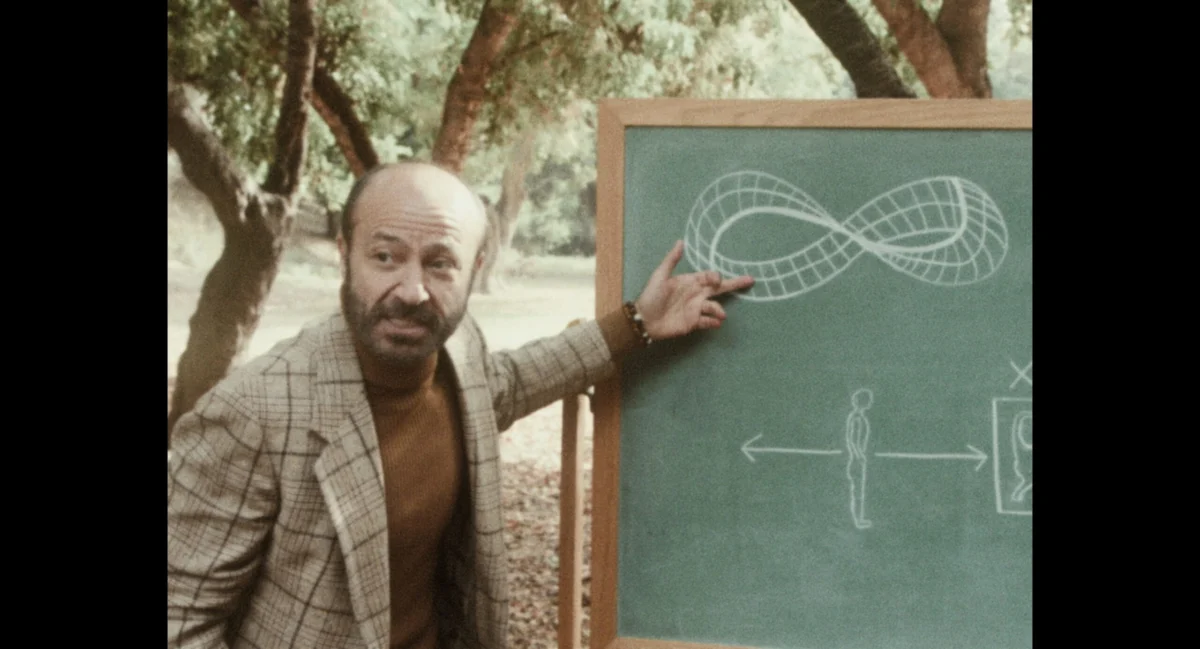
Mobius Loop is an ambitious cinematic endeavor that navigates three distinct time periods, weaving a complex tapestry of discovery, legacy, and familial connection. The narrative arc begins in the 1970s, introducing audiences to a brilliant, yet enigmatic, scientist portrayed by Jay Abdo. In this era, the scientist makes a profound and unsettling discovery: the ability to perceive fragments of the future. This initial breakthrough sets the stage for a story that grapples with the implications of foreknowledge and the human desire to alter destiny.
Years later, the film transitions to a poignant scene depicting the inventor on his deathbed, a figure laden with the weight of his revolutionary, yet perhaps dangerous, technology. This period offers a contemplative reflection on the consequences of his scientific pursuits and the unresolved questions surrounding his invention. The final temporal thread brings the audience to the present day, where the inventor’s granddaughter, played by Dalia Rooni, steps into the spotlight. Tasked with the formidable challenge of deciphering and unraveling her grandfather’s complex technology, she embarks on a journey that blurs the lines between scientific inquiry, inherited legacy, and the potential for a new future. The film’s title itself, Mobius Loop, hints at the cyclical, self-referential nature of time and destiny that its characters confront, suggesting that past, present, and future are intricately linked in an unending continuum. This multi-layered narrative structure demands significant technical and creative precision, especially within the confines of a short film format, making its successful execution all the more remarkable.
The Visionary Behind the Lens: Lee Mosa-Peterkin’s Personal and Artistic Journey
Lee Mosa-Peterkin, the Palestinian-American filmmaker at the helm of Mobius Loop, brings a deeply personal and culturally resonant perspective to his work. His identity has profoundly influenced his artistic motivations, particularly in shaping the protagonists and themes within his storytelling. The decision to embark on production for Mobius Loop in November 2023 was not merely a logistical one, but an emotionally charged choice made amidst profound global turmoil. The film was shot over an intense three-day period in California, coinciding with the early, harrowing days of the Gaza war, specifically during Israel’s extensive bombing response to the October 7 attacks.
Mosa-Peterkin openly shared the immense internal struggle he and his wife, Anna Dale-Meunier, who served as producer and script supervisor, faced during this period. "It was extremely challenging in October when we were deciding if we should go into production, because of the horrors coming out of Gaza," he recounted. "My wife and I struggled with the motivation to film anything." This candid admission highlights the profound emotional toll that global conflicts can exert on artists, often forcing them to confront the perceived relevance and purpose of their creative endeavors. However, this initial hesitation evolved into a powerful sense of obligation. Mosa-Peterkin articulated a clear purpose that transcended mere filmmaking: "Then it felt like an obligation. Part of the purpose was to show the kind of protagonists Palestinians can be." This statement encapsulates the film’s deeper mission – to challenge preconceived notions and expand the narrow, often stereotyped, portrayals of Palestinians in media by presenting complex, multi-dimensional characters who are scientists, inventors, and seekers of truth. This commitment to authentic representation adds a crucial layer of socio-political significance to Mobius Loop, elevating it beyond a mere genre piece.
A Three-Day Odyssey: Technical Prowess Under Pressure
The ambitious scope of Mobius Loop, particularly its requirement to convincingly depict three distinct time periods within a compressed shooting schedule, presented a myriad of technical challenges. Each era—the 1970s, a later period encompassing the inventor’s final days, and the contemporary setting of his granddaughter’s quest—demanded its own meticulous set design, authentic wardrobe, and period-appropriate props. Achieving this intricate level of detail and continuity across multiple timelines in just three days of filming was a logistical marvel, pushing the boundaries of independent film production.
The production team strategically utilized diverse locations across California to bring these disparate worlds to life. Scenes were captured in the verdant expanse of Elysian Park, the controlled environment of Martin Sound in Alhambra, and the scenic, remote setting of Pine Mountain Club, located approximately an hour and a half north of Los Angeles. This geographic diversity, combined with the rapid transitions required between periods, necessitated an extraordinary level of planning and collaboration among key department heads.
Mosa-Peterkin credits his close collaboration with cinematographer Jack McDonald, set designer Melissa Lyon, and costume designer Nina Rocklin as instrumental to the film’s success. Their collective expertise and meticulous pre-production efforts were crucial in managing the complexity. A particularly innovative aspect of their workflow involved leveraging technology typically associated with video game development. Mosa-Peterkin explained, "I used 3D clones of real-world locations in Unreal Engine to prep with department heads and create the shot list and map out lighting, set design and logistics." This pioneering approach to pre-visualization, employing Unreal Engine – a real-time 3D creation tool – allowed the team to virtually scout locations, block scenes, experiment with lighting, and plan set dressing with unparalleled precision long before cameras rolled. This not only streamlined communication and decision-making but also proved indispensable in maximizing efficiency during the extremely tight shooting schedule. "We would never have made our days and all the time periods work without it," the filmmaker acknowledged, highlighting how this technological foresight was pivotal in overcoming what would otherwise have been insurmountable obstacles for an independent production. The successful integration of such advanced tools in a short film production underscores a growing trend in indie filmmaking to adopt innovative solutions to achieve high production values on limited budgets.
Watermelon Pictures: A New Beacon for Palestinian Storytelling
The acquisition of Mobius Loop by Watermelon Pictures is more than just a distribution deal; it represents a significant alignment of artistic vision and institutional mission. Watermelon Pictures is a relatively new but rapidly impactful company founded by brothers Badie and Hamza Ali, whose core mission is to center and elevate Palestinian stories. In an industry where diverse representation remains a persistent challenge, particularly for narratives from marginalized communities, Watermelon Pictures has emerged as a vital platform dedicated to fostering and showcasing Palestinian cinematic talent and narratives.
Their commitment is evident in their burgeoning slate of projects, which includes the Oscar-nominated film The Voice of Hind Rajab, a powerful testament to their dedication to impactful storytelling. Among their other notable projects in development is The Visitor, a Palestinian horror feature that promises to explore genre conventions through a distinct cultural lens. The launch of their streaming service, Watermelon+, further solidifies their ambition to create an accessible, curated space for these crucial stories.
Filmmaker Lee Mosa-Peterkin expressed profound satisfaction with Mobius Loop finding its home at Watermelon Pictures, citing the distributor’s impressive and authentic track record. He specifically praised several recent productions: "I loved Palestine 36, The Teacher, All That’s Left of You, and The Voice of Hind Rajab. All films from just the last year." This endorsement highlights Watermelon Pictures’ rapid ascent in establishing itself as a discerning curator of high-quality, culturally significant Palestinian cinema. For a new company to have backed an Oscar-nominated film and assembled such a compelling roster of titles in a short span speaks volumes about their vision and efficacy in a competitive market. Their emergence signifies a critical development for Palestinian filmmakers, offering a dedicated pipeline for their works to reach a global audience and contribute to a more nuanced understanding of Palestinian identity and experiences.
From Festival Circuit Acclaim to Global Streaming Premiere
Prior to its acquisition by Watermelon Pictures, Mobius Loop embarked on a successful journey through the international film festival circuit, garnering critical attention and validating its artistic merit. The film received an honor at the prestigious Hollywood Arab Film Festival, a significant recognition that underscores its resonance within the Arab cinematic landscape and its broader appeal. This award not only provided crucial exposure but also affirmed the film’s ability to connect with audiences and industry professionals.
Beyond this accolade, Mobius Loop was also an official selection at several other prominent festivals, including the Micheaux Film Festival and the LA Shorts International Film Festival. The Micheaux Film Festival is renowned for celebrating diverse, independent voices, particularly those from underrepresented communities, making it a fitting platform for Mosa-Peterkin’s work. The LA Shorts International Film Festival, one of the largest and most respected short film festivals globally, further amplified the film’s reach and cemented its standing among top-tier short-form content. The festival run not only generated buzz and critical appreciation but also served as a vital stepping stone, demonstrating the film’s marketability and paving the way for its eventual acquisition and streaming premiere on Watermelon+. This trajectory from independent production to festival success and finally to a dedicated streaming platform exemplifies the evolving landscape of film distribution for diverse narratives.
Broader Implications: Elevating Palestinian Cinema on the Global Stage
The premiere of Mobius Loop on Watermelon+ carries implications that extend far beyond the immediate success of a single short film. It symbolizes a burgeoning movement within the film industry to recognize, support, and actively promote cinematic narratives from historically marginalized regions, particularly Palestine. For decades, Palestinian voices in cinema have struggled for consistent visibility and equitable representation, often confined to specific political contexts or viewed through a narrow lens. The concerted efforts of platforms like Watermelon Pictures are systematically dismantling these barriers, creating essential avenues for filmmakers like Lee Mosa-Peterkin to share their nuanced perspectives with a global audience.
This development is crucial for several reasons. Firstly, it enriches the global cinematic tapestry by introducing diverse storytelling traditions, aesthetic approaches, and cultural insights. Secondly, it plays a vital role in cultural preservation and identity affirmation, allowing Palestinian artists to shape their own narratives and challenge prevailing stereotypes. In a world increasingly shaped by media, the power of self-representation through film cannot be overstated, offering a counter-narrative to often one-sided geopolitical discussions.
The success of Mobius Loop also signals a growing appetite among audiences for authentic, challenging, and culturally specific stories that transcend traditional genre boundaries. As streaming services proliferate, there is an increasing demand for niche content that caters to specific communities and interests, and Watermelon+ is strategically positioned to meet this demand for Palestinian and Middle Eastern cinema. This trend empowers independent filmmakers, providing them with more direct pathways to audiences without the traditional gatekeepers of major studios.
Looking ahead, Lee Mosa-Peterkin is already channeling his creative energy into a feature-length version of the Mobius Loop script. This expansion into a longer format suggests the rich potential he sees in its themes and characters, promising an even deeper exploration of time, destiny, and human connection. This move is a natural progression for a filmmaker whose short film has demonstrated both critical acclaim and a clear artistic vision. Meanwhile, Watermelon Pictures continues its robust expansion, with plans for additional acquisitions and original productions aimed at solidifying its position as the premier destination for Palestinian and regional cinema. The launch of Mobius Loop on Watermelon+ is thus not just a premiere, but a significant milestone in the ongoing journey of cultural storytelling and representation in the digital age.