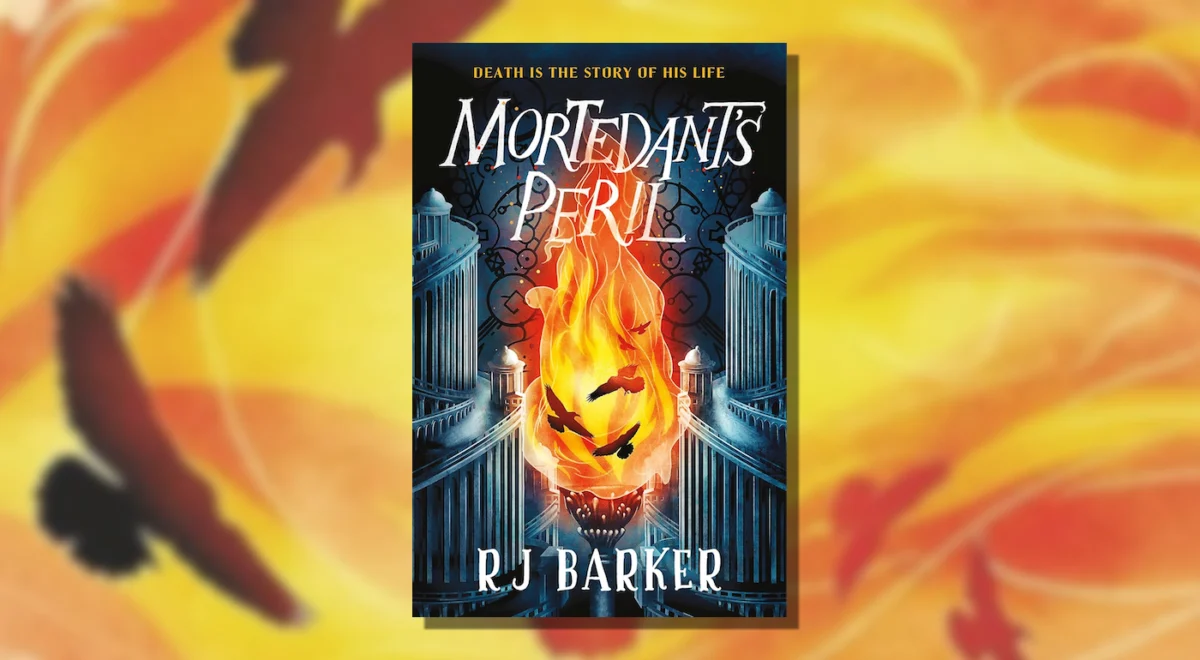
Tor Books unleashes a new fantasy saga with RJ Barker’s "Mortedant’s Peril," the inaugural volume of a trilogy set to redefine the genre. The novel, released on May 19th, introduces readers to the intricate and often grim world of Elbay, a city built on secrets and shadowed by death. This compelling introduction offers a glimpse into the life of Irody Hasp, a Mortedant, a cleric whose solemn duty is to commune with the final thoughts of the deceased. However, for Irody, this sacred task is far from revered, marked by ostracization and relegated to the most menial of assignments within his guild.
The narrative quickly plunges into a vortex of suspicion and peril when a routine reading of a low-level records keeper, Dirrivan Murser, takes a sinister turn. Following this grim appointment, Irody finds himself the prime suspect in the murder of his own apprentice. This dire predicament forces Irody to embark on a desperate investigation to clear his name, a journey that promises to unearth dangerous truths and confront powerful adversaries lurking within the corrupt yet wondrous metropolis of Elbay.
The Unwelcomed Gift of the Dead
The excerpt from "Mortedant’s Peril" opens on "Ventday," a day that, for Irody Hasp, should ideally be reserved for personal reflection, but is instead consumed by the grim necessities of his profession. As a Mortedant, Irody possesses the unique ability to hear the last utterances of the departed. Yet, this extraordinary gift is a double-edged sword, offering little practical solace and even less financial reward. The current assignment, the deceased Dirrivan Murser, a "downtier record-keeper," exemplifies the unglamorous reality of Irody’s existence. Murser’s dwelling, situated in the disreputable eastern side of Elbay’s second secant, underscores the protagonist’s low standing. The pervasive stench of vomit clinging to the corpse highlights the grim circumstances and Irody’s inherent aversion to the diseases that plague the lower echelons of the city.
Irody’s reluctance to directly handle the body, a crucial aspect of his Mortedant duties, stems from a deep-seated fear of contagion. This apprehension is compounded by his personal desire to safeguard his "Ventday" for himself, a day often encroached upon by the scarcity of work for Mortedants, particularly for someone of his unpopularity.
A Neophyte’s Shady Dealings
The scarcity of work is a recurring theme, pushing Irody into accepting the most unappealing assignments. His neophyte, Malkin, a skinny fifteen-year-old, secured this particular job with the promise of significant coin. Murser, apparently, had amassed a substantial fortune, and the family’s inability to locate it presented an opportunity for Irody to earn a percentage by discovering clues within the deceased’s final thoughts. The urgency of this potential windfall is underscored by the looming threat of his "fearsome landlady" and overdue rent. Irody’s pragmatic decision to accept the job, without probing Malkin’s methods for acquiring it, reveals a pragmatic approach to survival in the harsh realities of Elbay’s lower tiers.
The initial interaction with Murser’s widow, Sivver Murser, is fraught with tension. Her hardened demeanor and the menacing brandishing of a knife, ostensibly for chopping cabbage, create an atmosphere of unease. Irody’s inquiry about the deceased’s will is met with suspicion, as Sivver believes it to be the Mortedant’s responsibility to procure it from the records office. While technically correct, the prospect of enduring hours in queues and facing the rudeness and demands for bribes from record clerks prompts Irody to seek an alternative.
Malkin, demonstrating a surprising aptitude for navigating the complexities of downtier interactions, intervenes. He skillfully explains that due to the Priory’s refusal to process the will through official channels, a more direct approach is necessary. Malkin’s assertion that obtaining the will directly from Sivver would circumvent additional costs, subtly shifting the burden of payment, is a testament to his understanding of Elbay’s bureaucratic and economic landscape. The city, as Malkin aptly puts it, "loves a bit of paperwork." Sivver, after some deliberation, concedes, revealing her own desperation for any financial relief. Her comment about "death crows" being a greedy lot, aimed at Irody, highlights the public perception of Mortedants.
Whispers of Unsettled Demise
Sivver Murser’s suspicion regarding her husband’s death, a sentiment she voices to Irody, adds a layer of intrigue. She claims, "It weren’t right, you know," referring to the abruptness of Dirrivan’s demise. One moment, he was engrossed in his journal, the next, he was dead from an unspecified illness. This suddenness, coupled with the assertion that Dirrivan would never have left them destitute, fuels Sivver’s conviction that he had indeed hidden away wealth. Her parting words, a direct demand for Irody to "find whatever he had hid away," set the stage for the central conflict of the narrative.
Malkin’s impatience with Irody’s perceived delay and his reiteration of the need to check the will at the records office reveals a potential underlying agenda. Irody’s hushed confession to Malkin about the Priory’s disapproval of Mortedants acting independently explains his hesitation to use official channels, fearing censure. Malkin, however, dismisses these concerns, emphasizing that as long as the Priory receives its due, such minor breaches of protocol are often overlooked. The conversation then shifts to the precarious financial situation, with Irody expressing his anxiety about the meager standard fee if Murser’s alleged hidden wealth proves to be a myth. This precariousness is further illustrated by Malkin’s promise of soup for dinner, a stark contrast to Irody’s desire for meat, highlighting their meager resources.

The Weight of Duty and Distrust
The excerpt offers a nuanced portrayal of the Mortedant’s guild, once a revered institution in the multi-tiered city of Elbay. Historically, Mortedants held a significant societal role, mediating disputes, uncovering hidden legacies, and even aiding in the resolution of criminal investigations through their communion with the deceased. The narrative emphasizes that even in its current diminished state, the Priory commands a certain respect, particularly among the city’s elite. The expectation of a Mortedant’s presence at the death of prominent families, even if for mere ceremonial purposes, persists.
However, the excerpt also delves into the inherent limitations and misunderstandings surrounding the Mortedants’ abilities. The ability to perceive the final thoughts of the deceased is not an omniscient vision but a fleeting, often blurred glimpse into the moments leading up to death. This limitation, not openly communicated by the Priory, led to Irody’s initial self-doubt and a period of profound misery during his neophancy. It was only through a chance encounter with a fellow student, Kuridan Satury, and their subsequent clandestine investigations, that Irody began to understand his true capabilities. He realized his aptitude for discerning deeper insights, a skill that, paradoxically, became a source of envy and ostracization rather than recognition.
Irody’s current approach reflects this hard-won wisdom. He consciously avoids delving too deeply into the minds of the deceased, having learned that such efforts often lead to "trouble and a headache." His focus remains on uncovering any significant hidden assets, as wealth is a paramount concern for all inhabitants of Elbay.
The Fading Echoes of a Life
The ritualistic communion with Dirrivan Murser’s spirit commences. Irody, despite the cramped conditions and the pervasive stench, prepares himself. He notes the absence of the "spirit tent," a concession to the limited space and the practical needs of a downtier dwelling. Malkin’s sarcastic remark about "downtier types like a bit of theatre" underscores the class distinctions within Elbay. Irody’s instruction to dim the lights is met with Malkin’s observation that the room is "already pretty dim," a subtle commentary on their impoverished surroundings.
Sivver Murser returns, presenting the deceased’s will – a "scabrous looking sheet of paper." Her assertion that she knows its contents and that it barely covers Irody’s fee adds another layer of financial anxiety. Her insistence on the "big payday" Dirrivan had promised before the festival reinforces her belief in hidden wealth and her desperation for it. Irody’s attempt to offer a slight reduction in his fee if the ritual is streamlined is met with suspicion. Sivver’s question, "Will it still work? You’ll still be able to read his mind?" is answered with Irody’s pragmatic assertion that the ritual is primarily for the mourners, not the mourned.
With Sivver’s reluctant agreement, Irody proceeds. He removes his gloves and places his hands on Dirrivan Murser’s forehead. The initial contact reveals only the slow decay of the body and a sense of sadness, tinged with a hint of a secret. Irody sifts through the murk of the dead mind, seeking the final, clearest thoughts. The revelation is anticlimactic: "Not sure them berries were good." A fleeting thought of "festival" surfaces, but Irody dismisses it as a common preoccupation given the approaching "Festival of the Last Siren."
A Sudden Descent into Chaos
Irody’s pronouncement of "No sign of any hidden fortune" is met with immediate suspicion by Sivver. Her accusation that Irody has discovered the wealth and intends to keep it for himself, labeling him a "death crow," escalates the situation. Brandishing her knife, she demands to know the location of the coin, threatening a gruesome revenge. In this moment of extreme peril, Malkin intervenes, hurling a cabbage at Sivver’s face. "Run, Hasp!" he shouts, already escaping with Irody’s bags. Irody, spurred by the immediate threat, follows his neophyte in a swift retreat.
This abrupt turn of events transforms a routine assignment into a life-threatening confrontation, signaling that Irody’s investigation into Dirrivan Murser’s death has just begun, and the dangers are far more immediate and visceral than he could have anticipated. The initial foray into the deceased’s last thoughts, seemingly mundane, has inadvertently propelled Irody into a dangerous conspiracy that threatens to unravel the fabric of his already precarious existence within the corrupt yet wondrous city of Elbay. The consequences of this encounter, and the true nature of Dirrivan Murser’s demise, are yet to be fully revealed, setting the stage for the perilous journey ahead in "Mortedant’s Peril."