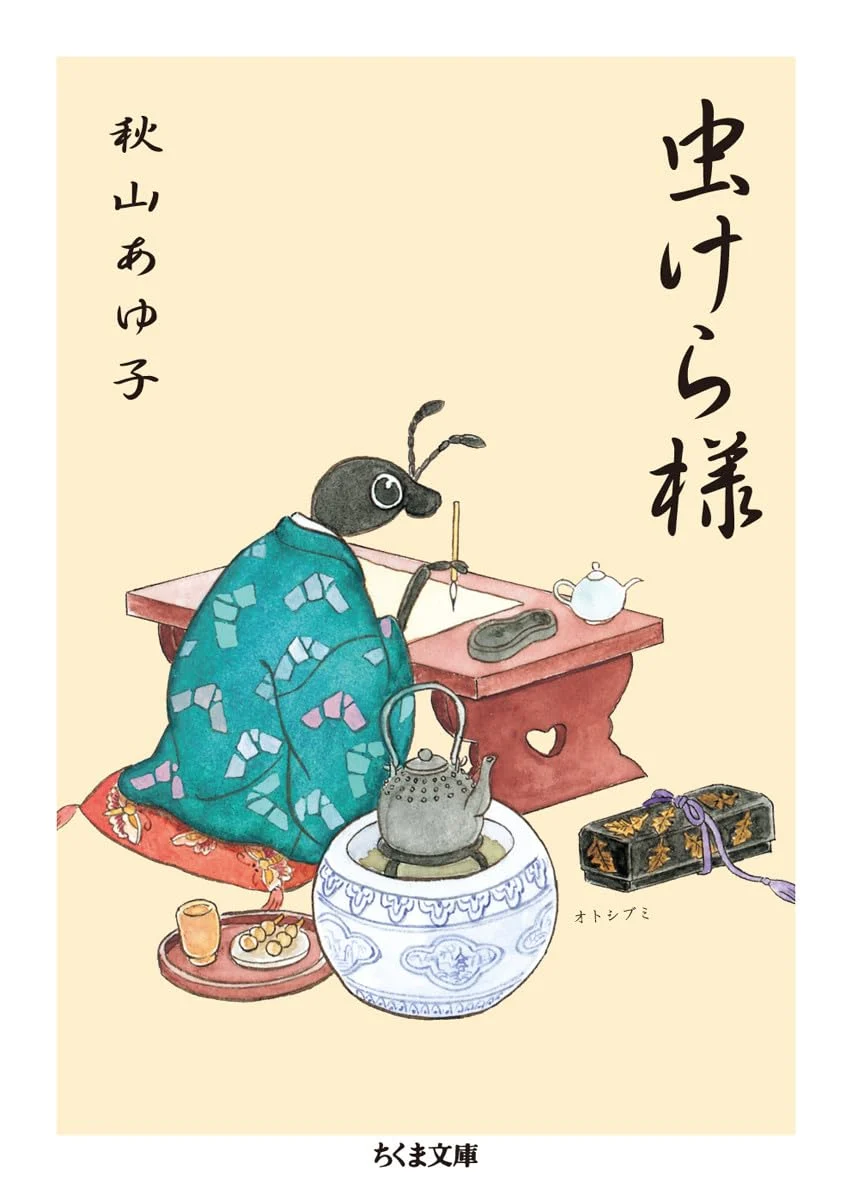
The literary world is currently abuzz with the release of "Mushikera-sama" (lit. "Their Majesties, the Insignificant Ones"), the inaugural tankobon format work by the Tokyo-born and countryside-inspired artist Ayuko Akiyama. This meticulously crafted collection of short stories leverages the minute, often overlooked lives of insects, arachnids, and other small creatures as a profound pretext to dissect the intricacies of human nature and the inherent documenting function of art itself. The publication marks a significant milestone for Akiyama, an artist long recognized for her distinctive voice and intricate visual narratives within the avant-garde manga scene.
Ayuko Akiyama’s Artistic Roots: The Garo Legacy
Ayuko Akiyama emerged from the fertile ground of Garo magazine, a legendary Japanese manga publication that, since its inception in 1964, has served as a crucible for experimental and alternative manga artists. Garo was renowned for its commitment to artistic freedom, often publishing works that defied commercial conventions and explored darker, more introspective themes. It became a vital platform for the gekiga movement, a style of manga characterized by its mature storytelling, realistic or semi-realistic art, and often serious subject matter, contrasting sharply with the more fantastical or child-oriented narratives dominant in mainstream manga.
Akiyama debuted in Garo roughly ten years prior to its historic restructuring of editorial staff in 2002. This period, leading up to and following the magazine’s transformation, was a critical time for many artists grappling with the evolving landscape of independent manga. Garo‘s influence on Akiyama is palpable; her work consistently reflects the magazine’s ethos of artistic integrity and thematic depth. She belongs to a generation of artists who inherited Garo‘s legacy of pushing boundaries, using the medium of manga not merely for entertainment but as a vehicle for profound philosophical and social commentary. Her consistent fascination with the tiniest living creatures, a hallmark of her oeuvre, finds its natural home within the Garo-esque tradition of finding universal truths in specific, often unconventional, perspectives. This dedication to the minute has permeated her illustrations and manga both before and after "Mushikera-sama," such as in "Kumo no su oyabun torimonochou" (lit. "The Spiderweb Kingpin—Detective Stories"), a piece where the central figure tracking criminals is, remarkably, a bossy spider, nodding to the Edo period torimonochou genre.
"Mushikera-sama": A Deep Dive into the Microcosm
"Mushikera-sama," a title that provocatively combines "mushikera" (insects, often used idiomatically to denote insignificance) with the honorific "sama" (majesty), immediately signals the work’s central conceit: elevating the seemingly trivial to a position of profound importance. The collection, published in the standard tankobon format, allows readers to engage with Akiyama’s intricate narratives in a consolidated volume, a significant step for any manga artist, marking a transition from serialized chapters to a cohesive, collected work.
The sixteen stories within "Mushikera-sama" are not mere fables. They are meticulously crafted allegories that utilize the biological realities and perceived societal roles of insects and small animals to mirror and critique human existence. Akiyama’s unique approach involves a painstaking level of detail in depicting the lives of these creatures, serving as a springboard for investigating complex facets of human nature, societal structures, and the very act of artistic documentation. The manga challenges readers to reconsider their anthropocentric biases, inviting them to find universal resonance in the struggles, joys, and existential dilemmas of creatures often dismissed as "insignificant."
Narrative Threads: Exploring the Human Condition
The collection features several standout stories, each offering a distinct lens through which to examine universal themes:
-
"Yama no sachi" (lit. "Blessings from the Mountain"): This story transports readers to a small, isolated village nestled deep within the mountains of Yamagata Prefecture, a region known for its rugged terrain, rich folklore, and strong connection to ancient spiritual beliefs. The village harbors a profound secret, shrouded in myth and tradition. Two inquisitive children, driven by a primal curiosity, defy parental warnings and follow their father into the forbidden forest. This forest, a recurring motif in Japanese folklore, is rumored to be the new abode of ancestral spirits, a place where the veil between the living and the dead, the natural and the supernatural, is thin. The narrative explores themes of forbidden knowledge, the weight of tradition, the courage of youth, and the enduring power of nature as a repository of collective memory and spiritual energy. The "blessings" from the mountain might not be material wealth, but a deeper understanding of life’s cyclical nature and humanity’s place within a larger spiritual ecosystem.
-
"Inamushi" (lit. "Rice Pest"): Set against the quintessential Japanese landscape of rice paddies, this story follows a young boy on his journey home. He encounters a quiet, solitary child who claims to be waiting for his mother. The impending sunset, a symbol of vulnerability and danger in rural settings, prompts the boy’s concern for the stray child’s survival. His act of compassion leads him to help the child reunite with his parent, only to uncover a startling revelation: the child and all his relatives are, in fact, human-sized insects living within the paddies. This narrative masterfully plays with themes of empathy, identity, the blurring of species boundaries, and the redefinition of what constitutes a "pest." It forces the reader to question preconceived notions of "otherness" and consider the possibility of coexistence with beings radically different from ourselves. The "rice pest" becomes a complex character, challenging the binary of beneficial vs. harmful, asking who truly belongs and what forms life can take.
-
"Nezumi no soushi" (lit. "The Mouse’s Notes"): This story is a brilliant example of Akiyama’s intertextual prowess, directly referencing "Makura no Sōshi" (The Pillow Book), a seminal Heian period masterpiece by Sei Shōnagon. "The Pillow Book" is a zuihitsu (miscellaneous writings) collection, a genre characterized by its free-form structure, personal observations, lists, anecdotes, and reflections on daily life, nature, and courtly society. It is celebrated for its keen insights into human behavior and its appreciation for the beauty in the mundane. In Akiyama’s homage, the old mouse Gonnokami, embodying the human desire for status and love, prays to Bodhisattva Kannon, a revered figure of compassion in Mahayana Buddhism, seeking permission to marry a human noblewoman. His wish is granted, highlighting the Buddhist belief in the transformative power of prayer and karmic potential. However, the newlyweds’ happiness is tragically short-lived, doomed by a transgression of the original vow made to the goddess. This narrative delves into themes of desire, spiritual contracts, the fragility of happiness, and the consequences of breaking sacred promises. It draws a poignant parallel between the fleeting nature of life and love, echoing the Buddhist concept of anicca (impermanence) and the cyclical nature of existence. The reference to Sei Shōnagon underscores the story’s emphasis on detailed observation and the significance of even the smallest lives, mirroring Shōnagon’s own meticulous chronicling of her world.
Philosophical Underpinnings: Impermanence and the Buddhist Lens
At its philosophical core, "Mushikera-sama" deeply engages with the concept of impermanence, a fundamental doctrine in Buddhism known as anicca. This teaching posits that all conditioned phenomena are in a constant state of flux, arising and passing away. The lives of insects and small creatures, characterized by their short lifespans and often precarious existences, serve as potent metaphors for this universal truth. Unlike the human tendency to resist or deny mortality, the characters in "Mushikera-sama"—the insects and arachnids—embrace the transient nature of their lives. They live with an acute awareness that every small moment, every fleeting interaction, and every minute detail may hold profound significance.
This perspective consciously contrasts with Western philosophical traditions that often emphasize human exceptionalism and the struggle against mortality. Instead, Akiyama’s work aligns with a long-standing Japanese aesthetic and philosophical tradition that finds beauty and meaning in ephemerality, exemplified by concepts like mono no aware (the pathos of things, a gentle melancholy at the fleeting nature of beauty) and the appreciation of seasonal changes. By portraying characters who accept the precariousness of their existence, Akiyama invites readers to find a deeper appreciation for life’s moments, recognizing that even the smallest things can be noteworthy. This echoes the sentiment found in the private diaries and zuihitsu of Heian period court ladies like Murasaki Shikibu, Sei Shōnagon, and Izumi Shikibu, whose literature focused on personal observations, daily life, and emotional nuances—a stark contrast to the male-dominated chronicle-like accounts of "great" historical events.
Echoes of Classical Japan: Art, Literature, and the Female Gaze
Akiyama’s work is not only a contemporary manga but also a rich tapestry woven with threads from Japan’s classical artistic and literary heritage. She masterfully incorporates elements from:
-
Emaki (Illustrated Scrolls): These narrative picture scrolls, flourishing from the 11th to the 16th centuries, combined text and images to tell stories, depict historical events, or illustrate Buddhist sutras. Akiyama’s visual style, particularly her careful juxtaposition of anthropomorphized creatures with natural settings, often evokes the intricate detail and narrative flow of emaki. Her "perfect reproductions of notable scenes of emaki where human figures are replaced by mice and insects" are a direct homage, demonstrating a deep understanding of this art form while simultaneously subverting its traditional content to make a contemporary statement. The famous Chōjū-jinbutsu-giga (Scrolls of Frolicking Animals and Humans) from the 12th century, depicting anthropomorphic animals engaged in human activities, is a clear precursor to Akiyama’s artistic vision, highlighting a long tradition of using animals to satirize or comment on human society.
-
Monogatari (Tales): This genre, encompassing prose narratives from the Heian period onwards (e.g., "The Tale of Genji"), focused on romantic adventures, historical chronicles, and fantastic voyages. Akiyama’s short stories, with their distinct plots, character development, and moral inquiries, align with the storytelling traditions of monogatari, albeit condensed and focused on a different scale of existence.
-
Zuihitsu (Miscellaneous Writings): As previously discussed with "Nezumi no soushi" and Sei Shōnagon, the zuihitsu tradition emphasizes personal reflection, lists, and observations of the mundane. Akiyama’s approach, which finds profound meaning in the everyday lives of insects, perfectly encapsulates the spirit of zuihitsu, elevating what might be considered trivial to a subject worthy of deep contemplation.
Moreover, the article specifically highlights the influence of Heian period women writers. Murasaki Shikibu’s "The Tale of Genji" (considered the world’s first novel), Sei Shōnagon’s "The Pillow Book," and Izumi Shikibu’s poetic diaries were revolutionary for their focus on subjective experience, emotional depth, and the intricate details of court life, rather than grand historical narratives. Akiyama’s decision to focus on "insignificant" lives and their internal worlds directly aligns with this female literary tradition, which valued personal perception and the beauty of the transient over epic events. This choice implicitly critiques the historical bias towards "great men" and "great events," asserting the equal validity and richness of lives lived on a smaller scale.
The Gekiga Medium: Realism, Anthropomorphism, and Artistic Juxtaposition
"Mushikera-sama" firmly establishes itself within the gekiga genre, but with Akiyama’s unique spin. While gekiga often embraces a gritty realism, Akiyama’s insects are depicted with a fascinating blend of scientific accuracy and gentle anthropomorphism. They appear almost "cartoonish" in their expressions and relatable behaviors, as if plucked from an illustrated children’s book. Yet, their life events are described with unflinching, sometimes brutal, realism. This striking juxtaposition—the gentle appearance against the harsh realities of survival, death, and disease—is a deliberate artistic choice.
Akiyama argues that death and disease are not the antithesis of life but intrinsic parts of it, and art has a responsibility to portray them without flinching. This philosophy is vividly embodied in panels that depict the killing of a spider or the formation of a chrysalis with sheer, unsentimental realism, often placed alongside her meticulous reproductions of classical emaki scenes where human figures are replaced by insects and mice. This visual strategy challenges readers to confront the cyclical nature of existence, where beauty and brutality, life and death, are inextricably linked. The realism of the insect world serves as a stark contrast to the often "larger than life" and more overtly cartoonish depiction of their human counterparts within the narrative, subtly suggesting that perhaps the "insignificant" creatures possess a deeper, more grounded understanding of existence.
Beyond "Mushikera-sama": Akiyama’s Consistent Fascination
Akiyama’s dedication to exploring the world of small creatures is not new. Her work predates "Mushikera-sama" with similar themes, most notably "Kumo no su oyabun torimonochou" (The Spiderweb Kingpin—Detective Stories). In this earlier work, the officer in charge of tracking down and arresting culprits in crimes against the good folk of the capital is a bossy spider. This manga directly references the torimonochou genre, a popular form of detective fiction that flourished during Japan’s Edo period (1603-1868). These stories, often featuring samurai detectives or astute commoners solving crimes, were forerunners of the modern detective novel. By casting a spider as the protagonist, Akiyama not only injects humor and fantasy but also continues her thematic exploration of perspective, power dynamics, and the hidden complexities of a world often perceived through a singular, human-centric lens. It showcases her consistent ability to take established genres and infuse them with her unique blend of natural observation, classical allusion, and philosophical inquiry.
Critical Acclaim and Lasting Impact
"Mushikera-sama" is not merely a collection of stories; it is a gekiga of rare intensity, upheld by a painstaking work of bibliographic research spanning natural sciences, visual arts, and literature. This intellectual rigor is evident in every panel and every narrative twist, inviting readers to engage with the work on multiple levels. Critics have lauded its ability to stir profound emotions while simultaneously prompting readers to decipher its rich intertextuality. The manga functions as a profound compendium of the traditional Japanese way of looking at life, where the transient, the small, and the seemingly insignificant hold the keys to universal truths.
Its publication as a tankobon solidifies Ayuko Akiyama’s position as a significant voice in contemporary Japanese manga. "Mushikera-sama" is a testament to the enduring power of alternative storytelling, demonstrating how a singular artistic vision, steeped in both scientific observation and classical aesthetics, can create a work that is both deeply personal and universally resonant. It challenges readers to pause, observe, and reconsider their place within the vast, intricate tapestry of life, proving that sometimes, the most profound insights come from looking closely at the smallest of beings.