Rachel Mason’s latest true crime documentary, My Brother’s Killer, transcends the typical investigative narrative, emerging as a profound love letter to a lost era, a vibrant community, and a young man whose life was tragically cut short. Premiering at SXSW 2026, the film meticulously reconstructs the unsolved murder of 25-year-old porn actor and aspiring director Billy London, born William Newton, whose dismembered remains were discovered in a West Hollywood dumpster on October 28, 1990. More than three decades later, a confluence of unexpected factors and determined individuals finally led to the solving of this cold case, unraveling a story deeply embedded in the complex social fabric of 1990s Los Angeles.
The Haunting Echoes of a Cold Case in West Hollywood
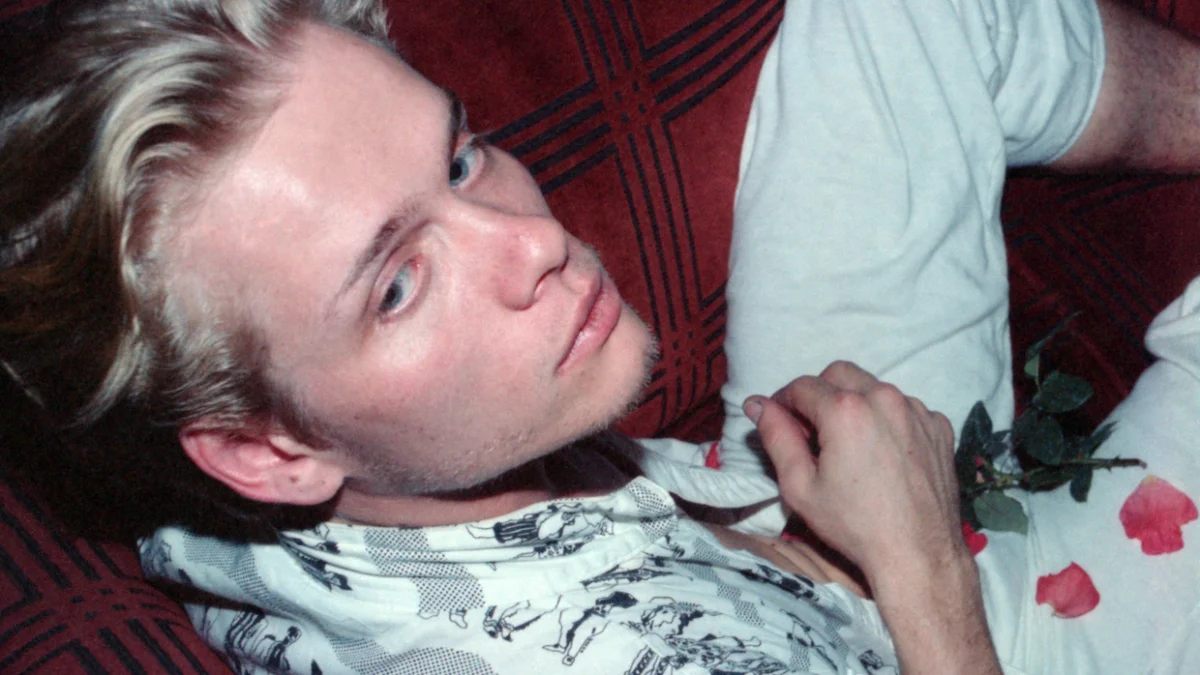
The documentary plunges viewers into the distinctive milieu of West Hollywood in the late 1980s and early 1990s, a period marked by both immense cultural vibrancy and profound societal challenges. For many, West Hollywood, particularly its famed Santa Monica Boulevard, represented a beacon of freedom and acceptance, a nascent "queer mecca" where individuals like William Newton, hailing from rural Wisconsin, sought refuge and identity. Arriving as a teenager, London embraced the burgeoning gay porn industry, a subculture that, despite its marginalization, offered a stage for self-expression and community. He was described as a young man with peach fuzz and slicked-back blond hair, often seen in sun-bleached denim and floral shirts, an image of youthful innocence amidst a world of burgeoning sexuality and burgeoning danger.
This era was a fascinating convergence of cultural phenomena: the tactile allure of the VHS and magazine eras, the pioneering spirit of video awards championed by figures like Chi Chi LaRue, the edgy aesthetics of cyberpunk explored by filmmakers such as Bruce LaBruce, and a predominantly white gay male scene. Yet, beneath this dynamic surface, the community was grappling with the devastating shadow of the HIV/AIDS crisis, a pandemic that systematically decimated a generation, instilling widespread fear, grief, and often, cruel stigmatization.
Billy London’s murder on that October day in 1990 sent shockwaves through this already vulnerable community. His head and feet, discovered by a transient, painted a gruesome picture that momentarily gripped national media. However, the prevailing public obsession with the AIDS epidemic, which often fueled homophobic narratives and deflected attention from other forms of violence against gay men, meant that London’s case, despite repeated attempts to revive it, soon grew cold. The brutality of the crime was undeniable, yet in a climate where death was a constant, overwhelming presence due to AIDS, the specific nature of London’s murder often got lost in the broader tragedy, making it difficult for the public and law enforcement to fully process or prioritize.
A Personal Journey into a Public Tragedy
For director Rachel Mason, My Brother’s Killer is not merely an investigative exposé; it is deeply personal. Mason’s upbringing within the unique environment of her parents’ West Hollywood gay porn bookstore, Circus of Books, previously chronicled in her acclaimed documentary of the same name, provided her with an intimate understanding of the community London inhabited. She grew up enamored by the men who frequented the store, witnessing firsthand the joys and struggles of a marginalized population. This background meant that London’s story resonated with her on a visceral level.
Mason recalls her parents’ bookstore being a hub where notices for Billy were posted after his murder, indicating his presence within their immediate sphere. She found herself identifying with London’s journey and fate, particularly as a sister to a gay brother. The pain of the sisters of William Newton, whom Mason connected with during her research, further solidified this familial bond, leading her to feel that "Billy could have been my own brother." This profound personal connection underscores the film’s emotional core, transforming a cold case into a poignant human story.
The film’s title itself stems from an unexpectedly powerful moment: a casual inquiry from one of Billy Newton’s sisters asking Mason, "Have you been talking to my brother’s killer?" This haunting expression crystallized for Mason the multifaceted nature of the term "killer." Beyond the individual perpetrator, she posits a more philosophical interpretation: "Who really killed Billy? Yes, it was this one individual, but you can also look at our society. There’s a larger factor at work that led to Billy’s death, and which is continuing to be the killer of queer people today." This perspective extends to the AIDS crisis, often described as a "killer," broadening the film’s thematic scope to encompass systemic issues of prejudice and violence.
The Unfolding of Justice: A Decades-Long Pursuit
The journey to solve Billy London’s murder, chronicled with "jaw-dropping" and "fortuitous" turns in Mason’s documentary, involved an unlikely coalition of dedicated individuals. The "good Samaritans" included old boyfriends and roommates, such as Marc Rabins, who meticulously preserved London’s personal effects, including his poems, for decades. True crime podcast hosts, drawn to the mystery, helped reignite public interest. A curious LAPD detective, presumably John Lamberti, known for his thoroughness, refused to let the case rest, pursuing leads that others might have dismissed. And a "stubborn empty nester" in Eau Claire, Wisconsin, born in the same year and place as Newton, played an as-yet-undisclosed but crucial role in the breakthrough.
The chronological unfolding of these events, carefully crafted by Mason and her editor Dion Labriola, builds suspense and mirrors the real-life discovery process. One of the most astonishing revelations, which elicited gasps from preview audiences, was the unexpected connection to notorious serial killer Jeffrey Dahmer. Early in the investigation, the LAPD contacted and questioned Dahmer about London’s murder. A pivotal piece of evidence unearthed by Mason was a 1991 letter from Milwaukee homicide detectives confirming that Dahmer had been interrogated regarding cases, including London’s, in Los Angeles. While Dahmer was ultimately not linked to London’s death, this inquiry was a critical juncture, demonstrating the LAPD’s diligence in exploring all avenues and ultimately providing a key that helped redirect the investigation towards the true perpetrator. As Mason explains, "Jeffrey Dahmer is actually key to why we solved this murder."
Unmasking the Killer: A Chilling Nexus of Hate

The documentary reveals that Billy London’s murder was not a random act of violence but a hate crime deeply rooted in the white nationalist skinhead movement of the late 1980s and early 1990s. This movement, far from being underground, actively propagated ideologies that called for the systematic murder of gay people and individuals who were not "Aryan." Mason highlights a chilling historical context: the weekend of London’s murder coincided with a significant public announcement by a leader of the Nazi party, explicitly advocating for the targeting of gay and non-white individuals.
This historical revelation casts a stark and terrifying light on the present day, as Mason notes the resurgence of overt white nationalism and its dangerous proximity to political power. The film meticulously details how this specific brand of hate, which permeated certain fringe groups at the time, directly contributed to the brutal crime against London. This aspect of the narrative serves to deepen the historical record, demonstrating that the violence faced by marginalized communities then, particularly the LGBTQ+ community, was not merely a byproduct of societal homophobia but often the result of organized, virulent hate.
Resilience in the Face of Brutality: The Queer Nation Response
Despite the pervasive threats of AIDS and hate-fueled violence, the 1990s also saw an extraordinary display of resilience and defiance within the gay community. Mason emphasizes that alongside the horror, there was a vibrant, celebratory culture that refused to be extinguished. The emergence of groups like Queer Nation, a militant activist organization, was a direct response to this brutality. Their iconic slogan, "Hey, Bigots! An attack on one of us is an attack on all of us," emblazoned on buttons for the film’s release, resonates powerfully today, underscoring the timeless nature of collective resistance against oppression.
This era, often simplified in hindsight, was far more nuanced. It was a time of diverse gay subcultures—punk rockers, preppies, and myriad other identities—all coexisting without the unifying (or fragmenting) influence of modern social media. The film aims to capture this intricate tapestry, showcasing not only the suffering but also the indomitable spirit and fierce solidarity that characterized the LGBTQ+ community’s response to an existential crisis.
The Craft of Storytelling: Centering the Victim’s Voice
The artistic vision for My Brother’s Killer was significantly shaped by the collaboration between Rachel Mason and her editor, Dion Labriola. Labriola, a gay man from the Midwest, shares the same birth year as Billy London (1965), bringing an unparalleled empathy and understanding to the project. Mason credits Labriola as indispensable, noting his personal commitment to the film, even offering to work without immediate financing due to his profound belief in its importance.
A central artistic choice was the use of Billy London’s own words. Marc Rabins, London’s lover, had meticulously preserved a "pile of stream-of-consciousness poems" written by London. One poem, titled "A Piece of Me," gave Mason "chills" upon discovery. Gruesomely, London’s body was dismembered, making the poem’s title a haunting, almost prophetic echo from beyond the grave. This poem bookends the film, ensuring that London’s voice and humanity remain at the core of the narrative. Labriola, Mason explains, was adamant that the film, while classified as true crime, first and foremost be a "portrait of a person and a victim," centering London at the beginning and end, allowing him to speak in his own words.
The filmmaking team also meticulously crafted the narrative for maximum audience engagement. Mason credits notes from talents like Penelope Spheeris for helping to refine the story’s structure, which unfolds chronologically to align with the real experience of discovery. This deliberate pacing allows the shocking revelations, such as the Dahmer connection, to land with maximum impact, transforming what could have been a straightforward account into a gripping, emotionally resonant journey.
A Legacy of Remembrance and Continued Vigilance
As My Brother’s Killer prepares for its SXSW 2026 premiere, its significance extends beyond the resolution of a single cold case. The documentary serves as a vital historical document, deepening our understanding of a critical period in LGBTQ+ history and the broader societal landscape of the United States. It meticulously reconstructs the life and tragic death of Billy London, ensuring that his story is not lost to the annals of forgotten crimes.
Furthermore, the film’s powerful insights into the nexus of homophobia, white nationalism, and societal neglect resonate chillingly with contemporary realities. The resurgence of hate movements and the ongoing struggles for LGBTQ+ rights underscore the urgent relevance of London’s story. By drawing parallels between past and present, Mason’s film acts as a stark reminder that the fight against prejudice and violence is an ongoing battle.
Ultimately, My Brother’s Killer is a testament to the enduring power of documentary filmmaking—to seek justice, to reclaim lost narratives, and to illuminate the human cost of hatred. It is a powerful call for remembrance, vigilance, and the recognition that even decades later, the pursuit of truth can bring both closure and a deeper understanding of our shared history.