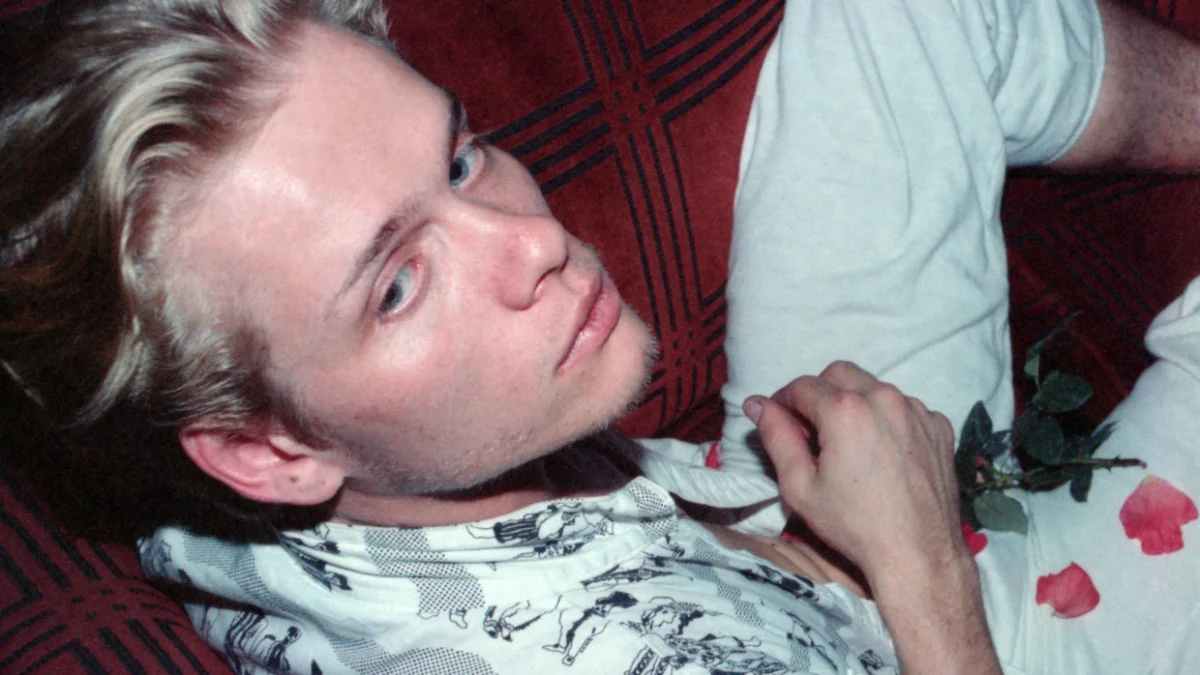
Rachel Mason’s compelling true crime documentary, My Brother’s Killer, transcends the genre to become a profound elegy and a historical document, meticulously unearthing the cold case of William "Billy London" Newton, a 25-year-old gay porn actor and aspiring director brutally murdered in 1990. The film, which premiered at SXSW 2026, is described by Mason as, first and foremost, a love letter—not only to Newton but also to a specific era and community: the vibrant, yet perilous, West Hollywood of the 1990s. This period, characterized by its distinct subcultures, burgeoning video industry, and the omnipresent shadow of the HIV/AIDS crisis, provides the rich, complex backdrop against which Billy London’s tragic story unfolds.
The Unsolved Murder of Billy London
On October 28, 1990, the partial remains of William Newton, known professionally as Billy London, were discovered by a transient in a dumpster in West Hollywood. His head and feet had been dismembered, turning his death into a gruesome and baffling mystery that briefly captured national media attention. However, in an era where the AIDS crisis was tragically stigmatizing the gay community, Newton’s murder, despite its horrific nature, soon faded from the headlines. The case quickly went cold, resisting repeated attempts to revive the investigation for over three decades.
Newton, originally from rural Wisconsin, arrived in West Hollywood as a teenager, drawn to the promise of acceptance and a community that embraced his identity. He immersed himself in the gay adult film industry, seeking connection and purpose amidst a backdrop of methamphetamine use and personal misguidance. His journey, as depicted in the documentary, is a poignant portrayal of a queer individual navigating a world where the term "queer" was still a slur, years before its reclamation by pride movements. His story is emblematic of many who sought refuge and identity in West Hollywood, a perceived haven that could also conceal profound dangers.
A Deeper Dive into West Hollywood’s Past
Mason’s film is deeply rooted in the history of West Hollywood, particularly the notorious stretch of Santa Monica Boulevard in the 1990s. It paints a vivid picture of a "VHS era," a "magazine era," and a "video awards era" pioneered by figures like Chi Chi LaRue, whose defiant presence on stage underscored the community’s resilience. The documentary also touches on a "cyberpunk era," explored by filmmakers such as Bruce LaBruce, showcasing the diverse cultural landscape. This period, while vibrant and innovative, was simultaneously marked by the devastating impact of the HIV/AIDS crisis, which claimed countless lives and cast a pall over the community. The film subtly critiques the "very white gay male era," acknowledging its specific dynamics while also placing it within the broader context of the global health crisis.
The director’s connection to this world is deeply personal, stemming from her upbringing around her parents’ West Hollywood gay porn bookstore, Circus of Books—the subject of her previous acclaimed documentary. Mason grew up "enamored by the men who frequented it," witnessing firsthand the community’s joys and sorrows. This intimate exposure to the gay subculture of the time allows My Brother’s Killer to offer an authentic, empathetic perspective on Billy London’s life and the environment he inhabited. Mason’s mother, initially holding religious beliefs that deemed homosexuality a sin, evolved significantly through her experiences running the bookstore. Her trauma upon hearing about Billy’s murder, and her active role in posting signs for him at the store, illustrate the profound impact the crisis had on individuals, even those initially resistant to full acceptance.
The Unconventional Title and Its Meanings
The film’s evocative title, My Brother’s Killer, holds multiple layers of meaning, as explained by Rachel Mason. The genesis of the title came from a casual question posed by one of Billy Newton’s sisters: "Have you been talking to my brother’s killer?" This "haunting expression" resonated deeply with Mason. Beyond the literal identification of a perpetrator, Mason posits a more philosophical interpretation: "Who really killed Billy? Yes, it was this one individual, but you can also look at our society. There’s a larger factor at work that led to Billy’s death, and which is continuing to be the killer of queer people today." She further notes that AIDS itself was often described as a killer, drawing a parallel between the individual act of violence and systemic forces.
For Mason, the identification with Billy London as a "brother" is also deeply personal. As a sister to a gay brother, she felt a profound sense of empathy for Billy’s sisters and the grief they experienced. "Billy could have been my own brother," she reflects, underscoring the universal nature of loss and the particular vulnerability faced by the gay community during that period. This personal connection, though accidental, is a recurring theme in Mason’s work, including her previous investigative documentaries like Last Take: Rust and the Story of Halyna, where the victim was her close friend. She candidly shares that experiencing the loss of Halyna Hutchins gave her a "sensitivity" necessary to approach stories of murder, albeit a painful one.
The Decades-Long Pursuit of Justice
The cold case of Billy London remained unsolved for more than three decades, a testament to the complexities of the investigation and perhaps, in part, to the societal marginalization of its victim. However, a series of unforeseen developments, captured with "jaw-dropping" and "fortuitous" timing in Mason’s documentary, ultimately led to a breakthrough. The film meticulously documents the efforts of an eclectic group of "good samaritans" who refused to let Billy’s memory fade. This cast includes old boyfriends and roommates who preserved Billy’s personal effects and memories, true crime podcast hosts who kept the story alive in public discourse, a curious LAPD detective named John Lamberti, and a persistent empty nester in Eau Claire, Wisconsin, who shared Billy’s birth year and hometown.

One of the most astonishing revelations in the documentary, described by Mason as a "key" to unlocking the case, involves notorious serial killer Jeffrey Dahmer. Roughly 40 minutes into the film, the narrative takes a dramatic turn with the disclosure that the LAPD had contacted and questioned Dahmer in 1991 regarding Billy London’s murder. A letter from Milwaukee homicide detectives from that year, confirming that Dahmer had been interrogated about the Los Angeles case, became a crucial artifact. While Dahmer was ultimately not linked to London’s murder, the fact that a dedicated homicide detective like John Lamberti "leaves no stone unturned" meant that Dahmer’s potential involvement was thoroughly investigated. This unexpected lead, though ultimately a dead end for Dahmer, inadvertently reopened the case and spurred further investigation into other possibilities. The documentary effectively uses this dramatic twist to build suspense and demonstrate the intricate, often circuitous, path of true crime investigations.
Unveiling a Hate Crime and Societal Brutality
Beyond the individual act of murder, My Brother’s Killer excavates the deeper societal forces at play, revealing Billy London’s death as a hate crime directly tied to the burgeoning white-nationalist skinhead movement of the late 1980s and early 1990s. Mason highlights that the killer was involved in this movement, which actively called for the murder of gay and non-white individuals. The timing of Billy’s death, occurring shortly after a public announcement by a Nazi party leader advocating for violence against gay and non-Aryan people, underscores the chilling ideological underpinnings of the crime.
Mason draws a stark parallel between this historical context and contemporary society, noting the resurgence of white nationalism and its alarming presence "not even underground right now." She points to members of the political establishment who have direct ties to these movements, making the historical narrative resonate with terrifying immediacy in the present day. This analysis elevates the film from a mere true crime story to a critical examination of enduring systemic prejudices and the cyclical nature of hate.
However, the documentary also celebrates the "great resilience" within the gay community during this period of immense oppression. Mason speaks of the defiant spirit, exemplified by figures like Chi Chi LaRue, and the militant activism of movements like Queer Nation. The film features a Queer Nation poster that reads, "Hey, Bigots! An attack on one of us is an attack on all of us," a message that remains profoundly relevant. This defiance, expressed through vibrant celebrations and unwavering activism, served as a powerful counterpoint to the constant brutality and tragedy. The film meticulously deepens the historical record, showcasing the diverse "worlds within worlds" of gay subcultures—from punk rockers to preppy individuals—that existed without the unifying platforms of modern social media, creating a richer, more nuanced understanding of the past.
The Art of Storytelling and Editing
The collaborative genius behind My Brother’s Killer is largely attributed to the partnership between Rachel Mason and her editor, Dion Labriola. Mason unequivocally states that "there would be no film without Dion Labriola," praising his nuance and sensitivity. Labriola, who shares Billy Newton’s birth year (1965) and is also a gay man from the Midwest, brought an invaluable personal perspective to the project. His dedication was so profound that he committed to the film without immediate financing, a testament to his belief in its importance.
A poignant element woven throughout the film is Billy London’s poetry. Marc Rabins, Billy’s former lover and a one-time employee of Mason’s parents, meticulously preserved Billy’s "incredible pile of stream-of-consciousness poems." Among them was one titled "A Piece of Me," which resonated with chilling prescience given Billy’s dismembered body. Mason describes it as "completely like a voice from beyond giving us a key." Labriola’s editorial vision was crucial in utilizing this material, ensuring that Billy was "centered at the beginning and end and in his own voice and words." This decision reflects a conscious effort to portray Billy not just as a victim, but as a person with agency, thoughts, and feelings, countering the dehumanization often inherent in true crime narratives.
The filmmaking team also made deliberate choices to craft a suspenseful and engaging narrative. While the film is a portrait of a person and a victim, it also functions effectively as a true crime documentary. Mason acknowledges employing "storytelling devices" and working with "really smart people," including legendary filmmaker Penelope Spheeris, who provided notes instrumental in shaping the narrative for audience engagement. The decision to present the story chronologically aimed to align the audience’s experience with the real-time unfolding of the investigation, maximizing the impact of revelations like the Dahmer connection.
In its entirety, My Brother’s Killer is a powerful and essential piece of documentary filmmaking. It not only solves a long-cold murder case but also serves as a vital historical record, illuminating a specific moment in queer history with both its profound joys and devastating tragedies. By interweaving personal narratives with broader societal critiques, Rachel Mason and Dion Labriola have created a film that honors a lost life, confronts historical injustices, and resonates deeply with the ongoing struggles for acceptance and safety faced by the LGBTQIA+ community today.