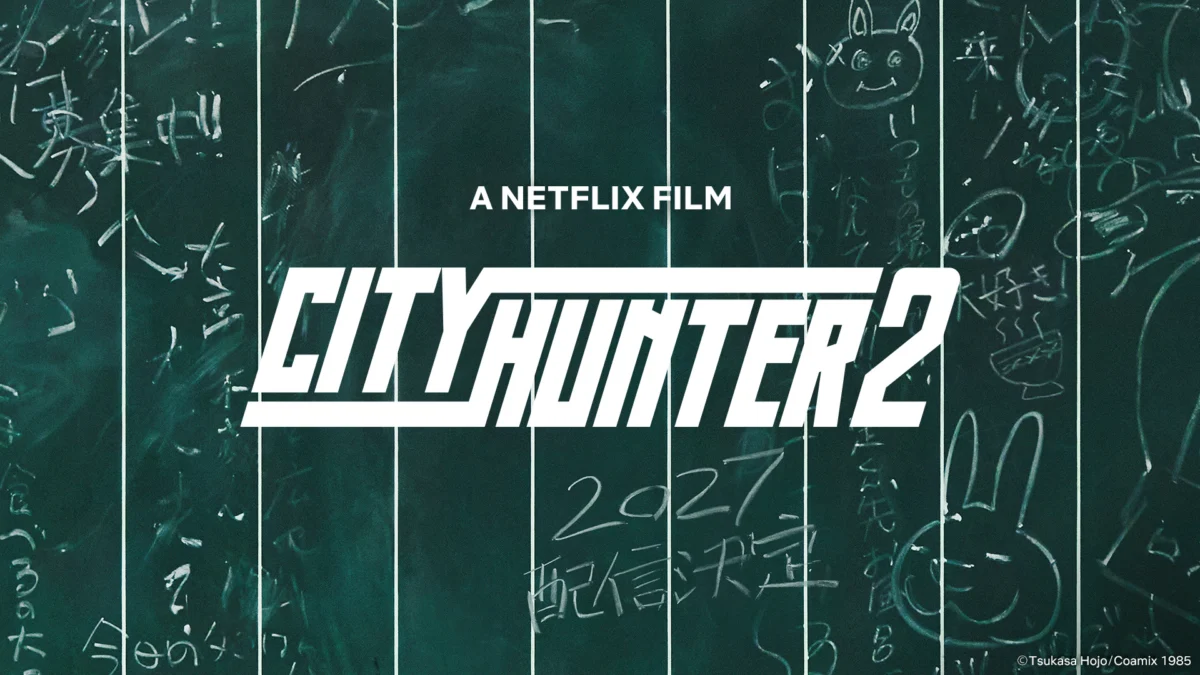
Netflix has officially announced the highly anticipated sequel, City Hunter 2, building on the remarkable global success of its live-action Japanese adaptation of Tsukasa Hojo’s iconic manga. Slated for a worldwide release in 2027, the new feature signals Netflix’s deepening commitment to high-quality local-language content and its strategy of cultivating beloved franchises for a global audience. The confirmation comes after the 2024 debut of the first City Hunter film, which resonated strongly with both long-time fans and new viewers, demonstrating the enduring appeal of the "sweeper" Ryo Saeba and his indispensable partner, Kaori Makimura.
The Return of a Dynamic Duo and Creative Team
The core creative and acting ensemble that brought the vibrant world of Shinjuku to life will be returning for City Hunter 2. Ryohei Suzuki is set to reprise his role as Ryo Saeba, the charismatic private detective whose unique blend of sharp-shooting prowess, deadpan humor, and notorious weakness for beautiful women defines the series’ distinctive charm. Suzuki’s portrayal in the first film was widely lauded for capturing the multifaceted nature of the character, balancing his formidable skills with his often-goofy demeanor. Misato Morita will also return as Kaori Makimura, Ryo’s spirited and indispensable partner, whose dynamic with Saeba forms the emotional backbone of the narrative. Their partnership, characterized by banter, mutual reliance, and underlying affection, is central to the City Hunter experience. Adding another layer of continuity, Fumino Kimura is back as the quick-witted detective Saeko Nogami, a recurring figure from Ryo’s past whose professional and personal entanglements often complicate – or assist – his investigations.
Behind the camera, Keiichiro Shiraki, who helmed the critically and commercially successful first film, will return to direct. This continuity in direction is expected to maintain the stylistic integrity and narrative tone established in the initial adaptation. The script will again be penned by Junpei Yamaoka, ensuring a consistent vision for the story’s evolution. The returning team underscores Netflix’s confidence in the group that successfully navigated the challenges of translating a cherished manga into a live-action format that pleased both domestic and international audiences.
A Legacy Forged in Print: The Enduring Appeal of City Hunter
Tsukasa Hojo’s City Hunter manga first graced the pages of Weekly Shonen Jump in 1985, quickly establishing itself as a phenomenon. Over its serialization, it captivated millions, eventually selling more than 50 million copies worldwide. More than just a popular manga, City Hunter became a foundational pillar of modern Japanese pop culture, influencing countless subsequent works and cementing its place in the collective consciousness. The series’ unique blend of hard-boiled detective action, slapstick comedy, and heartfelt drama set against the neon-lit backdrop of Shinjuku, Tokyo, resonated deeply. Ryo Saeba, with his cool professionalism contrasted by his insatiable libido and often absurd antics, became an iconic figure, a testament to Hojo’s masterful character development.
The manga’s success naturally led to a vast multimedia empire. Throughout the late 1980s and 1990s, City Hunter spawned multiple beloved anime television series, feature films, original video animations (OVAs), and even video games. Each adaptation further solidified its cultural footprint, introducing Ryo, Kaori, and their supporting cast to new generations and audiences beyond Japan. The series’ blend of thrilling action sequences, intricate plotlines involving criminal underworlds, and the emotional depth of its characters ensured its longevity. Stage adaptations also emerged, highlighting the versatility and enduring appeal of the narrative and its archetypal characters. The consistent quality and faithfulness of many of these adaptations contributed to the high expectations surrounding any new iteration, particularly in live-action.
Navigating the Treacherous Path of Live-Action Adaptation
The journey from beloved manga or anime to successful live-action film is often fraught with peril. Historically, many attempts to translate the vibrant, often exaggerated aesthetics and unique storytelling conventions of Japanese animation and comics into live-action have met with mixed, if not outright negative, reception. Challenges include capturing the distinctive visual styles, maintaining the tone (which can swing wildly between comedy and drama), and finding actors who can embody characters whose appearances and mannerisms are deeply ingrained in fans’ minds. Previous international live-action attempts, such as the 1993 Hong Kong film starring Jackie Chan, while having their own cult following, often deviated significantly from the source material, leading to varied fan reactions.
Netflix’s 2024 City Hunter film, however, emerged as a notable exception to this difficult trend. It was praised for its fidelity to Hojo’s original vision, its slick production values, and its ability to capture the essence of the characters and the bustling, often dangerous, atmosphere of Shinjuku. The decision to ground the story in a contemporary Japanese setting, utilizing local talent and creative teams, proved instrumental in its authenticity. The film was particularly successful in depicting the origin story between Ryo and Kaori, laying the groundwork for their legendary partnership and satisfying fans eager to see their favorite duo realized with respect and care. This success set a new benchmark for live-action manga adaptations, signaling that with the right approach, even the most challenging properties could thrive.
A Chronology of Success: From Pages to Global Screens

The timeline of City Hunter‘s journey is a testament to its lasting impact:
- 1985: Tsukasa Hojo’s City Hunter manga begins serialization in Weekly Shonen Jump, quickly becoming a cultural phenomenon.
- 1987-1991: The first City Hunter anime TV series airs, expanding the franchise’s reach and popularizing its characters globally.
- Late 1980s – 2000s: Numerous anime films, OVAs, and video games are released, further cementing the series’ legacy.
- 1993: A live-action Hong Kong film adaptation starring Jackie Chan is released, offering a unique, albeit significantly altered, interpretation of the source material.
- 2019: The anime film City Hunter: Shinjuku Private Eyes is released, demonstrating continued interest in the animated franchise.
- 2024: Netflix releases its first Japanese live-action City Hunter film globally. The film rapidly ascends to the top of streaming charts, debuting at No. 1 on Netflix’s Global Top 10 list for non-English films. It achieved Top 10 status in 32 countries, including crucial markets like Japan, France, South Korea, Hong Kong, and Brazil, highlighting its widespread appeal. The film’s success was not confined to streaming metrics; Netflix also reported a significant spike in sales of the original manga, illustrating the powerful cross-promotional effect of a successful adaptation.
- 2027: City Hunter 2 is slated for a global launch, aiming to delve deeper into the established world and further explore the dynamic between Ryo and Kaori.
The Creative Vision for City Hunter 2
The team behind City Hunter 2 is approaching the sequel with a palpable mix of gratitude, excitement, and a profound sense of responsibility to the beloved source material. Ryohei Suzuki, reflecting on the opportunity, expressed his deep appreciation: “It’s thanks to everyone who loved and supported the previous film that we are able to bring you this new installment. I’m truly grateful.” He acknowledged the weight of expectations, stating, “Once again, we are entrusted with Tsukasa Hojo’s beloved original work, as well as the story cherished by fans around the world. With that responsibility in mind, I am approaching the filming with a strong sense of tension and determination.” Suzuki hinted at the sequel’s narrative direction, promising a more quintessential City Hunter experience: “The previous film depicted the origin story between Ryo and Kaori. In this sequel, we’re delivering what you might call the most quintessential version of City Hunter yet.” This suggests a focus on the fully formed partnership and the classic elements that define the series.
Tsukasa Hojo, the creator himself, voiced his relief and delight at the sequel’s announcement. Having visited the set, he shared his admiration for the production team’s passion: “I recently had the opportunity to visit the set, and I was deeply impressed by the incredible passion of Ryohei Suzuki and the director.” He particularly highlighted Suzuki’s dedication, observing, “Ryohei’s physical transformation was remarkable – it clearly reflected his dedication and commitment to every project he takes on.” Hojo’s strong endorsement, noting his belief that the film will be “a fantastic piece of art filled with the passion of everyone involved,” offers a powerful validation for fans.
Director Keiichiro Shiraki also articulated the dual feelings of nostalgia and immense pressure. “City Hunter was a series I was completely absorbed in as a boy, through both the manga and anime,” Shiraki recounted, emphasizing his personal connection to the material. He acknowledged the daunting task of adapting such a legend: “Rather than pure excitement, I feel the immense pressure and challenge of taking on such a legendary work. How can we bring the world of the original to life in the Reiwa era without losing what makes it special? It truly feels like trying to thread a needle.” Shiraki detailed the collaborative process, revealing, “Together with Ryohei Suzuki – who is a bundle of pure love for the original work – we’ve been holding daily meetings at a family restaurant somewhere in Tokyo. Our passionate team is steadily bringing our ideas and vision to life.” This glimpse into the production process highlights the meticulous care and profound respect the team holds for the source material.
Shinichi Takahashi, Director of Live Action Creative for Netflix Japan, underscored the significance of City Hunter 2 within Netflix’s broader strategy: “We are truly delighted to bring you the first-ever sequel to a Netflix film from Japan.” He reiterated the commitment to fidelity and passion, stating, “Filming is already underway, and with deep respect for Tsukasa Hojo’s iconic original work, Ryohei Suzuki, Misato Morita, and the entire cast, along with the director and crew, are bringing this new installment to life with an even greater level of passion than before.” Takahashi expressed his personal anticipation, promising an engaging experience for all: “I can hardly contain my excitement to see Ryo, Kaori, and the others once again racing through the streets of Shinjuku in their signature ‘cool yet goofy’ style. We promise an exhilarating entertainment experience not only for longtime fans, but also for those discovering City Hunter for the first time.”
The sequel is poised to further explore the criminal underworld of Tokyo, with Suzuki’s Ryo Saeba navigating complex cases with his expert marksmanship and strategic mind, inevitably challenged by the allure of attractive women. The narrative will delve deeper into the established universe, promising more of the action, humor, and character development that made the original manga and the first Netflix film so compelling.
Broader Implications: Netflix’s Global Strategy and Japanese Content
The greenlighting of City Hunter 2 carries significant implications for Netflix, the Japanese content industry, and the global landscape of live-action adaptations. For Netflix, it reinforces their aggressive and successful strategy of investing heavily in local-language content, particularly from key markets like Japan. The first City Hunter film was a standout success story for Netflix Japan, proving that culturally specific narratives, when produced with high quality and respect for the source material, can transcend linguistic and geographical barriers to achieve global appeal. This model of "content localization with global reach" is a crucial driver for subscriber growth and retention, allowing Netflix to offer a diverse library that caters to varied tastes while simultaneously introducing international audiences to new cultural phenomena.
Furthermore, the success of City Hunter sets a new benchmark for the future of Japanese live-action adaptations. By demonstrating that fidelity to the source material, combined with modern production values, can result in both critical acclaim and commercial success, Netflix has potentially opened the floodgates for more high-quality adaptations of beloved manga and anime. This could alleviate the historical skepticism surrounding such projects and encourage further investment from both domestic and international studios. The economic boost delivered to the Japanese city of Kobe through location shooting for the first film also highlights the positive ripple effects of these productions, creating jobs and stimulating local economies, making these ventures attractive propositions for host cities.
From a cultural perspective, City Hunter 2 will continue to introduce a classic piece of Japanese pop culture to new generations and international audiences. This cultural rejuvenation not only revitalizes interest in the original manga and anime but also contributes to the global soft power of Japanese entertainment. It allows new fans to discover the rich history and enduring appeal of characters like Ryo Saeba and Kaori Makimura, fostering a deeper appreciation for Japanese storytelling traditions. The commitment to a sequel also signals Netflix’s intent to build sustainable franchises from its successful local content, mirroring traditional Hollywood studio models. This could pave the way for a multi-film series, potential spin-offs, or even renewed interest in the anime canon, solidifying City Hunter‘s place as a truly timeless and globally relevant franchise. The anticipation for City Hunter 2 in 2027 is a clear indicator of the profound impact Netflix’s strategic investment in Japanese content is having on the entertainment world.