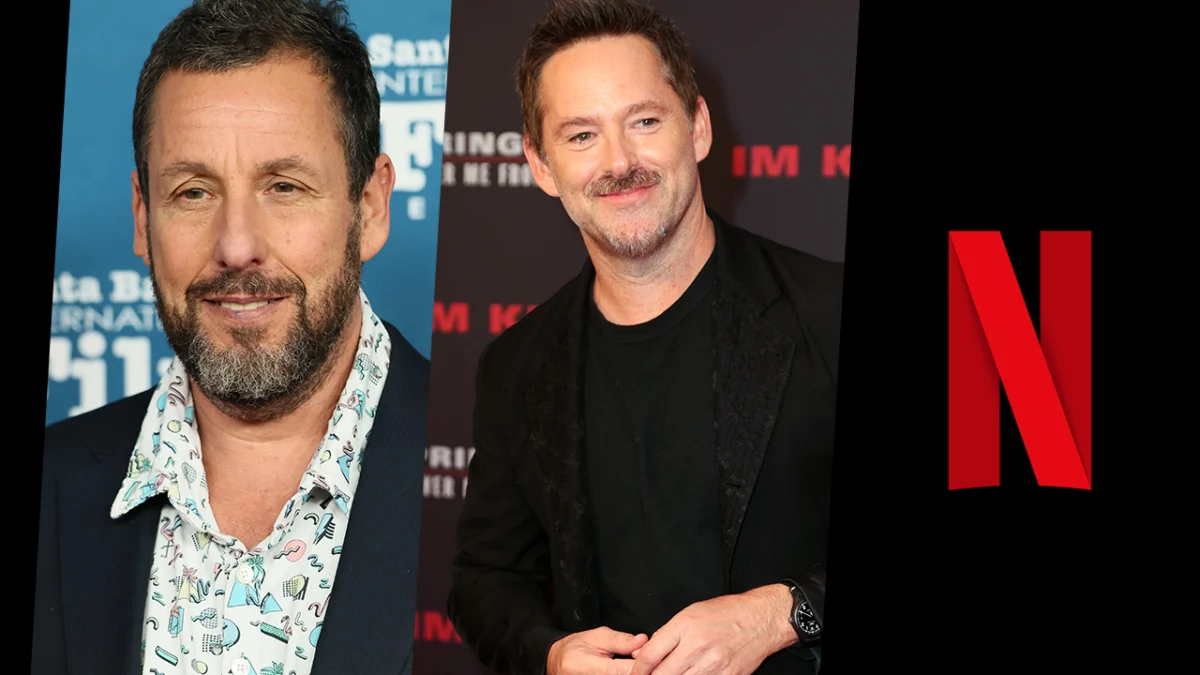
In a strategic move that signals Netflix’s continued push into prestige cinema, the streaming giant has officially announced Time Out, a psychological family drama featuring a powerhouse cast led by Adam Sandler, with veteran actors Willem Dafoe and F. Murray Abraham confirmed in key roles. Helmed by acclaimed writer-director Scott Cooper, known for his gritty, character-driven narratives, the film is already generating significant buzz within the industry, positioning itself as a major contender for the 2027 awards season. This project marks a significant step in Adam Sandler’s evolving career, further solidifying his pivot towards more complex and challenging dramatic roles following a recent string of critically acclaimed performances.
The Genesis of ‘Time Out’: A Timely Adaptation of a French Classic
Time Out is an English-language remake of Laurent Cantet and Robin Campillo’s critically lauded 2001 French film, L’Emploi du temps (English Time Out). The original French masterpiece captivated audiences and critics alike with its chilling exploration of identity, deception, and the pressures of societal expectations. It garnered significant international recognition, including an award at the Venice Film Festival, and was nominated for multiple César Awards, establishing itself as a benchmark in psychological realism.
Scott Cooper, a director celebrated for his unflinching portrayals of human struggle in films like Crazy Heart, Hostiles, and Netflix’s The Pale Blue Eye, has taken on the ambitious task of adapting and directing this poignant story. Cooper’s long-standing connection to the material is evident; he revealed to Deadline in March 2026 that he first encountered Cantet’s film in 2001 and it has "lived with [him] ever since." His decision to revisit the narrative now stems from a belief that "questions of identity, work, and self-worth have become impossible to ignore" in the contemporary world. This perspective suggests that Cooper’s adaptation will not merely be a rehash but a thoughtful reinterpretation, resonating with modern anxieties surrounding employment, self-perception, and the pervasive fear of inadequacy in a hyper-connected society. The film’s exploration of these themes promises a deeply immersive and thought-provoking cinematic experience, aligning perfectly with Cooper’s established style of profound character studies.
The logline for Time Out reveals a narrative rich with tension and psychological depth: "Vincent appears to happily spend his weeks on the road, busy with business trips and meetings. He shares vague details with his loving wife, Muriel, and their three children… But Vincent’s professional life is actually fictional. He hasn’t been able to tell his family and friends about losing his long-time consulting job weeks ago. Vincent feels pressured into inventing a prestigious new job for himself in Geneva. Telling lies becomes a full-time occupation. To maintain his lost income, he desperately betrays even his friends that trust him in shady investment deals. All Vincent ever wanted was to call time out from a suffocating professional life, yet somehow allow his family’s life to continue as before. Now the ever-growing tension of Vincent’s world is quickly closing in. The expectations of a provincial community where your job is who you are. A former colleague’s insistent concern. A father’s overbearing desire for the best for his son." This intricate plot, centered on a man trapped in a web of his own making, offers fertile ground for a compelling dramatic performance.
Adam Sandler’s Continued Dramatic Evolution
The casting of Adam Sandler in the lead role of Vincent is a significant highlight, underscoring his ongoing and highly successful transformation into a formidable dramatic actor. For over a decade, Sandler has called Netflix his primary creative home, initially known for a string of highly successful, albeit often critically mixed, comedies. However, recent years have seen a marked shift in his career trajectory, with roles that have showcased his profound acting talents far beyond his comedic roots. Films like the Safdie Brothers’ Uncut Gems (2019), for which he received widespread critical acclaim and numerous awards nominations, and more recently, Netflix’s own Hustle (2022) and Spaceman (2024), have demonstrated his capability to deliver nuanced, emotionally resonant performances.
His portrayal of Stanley Sugerman in Hustle, a basketball scout fighting for one last chance, earned him some of the best reviews of his career, while his performance in Spaceman, an introspective sci-fi drama, further cemented his versatility. These projects have not only broadened his appeal but have also positioned him as a serious contender in the awards circuit. Time Out, with its intense psychological premise, appears to be a deliberate choice to continue this dramatic path, allowing Sandler to delve into the complexities of a character grappling with profound existential and societal pressures. His involvement signals Netflix’s confidence in his ability to carry a prestige drama and to attract both critical attention and a broad audience drawn to his star power in a new light. This role as Vincent, a man consumed by the illusion he has meticulously constructed, offers Sandler a rich canvas to explore themes of vulnerability, desperation, and the corrosive nature of deceit.
Beyond Time Out, Sandler continues to maintain a prolific output with Netflix. While the article references fictional future projects like "Jay Kelly" and "Happy Gilmore 2" for the year 2026, it also notes his ongoing work on the sequel to the animated hit Leo, anticipated in the coming years. Furthermore, Sandler remains actively involved in producing, with two films starring his daughters slated for release in 2026: Roommates in April and Don’t Say Good Luck later in the year, showcasing his enduring commitment to nurturing new talent and expanding his creative footprint within the industry.
A Powerhouse Ensemble: The Stellar Supporting Cast
While the full ensemble cast details are still emerging, the involvement of two-time Academy Award winner F. Murray Abraham and four-time Oscar nominee Willem Dafoe immediately elevates Time Out into the realm of elite cinema. These seasoned actors bring immense gravitas and a wealth of experience to any project, promising performances that will undoubtedly enrich the film’s psychological landscape.
Willem Dafoe is renowned for his intense, often unsettling, yet always captivating portrayals across a diverse range of films, from independent art-house features to major blockbusters. His presence typically signals a film of significant artistic ambition and depth. Dafoe’s ability to convey complex inner turmoil and moral ambiguity makes him an ideal fit for a psychological drama where subtle expressions and simmering tension are paramount. His roles in films like The Florida Project, At Eternity’s Gate, and The Lighthouse have cemented his reputation as one of contemporary cinema’s most compelling figures, capable of transforming any supporting role into a memorable performance.
F. Murray Abraham, an Academy Award winner for his iconic portrayal of Antonio Salieri in Amadeus, brings a different but equally powerful dimension. His distinguished career is marked by roles that often exude authority, wisdom, or a subtle menace, perfect for characters who might embody the societal pressures or familial expectations that Vincent faces. Abraham’s recent resurgence in popular culture with roles in The Grand Budapest Hotel and the hit series The White Lotus further underscores his enduring appeal and formidable acting prowess. His involvement suggests a depth of character interaction that will challenge Sandler’s Vincent, adding layers of dramatic complexity.
The casting process, a critical component in assembling such a high-caliber ensemble, was handled by a team of respected industry professionals: Francine Maisler, Molly Rose, Corinne Clark, and Jennifer Page. Maisler, in particular, is a legendary casting director known for her work on numerous Oscar-winning films and her knack for bringing together dream casts, further reinforcing the film’s awards aspirations.
Interestingly, early in the development process, there were rumors that Christian Bale was being considered for a role, highlighting the project’s appeal to top-tier talent even before Sandler’s official attachment. Subsequent Canadian production listings also cited two-time Oscar winner Dustin Hoffman as part of the cast. While these earlier rumors suggest the high caliber of actors initially approached, the current confirmed lineup, particularly with Dafoe and Abraham, ensures a formidable dramatic presence that will undoubtedly complement Sandler’s lead performance.
Scott Cooper: A Director of Grit and Nuance
Scott Cooper’s directorial vision is consistently marked by a keen interest in human fallibility, moral complexities, and atmospheric storytelling. His filmography demonstrates a clear preference for delving into the darker aspects of the human psyche and the harsh realities of specific environments. Crazy Heart (2009) earned Jeff Bridges an Academy Award for Best Actor, showcasing Cooper’s talent for guiding actors to profound performances. Hostiles (2017), a brutal and beautiful Western, and Out of the Furnace (2013), a visceral Rust Belt drama, both starring Christian Bale, are testaments to his ability to craft intense, character-driven narratives that resonate long after viewing.
His most recent collaboration with Netflix, The Pale Blue Eye (2022), a Gothic detective story starring Christian Bale, further cemented his partnership with the streaming platform and his ability to deliver sophisticated, visually distinctive dramas. Cooper’s recurring collaboration with cinematographer Masanobu Takayanagi across several projects—including Hostiles, Out of the Furnace, and The Pale Blue Eye—speaks volumes about their shared artistic language. Takayanagi’s visual style, often characterized by its stark beauty, evocative lighting, and ability to capture mood and atmosphere, is perfectly suited to the psychological intensity of Time Out. Their established partnership ensures a cohesive and powerful visual narrative that will enhance the film’s thematic depth.
Behind the Scenes: The Crafting of a Prestige Drama
Beyond the director, the creative team assembled for Time Out boasts impressive credentials, indicative of a production striving for the highest artistic and technical standards. Scott Cooper will not only write and direct but also serve as a producer, underscoring his deep personal investment in the project.
He is joined by veteran producer Jon Kilik, whose extensive filmography includes acclaimed works like The Hunger Games franchise, Foxcatcher, and numerous Spike Lee films. Kilik’s experience spans both commercially successful blockbusters and critically lauded independent dramas, demonstrating his ability to navigate complex productions and deliver compelling stories. His involvement signals a robust production infrastructure behind Time Out.
Tracey Landon serves as Executive Producer, fresh off her work on Bradley Cooper’s Oscar-nominated Maestro (2023) for Netflix. Landon’s recent experience with a high-profile, awards-contending drama further reinforces the strategic intent behind Time Out and its potential for critical recognition.
The choice of Masanobu Takayanagi as cinematographer is particularly noteworthy. His recurring collaborations with Cooper are a testament to their synergistic creative partnership. Takayanagi’s unique visual style, which often employs natural light, rich textures, and a keen eye for atmospheric detail, will be crucial in rendering the psychological tension and the protagonist’s deteriorating reality. His work typically imbues films with a sense of realism and emotional depth, perfectly aligning with the gritty, introspective nature of Time Out.
Production Timeline and Locations
The development of Time Out has been meticulously planned, with rumors first circulating in January 2026 about a spring shoot, which have since been confirmed. The project officially entered pre-production, with principal photography scheduled to commence on March 31, 2026, and conclude on May 30, 2026. While some reports suggested a potential start in April, the two-month production window indicates a focused and efficient shooting schedule for this intense drama.
Filming will primarily take place in Vancouver, British Columbia, Canada. Vancouver has become a popular hub for film and television production due to its diverse landscapes, experienced crews, and attractive tax incentives. Its ability to double for various North American and European settings makes it an ideal choice for a film with potentially ambiguous geographical underpinnings, or to establish the "provincial community" mentioned in the logline. Additionally, on-location shooting is expected to occur in San Francisco, California. The iconic cityscape of San Francisco could provide a stark contrast to the more intimate or provincial settings, potentially representing the "prestigious new job in Geneva" that Vincent fabricates, or serving as a backdrop for some of his deceptive business dealings. The combination of these locations will likely offer a rich visual tapestry that supports the film’s narrative themes.
Netflix’s Strategic Play: Awards Season Ambitions and Subscriber Engagement
Time Out represents a significant strategic investment for Netflix, aligning with its broader ambition to solidify its position as a producer of high-quality, prestige cinema capable of competing for major industry awards. In an increasingly competitive streaming landscape, original content that garners critical acclaim and awards recognition is crucial for attracting and retaining subscribers.
Netflix has a proven track record of securing Academy Award nominations and wins for its original films, particularly dramas and character studies. Films like Roma, The Irishman, Marriage Story, The Power of the Dog, and All Quiet on the Western Front have demonstrated the platform’s commitment to backing auteur-driven projects with significant artistic merit. By bringing together a respected director like Scott Cooper, an evolving dramatic lead like Adam Sandler, and legendary actors such as Willem Dafoe and F. Murray Abraham, Time Out is tailor-made to appeal to awards voters. The film’s thematic depth—exploring identity, societal pressure, and the human cost of deception—also positions it as a timely and resonant piece of cinema, often favored by awards juries.
This project is not just about awards, however; it’s also about diversifying Netflix’s content library and offering a range of compelling narratives that cater to different audience segments. While Adam Sandler’s comedies continue to be massive draws, his dramatic ventures like Hustle and Spaceman have expanded his audience base to include those seeking more serious, thought-provoking fare. Time Out will undoubtedly capitalize on this dual appeal, leveraging Sandler’s star power while delivering a sophisticated drama that speaks to contemporary anxieties.
Anticipation and Implications for 2027
As cameras prepare to roll, anticipation for Time Out is already building within the film community. The unique blend of Scott Cooper’s directorial intensity, Adam Sandler’s nuanced dramatic capabilities, and the formidable presence of Willem Dafoe and F. Murray Abraham creates a compelling cinematic proposition. The film’s exploration of themes that resonate deeply with modern life—the pressure to maintain appearances, the struggle with self-worth in a work-obsessed culture, and the devastating consequences of deceit—ensures its relevance and potential for widespread discussion.
For Adam Sandler, Time Out offers another opportunity to redefine his legacy and further establish himself as a serious dramatic force, moving beyond the expectations often associated with his comedic past. For Scott Cooper, it is a chance to revisit a story that has long fascinated him, adapting it for a new era with a fresh perspective. And for Netflix, it represents a strategic and ambitious play in the ongoing quest for critical acclaim and subscriber loyalty, solidifying its commitment to delivering high-quality, original cinematic experiences. As the 2027 awards season approaches, Time Out is undoubtedly a film that will be closely watched, not just for its star power, but for its potential to deliver a profound and unforgettable psychological drama.