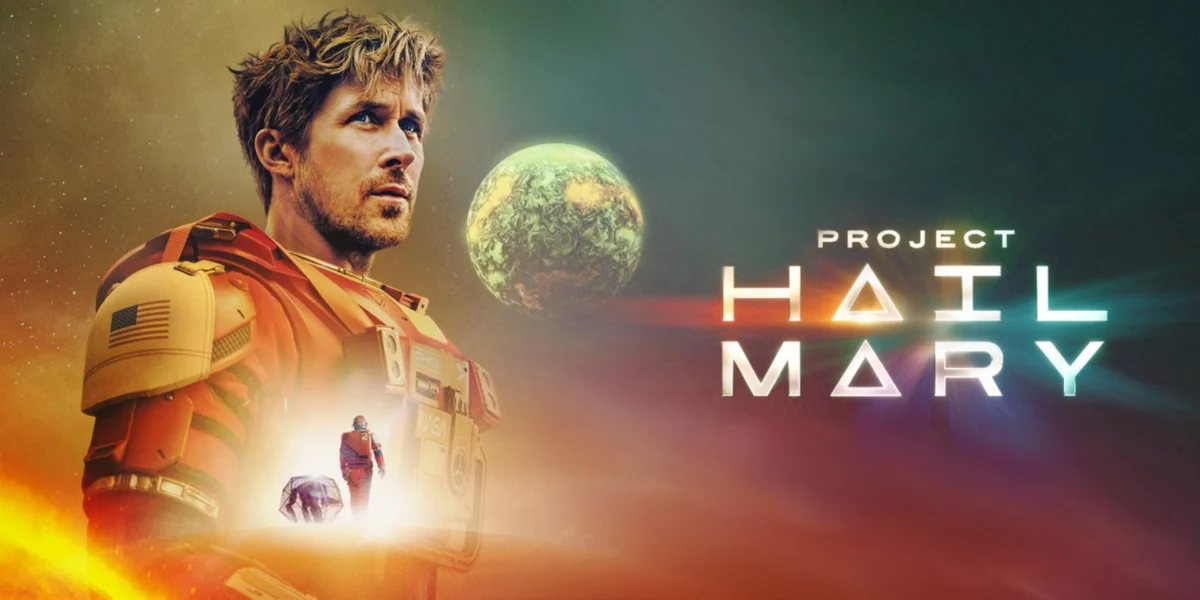
The cinematic landscape of early 2026 has been significantly defined by the release of Project Hail Mary, the highly anticipated adaptation of Andy Weir’s 2021 best-selling novel. Directed by the filmmaking duo Phil Lord and Chris Miller, the film has emerged as a critical and commercial focal point, prompting an in-depth analysis from the Next Best Picture Podcast. In a comprehensive review featuring Matt Neglia, Sara Clements, Josh Parham, Cody Dericks, Brendan Hodges, and Tom O’Brien, the panel explored the multifaceted layers of the production, ranging from Ryan Gosling’s lead performance to the film’s potential trajectory during the upcoming awards season. As a blend of epic science fiction and character-driven comedy, the film is being positioned as a rare "crowdpleaser" that balances technical sophistication with emotional resonance, securing its status as the premier film event of the first quarter of the year.
The Literary Foundation and Adaptation Process
The journey of Project Hail Mary from the printed page to the IMAX screen began well before the novel’s official publication in May 2021. Metro-Goldwyn-Mayer (MGM), now under the umbrella of Amazon MGM Studios, acquired the film rights for an estimated $3 million in early 2020, demonstrating immediate confidence in the intellectual property. The source material, authored by Andy Weir, follows the success of his previous work, The Martian, which was adapted into a critically acclaimed, Oscar-nominated film directed by Ridley Scott.
To translate the complex "hard science" narrative of Project Hail Mary into a screenplay, the studio enlisted Drew Goddard. Goddard’s involvement provided a thematic bridge to Weir’s previous success, as he had previously received an Academy Award nomination for his screenplay for The Martian. The narrative structure of Project Hail Mary presents unique challenges for a screenwriter; it centers on Ryland Grace, a middle-school science teacher turned astronaut who wakes up on a spacecraft with no memory of his identity or his mission. The story utilizes a dual-timeline structure, slowly revealing the global catastrophe—a solar-dimming phenomenon caused by "Astrophage"—that necessitated Grace’s desperate voyage to the Tau Ceti star system.
Production Chronology and Creative Leadership
The development of the film saw a strategic assembly of high-profile creative talent. Phil Lord and Chris Miller, known for their innovative work on The LEGO Movie and Spider-Man: Into the Spider-Verse, were attached to direct in 2020. This project marks a significant return to live-action feature directing for the duo, whose stylistic hallmarks often include a blend of irreverent humor and deep sincerity.
Principal photography for Project Hail Mary commenced in mid-2024 at the United Kingdom’s Shepperton Studios. The production utilized advanced soundstages and visual effects technology to replicate the zero-gravity environments and the intricate interiors of the Hail Mary spacecraft. The filming schedule was designed to accommodate the heavy visual effects requirements necessary for the film’s non-human elements and cosmic sequences. By early 2025, the film entered an extensive post-production phase, focusing on the realization of the film’s "Eridian" co-protagonist through a combination of practical puppetry and digital enhancement, a process overseen by James Ortiz.
Casting Dynamics and Performance Analysis
A central pillar of the film’s appeal is its ensemble cast, led by Ryan Gosling in the role of Ryland Grace. Gosling, who also serves as a producer on the project, brings a specific brand of vulnerable charisma to the role, which requires him to carry much of the film’s first act in isolation. The Next Best Picture panel highlighted Gosling’s ability to navigate the tonal shifts between the existential dread of deep-space isolation and the comedic levity found in his character’s scientific discoveries.
The supporting cast is anchored by Sandra Hüller, who portrays Eva Stratt, the indomitable leader of the international task force charged with saving Earth. Hüller’s casting followed her breakout success in 2023 with Anatomy of a Fall and The Zone of Interest, signaling the film’s intent to pair blockbuster sensibilities with high-caliber dramatic acting. The cast is further rounded out by:

- Ken Leung: Bringing a grounded presence to the terrestrial flashback sequences.
- Lionel Boyce: Contributing to the collaborative dynamic of the scientific team.
- Milana Vayntrub: Providing key support in the film’s ensemble-driven moments.
- James Ortiz: Tasked with the unique challenge of bringing a non-verbal, non-human character to life through movement and physical performance.
Technical Execution and IMAX Presentation
The Next Best Picture review emphasized the importance of the theatrical experience for Project Hail Mary, specifically noting its optimization for the IMAX format. The film’s cinematography and sound design were crafted to immerse audiences in the vacuum of space and the claustrophobic confines of the starship. The technical crafts—encompassing production design, film editing, and visual effects—were cited as high-water marks for the genre.
The visual representation of the alien "Rocky" was a particular point of interest. Unlike many contemporary sci-fi films that rely solely on CGI, Lord and Miller opted for a hybrid approach to ensure a tangible sense of interaction between Gosling and his extraterrestrial counterpart. This decision has been noted by critics as a key factor in the film’s emotional effectiveness, allowing for a believable bond to form between two vastly different species.
Critical Reception and Awards Potential
The Next Best Picture Podcast panel provided a "spoiler-filled" deep dive into the film’s narrative payoffs, ultimately assessing its viability in the upcoming awards cycle. Historically, big-budget science fiction films released in the first quarter—such as Dune: Part Two—have successfully maintained momentum through to the Academy Awards. The panel discussed whether Project Hail Mary could follow a similar path, potentially contending in categories such as Best Picture, Best Actor for Gosling, and various technical honors including Best Visual Effects and Best Sound.
The film’s reception among "built-in fan bases" (readers of Weir’s novel) has been largely positive, with the adaptation being praised for its fidelity to the book’s scientific optimism while streamlining the narrative for a general audience. The "crowdpleaser" designation is particularly relevant in the current theatrical climate, where original (or novel-based) sci-fi must compete with established franchises.
Broader Industry Implications and the Evergreen Network
The discussion of Project Hail Mary also serves as a milestone for the Next Best Picture Podcast itself. As a member of the Evergreen Podcasts Network, the program continues to expand its reach within the film criticism community. The podcast encourages listener engagement through platforms like Apple Podcasts and Patreon, offering ad-free content and exclusive reviews that cater to a dedicated audience of cinephiles and industry observers.
The success of Project Hail Mary is viewed by industry analysts as a validation of the "mid-to-high-budget" sci-fi model. At a time when studios are often risk-averse, the collaboration between Amazon MGM, high-profile directors like Lord and Miller, and a bankable star like Gosling suggests that there remains a robust market for sophisticated, intellectually stimulating blockbusters.
Timeline of Key Milestones
The trajectory of Project Hail Mary can be summarized through the following chronological developments:
- March 2020: MGM acquires film rights for $3 million prior to the novel’s release.
- May 2021: Andy Weir’s novel is published, becoming an instant bestseller.
- 2022–2023: Drew Goddard completes the screenplay; Sandra Hüller and the supporting cast are finalized.
- June 2024: Principal photography begins in the United Kingdom.
- March 2026: The film is released globally in theaters and IMAX.
- Q1 2026: Critics and podcast outlets, including Next Best Picture, publish definitive reviews, marking the film as a major awards contender.
Conclusion: A New Standard for Sci-Fi Cinema
Project Hail Mary represents more than just a successful adaptation; it is a testament to the enduring appeal of stories that celebrate human ingenuity and the spirit of cooperation. By combining the rigorous scientific curiosity of Andy Weir’s writing with the imaginative visual storytelling of Phil Lord and Chris Miller, the film has carved out a unique space in the 2026 cinematic calendar. As the Next Best Picture team concluded in their review, the film’s ability to move audiences emotionally while providing a high-stakes, large-scale spectacle ensures its place in the conversation for the best films of the year. Whether viewed on the largest IMAX screen or discussed at length in a podcast format, Project Hail Mary stands as a significant achievement in modern filmmaking, bridging the gap between intellectual sci-fi and mainstream entertainment.