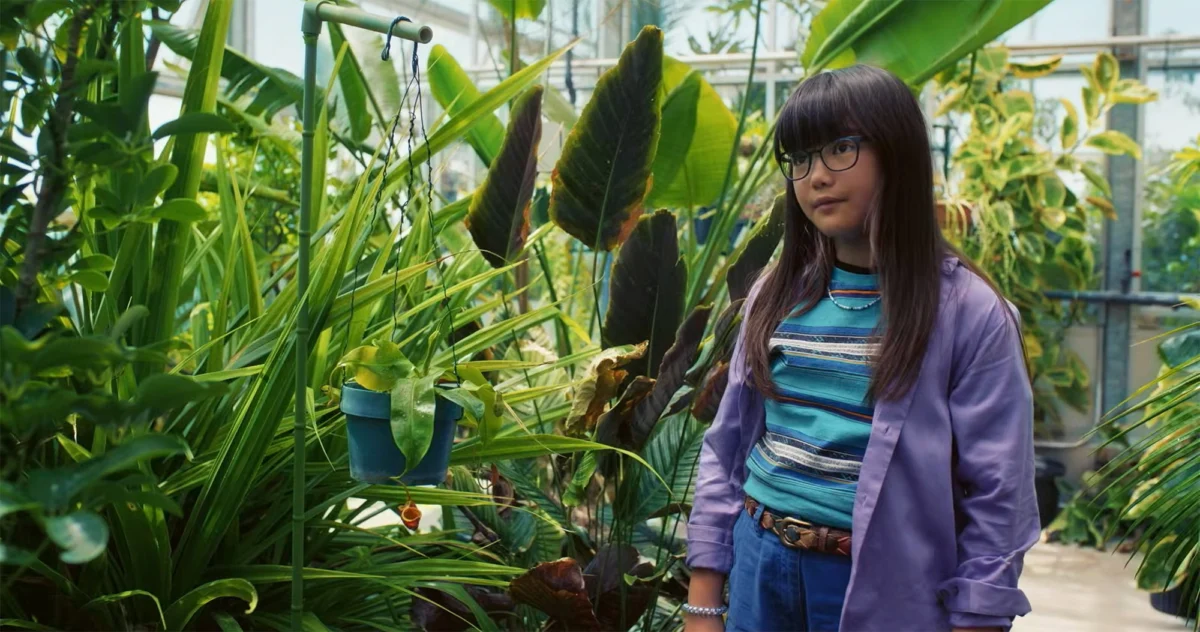
Tribeca Films has officially unveiled the trailer and promotional materials for Nicholas Ma’s feature directorial debut, Mabel, signaling the film’s transition from the international festival circuit to a domestic theatrical release. Scheduled to arrive in select cinemas in New York and Los Angeles on April 17, 2026, the film explores the complexities of adolescent isolation through the lens of botany and scientific curiosity. The project, which first garnered critical attention during its world premiere at the San Francisco Film Festival in 2024, arrives at a time when indie cinema is increasingly focused on idiosyncratic, character-driven narratives that challenge traditional coming-of-age tropes.
Mabel follows the story of Callie, portrayed by newcomer Lexi Perkel, a biracial pre-teen who finds the company of flora significantly more compelling than that of her peers. After her family relocates, Callie struggles to navigate the social hierarchies of a new middle school, leading her to retreat further into her obsession with plants. Her primary "friend" is a potted plant named Mabel, a central figure that serves as both a comfort and a catalyst for her academic pursuits. The narrative tension intensifies when Callie encounters Ms. G, played by veteran actress Judy Greer, a substitute teacher who introduces her to the concept of "plant intelligence." This encounter sparks a clandestine scientific endeavor in Callie’s backyard, setting the stage for a conflict between her burgeoning intellectual independence and her strained domestic life.
Narrative Structure and Character Dynamics
The screenplay, co-written by Nicholas Ma and Joy Goodwin, positions Callie as a uniquely determined protagonist whose social awkwardness is balanced by a sophisticated intellectual drive. Unlike many coming-of-age films that focus on romantic interests or popular cliques, Mabel centers on the protagonist’s relationship with the natural world and her mentor. Judy Greer’s Ms. G serves as the bridge between Callie’s solitary hobby and the broader world of scientific inquiry. By treating Callie’s interest with professional seriousness rather than childhood whimsy, Ms. G validates the girl’s identity while inadvertently pushing her toward a path of obsession.

The supporting cast provides the necessary friction to Callie’s journey. Christine Ko and Quincy Dunn-Baker portray Callie’s parents, who struggle to bridge the communication gap with their daughter. Their concern highlights a common theme in modern indie dramas: the disconnect between well-meaning parents and neurodivergent or highly specialized children. Additionally, the character of Agnes, played by Lena Josephine Marano, represents Callie’s first genuine opportunity for human friendship. Agnes, an ebullient younger neighbor, becomes an assistant in Callie’s "darkness experiment" with chrysanthemums, illustrating the delicate balance between shared passion and the exploitation of social dynamics for personal goals.
Scientific Context: The Theme of Plant Intelligence
A significant portion of the film’s intellectual weight rests on the controversial and evolving field of plant intelligence, often referred to in academic circles as plant neurobiology. This field suggests that plants possess a form of cognition, memory, and the ability to communicate through chemical signals and fungal networks. By incorporating these real-world scientific theories, Ma elevates the film from a standard "hobbyist" story to a deeper exploration of how humans perceive life and consciousness.
In the film, Callie’s experiment involves raising chrysanthemums in total darkness to test their adaptability and "decision-making" capabilities. This plot point reflects actual botanical studies regarding phototropism and circadian rhythms in flora. For Callie, the plants are not merely passive organisms; they are sentient beings that demand her respect and protection. This perspective puts her at odds with a society that views nature primarily as a resource or a backdrop, further alienating her from her community while providing her with a profound sense of purpose.
Production Background and Nicholas Ma’s Vision
Mabel marks a significant milestone for Nicholas Ma, who makes his feature directorial debut after a successful career in documentary and production. Ma is perhaps best known for producing the critically acclaimed documentary Won’t You Be My Neighbor?, which explored the life and legacy of Fred Rogers. His transition to narrative filmmaking appears to carry over the same themes of empathy, childhood development, and the importance of nurturing the internal lives of young people.

Produced by Ben Howe, Luca Borghese, and Helen Estabrook, Mabel was developed with an emphasis on visual storytelling that mirrors the protagonist’s meticulous nature. The cinematography reportedly utilizes close-up shots of botanical life to create an immersive, almost tactile experience for the audience. Ma’s dual role as director and co-writer allowed for a cohesive vision that blends the quietude of a suburban drama with the rigorous curiosity of a science-themed narrative. Following the completion of Mabel, Ma also directed the documentary Leap of Faith, further establishing his reputation for exploring complex human connections and belief systems.
Chronology of Release and Festival Reception
The journey of Mabel from production to the 2026 theatrical release has been a multi-year process characteristic of independent "slow-burn" successes.
- 2023: Principal photography was completed, followed by an extensive post-production phase to perfect the film’s unique visual tone.
- April 2024: The film premiered at the San Francisco Film Festival (SFFILM). Initial reviews praised Lexi Perkel’s performance as grounded and unsentimental, avoiding the "precocious child" clichés often found in the genre.
- 2024–2025: The film toured the festival circuit, picking up distribution interest and refining its marketing strategy to target both indie film enthusiasts and families looking for "wholesome yet intellectually stimulating" content.
- April 6, 2026: Tribeca Films released the official trailer and poster, sparking renewed interest on social media platforms and film forums.
- April 17, 2026: The film is scheduled for its limited theatrical debut in New York and Los Angeles, with a planned expansion to additional markets and VOD platforms depending on initial box office performance.
The Role of Tribeca Films and Distribution Strategy
Tribeca Films’ acquisition of Mabel underscores the distributor’s commitment to "joyfully geeky" and "warmly human" stories. In an era where mid-budget indie films often struggle to find theatrical space against blockbuster franchises, Tribeca’s strategy for Mabel involves a targeted release. By opening in New York and Los Angeles first, the distributor aims to capture the attention of critics and urban audiences who traditionally support artisanal filmmaking.
Industry analysts suggest that Mabel’s release timing—mid-April—is a strategic move to capitalize on the "Earth Month" sentiment, aligning the film’s botanical themes with seasonal environmental awareness. The film’s "PG" or "PG-13" appeal (pending final rating) makes it accessible to a wide demographic, including educators and students who may find the film’s depiction of the scientific method particularly inspiring.

Broader Implications for Indie Cinema and STEM Representation
The release of Mabel contributes to a growing trend of films that center on young women in STEM (Science, Technology, Engineering, and Mathematics). By portraying Callie’s obsession not as a phase to be "cured" but as a legitimate intellectual pursuit, the film offers a counter-narrative to traditional coming-of-age stories that prioritize social assimilation.
Furthermore, the film’s exploration of biracial identity, though subtle, adds a layer of contemporary relevance. Callie’s struggle to find her place is not explicitly tied to her heritage in the trailer, yet the casting of Lexi Perkel brings an authentic representation of modern American families to the screen. This intersection of identity, science, and the transition into adolescence positions Mabel as a potentially significant entry in the 2026 indie film landscape.
As the theatrical date approaches, the film is expected to generate discussions regarding the "intelligence" of the natural world and the ways in which society supports—or fails—the intellectual passions of unconventional children. With a strong ensemble cast led by Judy Greer and a visionary director at the helm, Mabel stands as a testament to the enduring power of small-scale, deeply personal storytelling.
The official trailer, now available on Tribeca’s YouTube channel, showcases a film that is "warm, welcoming, and wholesome," promising a cinematic experience that encourages audiences to look a little closer at the world—and the plants—around them. Starting April 17th, viewers in major metropolitan areas will have the first opportunity to witness Callie’s journey from a solitary plant lover to a young woman finding her unique place in a complex human world.