The 97th Academy Awards culminated in a night of triumphant firsts, historic milestones, and several surprising outcomes, with Paul Thomas Anderson’s critically acclaimed drama, One Battle After Another, emerging as the night’s biggest victor. After a distinguished career spanning ten feature films and numerous nominations, Anderson finally claimed his first Academy Awards, securing an impressive three individual trophies and contributing to the film’s total haul of six, including the coveted Best Picture. The ceremony, held at the Dolby Theatre in Hollywood, celebrated a diverse range of cinematic achievements, though it was not without its share of technical hitches and pointed political statements.
A Triumphant Night for Paul Thomas Anderson and ‘One Battle After Another’
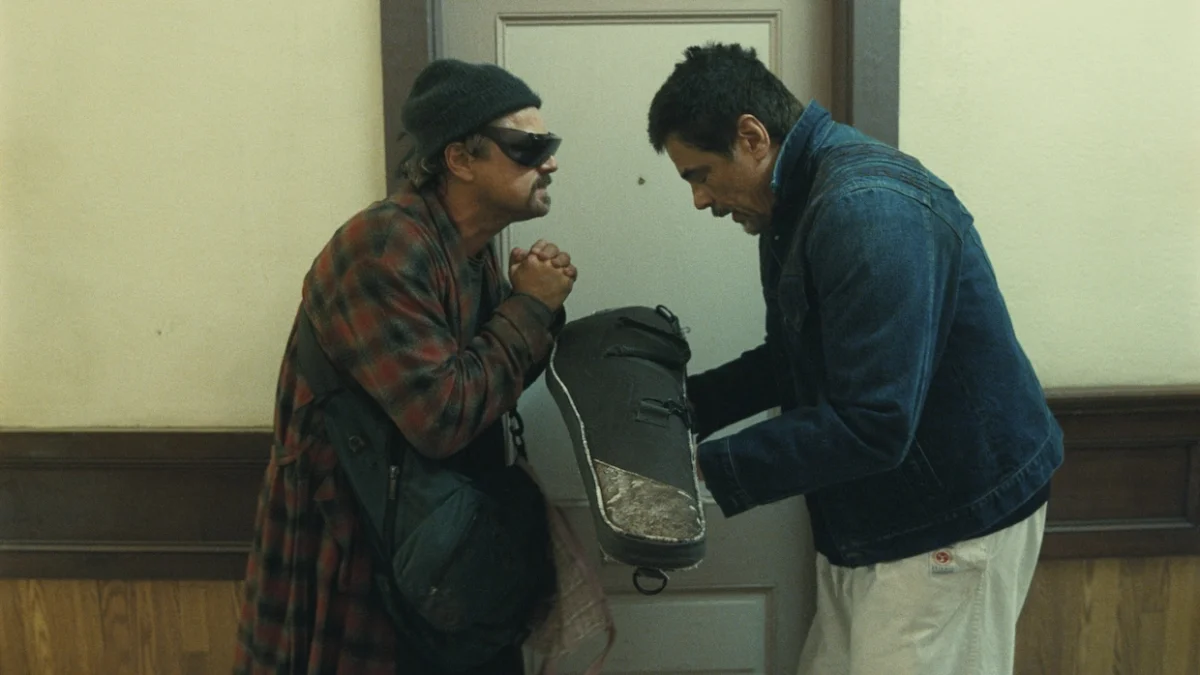
The cinematic landscape shifted dramatically as One Battle After Another swept key categories, cementing its place as the year’s most celebrated film. The drama, lauded for its intricate narrative and profound character studies, earned Academy Awards for Best Picture, Best Director (Paul Thomas Anderson), Best Supporting Actor (Sean Penn), Best Adapted Screenplay, Best Film Editing, and Best Casting. This monumental achievement marks a pivotal moment for Anderson, a filmmaker consistently praised for his artistic vision and distinctive voice, who had previously amassed multiple Oscar nominations across his esteemed filmography without a win. His previous works, including There Will Be Blood, Magnolia, and Phantom Thread, had garnered critical acclaim and industry respect, making this breakthrough victory particularly resonant for his long-standing admirers and the broader film community.
Accepting the top prize alongside producer Sara Murphy, Anderson delivered a poignant speech that underscored his profound reverence for cinema’s rich history. He invoked a quintet of iconic films from half a century ago—Barry Lyndon, Dog Day Afternoon, Jaws, Nashville, and One Flew Over the Cuckoo’s Nest—all nominees for Best Picture in 1975. "There is no best among them," Anderson stated, reflecting on the enduring quality of these diverse masterpieces. "There is just what that mood might be that day." His remarks resonated deeply, acknowledging the subjective nature of artistic evaluation while celebrating the collective power of storytelling. This sentiment, a humble nod to the pantheon of cinematic excellence, implicitly connected his own acclaimed work to the timeless artistry of those past giants, suggesting a continuity of cinematic ambition and influence.
The win for One Battle After Another was widely anticipated in some circles after a strong showing during the precursor awards season, solidifying its status as a frontrunner. Its success across multiple craft and major categories highlights the Academy’s appreciation for its comprehensive excellence, from narrative construction to performances and technical execution. For Warner Bros., the distributor behind the film, this victory contributed significantly to an overall dominant night, with the studio accumulating an impressive 11 Oscars across its various contenders, reaffirming its position as a powerhouse in prestige filmmaking.
‘Sinners’ Makes History and Celebrates Diverse Talent
While One Battle After Another ultimately claimed the night’s top honors, Ryan Coogler’s ambitious epic, Sinners, entered the ceremony with a record-setting 16 nominations, signaling its broad appeal and technical prowess. The film converted four of these nominations into wins, notably for Best Original Score, Best Original Screenplay, Best Cinematography, and Best Actor.
Ludwig Goransson, a three-time Academy Award winner, secured his latest Oscar for Sinners‘ original score. Known for his innovative compositions that blend traditional instrumentation with contemporary sounds, Goransson’s work on Sinners was praised for its emotional depth and its ability to elevate the film’s narrative. Ryan Coogler himself took home the Oscar for Best Original Screenplay, a testament to his unique storytelling voice and his ability to craft compelling, socially resonant narratives that challenge and entertain audiences.
Perhaps the most groundbreaking victory for Sinners came in the Best Cinematography category, where Autumn Durald Arkapaw made history as the first woman ever to win the award. Arkapaw’s masterful use of light and shadow, combined with her innovative camera work, created a visually stunning and immersive experience that captivated both critics and audiences. Her win marks a significant step forward for diversity and inclusion within the historically male-dominated field of cinematography, inspiring a new generation of female filmmakers. The industry has long grappled with underrepresentation in technical categories, and Arkapaw’s triumph stands as a powerful symbol of evolving recognition and opportunity.
Michael B. Jordan’s Career-Defining Best Actor Win
The Best Actor race was among the most intensely debated categories of the season, with a strong field of contenders including Timothée Chalamet, Leonardo DiCaprio, and Wagner Moura. However, it was Michael B. Jordan, in his first-ever Academy Award nomination for his role in Sinners, who ultimately clinched the statuette. His victory followed weeks after he collected the same prize at the prestigious Actor Awards (often seen as a strong indicator for the Oscars, similar to the SAG Awards), signaling a growing consensus around his powerful performance.
Jordan’s win was met with a resounding standing ovation, a clear demonstration of the immense goodwill he commands within the industry. At 39, Jordan is considered a veteran, having begun his career as a child actor and steadily built a formidable filmography marked by versatility and dedication. His journey from early roles in television series like The Wire to his current status as a leading man and producer highlights a remarkable trajectory of sustained excellence and artistic growth. This Oscar not only celebrates a career-best performance but also serves as a testament to his longevity, professionalism, and unwavering commitment to his craft, affirming his place among Hollywood’s elite.
Leading Ladies: Buckley and Madigan Shine in Acting Categories
The Best Actress category saw a more predictable outcome, with Jessie Buckley winning for her transformative performance in Hamnet. The Irish actress had dominated the awards circuit throughout the season, collecting numerous trophies for her portrayal in Chloe Zhao’s latest directorial effort. This win marks an impressive follow-up for Zhao, who previously earned two Oscars for Nomadland and has now directed two different actresses to Best Actress wins, a rare and remarkable feat that underscores her profound ability to elicit powerful performances from her collaborators. Buckley’s nuanced and compelling performance resonated deeply with voters, cementing her status as one of the most compelling talents in contemporary cinema.
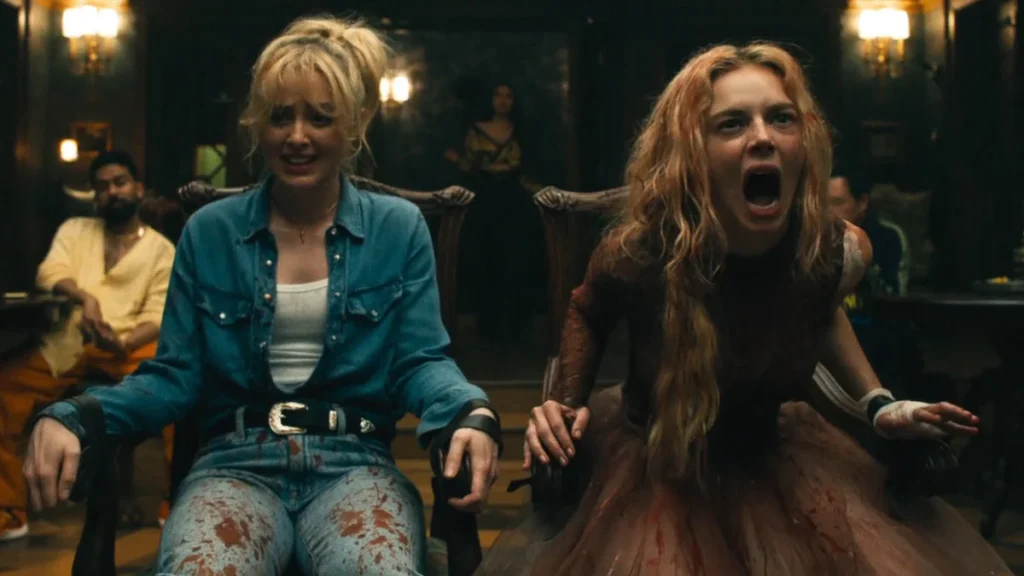
In a moment that truly ignited the ceremony, Amy Madigan delivered the first major surprise of the night by winning Best Supporting Actress for her role in the horror film Weapons. Madigan, an industry legend with a distinguished career spanning decades, delivered a surprising turn that captivated audiences and critics alike. Her win recalled memorable instances of veteran actors earning recognition for unexpected genre performances, drawing parallels to Ruth Gordon’s iconic victory for Rosemary’s Baby. Madigan’s acceptance speech was a delightful highlight, injecting a much-needed dose of levity and genuine charm into the proceedings. "I was in the shower last night trying to think of something to say as I was shaving my legs," Madigan quipped, setting a wonderfully irreverent tone for the evening, before humorously adding, "And I went, ‘[I’ll] have pants on, I don’t have to worry about that.’" Her candid and humorous remarks were widely praised for loosening up the evening’s often-stiff formalities.

Sean Penn’s Absence and the Shifting Tides of Awards Campaigning
Sean Penn, already a two-time Best Actor winner for Milk and Mystic River, added a third Oscar to his collection, this time for Best Supporting Actor in One Battle After Another. However, Penn was conspicuously absent from the ceremony, a decision that underscored his increasingly complex relationship with the awards circuit. His previous gesture of gifting one of his Best Actor Oscars to Ukrainian President Volodymyr Zelensky in a show of solidarity against the ongoing conflict had already highlighted his prioritization of global humanitarian issues over traditional Hollywood accolades.
Penn’s absence and win, achieved with seemingly minimal traditional awards campaigning, sparked considerable discussion within the industry. It raises questions about the efficacy and necessity of the exhaustive and often costly promotional campaigns that have become standard practice for Oscar contenders. His success without actively "playing the game" suggests that for stars of his stature, raw talent and critical acclaim might transcend strategic maneuvering, potentially influencing how future high-profile actors approach awards season. This could signal a subtle shift away from the relentless self-promotion that has come to define the modern awards race.
Netflix’s Strategic Wins and a Political Documentary Upset
While traditional studios like Warner Bros. enjoyed a robust night, streaming giant Netflix also secured a respectable tally of Oscars, demonstrating its continued influence across various categories. The streamer’s success included a trio of craft wins for Frankenstein, which was honored for Best Costume Design, Best Makeup and Hairstyling, and Best Production Design. These awards highlight Netflix’s commitment to high-quality technical execution in its productions, recognizing the intricate artistry involved in bringing the classic monster to life.
Netflix also celebrated two wins for its vibrant animated feature, KPop Demon Hunters, which earned the Oscar for Best Animated Feature and Best Original Song for "Golden." Further diversifying its portfolio, Netflix picked up awards for Live-Action Short Film with The Singers (which tied in a rare occurrence with Two People Exchanging Saliva, confounding many Oscar pools worldwide) and for Documentary Short.
However, the night held a significant upset in the Best Documentary Feature category, where Mr. Nobody Against Putin triumphed over the widely favored The Perfect Neighbor. This outcome sparked considerable debate, with many analysts pointing to geopolitical factors as a potential driver. As one industry insider observed, the explicit "Against Putin" in the title likely resonated strongly with European voters and those influenced by global political sentiment, perhaps even overriding a detailed assessment of all nominees for some busy Academy members. The victory provided one of the evening’s most outwardly political acceptance speeches, which was later amplified by Javier Bardem, who, before reading the scripted remarks for the International Feature nominees, passionately declared, "No to war, and free Palestine," eliciting cheers from the audience and further underscoring the intersection of global politics and entertainment.
Other Notable Victories and Cinematic Achievements
Beyond the major categories, several other films received well-deserved recognition. F1 secured the Oscar for Best Sound, acknowledging its immersive audio design that transported audiences into the high-octane world of motor racing. James Cameron’s highly anticipated sequel, Avatar: Fire and Ash, continued the franchise’s legacy of visual innovation by winning Best Visual Effects. The award was presented by the franchise’s iconic star, Sigourney Weaver, in a particularly sweet and fitting moment that celebrated the film’s technological marvels.
The Best Animated Short Film Oscar went to The Girl Who Cried Pearls, a poignant and visually imaginative work that stood out in a competitive field. In the fiercely contested Best International Feature Film category, Sentimental Value emerged victorious. This race was notably tight, featuring an impressive four contenders distributed by NEON, a distributor renowned for its curation of groundbreaking international cinema, underscoring the global reach and diverse storytelling celebrated by the Academy.
A Ceremony Marred by Technical Difficulties and Missed Opportunities
The awards ceremony itself, hosted by the charismatic Conan O’Brien, aimed for an entertaining blend of humor and reverence. O’Brien kicked off the night with a memorable opening segment, donning an "Aunt Gladys" drag persona and engaging in a comedic chase through various parody clips of the Best Picture nominees. However, the initial energy waned as his monologue proved spotty, with several bits failing to land with the live audience and viewers at home.
Overall, the broadcast suffered from a series of technical mishaps, contributing to a perception of a messy awards show. Viewers noted rudely cut-short acceptance speeches, which frustrated both winners and the audience, and bizarre camera angles that often detracted from key moments. The emotional "In Memoriam" segment, featuring heartfelt tributes from Billy Crystal to Rob and Michelle Reiner, Rachel McAdams to Diane Keaton, and Barbra Streisand to Robert Redford, culminated in Streisand’s performance of the iconic Oscar-winning song "The Way We Were." Yet, this moving tribute was unfortunately undercut by significant sound problems, diminishing its intended impact and sparking criticism regarding the production quality.
Another point of contention revolved around the music performances. Despite five songs being nominated, only two were performed live: "Golden" from KPop Demon Hunters and "I Lied to You" from Sinners. While both performances were lauded for their excellence, the decision not to feature the other three nominated songs felt like a significant oversight. Instructions to scan a QR code during commercial breaks to listen to the full roster were widely perceived as an inadequate substitute, signaling that producers had arbitrarily decided only two songs were "worth presenting" to the global audience, a perceived missed opportunity to celebrate the full breadth of musical talent.
Reflecting on the Season and Looking Ahead
As the curtain fell on the 97th Academy Awards, the traditional post-show discourse quickly began. While the ceremony itself had its share of complaints, it delivered a "fairly good outcome" in terms of recognizing cinematic excellence. The season was long and arduous, marked by intense campaigning and critical debate, but it ultimately celebrated a diverse range of films and individuals. For the major players in the awards space, the night concluded with celebrations and a brief respite. However, the relentless cycle of cinema means that the next Oscar season is already looming, promising new stories, new talents, and new battles for cinematic supremacy. The industry will now turn its attention to the films premiering in the coming months, eager to discover the next set of contenders destined for Academy glory.