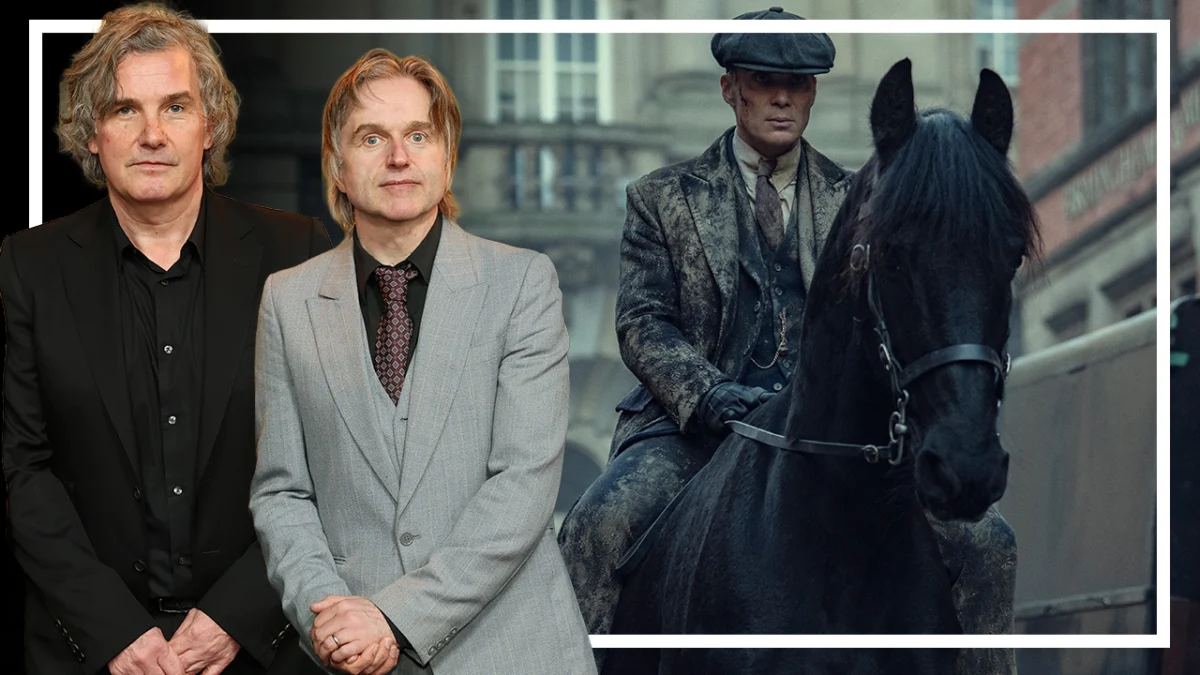
The soundtrack for Peaky Blinders: The Immortal Man stands as a monumental and intricate sonic achievement, a dense tapestry of sound that resonates with both raw power and profound emotional depth. Far from a mere accompaniment, the score, crafted by the accomplished composing duo Anthony Genn and Martin Slattery, functions as a compelling concept album in its own right, rich with diverse collaborations, inventive instrumentals, and a genre-defying approach. Despite its inherent complexity and weighty themes, the music possesses an undeniable fluidity and propulsive energy, effectively capturing the essence of the acclaimed series’ cinematic continuation and finale.
The Architects of Sound: Anthony Genn and Martin Slattery
Anthony Genn and Martin Slattery, veteran collaborators with three decades of shared musical history, approached the scoring of Peaky Blinders: The Immortal Man with palpable enthusiasm and a deeply ingrained creative synergy. Working from their inviting studio, described as a "massive living room" rather than a cold, intimidating recording space, the duo engaged in a detailed discussion with Netflix, peeling back the layers of their process for crafting the sonic landscape of this "gangster ghost story." Their long-standing partnership has forged a unique musical language, where individual strengths coalesce into a cohesive and innovative sound, perfectly suited to the dark, evocative world of Thomas Shelby.
Unveiling the Opening Scene: "The Currency"
The film’s opening track, "Opening Scene, The Currency," serves as a masterclass in dynamic storytelling through sound. Characterized by its unpredictable ebb and flow, the piece immediately draws the listener into the narrative’s unfolding mystery. Martin Slattery explained the deliberate neutrality of its initial piano notes, designed to avoid pre-empting the scene’s emotional trajectory. "The piano piece came from a neutral perspective because it was the very beginning; you’re not really quite sure what’s going on," Slattery stated. "We didn’t want to give anything away with the very opening part of it until you start to see what’s going on."
Anthony Genn elaborated on this gradual unveiling, detailing the subtle introduction of mysterious chords, low notes, and a tremolo low guitar. This sonic progression mirrors the on-screen revelation, shifting from an ambiguous calm to an unsettling realization of impending dread. "Start with something that’s cold, neither sad or happy or too mysterious," Genn described. "Gradually we add in a mysterious chord here and a low note there and a tremolo low guitar thing. As the scene unveils what is actually going on, you realize, oh, hold on a second, this ain’t such a good scene. What’s going on here? This is a bad vibe." The full impact of the scene, particularly the appearance of the Nazis, is then punctuated by the arrival of Fontaines D.C.’s Carlos O’Connell on guitar, an element born from an organic studio jam that was later refined and integrated. This collaborative and improvisational origin highlights a core tenet of Genn and Slattery’s creative methodology.
The Power of Jamming and Collaboration
A significant portion of the Peaky Blinders: The Immortal Man score originated from spontaneous musical improvisation. Unlike composers who might meticulously construct tracks solely on computers, Genn and Slattery champion a hands-on, organic approach. "Most of the stuff we do comes from just jamming music. We’re not head scratchers," Genn affirmed. "Whoever it is that comes in to work with us comes into this place, it’s like a playground." This philosophy fosters an environment where creativity flourishes, allowing musicians to contribute authentically without rigid preconceived notions.
This collaborative ethos extended to an impressive roster of guest artists, including Fontaines D.C., Lankum, Grian Chatten (who also contributed significantly as a multi-instrumentalist on tracks like "Angel," "Medusa," and "Ellipsis"), Amy Taylor, Girl in the Year Above, and Mclusky. Each artist was invited to bring their unique voice, enriching the soundtrack with diverse textures and perspectives. Martin Slattery highlighted the welcoming atmosphere of their studio, which facilitated this freedom: "There’s something interesting about our studio – it’s like a massive living room. It’s not like a cold studio where you’re waiting for a record to be hit and then everyone’s nervous. Imagine having that massive living room and then putting one of your favorite bands in there and then listening to them play music. I suppose that’s why you would feel like it was a great day because it would be a great day."
The "Magical" Lankum Session and Creative Reinterpretation
One particularly memorable collaboration involved the Irish folk group Lankum. Anthony Genn described their recording sessions as "one of the most magical few days of [his] career." A long-time admirer of their music, Genn was instrumental in bringing Lankum into the project after witnessing their captivating live performances. The director, Tom Harper, had initially chosen an existing Lankum track, which remained a fixture for a considerable period. However, Genn, driven by a desire to deepen its integration into the film’s narrative, proposed rerecording it. This decision, initially met with raised eyebrows, was ultimately justified by the opportunity to meticulously weave the music into the film’s scenes, adding specific instruments and extracting maximum emotional resonance from every frame.
The process underscored Genn and Slattery’s commitment to serving the story above all else. By re-recording, they were able to tailor the track to the film’s precise emotional and visual beats, demonstrating a willingness to challenge conventional approaches for the sake of artistic integrity and narrative depth. This bespoke adaptation ensures that the music doesn’t merely play alongside the visuals but becomes an inseparable part of the cinematic experience, enhancing the audience’s connection to the characters and their struggles.
"Play Like a Child, Edit Like a Scientist": The Fast-Paced Workflow
Genn and Slattery’s collaborative methodology is underpinned by a dynamic workflow that prioritizes rapid, intuitive creation followed by meticulous refinement. Genn paraphrased Tyler, The Creator, to articulate this approach: "Play like a child, edit like a Scientist." The initial "play" phase involves quick, uninhibited jamming, leveraging their studio’s setup where every instrument is constantly hooked up and ready to record. This instant capture of creative impulses is a "holy grail" for musicians, as Martin Slattery noted, allowing for spontaneous ideas to be preserved immediately.
However, this speed is balanced by a rigorous editing and detailing phase. "Don’t get us wrong. Once we’ve done the bit that goes fast, sometimes it goes really slow," Slattery quipped, with Genn admitting to being "a bit of a fiddler." This "slower part" involves a deep consideration of every musical element, ensuring that each note serves the film’s broader vision. This dual approach allows for both organic spontaneity and precise artistic control, creating a soundtrack that feels both raw and exquisitely crafted.
Scoring a "Gangster Ghost Story": Ethereal and Haunted Sounds
Peaky Blinders: The Immortal Man is uniquely positioned as both a gangster narrative and a profound ghost story, delving into the psychological torment of Thomas Shelby. This spectral dimension significantly influenced Genn and Slattery’s musical choices, leading them to explore more ethereal and haunted soundscapes. A key instrument in achieving this was an old, "wonky," and "frail" Kimball piano in their studio. Genn described it as "haunted itself," its imperfect timbre lending itself perfectly to the ghostly presence in Tommy’s mind.
The integration of the viola and Grian Chatten’s contributions further enhanced this spectral atmosphere. These organic sounds provided a subtle, yet powerful, means of expressing the unseen forces and internal struggles plaguing Shelby. The composers emphasized the power of subtlety and strategic restraint, particularly in scoring quiet dialogue scenes. "Less information is often more powerful," Genn asserted, drawing parallels to classic film scores. He cited Chinatown (with only 23 minutes of original music), Ken Loach’s Kes (18 minutes), and even Jaws (less than an hour) as examples where judicious use of music, alongside significant periods of silence, amplified dramatic impact. This conscious decision to embrace space between notes and avoid constant musical accompaniment allows the emotional weight of the narrative, and particularly Shelby’s internal battles, to resonate more profoundly.
The Fragility of "The Immortal Man": Broken Sounds and Organic Rhythms
The title track, "The Immortal Man," exemplifies the composers’ embrace of fragility and "broken" sounds. Much of this was born from improvisations between Slattery on piano and Genn on an antique 1916 Gibson guitar. Acquired by Slattery years ago, this guitar, often played with only five strings and in unconventional tunings, produced a distinct "wonkiness" that the composers found immensely evocative. "I did some mad tuning, and that’s pretty much how we left it for the film," Genn recalled, noting the guitar was "never in a normal tuning." This deliberate imperfection contributes to a sense of organic, human physicality in the music, mirroring the flawed and complex nature of the characters.
A crucial aspect of achieving this fragility was the conscious decision to move away from a constant click track. While some parts were click-based, the composers often allowed the music to flow more naturally, particularly in delicate moments. "There’s something about that fragility that you talk about," Slattery explained, "When music’s moving in a more natural way, when you’re off that sort of rhythm, you’re letting the music flow." This "bravery" to depart from rigid tempo allows the music to breathe, creating moments of suspense and emotional vulnerability that a strictly metronomic approach might stifle. Their deep-rooted partnership, forged over decades, enables them to instinctively "ebb and flow" together, falling back into sync at precisely the right moments, imbuing the music with an undeniable human touch.
Conducting "Shefftalian": Bridging Musical Languages
The grandeur of the Peaky Blinders score often necessitates orchestral recording sessions, which presented a unique challenge given Anthony Genn’s non-traditional musical background. While orchestral notation is Italian, Genn, a native of Sheffield, admitted, "I don’t read music." This linguistic barrier was humorously bridged by brilliant conductors like Richard Jones and Joe Davies, who, according to lead violinist Tom Gold, were "good at translating your Shefftalian."
Genn’s communication style, particularly when aiming for a specific raw or visceral sound, was direct and colorful. Describing a typical interaction during an Abbey Road session, Genn recounted pressing the conductor button: "’Rich, it needs to be more gnarly, man. Get him up on that bridge, get off him really fucking going for it and fucking it up. It needs to be fucked up, man. Get bent. It’s too fucking polite, man.’" Richard Jones would then translate this fervent instruction into precise musical directives for the orchestra, a testament to the conductors’ skill and the collaborative spirit of the entire team. Occasionally, Genn would even step in to communicate directly with the orchestra, demonstrating his unwavering commitment to achieving the desired emotional intensity. This blend of formal musical training and raw artistic instinct contributed significantly to the soundtrack’s distinctive character.
Cillian Murphy: A Partner in Sound
Beyond his iconic portrayal of Thomas Shelby, Cillian Murphy played a pivotal, albeit often uncredited, role in shaping the musical landscape of Peaky Blinders. Anthony Genn highlighted Murphy’s deep musical intelligence and long-standing involvement with the series’ score. "Cillian is a serious musical mind himself. He is a musician himself," Genn revealed. Murphy’s initial call to Genn to score Season 4 marked the beginning of their formal collaboration, which evolved into a highly collaborative partnership for The Immortal Man.
Murphy’s influence extended beyond suggestions; he acted as a brilliant producer on the film, contributing significantly to the overarching sonic vision. This close collaboration between the leading actor, who intimately understands the character and narrative, and the composers ensured that the music was always deeply intertwined with the story’s emotional core. "The story, as ever, is the boss," Genn concluded, underscoring that every musical decision ultimately served the powerful narrative of Peaky Blinders: The Immortal Man.
The Enduring Legacy of a Sonic Journey
The soundtrack for Peaky Blinders: The Immortal Man is more than just a collection of tracks; it is a testament to the power of authentic collaboration, intuitive creativity, and a profound understanding of narrative storytelling through sound. Anthony Genn and Martin Slattery, alongside their diverse collaborators, have crafted a score that is both grand and intimate, brutal and fragile, perfectly encapsulating the complex world of Thomas Shelby. Their philosophy – embracing improvisation, celebrating organic sounds, and strategically deploying silence – elevates the film’s emotional impact, solidifying the soundtrack’s place as a vital component of the Peaky Blinders legacy and a remarkable work of art in its own right. As the final notes fade, the immersive sonic journey leaves an indelible mark, ensuring that the immortal man, and his haunting tale, resonate long after the screen goes dark.