The film "People and Meat," a poignant and darkly humorous cinematic exploration, delves into the often-overlooked struggles of South Korea’s elderly population, confronting themes of aging, poverty, and the fight for dignity in the face of societal neglect. Written by Lim Namoo and directed by Yang Jong-hyun, the film embarks on a narrative journey that begins with a seemingly light-hearted, albeit illicit, escapade before transitioning into a more grounded and realistic portrayal of underlying criminal dynamics, evoking a complex blend of bittersweet emotion and silent contemplation. It stands as a significant work that not only entertains but also serves as a potent social commentary, shedding light on the harsh realities faced by a demographic frequently marginalized within contemporary Korean society.
The Narrative Unveiled: A Chronicle of Desperation and Dignity
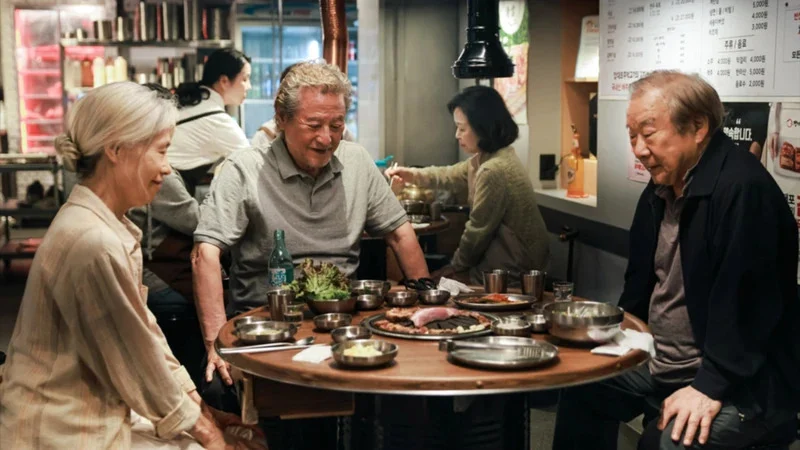
"People and Meat" introduces its audience to a trio of septuagenarians and octogenarians whose lives intersect through shared hardship and an unlikely bond. U-sik (portrayed by Jang Yong), Hyeon-jung (played by Park Keun Hyong), and Hwa-jin (embodied by Ye Soo-jung) form what becomes known, with a touch of wry irony, as "the dine-and-dash trio." Their notoriety stems from a pattern of enjoying meals at various restaurants, particularly Korean barbecue establishments, and then absconding without payment. This audacious act, while morally questionable, is presented not as malicious delinquency but as a desperate survival mechanism born from extreme poverty.
The genesis of their unusual camaraderie is rooted in everyday struggle. U-sik and Hyeon-jung, both engaged in the arduous and low-paying work of collecting discarded paper and cardboard, initially encounter each other as rivals in the cutthroat world of urban scavenging. Their competition gradually transforms into a tentative friendship, forged through mutual understanding of their precarious existence. Their connection with Hwa-jin, who ekes out a living running a modest roadside vegetable stall, deepens when a whimsical suggestion to prepare beef and radish soup together—a dish often associated with comfort and communal sharing in Korean culture—sparks a new dimension to their relationship.
It is U-sik, a seasoned veteran of life’s hardships and a figure of pragmatic resourcefulness, who unveils the audacious scheme of "dine-and-dash." Initially, his companions are kept unaware of his true intentions, believing they are merely enjoying a rare indulgence. The revelation that U-sik is entirely unable to pay the bill forces them into a hasty retreat, typically executed by feigning a brief exit. Despite their initial discomfort and moral qualms, Hyeon-jung and Hwa-jin find themselves drawn into U-sik’s instigation, realizing that these illicit meals represent a quality of food and experience they have long been deprived of due to their circumstances. The act of enjoying a good meal, even under such fraught conditions, becomes a profound experience of momentary respite and pleasure.
As the trio continues their escapades, they develop a remarkable synergy, becoming increasingly adept at their "craft." They learn to complement each other’s actions, orchestrating their exits with precise timing, their bellies full, and their spirits momentarily lifted. This progression in their illicit activities parallels a deeper unveiling of their individual pasts and persistent sufferings. U-sik carries the heavy burden of profound regret stemming from a brief but impactful encounter in his youth, a memory that haunts his present. Hyeon-jung lives a solitary existence in a spacious yet empty house, having been abandoned by his family, a source of deep-seated resentment and loneliness. Hwa-jin grapples with the enduring pain of losing her daughter and strives tirelessly to provide for her aloof grandson, finding solace and purpose in her small earnings, even as the emotional distance from her grandson remains. These personal narratives add layers of pathos to their collective struggle, transforming them from mere "outlaws" into deeply sympathetic figures.
Behind the Scenes: Artistic Vision and Craftsmanship
The artistic execution of "People and Meat" is a testament to the collaborative vision of its creators, deftly balancing dramatic comedy with serious realism. Director Yang Jong-hyun masterfully weaves light humour into the plaintive core of the harsh realities his characters face. This delicate balance is particularly evident in the trio’s dialogue, which is both wry and deeply resonant, capturing the essence of their resilience and vulnerability. Yang’s direction ensures that these characters, despite their unlawful actions, are portrayed not as obnoxious delinquents but as individuals driven by desperation and a fundamental human need for dignity and connection.
Credit for this nuanced portrayal also extends to writer Lim Namoo. Lim’s choice of Korean barbecue as a recurring motif is particularly insightful. Korean barbecue, often a symbol of communal celebration, abundance, and prosperity, becomes a site of "bacchanalian excess" for the impoverished trio. This stark contrast highlights the unsustainable nature of their living conditions against their deeply human anticipation of better lives. It underscores the profound irony of their situation: seeking a taste of societal affluence through acts of defiance against it. The act of eating meat, a luxury for many, transforms into a symbol of their longing for a life beyond mere survival.
The performances delivered by Jang Yong, Park Keun Hyong, and Ye Soo-jung are central to the film’s emotional impact. Each actor brings a distinct and complementary nuance to their respective roles. Jang Yong’s portrayal of U-sik is marked by a jovial smile that often masks an unknown past and endured pain, conveying an underlying sense of optimism even in adversity. Park Keun Hyong embodies Hyeon-jung as a stern, stoic old man, whose mask of resentment towards his abandoning family barely slips, revealing the deep scars of his emotional abandonment. Ye Soo-jung delivers a particularly touching performance as Hwa-jin, her brimming eyes and natural reactions capturing emotional subtleties that resonate deeply through her physical presence, embodying the quiet strength and enduring grief of a mother and grandmother. Their collective synergy on screen elevates the film from a simple narrative to a profound character study.
Beyond the performances, the technical aspects of "People and Meat" further enhance its narrative and thematic depth. Cinematographer Lee Seong-eun is lauded for preserving the authenticity of Seoul’s cityscape, employing a natural visual style that grounds the film in everyday life. His balanced framing of the three characters consistently supports the dynamics of their evolving relationship, ensuring that each member of the trio holds visual weight. Editor Son Jin-woo contributes significantly to the film’s narrative rhythm through the strategic use of fast cuts for moments of levity and occasional longer takes that weave in moments of emotional silence and contemplation. Notably, two fleeting flashback scenes depicting U-sik’s youth are crafted with incredible delicacy, adding layers of sentiment and foreshadowing the solitary destination he must eventually confront. The integration of these technical elements ensures that the film’s aesthetic serves its profound human story.
Societal Echoes: The Plight of South Korea’s Seniors
"People and Meat" is not merely a cinematic narrative; it functions as a potent social critique, reflecting the pressing issues faced by South Korea’s rapidly aging society. South Korea, often celebrated for its economic miracle and technological advancements, paradoxically holds one of the highest elderly poverty rates among developed nations. According to recent OECD data, a significant percentage of South Korea’s senior citizens live below the poverty line, a figure substantially higher than the OECD average. This demographic often grapples with a severe lack of social welfare support, inadequate pensions, and increasing healthcare costs, leading to widespread financial insecurity and social isolation.
The film meticulously illustrates these grim realities. The characters’ "dine-and-dash" acts are a direct consequence of their "hand-to-mouth" existence, a stark symbol of a system that has failed to provide basic necessities for its most vulnerable citizens. Their struggle to afford even a decent meal highlights the systemic deficiencies in social care, both financially and spiritually. The narrative underscores the immense pressure on the elderly to continue working in often precarious and undignified jobs, like collecting paper, long past conventional retirement age, simply to survive. This contrasts sharply with traditional Korean cultural values of hyo (filial piety), which historically placed a strong emphasis on children caring for their elderly parents. In modern South Korea, rapid urbanization, changing family structures, and economic pressures have significantly eroded these traditional support systems, leaving many seniors isolated and without familial assistance.
The film’s exploration of individual suffering—U-sik’s regret, Hyeon-jung’s abandonment, and Hwa-jin’s grief and struggle to connect with her grandson—further illuminates the multifaceted challenges beyond mere financial hardship. These are individuals battling profound loneliness, the emotional toll of neglect, and the existential dread of facing their final years in solitude and destitution. Their actions, though deemed immoral and illicit by civil law, become an act of resistance against a capitalist system and societal norms that prescribe a rigid life trajectory, often leaving those who deviate or simply grow old, behind. The "joy and pleasure they experience" through their illicit meals stand out as a self-created value, a desperate assertion of their right to experience life’s small pleasures, even if those pleasures come at a cost.
"People and Meat" therefore serves as a crucial mirror reflecting the lack of comprehensive social safety nets and the pervasive societal oversight of this vulnerable population. It challenges audiences to look beyond the superficial judgment of their actions and recognize the fundamental human needs and enduring vitality of individuals striving to preserve their dignity against overwhelming odds. The film implicitly urges a re-evaluation of social policies and a greater emphasis on empathy and support for the elderly, advocating for a society where aging does not equate to abandonment or destitution.
Critical Reception and Broader Implications
Upon its release and screenings, "People and Meat" has garnered significant critical attention for its unflinching portrayal of elderly poverty and its unique blend of dark humor and profound pathos. While specific box office numbers or detailed critical reviews might vary by region, the themes presented resonate deeply, positioning the film as a significant contribution to contemporary Korean cinema that addresses social issues. The film’s ability to humanize characters engaged in unlawful acts, by grounding their motivations in systemic failures, has been particularly praised.
The broader implications of "People and Meat" extend beyond its artistic merit. By bringing the plight of the marginalized elderly to the forefront, the film contributes to a crucial public discourse on social welfare, aging policies, and intergenerational responsibility in South Korea. It prompts viewers to consider the ethical dimensions of societal neglect and the individual’s struggle for self-worth when basic living conditions are compromised. The film’s narrative serves as an indirect call to action, encouraging greater awareness and empathy towards a population that is often invisible in the hustle and bustle of modern life.
Moreover, "People and Meat" aligns with a growing trend in Korean cinema and media to tackle sensitive social issues, moving beyond traditional genre fare to explore the complexities of contemporary life. This commitment to social realism helps to cement South Korea’s reputation for producing thought-provoking and impactful films that not only entertain but also challenge and inspire introspection. The film’s message about confronting aging, poverty, and death while striving to preserve dignity is universally resonant, making it a powerful piece of cinema that transcends cultural boundaries.
In conclusion, "People and Meat" is an affectingly poignant work that masterfully uses a darkly humorous premise to illuminate profound societal issues. It is a testament to the resilience of the human spirit and a stark reminder of the urgent need for greater social care and recognition for the elderly population, whose struggles often remain unseen and unheard. Through its compelling characters, masterful direction, and insightful writing, the film stands as a significant cultural artifact, urging its audience to look deeper into the lives of those on the margins and to reconsider the true meaning of dignity and survival.