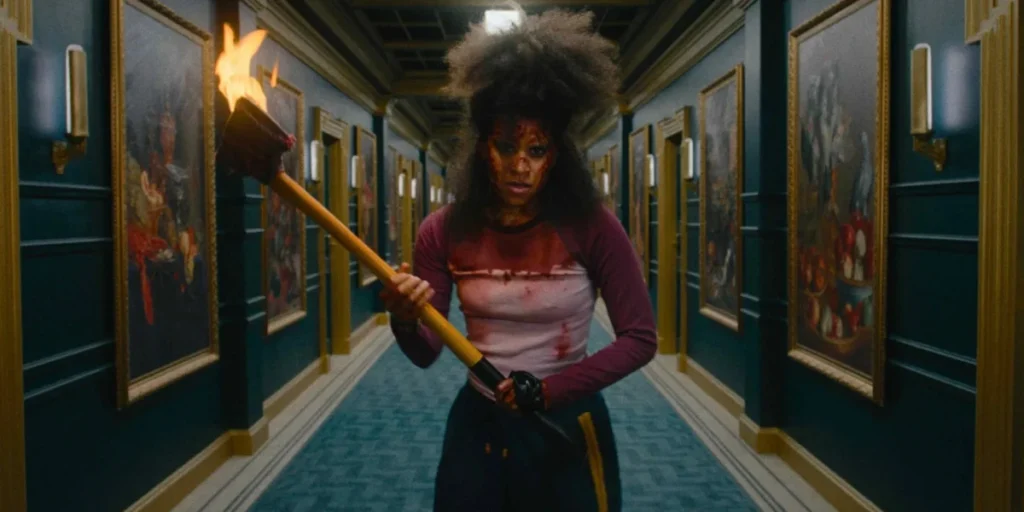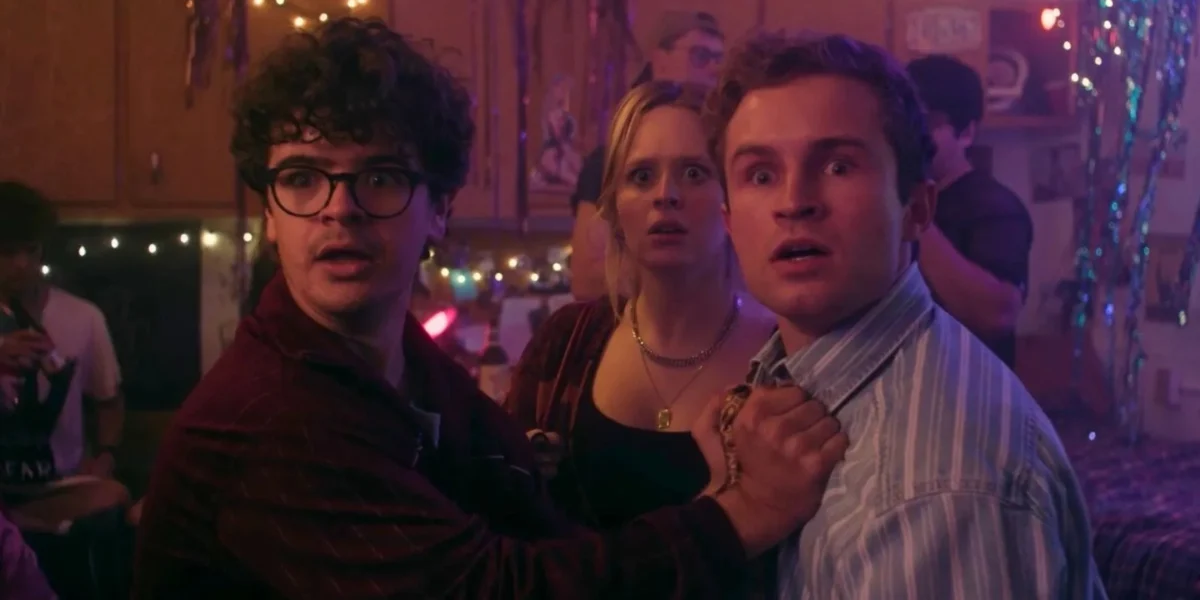
Pizza Movie marks the feature-length directorial debut of the comedic duo Brian McElhaney and Nick Kocher, known professionally as BriTANicK, delivering a 92-minute absurdist comedy that explores the intersection of collegiate life, synthetic drug experimentation, and high-stakes logistics. Released as a Hulu original, the film centers on two college roommates who inadvertently enter a state of extreme hallucinogenic distress after consuming a fictional substance known as M.I.N.T.S. The narrative follows their desperate attempts to secure a pizza delivery, which serves as the only biological antidote to the drug’s escalating effects. Featuring a cast led by Gaten Matarazzo and Sean Giambrone, the production represents a significant shift for its creators from short-form sketch comedy to long-form narrative storytelling.
Narrative Overview and Conceptual Framework
The plot of Pizza Movie is driven by a high-concept premise involving "Mind-Igniting Neural Tuning Stimulants," or M.I.N.T.S. The story begins when Jack (Gaten Matarazzo) and Montgomery (Sean Giambrone), two socially marginalized college students, discover a hidden supply of these synthetic drugs within the ceiling of their dormitory. The discovery occurs shortly after the pair experiences a typical collegiate conflict with members of the university’s football team, establishing a motivation for escapism.
Upon ingesting the substance, the characters learn through digital research that the drug triggers six distinct phases of hallucinogenic reality. These phases are characterized by increasingly surreal psychological and sensory distortions, bearing titles such as "Make the Baby Like It" and "The Ol’ Switcheroo." The internal logic of the film dictates that if the users do not consume a specific counter-agent—pizza—before the conclusion of the sixth phase, they will enter a permanent and catastrophic psychological state. This setup transforms a mundane task into an existential quest, as the protagonists must navigate their dormitory’s physical and social obstacles while their perception of reality systematically dismantles.
Joining the duo is Lizzy (Lulu Wilson), a former friend who consumes the drug under the mistaken impression that it is a standard breath mint. The trio’s objective is centralized on a single point of failure: a drone-delivered pizza that must be retrieved from the ground floor of their building. The film utilizes this restricted setting to create a "bottle movie" atmosphere, where the familiar environment of a college dorm is rendered alien and hostile through the lens of the characters’ intoxication.
Production Background and Creative Leadership
The transition of Brian McElhaney and Nick Kocher to feature film direction follows a decade of success in the digital comedy space. As BriTANicK, the duo gained prominence on YouTube and eventually transitioned into professional television writing, including stints at Saturday Night Live and It’s Always Sunny in Philadelphia. Their background in sketch comedy is evident in the film’s episodic structure, where each phase of the drug trip serves as a distinct comedic set piece.
The production of Pizza Movie reflects a broader trend in the film industry where streaming platforms like Hulu invest in mid-budget, genre-bending comedies that might struggle in a traditional theatrical landscape. By leveraging the established fan bases of stars like Gaten Matarazzo (Stranger Things) and Sean Giambrone (The Goldbergs), the production secured a demographic of younger viewers familiar with both the actors’ television work and the directors’ digital presence.
Profile of Lead Performers and Supporting Cast
The film’s efficacy relies heavily on its central trio, all of whom bring significant experience from high-profile television and film projects.
Gaten Matarazzo and Sean Giambrone
Gaten Matarazzo, widely recognized for his role as Dustin Henderson in Netflix’s Stranger Things, portrays Jack as the impulsive catalyst of the story. Industry analysts note that this role allows Matarazzo to deviate from his teenage persona into a more adult, albeit absurd, collegiate setting. His performance is characterized by physical comedy and a high-energy delivery that complements his background in musical theater.
Sean Giambrone, known for his long-running lead role in ABC’s The Goldbergs, plays Montgomery. Giambrone’s performance utilizes his established "straight man" archetype—cautious and anxious—to provide a necessary foil to Matarazzo’s character. His portrayal has drawn comparisons to early-career comedic actors who specialize in high-intensity neurosis.
Lulu Wilson
Lulu Wilson delivers what many observers consider a transformative performance. Having built a career primarily in the horror genre—with credits including Annabelle: Creation, Ouija: Origin of Evil, and The Haunting of Hill House—Wilson’s turn in Pizza Movie demonstrates a significant pivot toward absurdist comedy. Her character, Lizzy, is written to avoid the traditional tropes of female supporting characters in "stoner comedies," participating fully in the physical and psychological chaos of the plot rather than serving as a grounded moral compass.
Supporting Cameos and Ensemble
The film features a notable cameo by Saturday Night Live’s Sarah Sherman, who portrays the eccentric creator of the M.I.N.T.S. drug. Sherman, known for her "body horror" and surrealist approach to comedy, provides the necessary exposition to ground the film’s internal logic. Additionally, the cast includes Jack Martin, Peyton Elizabeth Lee, Marcus Scribner, Caleb Hearon, Justin Cooley, and a featured appearance by Daniel Radcliffe, whose involvement adds a layer of high-profile recognition to the independent-spirited project.
Technical Execution and Stylistic Influences
Directors McElhaney and Kocher employ a variety of technical maneuvers to simulate the characters’ deteriorating mental states. The film utilizes creative staging, camera tricks, and non-linear editing to differentiate between the six phases of the drug trip.
Cinematic influences cited by observers include the visual maximalism of Everything Everywhere All at Once and the frantic, kinetic camera work associated with Sam Raimi. One specific sequence, which involves a "Groundhog Day" style time loop triggered by the use of profanity, showcases the directors’ ability to blend high-concept sci-fi tropes with traditional slapstick. The use of drone delivery as a plot device also serves as a contemporary commentary on the automation of the gig economy, albeit within a fantastical context.
The film’s 92-minute runtime is structured to maintain a brisk pace, ensuring that the repetitive nature of the "quest" does not lead to narrative stagnation. The editing, handled with a focus on comedic timing, emphasizes the jarring transitions between the "phases," using color grading and sound design to signal shifts in the characters’ perceptions.
Chronology of Development and Release
The timeline for Pizza Movie follows a rapid trajectory from conception to streaming release:
- Development: The script was developed by Kocher and McElhaney, drawing on their history of surrealist sketches involving pharmaceutical parodies.
- Casting: The attachment of Matarazzo and Giambrone in late 2022 provided the necessary momentum for greenlighting the project.
- Filming: Principal photography took place primarily on a soundstage and a university campus, focusing on the claustrophobic elements of the dormitory setting.
- Post-Production: Significant emphasis was placed on visual effects (VFX) to realize the hallucinogenic sequences, including the "drone’s eye view" and the environmental distortions of the M.I.N.T.S. phases.
- Release: The film premiered on Hulu, targeting a weekend release window optimized for the "comfort viewing" and "stoner comedy" demographics.
Broader Impact and Genre Implications
Pizza Movie enters a cinematic landscape where the "stoner comedy"—a subgenre popularized in the late 1990s and 2000s by films like Half Baked and Harold & Kumar Go to White Castle—is undergoing a modern evolution. Unlike its predecessors, which often focused on the search for substances or simple relaxation, Pizza Movie leans into the "absurdist thriller" territory, where the comedy is derived from high-stakes anxiety and surrealism rather than laid-back observational humor.
The film’s reliance on a "limited location" reflects a post-pandemic production trend where narrative density is favored over expansive location shooting. By maximizing the utility of a single dorm building, the filmmakers were able to allocate more resources toward cast talent and visual effects.
Furthermore, the film’s reception highlights a divide in modern comedy criticism. While some analysts point to the "hit-or-miss" nature of joke density in absurdist films, others argue that the commitment of the lead actors and the technical proficiency of the direction provide a blueprint for successful streaming-exclusive content. The inclusion of established horror and sitcom stars in an experimental comedy format suggests a growing fluidity in talent management, where actors are increasingly encouraged to subvert their established brand identities.
Conclusion
Pizza Movie serves as a technical showcase for the BriTANicK directing team and a versatile platform for its young ensemble cast. While the film operates within the low-stakes environment of streaming comedy, its execution involves sophisticated narrative layering and a deep understanding of genre tropes. As the industry continues to navigate the transition from theatrical releases to digital-first distributions, projects like Pizza Movie demonstrate the potential for high-concept, niche comedies to find a significant audience through targeted platform placement and recognizable lead talent. The film remains a notable entry in the 2024 streaming calendar, representing a fusion of internet-era comedy sensibilities with traditional feature-film production values.