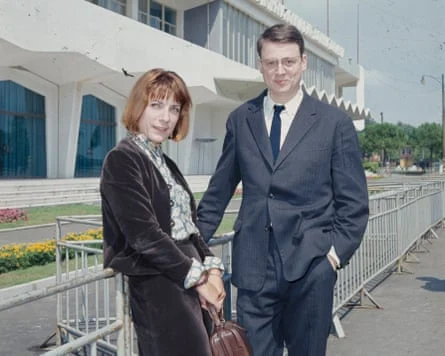
A uniform grey nimbostratus has blocked the rays of the London sun on the day Gianfranco Rosi is interviewed, yet the consummately Italian filmmaker feels right at home. "When Jean Cocteau visited Naples, he wrote a letter to his mother in which he said, ‘Vesuvius makes all the clouds in the world.’ And I think that’s a beautiful image," Rosi muses, offering a gracious nod to the blanket of grey outside the window. "I am sure there is one cloud over London today that has come straight from southern Italy." This sentiment, invoking the powerful natural forces that have shaped his cinematic landscape, perfectly encapsulates the thematic core of his latest work, "Pompeii: Below the Clouds," which completes a profound trilogy of films exploring the soul of Italian locales.
Rosi, 62, has carved out a formidable reputation as one of Europe’s most important documentary filmmakers through his highly original and poetic portraits of Italian places. His 2013 film, Sacro GRA, made history as the first documentary to win the Golden Lion at the Venice Film Festival. It offered an intimate glimpse into the lives of a diverse cast of characters who inhabit or work along the Grande Raccordo Anulare, the ring road encircling Rome. Three years later, Fire at Sea, which earned the Golden Bear at the Berlinale, provided a poignant study of the inhabitants of the island of Lampedusa and the desperate migrants arriving on its shores during the height of the European refugee crisis. This dual triumph elevated Rosi to an elite echelon of directors, having secured the top prize at two of Europe’s three major film festivals.
"Pompeii: Below the Clouds" is not merely the concluding chapter of this acclaimed trilogy; it also serves as a deliberate counterpoint to the recent surge of films and television series that have positioned Naples, the regional capital of Campania, as a cultural epicenter of the 2020s, drawing parallels to the artistic ferment of 1920s Berlin or 1960s London. Rosi, whose childhood was spent in Eritrea and Turkey before he pursued film studies in New York, admits to approaching Naples with an initial lack of preconceptions. "I started this film with very little awareness of Naples," he states. "I was a tourist in a city that everybody loves, but I tried also to capture a Naples that is not immediately there."

A Subterranean Gaze: Beyond the Neapolitan Stereotypes
Rosi’s latest film diverges sharply from the conventional portrayals of Naples that have recently captivated global audiences. Eschewing the vibrant, sun-drenched metropolis often depicted in adaptations of Elena Ferrante’s novels like My Brilliant Friend, the gritty realism of the crime series Gomorrah, or Paolo Sorrentino’s autobiographical drama The Hand of God, Rosi’s "Pompeii: Below the Clouds" adopts a starkly different aesthetic. Shot in black and white, the film transforms the city into something akin to a frontier settlement on an alien planet, perpetually overshadowed by the latent power of the Campanian volcanic arc, which includes the iconic Mount Vesuvius and the formidable Phlegraean Fields.
This otherworldly atmosphere is artfully amplified by a unique saxophone soundtrack composed by Oscar-winning British musician Daniel Blumberg. Blumberg achieved his distinctive sound by playing his instrument underwater and then re-recording the amplified vibrations with a microphone positioned on Naples’ sandy beaches. This sonic innovation complements the film’s visual language, creating a sense of unease and foreboding that permeates the narrative.
A significant portion of Rosi’s film unfolds within the control room of the Naples fire brigade. Here, residents call in their anxieties and fears, particularly when the ground trembles beneath their feet. The documentary captures a spectrum of reactions, from palpable terror for loved ones to a peculiar, almost unsettling, longing for a catastrophic event. This psychological landscape draws parallels to Werner Herzog’s 1977 documentary La Soufrière, which chronicled the anticipation of a volcanic eruption on Guadeloupe that ultimately never materialized. In "Pompeii: Below the Clouds," the question "Was that an earthquake?" is often met with an impatient "Will there be another one?" reflecting a city living on the edge of geological uncertainty.
Vesuvius: A Deity of Destruction and Preservation
Rosi spent four years immersed in Naples, a period during which Mount Vesuvius evolved from a geographical feature into a profound, almost mythical entity. "Vesuvius became like a mythical figure to me, a deity," he explains. "It’s like Shiva – a destroyer but also a regenerator. The volcano destroyed Pompeii, destroyed 3,000 years of history, but also preserved it under the ashes." This duality of destruction and preservation is a central metaphor for the film, reflecting not only the geological forces at play but also the resilience and complex cultural identity of Naples itself.
The filmmaker’s meticulous working methods resonate with the tradition of British psychogeographers and filmmakers like Iain Sinclair and Patrick Keiller, who explore the hidden layers and psychological dimensions of urban landscapes. However, Rosi’s excavation in "Pompeii: Below the Clouds" delves into the minds of the city’s inhabitants, unearthing their internal states rather than solely mapping external realities.
Portraits of Devotion Amidst Uncertainty
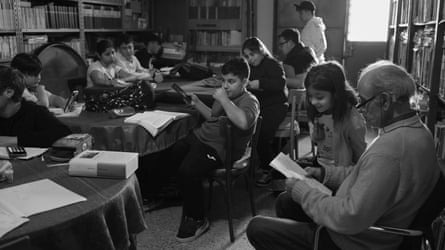
The film presents a series of compelling character studies, each revealing a deep commitment to their respective pursuits. Titti, a self-proclaimed "street teacher," imparts lessons in algebra, English grammar, and human geography from his antique shop with a blend of stern patience and profound dedication. Maria, a conservator at the National Archaeological Museum, displays maternal pride as she safeguards excavated heads and busts, artifacts that represent the city’s rich and layered past. A group of Japanese archaeologists, who have dedicated two decades to diligent excavation at the Villa Augustea, exemplify long-term commitment and meticulous research. The narrative also includes a Syrian ship captain who docks at the port with a cargo of Ukrainian grain, a poignant symbol of global interconnectedness and ongoing geopolitical realities.
These portrayals possess a distinct dramatic quality, enhanced by the monochrome cinematography and the deliberate, often static, composition of scenes. This aesthetic choice may also be influenced by the local temperament, where "un dramma napoletano" is an Italian idiom for exaggerating a situation, but Rosi insists on the authenticity of his encounters. "There’s not a single fictionalized moment in my film," he asserts. "But I love when people think that, because I always try to break that thin line between documentary and fiction without actually fictionalizing." This approach blurs the boundaries, inviting viewers to question the nature of reality presented on screen.
Intertwining Themes of Poverty, Violence, and Resilience
As in his previous works, Rosi masterfully weaves together the lives of his subjects, allowing their individual preoccupations to resonate and converge. Fire at Sea, for instance, explored themes of perception and willful ignorance, mirroring the central character’s visual impairment with the broader European tendency to overlook the migrant crisis. "Pompeii: Below the Clouds" similarly addresses potent political themes: poverty, violence, and the lingering echoes of war. Titti references Victor Hugo’s Les Misérables while the fire brigade is called to extinguish a blaze ignited by disaffected youths. A woman contacts the emergency hotline from her bathroom, her drunkenly raging husband a menacing presence on the other side of a locked door.

"There is this kind of oxymoron I perceived throughout the four years I lived in Naples," Rosi reflects. "There’s a constant sense of a tragedy, but also a sense that the tragedy has already passed and we lived through it without realizing what was happening. It’s a state of mind." This pervasive sense of living with a historical weight, a constant awareness of potential disaster juxtaposed with a stoic acceptance, defines the film’s emotional core.
Secular Devotion: The Foundation of Civilization
Despite the pervasive sense of impending doom and historical trauma, the film ultimately highlights a profound capacity for empathy and connection among its subjects. "When I was editing the film, I asked myself what all these people I had met over the years had in common. And what they all share is a sense of devotion, of giving themselves to others," Rosi observes.
This theme is powerfully illustrated when a Japanese archaeologist recounts how, in the Roman Empire, the port of Naples served as a vital conduit for distributing grain from regions of abundance to those facing shortages, thereby averting wars. Rosi then cuts to the Syrian ship captain, who confirms that his vessel was nearly bombed in Odesa and expresses his unwavering intention to return.
"All the characters in the film have this quality, a kind of secular devotion. I believe that that is where civilization starts," Rosi concludes. This notion of selfless dedication, of individuals committing themselves to a greater good or purpose even in the face of immense adversity, forms the bedrock of his cinematic vision and the ultimate message of "Pompeii: Below the Clouds." The film stands as a testament to the enduring human spirit, found not in grand pronouncements, but in the quiet, steadfast devotion of ordinary people navigating extraordinary circumstances.