Seven years have passed since the chilling events of Ready or Not, a span that feels more like an epoch than a mere half-decade, particularly when juxtaposed with its sequel, Ready or Not 2. The film picks up immediately in the immediate aftermath of its predecessor, featuring Grace MacCaullay, portrayed by Samara Weaving, amidst the smoldering ruins of the Le Domas manor. Her solitary cigarette on the steps of the inferno serves as a stark punctuation mark to the harrowing night that redefined her existence.
For those unacquainted with the darkly comedic horror of the original, Grace’s wedding night was an initiation into a terrifying family tradition. The Le Domas clan, titans of the board game industry, are bound by an ancient pact with a mysterious entity known as Mr. Le Bail. This pact dictates that new members must participate in a deadly game of "Hide and Seek" on their wedding night. The stakes are absolute: if the chosen victim is not hunted down and killed by sunrise, the entire family faces a grim demise. Grace, through sheer resilience and a brutal fight for survival, defied the odds, emerging as the sole survivor of this macabre ritual.
The Unfolding Crisis: A New Game for a New World Order
The devastating conclusion of the first film, which saw the Le Domas family and their ancestral home consumed by fire, places Grace in a precarious legal position. The visual evidence—an exploded family, a burning estate, and her blood-stained wedding attire—points unequivocally towards her guilt. However, Grace’s survival has triggered a far more significant consequence: the activation of a contingency within the pact. It appears that her defiance has not ended the games but rather escalated them.
Now, a consortium of "ruling families," all descendants of Mr. Le Bail’s original deal, are mandated to engage in a second, even more perilous game. This new contest is designed to determine who will ultimately "rule the world," a concept that remains as enigmatic as the shadowy Mr. Le Bail himself. The Danforth family, formerly holding this coveted "center seat," is embroiled in internal strife. Their patriarch, played with chilling gravitas by David Cronenberg in a remarkable acting resurgence, has orchestrated a patricidal act among his twin heirs. This desperate maneuver is intended to position them as the sole contenders for the Danforth seat in the impending global power struggle.
Sisterhood and Survival: A Forced Reunion
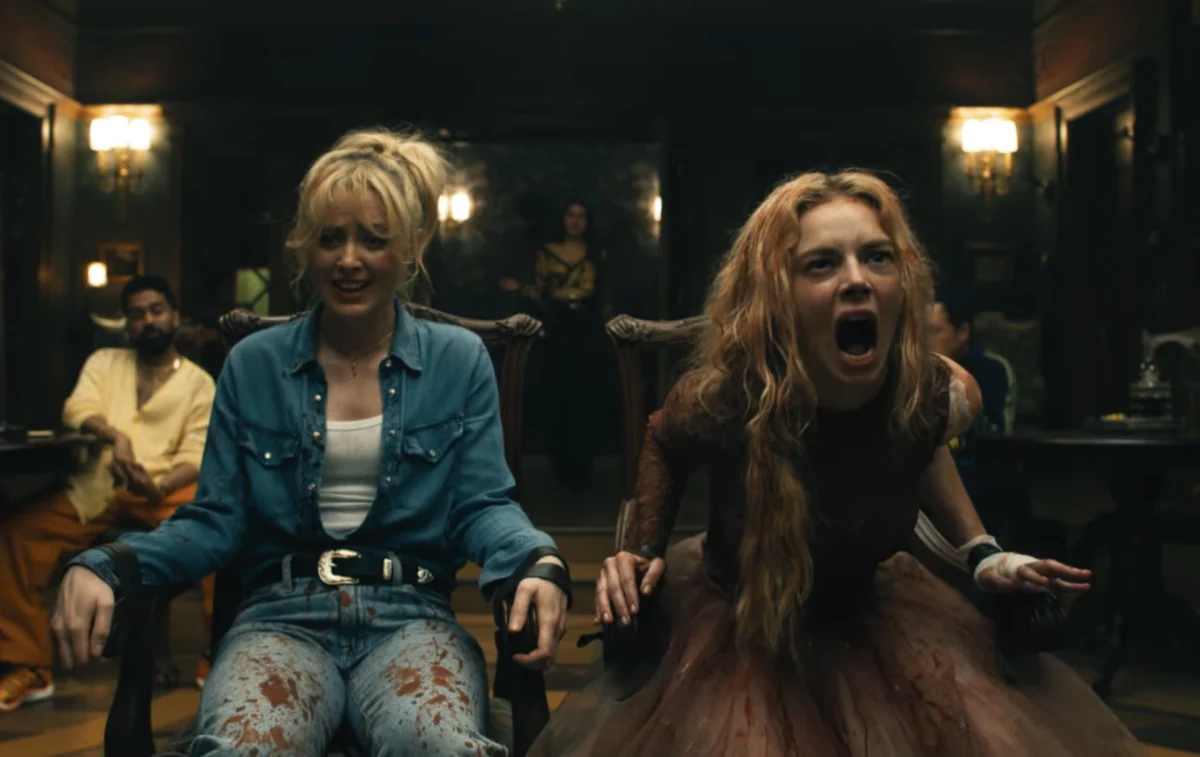
Grace, understandably, wishes to extricate herself from this escalating madness. Her ordeal has left her profoundly traumatized, and the prospect of further violence is abhorrent. However, a critical oversight in her survival plan—listing her younger sister, Faith MacCaulley (Kathryn Newton), as her emergency contact—draws her back into the fray. Faith’s involvement is instrumental in compelling Grace to participate, with the opulent Danforth resort serving as the unsettling new battleground.
The rules of this secondary game are deliberately labyrinthine, orchestrated by "the Lawyer" (Elijah Wood), a figure who seems to embody the chilling bureaucracy of Mr. Le Bail’s infernal contract. From a secure observation room, the heads of the four ruling families watch via screens as their chosen representatives engage in a hunt for the sisters. Wood’s portrayal of the Lawyer is a standout, exuding a peculiar blend of sardonic wit and sinister authority, suggesting a deep familiarity with the darkest corners of human ambition.
Grace, compelled by the threat to her sister, dons her original survival gear—a symbolic ensemble of ripped wedding dress and combat boots, a stark reminder of her past trauma. This attire, while practical for movement, is a visceral testament to the horrors she has endured. She has cultivated a new, hardened resilience, a quality Faith, despite her anger at being left behind, implicitly trusts.
Narrative Retcons and Missed Opportunities
Despite the propulsive nature of the sequel’s premise, Ready or Not 2 grapples with significant narrative challenges, primarily stemming from its creative team’s decision to incorporate elements from a previously conceived project. The introduction of Faith as Grace’s sister, a character absent from the original film’s narrative, feels like a substantial retcon. Grace’s initial motivation for marrying into the Le Domas family stemmed from her experience in the foster system and a profound longing for belonging. An elaborate falling out between the sisters is shoehorned into the plot, but it ultimately weakens the emotional core of Grace’s initial journey. The directors, Matt Bettinelli-Olpin and Tyler Gillett, have openly acknowledged that they merged two distinct story concepts—one featuring Weaving and Newton as sisters, and the other as a Ready or Not sequel—into this film. While their collaborative synergy is evident, this creative amalgamation leads to a disconnect from the established foundations of the first film.
Another significant narrative adjustment involves the revelation that Grace was not the first intended bride for Alex Le Domas. Francesca (Maia Jae), a member of the El Caido ruling house, is introduced as Alex’s prior fiancée. Her sole motivation appears to be revenge against Grace for "stealing her man." While their confrontations provide some of the film’s more comedic moments, Francesca’s character is largely defined by the trope of a scorned lover. This presents a missed opportunity to delve into the Le Domas family’s complex history and the potential power dynamics that might have led Alex to consider such a union. Questions about Alex’s past relationships, the nature of his family’s influence, and the specific rituals of the other ruling families remain unanswered, leaving a void in the world-building.
The Diminishing Folk Magic and Shifting Stakes
The sequel’s expanded scope, moving from the intimate horror of a single family to a global power struggle, sacrifices the intimate, folk-magic atmosphere that made the first film so compelling. The once-terrifying pact now feels like a business transaction between elites, diminishing the primal fear and supernatural dread. The question of where the franchise could possibly go from here also looms large. With the ultimate prize being global rule, the narrative seems to have reached a logical, albeit potentially limiting, endgame. The prospect of an intergalactic or ultra-dimensional sequel, while imaginative, feels like a desperate measure to prolong the series.
The Spectacle of Power and Performance
Despite these narrative critiques, Ready or Not 2 delivers moments of undeniable spectacle and dark humor. The interactions among the various heads of houses and their entourages provide a wealth of comedic material. The familial resemblances and dynamics, particularly between Francesca and her father Ignacio (Néstor Carbonell), are highlights, showcasing the absurdity of inherited power. The script also skillfully explores the nuances of power, differentiating between those who believe they are in charge and those who actually wield influence, offering a glimpse into the machinations of the ultra-wealthy. Elijah Wood’s performance as the devil’s advocate lawyer is a masterclass in controlled chaos, underscoring the transactional nature of good and evil in this world.
The casting of Sarah Michelle Gellar and Shawn Hatosy as the Danforth twins, Ursula and Titus, adds significant star power. Gellar, a beloved icon of the horror genre, transitions to a villainous role with characteristic intensity. However, the character arcs for both twins, particularly Gellar’s, suffer from a lack of payoff. The familiar horror movie tropes of betrayal and revelation are deployed, but the ultimate conclusions for these characters feel unearned. Hatosy’s portrayal of brutality is visceral, but the initial build-up lacks the simmering menace required for true impact.
A Cathartic Conclusion and a Timeless Message
Remarkably, Ready or Not 2 manages to coalesce its disparate elements into a surprisingly cathartic conclusion. Much like its predecessor, the finale is characterized by outrageousness, escalating the stakes to an almost unbearable degree. The emotional release that follows is palpable. Beneath the blood-soaked spectacle, the film retains echoes of the original’s core themes. It continues to be a critique of the moral bankruptcy of the ruling classes, but more importantly, it underscores the profound demands and sacrifices—both emotional and physical—that marriage, and by extension, societal expectations, place upon women.
While Faith’s existence may be a narrative contrivance, her inclusion serves as a powerful reminder of the enduring strength of sisterhood. It subtly emphasizes that true family is not solely defined by marital bonds but by the unwavering support and loyalty of those who stand with you, especially in the face of overwhelming adversity. In a world increasingly defined by transactional relationships and the pursuit of power, the enduring power of familial connection, particularly that of sisterhood, emerges as a beacon of hope.